
Colorado Surgical Assistant and Surgical Technology License Defense Lawyer
A Colorado surgical technology or surgical assistant license represents years of clinical training, national certification, and professional reputation. When a complaint lands with the Colorado Department of Regulatory Agencies or a credentialing body flags a concern, everything built through that work sits at risk. The investigation process moves on its own timeline, and the decisions made in the first days after receiving notice often shape what happens next. Waiting to see how things unfold, or assuming a complaint will resolve on its own, are among the most costly mistakes a healthcare professional can make at this stage.
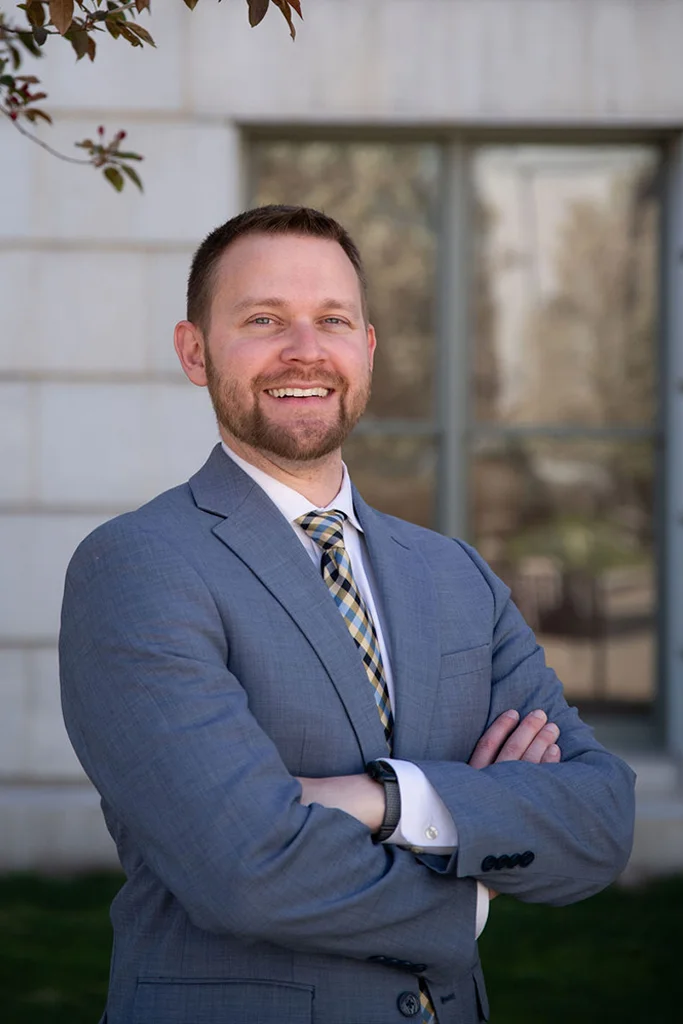
DeChant Law represents Colorado surgical assistants and surgical technologists facing licensing investigations, disciplinary proceedings, and professional board actions. Reid DeChant’s background in criminal defense and government-side adversarial proceedings translates directly into this work. Licensing boards are not neutral bodies. They have investigators, attorneys, and procedures designed to protect the public, and when you sit across from that process without representation, the power imbalance is real. Having counsel who understands how to challenge evidence, construct a factual narrative, and engage institutions directly is not a luxury in a high-stakes professional proceeding; it is the foundation of a real defense.
For Colorado surgical assistant and surgical technology license defense, the questions that matter most are specific: What triggered the complaint? What does the board actually have? What are the procedural timelines, and have they been followed? What relief is actually available? These are the questions Reid DeChant asks from the beginning, before any response is filed or any statement is made.
What Puts a Surgical Technology License at Risk in Colorado
The pathways to a licensing complaint or disciplinary action for surgical technologists and surgical assistants in Colorado are broader than most practitioners realize. Some triggers are obvious. Others are not. Understanding the range of conduct that can initiate board scrutiny helps contextualize both the threat and the defense options available.
- Criminal charges or convictions: Any criminal charge, including charges outside the clinical setting such as DUI, drug possession, or assault, can trigger mandatory self-reporting obligations and independent board investigation, even if the charge is later reduced or dismissed.
- Substance use allegations: Concerns about alcohol or controlled substance use, whether raised by an employer, coworker, or patient incident report, frequently result in board investigation and may involve mandatory evaluation requirements or monitoring agreements under Colorado’s professional assistance programs.
- Patient safety incidents or adverse outcomes: Wrong-site surgery involvement, retained surgical items, sterile field breaches, or other adverse intraoperative events may generate facility-level investigations that escalate to the state licensing board, even when a technologist’s role was peripheral or disputed.
- Scope of practice concerns: Performing tasks that fall outside the defined scope of a surgical assistant or surgical technologist license in Colorado can lead to unauthorized practice allegations, particularly in facilities where role definitions are loosely enforced.
- Employer or facility reports: Terminations, suspensions, or internal disciplinary actions at hospitals, ambulatory surgery centers, or specialty clinics may carry mandatory reporting obligations that bring the state board into a dispute that might otherwise have remained private.
- Fraudulent credentialing or documentation issues: Misrepresentations on applications for licensure, renewals, or employer credentialing, whether intentional or the result of clerical error, are taken seriously by the board and can result in denial, revocation, or fraud referrals.
- Lapsed certification or continuing education failures: National certifying bodies such as the NBSTSA or NSSA have their own compliance standards. A lapse in certification or failure to meet continuing education requirements can affect licensure status and trigger board action.
What to Do When You Receive Notice from the Colorado Department of Regulatory Agencies
The first document that arrives, whether it is a complaint notification, a request for a written response, or a notice of investigation, requires careful attention before any action is taken. Do not assume the letter is routine. Do not respond immediately without counsel. The written response you provide to DORA or the Division of Professions and Occupations becomes part of the formal record in your case. Statements made without legal guidance have a documented history of complicating defenses that might otherwise be straightforward.
Colorado’s Division of Professions and Occupations, which operates under DORA, handles licensing complaints for numerous healthcare professions. When a complaint is filed, the division assigns an investigator and typically requests a written response from the licensee within a defined timeframe. That timeframe varies, but it is not indefinite, and missing it creates its own problems. Retaining a Colorado surgical technology license defense attorney before that deadline gives you the ability to submit a response that is accurate, strategic, and protected from avoidable missteps.
Gather everything relevant to the underlying facts from the start. That means incident reports, shift schedules, facility communications, personnel files, performance reviews, chain-of-custody documentation for any medication or instrument questions, and any correspondence from employers or credentialing committees. The more complete your documentation, the stronger your attorney’s starting position. Material that disappears or becomes unavailable later is material that cannot help you.
If your situation also involves a parallel criminal investigation, which is more common than most practitioners expect, it is critical that you understand how the two tracks interact. Statements made to board investigators are not protected in the same way as statements made to your attorney, and they can be used in criminal proceedings. Reid DeChant’s background in criminal defense is directly relevant here. He understands how to navigate parallel proceedings in a way that protects the licensing matter without inadvertently damaging any criminal defense.
Formal hearings in Colorado professional licensing matters are conducted before the Office of Administrative Courts, with an administrative law judge presiding. These proceedings follow Colorado’s Administrative Procedure Act and have their own rules of evidence and briefing schedules. They are not courtrooms in the traditional sense, but they function adversarially, and the outcomes, ranging from public censure to probation, license suspension, or revocation, are real and lasting.
What the Disciplinary Process Actually Looks Like
After a complaint is filed with DORA, the division screens it to determine whether it alleges conduct that falls within the board’s jurisdiction. Complaints that survive screening are assigned for investigation. The investigation phase may involve interviews, records requests to employers and facilities, and review of the licensee’s written response. At the conclusion of the investigation, the matter is referred to the appropriate licensing board for review.
The board has several options at this stage. It can dismiss the complaint, offer a confidential letter of concern, propose a stipulation agreement with conditions, or refer the matter to a formal hearing. A stipulation, which is a negotiated resolution, can be appealing because it avoids a contested hearing, but it is not without consequence. Stipulations are typically public records. They can affect hospital privileges, malpractice insurance, and employment eligibility. Any proposed agreement deserves thorough legal review before it is signed.
If no agreement is reached, the matter proceeds to the Office of Administrative Courts. The administrative law judge’s decision is then reviewed by the board, which may adopt, reject, or modify it. Appeals from board decisions can be taken to Colorado district court. The process is layered, and each stage offers strategic opportunities that only exist if they are identified and pursued in time.
For surgical assistants and surgical technologists, national certification is intertwined with this process. An action by the Colorado board may be reportable to the National Practitioner Data Bank, which affects the practitioner’s ability to work in other states or through national staffing agencies. A Colorado surgical technology license defense attorney who understands both the state licensing track and the national certification implications can help you think through the full picture of consequences rather than addressing each piece in isolation.
Why DeChant Law Is the Right Firm for Colorado Surgical Technology License Defense
Reid DeChant built his practice on the principle that clients facing institutional power deserve representation rooted in genuine preparation and authentic advocacy. That principle does not change when the institution is a licensing board rather than a prosecutor’s office. The dynamic is familiar: an investigating body with resources and procedural advantages on one side, an individual whose career is at stake on the other.
Reid’s background as a former public defender in Denver, Broomfield, and Adams County gave him exposure to an enormous volume of adversarial proceedings, including cases involving healthcare-adjacent criminal charges, professional license consequences of criminal convictions, and parallel regulatory investigations. His training at the Trial Lawyers College, founded by attorney Gerry Spence, taught him that effective advocacy requires understanding the full human context of a client’s situation. In licensing defense, that means understanding not just the legal theory but the clinical environment, the workplace dynamics, the chain of events that led to a complaint, and the professional stakes that a resolution must account for.
Reid is a member of the National Association of Criminal Defense Lawyers and the Colorado Criminal Defense Bar. He has defended clients against charges ranging from minor offenses to serious felonies, with results that include not-guilty verdicts at trial, case dismissals, and successful DMV hearing outcomes. Clients at DeChant Law are treated as partners in their own defense, kept informed throughout, and consulted on every significant decision. That approach matters in licensing defense, where the practitioner’s own factual knowledge of clinical events is often the most important asset in the case.
Questions Surgical Technologists and Surgical Assistants Ask About Colorado License Defense
Do I have to respond to a complaint from DORA?
A formal request for response from DORA or the relevant licensing division should be treated as a serious procedural obligation. Failing to respond within the specified timeframe can result in a default finding against you or an inference that the allegations are uncontested. At the same time, what you say and how you say it matters enormously. The response should be prepared with counsel, not drafted hastily and submitted without review.
Will a complaint against my license become public?
Not all complaints result in public action. The investigation phase itself is typically not public. However, formal disciplinary orders, license suspensions, and stipulations are generally part of the public record and appear on the DORA license lookup database. Dismissals and confidential letters of concern typically do not. One of the goals of early representation is to maximize the chances of a resolution that does not generate a public record.
Can a criminal charge affect my surgical technology license in Colorado?
Yes. Colorado law generally requires licensed healthcare professionals to self-report criminal charges and convictions within specified timeframes. The board treats criminal history as relevant to fitness for licensure, particularly for charges involving dishonesty, controlled substances, or conduct that could directly relate to patient safety. The board’s assessment is independent of how the criminal case resolves, which is why parallel representation in both tracks is often appropriate.
What happens if I already submitted a written response to the board without an attorney?
Retaining counsel after submitting an initial response is still worthwhile. The case is not over because one letter was sent. An attorney can review what was submitted, identify any areas of concern, and help position the defense going forward. Depending on the stage of the investigation, there may be opportunities to supplement or clarify the initial response through the investigation process or in subsequent proceedings.
Can the board suspend my license while the investigation is still ongoing?
In situations involving immediate concerns about public safety, Colorado licensing authorities have the ability to seek emergency suspension of a license before a full hearing is completed. This is not the standard outcome in most complaints, but it is a possibility in cases involving serious patient harm allegations or active criminal charges related to clinical conduct. If you have received any indication that emergency action may be sought, contact an attorney immediately.
What if the complaint was filed by a disgruntled coworker or an employer I had a conflict with?
The identity and motivation of the complainant are relevant context, but they do not automatically determine the outcome. The board investigates the underlying allegations on their merits, regardless of who filed the complaint. A strategic defense will address both the factual record, demonstrating what actually happened, and the context of the complaint itself, including any workplace dynamics, interpersonal conflicts, or institutional pressures that may have shaped how events were characterized.
How does a Colorado licensing action affect my ability to work in other states?
Colorado participates in various interstate compacts and reciprocity frameworks that affect multi-state healthcare licensure. A public disciplinary action in Colorado is reportable to the National Practitioner Data Bank and can be visible to licensing authorities in other states. Some states will automatically investigate a Colorado disciplinary action; others conduct their own independent review. If you work across state lines or anticipate relocating, the multi-state implications of any Colorado resolution are a critical part of the analysis.
Can I practice while a licensing investigation is pending?
In most cases, yes. A pending investigation does not automatically suspend your license or restrict your ability to practice. However, some employers and facilities require self-disclosure of pending investigations as part of credentialing maintenance, and failure to disclose when required can create separate problems. It is important to understand your employer’s specific credentialing obligations alongside the board’s requirements so that compliance with one does not inadvertently create a problem with the other.
What is the difference between a reprimand, a censure, and a letter of concern?
These terms reflect different levels of formal board action, and the distinctions matter significantly. A letter of concern is typically not a formal disciplinary action and may not appear on the public license record. A censure or reprimand is a formal finding that does appear publicly and creates a permanent entry in the licensing history. Board stipulations can include probationary conditions, mandatory continuing education, or practice limitations depending on the severity of the underlying conduct. Understanding the precise nature of any proposed resolution is essential before agreeing to anything.
If my national certification lapses, does that automatically affect my Colorado license?
The relationship between national certification through bodies like the NBSTSA and Colorado state licensure depends on the specific licensing requirements applicable to your credential. In some circumstances, a lapse in certification can affect license renewal eligibility. It is important to understand which requirements are enforced independently by the state and which are tied to national certification status, particularly when facing circumstances that may affect your ability to meet continuing education or recertification deadlines during an investigation.
License Defense Representation Across Colorado
DeChant Law represents surgical assistants and surgical technologists throughout Colorado, from the Denver metropolitan area through the surrounding Front Range communities and into the broader state. Practitioners in Aurora, Lakewood, Englewood, Westminster, Arvada, Thornton, and Northglenn, as well as those working in Adams County facilities and the communities of Commerce City and Brighton, are among those the firm serves. Representation extends to Boulder and the surrounding foothills communities, as well as Jefferson County practitioners in Wheat Ridge, Golden, and Littleton. Surgical technologists and surgical assistants based in Douglas County, including Highlands Ranch, Castle Rock, and Parker, can reach DeChant Law for the same level of focused defense. The firm also represents clients in Arapahoe County and the communities of Centennial, Greenwood Village, and Cherry Hills Village. Further from the metro area, practitioners in Fort Collins, Greeley, Pueblo, Colorado Springs, and the western slope communities of Grand Junction and Montrose are welcome to seek representation regardless of where in Colorado the licensing board matter arises.
Colorado Surgical Technology License Defense Attorney Ready to Help
A licensing complaint does not have to define what happens next in your career. What matters now is building a defense with someone who understands both the institutional process and how to tell your story accurately and effectively within it. DeChant Law offers that combination for Colorado surgical assistants and surgical technologists who need a Colorado surgical technology license defense attorney with real adversarial experience and a commitment to genuine client partnership throughout the process.
Contact DeChant Law to discuss your situation directly with Reid DeChant. The earlier in the process a defense begins, the more options remain available.