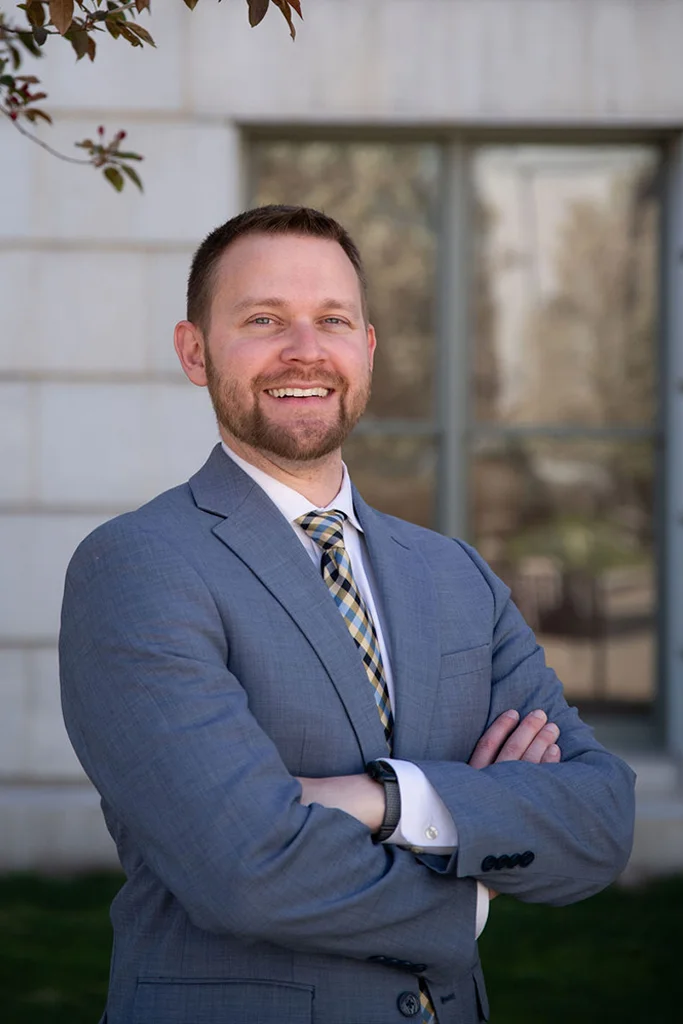

Colorado Professional Engineer License Defense Lawyer
A professional engineering license represents years of academic preparation, rigorous examination, and practical experience. In Colorado, that license is also the foundation of your career and livelihood. When the Colorado State Board of Licensure for Architects, Professional Engineers, and Professional Land Surveyors initiates a complaint investigation or disciplinary proceeding against your PE license, the process moves according to its own timeline and its own rules, regardless of how confident you feel in your professional conduct. What you say in your initial response to a board inquiry, what documentation you submit, and whether you appear at a hearing unrepresented can all have consequences that outlast the proceeding itself.
A Colorado professional engineer license defense lawyer provides something that a general understanding of the engineering profession cannot: knowledge of how administrative disciplinary proceedings work, how the board evaluates evidence of professional misconduct, and how to construct a defense that addresses the specific allegations rather than responding in generalities. DeChant Law represents Colorado engineers who are facing license investigations, formal complaints, or disciplinary hearings, bringing to these proceedings the same analytical rigor and courtroom preparation that define its criminal defense work.
The board’s investigators and prosecuting attorneys are experienced in building cases against licensees. A complaint that seems straightforward from your perspective may present questions of expert opinion, competing technical interpretations, or documentation gaps that require careful legal analysis before you respond at all. Waiting to engage legal counsel until after your first board appearance is one of the more consequential mistakes an engineer in this position can make.
What Triggers a Colorado PE License Investigation
The Colorado State Board of Licensure for Architects, Professional Engineers, and Professional Land Surveyors has authority to investigate and sanction licensed professional engineers for a wide range of conduct. Understanding the categories of complaints that typically generate board action helps clarify what you are actually facing and what the board is likely to focus on.
- Negligent or Incompetent Practice: Allegations that a design, inspection, calculation, or engineering judgment fell below the applicable standard of care. These complaints often arise from structural failures, construction disputes, or project outcomes that resulted in property damage or safety concerns. Expert testimony becomes central to evaluating what the standard of care required in the circumstances.
- Sealing or Stamping Violations: Colorado law requires that engineers seal only work they have personally prepared or work prepared under their direct responsible charge. Complaints involving improper use of an engineering seal, whether stamping work the licensee did not actually supervise or failing to review adequately before sealing, are among the most common grounds for disciplinary action.
- Criminal Convictions: The board may consider certain criminal convictions as grounds for disciplinary action, particularly convictions involving dishonesty, fraud, or conduct that reflects on professional fitness. A conviction does not automatically result in license revocation, but the board requires disclosure and retains discretion to impose sanctions.
- Fraud or Misrepresentation in Licensure: False statements on a license application, exam registration, or continuing education documentation can trigger investigations independent of any underlying practice complaint. These matters often involve straightforward documentary evidence, but the board treats them seriously because they go to the integrity of the licensing process itself.
- Continuing Education Noncompliance: Colorado requires licensed professional engineers to complete continuing professional competency requirements for license renewal. Audit failures or falsified CE documentation expose licensees to formal proceedings even in the absence of any underlying quality-of-work complaint.
- Ethical Violations Under NSPE Guidelines: The board enforces professional conduct standards that incorporate duties to the public, duties to clients and employers, and duties to the profession itself. Conflicts of interest, failure to disclose known deficiencies in engineering work, or conduct that undermines public confidence in the profession can all generate ethics complaints.
- Unlicensed Practice or Aiding Unlicensed Practice: Allowing an unlicensed individual to represent themselves as operating under your responsible charge without actual supervision, or otherwise facilitating unlicensed engineering practice, creates exposure both for the unlicensed party and for the licensed engineer who enabled it.
How DeChant Law Approaches Professional License Defense in Colorado
Reid DeChant built his practice on a principle that most defense attorneys articulate but few consistently demonstrate: the facts of any proceeding are only part of the story, and how that story gets told determines outcomes more than the raw facts alone. That insight, refined through training at the Trial Lawyers College and sharpened by years of public defender work across Denver, Broomfield, and Adams County, applies directly to professional license defense even though the forum is administrative rather than criminal.
Colorado administrative disciplinary proceedings share structural similarities with criminal prosecutions. There is a complaining party, an investigating authority, a hearing body, and a range of possible sanctions. There is also a licensee whose professional reputation, career, and financial security are at stake. DeChant Law has handled cases resulting in outright dismissals and not-guilty verdicts at trial in contexts where the government or prosecution believed it had a strong case. That track record, which includes dismissals in multiple DUI and DMV proceedings, acquittals on assault charges, and dismissals in domestic violence cases at the trial level, reflects the kind of preparation and advocacy that license defense cases demand.
Reid’s membership in the National Association of Criminal Defense Lawyers and the Colorado Criminal Defense Bar keeps him connected to the broader community of attorneys who understand how to challenge government action against individual rights. For a professional engineer facing the loss of a license, the board is the government. Its investigators collect evidence, its attorneys prosecute cases, and its hearing panel decides consequences. Treating that proceeding with the same seriousness as a criminal prosecution is not overcaution. It is the appropriate response.
When DeChant Law takes on a professional license defense case, the work begins with the evidence itself: What triggered the complaint? What documentation exists? What does the engineering record actually show versus what the complaint alleges? Are there technical experts whose opinions should be retained before any response is submitted? What deadlines apply and what rights does the licensee have at each stage? Building a defense in a professional license case requires understanding both the legal framework and the technical subject matter well enough to evaluate expert claims and cross-examine opposing witnesses effectively. That dual focus is what separates genuine advocacy from administrative box-checking.
What to Do the Moment You Receive Board Correspondence
If you receive a letter from the Colorado State Board of Licensure for Architects, Professional Engineers, and Professional Land Surveyors indicating that a complaint has been filed against you, the single most important action you can take is to consult with a Colorado professional engineer license defense attorney before you respond. The board’s initial correspondence often includes a request that you provide a written response to the allegations. That response becomes part of your permanent record with the board and can be used against you in subsequent proceedings. Providing a response without understanding the full scope of what is being alleged and what evidence the board may already have is an unnecessary risk.
The Division of Professions and Occupations within the Colorado Department of Regulatory Agencies handles administrative support for the board and manages the complaint and investigation process. DORA’s website provides general information about the licensure complaint process, but it is written from the regulator’s perspective, not the licensee’s. When you retain counsel, your attorney communicates with DORA and the board on your behalf, allowing you to gather documentation, consult technical experts if needed, and develop a coherent response strategy rather than reacting under pressure.
Document preservation should begin immediately. Gather every project file, correspondence record, calculation document, and drawing associated with the subject matter of the complaint. If the complaint involves a specific project, compile your contract documents, inspection records, change order files, and any communications with contractors, owners, or subconsultants. If the complaint involves seal or stamp usage, gather your firm’s documentation protocols. If it involves continuing education, pull your CE provider certificates and renewal records. The more complete your documentary record at the outset, the better your attorney can evaluate the strength of the complaint and develop a response that addresses the specific factual claims.
Colorado PE license matters are heard through the administrative process administered under DORA, with formal disciplinary hearings conducted before an administrative law judge at the Office of Administrative Courts, located in Denver. Understanding that you have the right to a formal hearing before any final sanction is imposed, and that you have the right to present evidence, call witnesses, and cross-examine the board’s witnesses at that hearing, is essential context. Accepting a consent agreement or stipulated resolution without evaluating whether the case could be defended at a full hearing is a decision that should only be made after careful legal analysis, not under time pressure from the investigation process itself.
Potential Consequences and What Is Actually at Stake
The Colorado board’s range of disciplinary sanctions runs from a letter of admonition at the lower end through probation, suspension, and revocation at the more serious end. Each of these outcomes carries different practical consequences that extend beyond the formal sanction itself.
A letter of admonition, while the least severe formal sanction, becomes part of the public record associated with your license and may appear in board lookups conducted by prospective clients, employers, or contracting agencies. For engineers who work in regulated industries or hold security clearances, even a non-suspension outcome may require disclosure on subsequent applications and can prompt additional scrutiny. Suspension removes your ability to practice engineering in Colorado for the duration of the suspension, which can terminate ongoing project responsibilities, damage existing client relationships, and create contractual liability with firms or clients whose projects stall as a result.
Revocation eliminates your Colorado PE license entirely. While reinstatement is possible after a waiting period and upon application, it is not guaranteed, and the board considers the severity of the underlying conduct as well as evidence of rehabilitation or remediation. Revocation also typically triggers reporting obligations to the National Council of Examiners for Engineering and Surveying, which maintains a national database that affects your ability to hold licensure in other states. For engineers who are licensed or seeking licensure in multiple jurisdictions, a Colorado disciplinary action can create cascading consequences across your entire professional footprint.
The goal of effective defense is not merely to minimize the formal sanction. It is to understand what the board can and cannot prove, challenge evidence and expert opinions that do not withstand scrutiny, present your account of the professional record with clarity and credibility, and achieve the outcome that best preserves your ability to continue practicing. That requires treating the proceeding as the high-stakes professional matter it is from the first correspondence forward.
Questions About Colorado PE License Defense
What is the difference between an informal conference and a formal disciplinary hearing?
An informal conference is typically an earlier stage in the Colorado board’s process at which the licensee and board representatives discuss the complaint and possible resolution without the procedural formality of a full hearing. You are not required to attend an informal conference unrepresented, and anything discussed can influence how the case proceeds. A formal hearing before an administrative law judge provides a full evidentiary proceeding with the right to present witnesses, introduce documents, and cross-examine opposing witnesses. Whether to pursue an informal resolution or contest the matter through a formal hearing is a strategic decision that depends on the strength of the evidence and the board’s proposed sanction.
Can I lose my license based solely on a customer or client complaint without any expert analysis of my work?
The board is required to conduct a reasonable investigation before taking disciplinary action. For complaints involving allegations of professional negligence or incompetent practice, the standard of care question typically requires some form of expert analysis, because the board must have a basis for concluding that your conduct fell below what a competent engineer in the same circumstances would have done. However, for other categories of complaints, such as stamping violations, criminal convictions, or CE noncompliance, the documentary record may be sufficient without expert opinion. Your attorney can evaluate what evidentiary basis the board is likely to rely on and whether that basis is legally sufficient to support the proposed sanction.
Does a criminal charge or conviction in Colorado automatically affect my PE license?
A criminal charge alone does not automatically trigger board action, but licensees are generally required to report certain criminal convictions to the board, and the board may initiate a separate disciplinary investigation based on the nature of the conviction. A conviction involving dishonesty, fraud, or moral turpitude carries greater risk of board action than other offense categories, though the board exercises discretion in evaluating each situation. If you are simultaneously facing a criminal matter and a board investigation arising from the same underlying conduct, coordinating legal strategy across both proceedings is important because statements made or evidence submitted in one context can affect the other.
How long does a Colorado PE board investigation typically take?
Timelines vary significantly depending on the complexity of the complaint, the volume of documentation involved, whether expert review is required, and the board’s current caseload. Simple documentation issues may resolve in a matter of months. Complex practice complaints involving multiple projects or disputed expert opinions can take considerably longer. Staying engaged with your attorney throughout the process and responding to board requests within the deadlines provided helps avoid unnecessary delays that extend the period of professional uncertainty.
What happens if the board finds a violation but I disagree with its decision after the formal hearing?
Administrative law judge decisions in Colorado board proceedings are subject to review within the administrative system and, thereafter, to judicial review in Colorado district court. The standards for overturning an administrative decision on appeal are demanding, but errors of law, insufficient evidence, or procedural violations can provide grounds for challenge. Preserving your rights on appeal begins during the hearing itself, which is one of the reasons that proper legal representation at the hearing stage matters considerably for licensees who may need to pursue review of an adverse outcome.
If the complaint involves a project where another engineer also worked, can the board hold me solely responsible?
The board evaluates each licensee’s conduct based on their own responsible charge and professional obligations. If multiple engineers contributed to a project and a complaint arises, the investigation may involve more than one licensee, or it may focus specifically on the engineer whose seal appeared on particular documents. The allocation of responsibility among engineers who worked on the same project is a factual and legal question that benefits from careful analysis of contract documents, work assignments, supervision records, and the specific allegations in the complaint.
Can board disciplinary records affect federal contracting or security clearance eligibility?
Board disciplinary actions become part of the public record and may be discoverable by federal agencies or contractors conducting background checks or eligibility reviews. The specific impact depends on the nature of the sanction, the type of clearance or contract involved, and the applicable federal standards. Engineers who hold or are seeking federal security clearances should discuss the potential implications of a board proceeding with their attorney before taking any position on a proposed settlement or consent agreement.
What if the complaint was filed by a disgruntled contractor or a client who has a financial dispute with me?
The board is aware that complaints are sometimes filed in the context of broader civil disputes, and the motivation behind a complaint can be relevant to how the board evaluates the credibility of the allegations. However, a complaint filed in bad faith can still trigger a formal investigation, and the board considers the substantive evidence independently. Documenting the existence of any underlying civil dispute, including any demands or litigation filed by the complainant, and presenting that context clearly as part of your response strategy can be important for giving the board an accurate picture of the circumstances.
Am I required to disclose a Colorado board investigation when applying for licensure in another state?
Most state licensing boards require applicants to disclose pending investigations and prior disciplinary actions by any licensing authority. Failing to disclose a pending Colorado investigation on an out-of-state application can itself become grounds for denial or discipline in the other jurisdiction, even if the Colorado matter ultimately resolves in your favor. Consult with your attorney about disclosure obligations in any other state where you are applying for or holding a license while a Colorado investigation is open.
Does retaining a lawyer signal guilt to the board?
No. Retaining legal counsel in a professional licensing proceeding is a standard and entirely appropriate step that the board’s own processes anticipate. Board investigators and attorneys are experienced professionals who understand that licensees are entitled to representation. The presence of counsel does not indicate culpability; it indicates that you are taking the proceeding seriously, which is the appropriate response to any formal regulatory action that could affect your professional license.
Colorado Professional Engineer License Defense Representation Across the State
DeChant Law represents Colorado professional engineers in license defense matters statewide, from the Denver metro area through the Front Range corridor and across the broader state. Engineers facing board investigations in Denver, Aurora, Lakewood, and Arvada make up a significant portion of clients given the concentration of engineering firms and infrastructure projects in the metro region. Reid DeChant also represents licensees in Boulder, Longmont, and the broader Boulder County technology and construction sectors, as well as engineers in Fort Collins, Greeley, and Larimer County. Along the southern Front Range, DeChant Law serves licensees in Colorado Springs, Pueblo, and the surrounding communities of El Paso and Pueblo County.
Colorado’s engineering workforce extends well beyond the urban corridor. DeChant Law represents engineers in Grand Junction and Mesa County, where energy and agricultural infrastructure projects generate their own distinct regulatory environment. Licensees in Durango, Steamboat Springs, Aspen, and the mountain resort communities throughout Eagle, Pitkin, Summit, and Routt counties are also within the firm’s reach for professional license defense representation. Whether you are based in Thornton, Westminster, Broomfield, Englewood, Littleton, Centennial, Parker, Castle Rock, or Commerce City, the geographic distance from Denver does not affect the board’s jurisdiction over your license, and it does not affect DeChant Law’s ability to represent you.
Colorado Professional Engineer License Defense Attorney Consultation
A board investigation is not a situation to manage with a wait-and-see approach. The Colorado professional engineer license defense attorney at DeChant Law works with engineers from the earliest stages of a complaint investigation through formal hearings and, where necessary, through appeal. Reid DeChant brings the same preparation, attention to evidence, and commitment to genuine client understanding that has produced dismissals and acquittals across years of criminal defense work, and applies that framework to the administrative proceedings that put engineering licenses at risk. If you have received correspondence from the Colorado State Board of Licensure or DORA, or if you have reason to believe a complaint may be forthcoming, call DeChant Law to discuss what you are facing and what your options are before you take any step in the board’s process.