
Colorado Social Work License Defense Lawyer
A social work license represents years of graduate-level education, supervised hours, and professional commitment. For many Colorado social workers, that credential is not just a professional asset but the foundation of an entire career built around helping others. When that license comes under threat through a complaint, investigation, or disciplinary proceeding before the Colorado State Board of Social Work Examiners, the consequences reach far beyond a fine or a formal reprimand. They can include suspension, permanent revocation, and a public record that follows a practitioner for the rest of their professional life. A Colorado social work license defense lawyer can make a decisive difference in how that process unfolds and what outcome is ultimately reached.
The Board of Social Work Examiners operates within the Colorado Department of Regulatory Agencies, commonly known as DORA. It has broad authority to investigate complaints, compel responses, conduct hearings, and impose discipline ranging from a letter of concern to permanent revocation. What many licensees do not realize until they are already in the middle of a proceeding is that the Board is not a neutral party. Its investigators work on behalf of the state, and the process is adversarial in ways that can catch unprepared practitioners completely off guard. Responding without legal representation, or worse, responding impulsively without understanding what that response might trigger, is one of the most common mistakes social workers make when a complaint arrives.
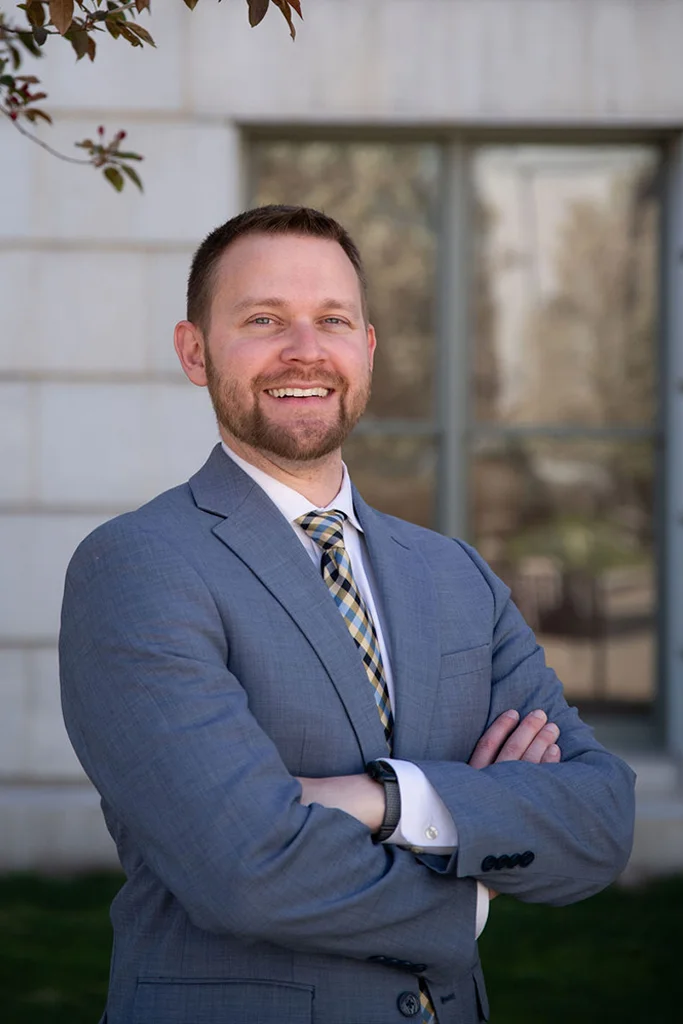
Reid DeChant at DeChant Law brings a distinctive perspective to professional license defense. His background is rooted in criminal defense and administrative proceedings, which means he understands how government agencies build cases, where procedural weaknesses tend to appear, and how to advocate effectively in front of decision-makers who hold extraordinary power over a client’s livelihood. That combination of skills translates directly into meaningful defense work when a social worker’s license, reputation, and career are on the line.
What Puts a Colorado Social Work License at Risk
Complaints against social workers in Colorado come from a wide range of sources: current or former clients, family members of clients, employers, colleagues, healthcare providers, courts, and even law enforcement. The Board is required to investigate credible complaints, and the mere fact that a complaint has been filed does not mean the allegations are accurate or that discipline is warranted. Understanding what kinds of conduct most commonly trigger investigations helps practitioners recognize when they need to act quickly.
- Criminal charges or convictions: Colorado law requires licensees to report criminal charges and convictions to DORA, and certain criminal matters, including DUI, assault, drug offenses, or crimes involving fraud or dishonesty, can trigger mandatory Board review regardless of the criminal outcome.
- Boundary violations: Complaints alleging inappropriate relationships with clients, dual relationships, or conduct that crosses professional boundaries are among the most serious matters the Board investigates and among the most difficult to defend without counsel.
- Confidentiality breaches: Improper disclosure of client information, whether intentional or inadvertent, can form the basis of a Board complaint and may run parallel to federal HIPAA considerations.
- Documentation deficiencies: Inadequate clinical records, failure to maintain proper documentation, or falsification of records are common grounds for disciplinary action, particularly in agency and clinical settings subject to audit.
- Supervision violations: Colorado has detailed requirements for supervised practice for LSWs and CSWs working toward licensure. Violations of supervision requirements, by either the supervisee or the supervisor, can result in Board action against either party.
- Scope of practice concerns: Providing services beyond the authorized scope of a social work license, including performing psychotherapy without proper credentials or practicing in areas requiring additional licensure, can lead to serious disciplinary exposure.
- Mandatory reporting failures: Social workers in Colorado are mandatory reporters of child abuse and neglect. A failure to report, whether disputed or not, can generate a complaint that flows simultaneously through child welfare channels and the Board.
- Impairment or substance use: Board investigations involving substance use or mental health impairment often intersect with the Colorado Peer Assistance Services Program, and navigating that intersection requires careful legal and strategic thinking from the outset.
Why DeChant Law for Colorado Professional License Defense
Professional license defense is a niche within administrative law that rewards attorneys who understand how government enforcement actually operates. Reid DeChant’s years as a public defender across Denver, Broomfield, and Adams County courtrooms gave him direct experience standing between government authority and individual clients in high-stakes proceedings. That experience shapes his approach to every professional license case, because the dynamics are more similar than they might initially appear. A licensing board investigation, like a criminal prosecution, involves a government agency with investigative resources, legal staff, and institutional momentum working toward a particular conclusion. The individual licensee on the other side of that process needs an advocate who has been through adversarial government proceedings and knows how to find the angles that shift outcomes.
Reid has handled cases ranging from misdemeanors and traffic offenses to serious violent felonies, including assault, domestic violence, strangulation, and charges carrying significant prison exposure. Case results from his work include a domestic violence harassment charge dismissed at trial in Adams County, multiple DUI cases dismissed outright, and assault charges resulting in not guilty verdicts. That track record reflects the kind of preparation and courtroom presence that matters whenever a client faces a formidable institutional opponent. His training at the Trial Lawyers College, founded by legendary trial attorney Gerry Spence, reinforced an approach built on genuine human connection and persuasive storytelling, qualities that translate into powerful advocacy whether the forum is a jury box or a Board hearing room. His memberships in the National Association of Criminal Defense Lawyers and the Colorado Criminal Defense Bar keep him current on legal strategy across the full range of proceedings his clients face.
For a social worker facing Board investigation, what matters most is having an attorney who will engage seriously with the substance of the allegations, protect your rights throughout the investigative process, and advocate with real conviction at every stage. That is what DeChant Law offers.
How the Colorado Board of Social Work Examiners Disciplinary Process Actually Works
When a complaint is filed against a Colorado social worker, the Board’s investigative staff at DORA conducts a preliminary review to determine whether the allegations fall within the Board’s jurisdiction and whether there is sufficient basis to open a formal investigation. If the complaint moves forward, the licensee receives written notice and is typically given an opportunity to respond. That initial response is often one of the most consequential documents in the entire proceeding, which is precisely why it should never be drafted without legal guidance.
Following the investigation, Board staff may recommend dismissal, an informal settlement, or referral for formal hearing. Informal settlements, sometimes called stipulated agreements, can resolve matters without a formal hearing, but they carry real consequences: admissions of misconduct, supervised practice requirements, mandatory continuing education, and a public record of discipline. Accepting a stipulated agreement without reviewing it carefully with an attorney can result in conditions that are far more burdensome than they initially appear.
Formal hearings are conducted before an administrative law judge through the Colorado Office of Administrative Courts. The administrative hearing process resembles civil litigation in structure, with discovery, witness examination, and evidentiary arguments, but the procedural rules differ from state district court in meaningful ways. Understanding those differences, and knowing how to use them strategically, requires familiarity with Colorado administrative procedure that goes beyond general litigation experience.
If the Board issues a final order, licensees have the right to seek judicial review in Colorado district court. That appellate pathway is available but narrow, and the strategic decisions made during the Board proceeding shape what is available on review. Documenting a strong record throughout the process is not just good practice but a legal necessity if review might eventually be sought.
Practitioners who receive a complaint notice should act immediately. Deadlines for response are real and often short. Gathering documentation, employment records, client files (to the extent permissible and relevant), supervision records, and communications relevant to the complaint should begin the moment an investigation is suspected. A Colorado social work license defense attorney can help identify what to preserve, what to say, and critically, what not to say before the investigation develops further.
Questions Colorado Social Workers Have About License Defense
What should I do the moment I receive a complaint notice from the Colorado Board?
The first step is to avoid responding immediately without legal counsel. Read the notice carefully, note any response deadlines, and contact a professional license defense attorney before you submit anything in writing to the Board. Your initial response creates a record that will follow the case throughout the proceeding.
Does the Board have to prove I did something wrong before it can discipline me?
The Board operates under a preponderance of the evidence standard in disciplinary proceedings, which means it must find it more likely than not that a violation occurred. This is a lower bar than the criminal standard of proof beyond a reasonable doubt. It is one reason why having experienced legal advocacy throughout the process matters significantly.
Can I lose my license even if the underlying complaint is exaggerated or false?
Yes. The outcome of a Board investigation depends heavily on how the licensee responds, what documentation exists, and how effectively the defense is presented. Exaggerated or false complaints can still result in discipline if the response is poorly managed or if the investigation surfaces other concerns. A strong defense from the outset helps prevent a complaint with weak underlying facts from gaining momentum.
If I am charged with a crime, do I have to report it to the Board?
Colorado licensees are required to self-report certain criminal charges and convictions to DORA within a specified timeframe. The reporting obligation and its timing can be technical, and the intersection of a criminal matter with a Board investigation creates layered strategic considerations. What you say in one proceeding can affect the other. This is a situation that genuinely requires coordinated legal advice.
What is the difference between an informal settlement and a formal hearing, and which is better?
An informal settlement resolves the matter without a formal hearing but typically requires admissions and acceptance of conditions. A formal hearing allows you to contest the allegations but carries the risk of a Board finding that may impose more serious discipline. Neither path is inherently better. The right choice depends on the strength of the evidence, the severity of the allegations, and the practitioner’s specific circumstances. This is a strategic decision that should be made with legal counsel.
Will a Board complaint become public record?
In Colorado, formal discipline imposed by the Board is generally public. Letters of concern are non-public, but stipulated agreements, orders of suspension, and revocations appear in public records that employers, credentialing bodies, and background check services can access. Understanding what resolution options create a public record, and which do not, is an important part of the strategic analysis in any license defense matter.
Can I continue practicing while a Board investigation is pending?
Generally yes, unless the Board issues an emergency suspension order, which requires a showing of immediate threat to public health or safety. Emergency suspensions are serious but not routine. In most investigations, the licensee continues working while the process unfolds, which makes it all the more important to manage the proceeding carefully rather than let it drag toward a hearing without strategic direction.
What happens if my social work license is revoked in another state?
Out-of-state discipline can trigger mandatory reporting obligations and may initiate a parallel investigation in Colorado even without a separate complaint. Colorado’s licensing statutes address discipline imposed by other jurisdictions, and Board staff will consider out-of-state disciplinary history in evaluating Colorado complaints. If you have been disciplined elsewhere, disclosing that history and framing it appropriately requires careful attention.
Can a criminal defense attorney also handle my Board proceeding, or do I need two separate lawyers?
When a criminal charge and a Board investigation arise from the same set of facts, having a single attorney who understands both proceedings can be a significant advantage. The ability to coordinate strategy across both forums, avoid inconsistent positions, and manage parallel timelines is genuinely valuable. DeChant Law handles both criminal defense and professional license proceedings, which means the strategic picture stays unified rather than fragmented between two separate legal teams.
What if I believe my employer filed the complaint in retaliation for a protected report I made?
Colorado has whistleblower protections in various employment contexts, and retaliatory complaints do occur. Whether those protections provide a viable defense in a Board proceeding, as opposed to a separate civil action against the employer, depends on the specific facts. Documenting the timeline and circumstances of the complaint, alongside the employment history, is an important early step if retaliation is suspected.
How long does a Board investigation typically take in Colorado?
Timelines vary considerably depending on the complexity of the complaint, the Board’s current caseload, and whether the matter proceeds to a formal hearing. Investigations can range from several months to well over a year. During that time, the uncertainty itself can be professionally and personally difficult. Having legal representation allows a licensee to take a more active role in moving the process forward and understanding where it stands.
Serving Colorado Social Workers Across the Front Range and Beyond
DeChant Law works with social workers throughout Colorado who are facing licensing board investigations, disciplinary proceedings, or related criminal matters that threaten their professional standing. Reid represents clients across the Denver metro area, including practitioners working in Aurora, Lakewood, Arvada, Westminster, Thornton, and Northglenn. The firm serves social workers in Boulder and the surrounding communities, including Lafayette, Louisville, Longmont, and Broomfield. Practitioners based in the southern suburbs, including Englewood, Littleton, Centennial, Highlands Ranch, and Parker, are within the firm’s regular service area. DeChant Law also assists licensees in Douglas County, Jefferson County, Adams County, and Arapahoe County, which together encompass a significant portion of the Colorado social work community. For practitioners outside the immediate metro area in communities such as Fort Collins, Greeley, Pueblo, Colorado Springs, Castle Rock, and Grand Junction, remote consultation and representation before the Board is available regardless of where in the state the licensee is based, since Board proceedings are conducted at the state level through DORA and the Office of Administrative Courts.
Speak with a Colorado Social Work License Defense Attorney Today
A Board investigation does not resolve itself. It builds, develops, and reaches conclusions based on the record that gets created along the way. The social workers who come through these proceedings in the strongest position are the ones who engaged legal counsel early, protected themselves during the investigative phase, and had an advocate in the room who understood what was at stake. Reid DeChant at DeChant Law is a Colorado social work license defense attorney who brings real adversarial experience to proceedings that require exactly that kind of preparation and commitment. If you have received a complaint notice, been contacted by a DORA investigator, or learned that your license may be under review, call DeChant Law to schedule a consultation. The earlier that conversation happens, the more options remain available.