
Colorado Electrician License Defense Lawyer
An electrician’s license is not just a credential. For most licensed electrical contractors and journeymen in Colorado, it is the entire foundation of their livelihood. When the Colorado State Electrical Board opens an investigation, files a complaint, or threatens license suspension, the stakes are as serious as any criminal prosecution. A Colorado electrician license defense lawyer handles the intersection of administrative law, occupational licensing, and the technical standards that govern electrical work in this state. That intersection is narrow, and most attorneys never work there.
Colorado’s electrical licensing system is administered through the Division of Professions and Occupations under the Department of Regulatory Agencies, commonly referred to as DORA. The Board has broad authority to investigate complaints, compel testimony, issue citations, impose fines, and suspend or revoke licenses. Proceedings before the Board are administrative rather than criminal, but the consequences of losing can be just as career-ending. An electrician who loses their license cannot work legally in their trade and cannot supervise others who do.
What makes these proceedings treacherous is that many licensed electricians treat them like a conversation with a building inspector. They respond to investigator inquiries without counsel, submit written statements without understanding the implications, and show up to hearings unprepared for the procedural formality of an administrative tribunal. By then, the record is already built against them.
What the Colorado State Electrical Board Can Actually Do to Your License
The Board’s disciplinary tools range from informal letters of concern to full license revocation. Understanding where your situation falls on that spectrum matters from the very first contact. A letter of admonition placed in your public record is different from a suspension that leaves you unable to work for months. A civil penalty is different from a consent agreement that conditions your continued licensure on supervision or retesting.
Revocation is the most severe outcome, but suspension and probationary conditions can be equally disruptive in practice. A contractor whose license is placed on probation may be prohibited from bidding on certain project types, required to submit to inspections, or obligated to report to the Board on a schedule. Any violation of those conditions becomes a new basis for more serious discipline. Electricians who sign consent agreements without understanding the embedded conditions often find themselves back before the Board within a year.
Colorado law also allows the Board to pursue civil penalties separate from license discipline. A single investigation can result in both a monetary fine and a license sanction running simultaneously. If the underlying conduct also involves a criminal allegation, such as fraudulent billing, identity theft related to contracts, or workers’ compensation fraud, the administrative case and the criminal case can proceed on parallel tracks. DeChant Law has the background to handle the criminal exposure while defending the administrative license matter.
Why DeChant Law Is the Right Firm for Colorado Electrical License Defense
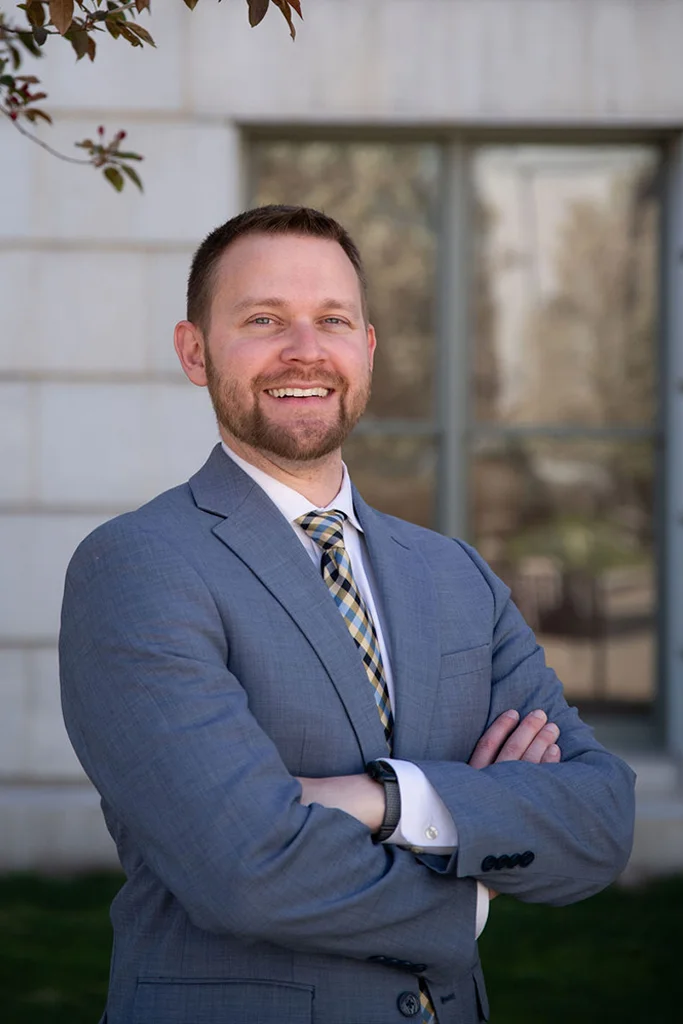
Reid DeChant has built his practice on the willingness to step into proceedings where the government holds institutional advantages and fight them on the merits. His background as a former public defender means he spent years navigating prosecutorial and administrative systems that are designed to move toward conviction or discipline, not toward fairness by default. That experience directly transfers to license defense work, where investigators build files, agency attorneys present evidence, and the burden of proof operates in ways that are unfamiliar to electricians who have never faced a regulatory proceeding.
Reid trained at the Trial Lawyers College, a program founded by legendary attorney Gerry Spence that emphasizes narrative, authenticity, and the human reality behind every legal matter. In licensing defense, that means the hearing officer or Board panel does not just see a file. They hear from a real professional whose career and reputation are on the line, someone whose story matters. Reid is recognized by the National Association of Criminal Defense Lawyers and the Colorado Criminal Defense Bar, and he maintains the peer relationships and continuing engagement with cutting-edge defense strategy that matters when the agency across the table has institutional experience and resources of its own.
Reid has won outright dismissals in cases where government agencies believed their position was airtight, including multiple dismissed DMV Express Consent hearings and dismissed or not-guilty verdicts in serious criminal and domestic cases. The willingness to challenge government action, demand strict adherence to procedural requirements, and take a matter to hearing rather than accept an unfavorable settlement defines the approach at DeChant Law.
Common Grounds for Colorado Electrical License Disciplinary Proceedings
- Workmanship complaints from inspections: A failed inspection that results in a formal DORA complaint can escalate quickly, particularly when the inspector documents code violations in writing and the Board receives those records as part of an investigation file.
- Unlicensed activity allegations: Performing electrical work beyond the scope of your specific license classification, or supervising unlicensed workers in ways that violate Colorado’s supervision ratios, can trigger complaints from competitors, building officials, or DORA’s own enforcement staff.
- Permit and inspection violations: Pulling permits under a licensed name for work performed by unlicensed personnel, or completing work without required inspections, is a pattern DORA investigators look for specifically when auditing contractor records.
- Criminal conviction reporting: Colorado law requires licensed electricians to report certain criminal convictions to DORA within a specified period. Failure to report, or a conviction for certain offenses, can independently trigger license review regardless of whether the conviction relates to electrical work.
- Fraudulent billing or insurance claims: Overbilling on contracts, submitting inflated insurance claims following damage, or billing for work not performed are grounds for both criminal prosecution and administrative discipline.
- Violation of consent agreement conditions: Electricians who previously resolved a Board matter through a consent agreement and then violate its conditions face expedited proceedings where the prior record is used as an aggravating factor.
- Injuries or property damage traced to electrical work: When a fire, electrocution, or other serious casualty is investigated and traced back to electrical installation or repair, DORA may open a parallel proceeding even if no criminal charges follow.
What to Do the Moment You Learn DORA Is Investigating You
The single most important thing to understand is that DORA investigators are not neutral fact-finders working on your behalf. Their job is to gather evidence that supports or refutes the complaint filed against you. When an investigator contacts you by phone, letter, or in person, you are not required to provide a detailed oral statement on the spot. You are not required to surrender documents without understanding what is being requested and why. Anything you say to an investigator becomes part of the administrative record and can be used against you in the disciplinary proceeding.
The first practical step is to preserve every document related to the project, client, or conduct at issue. Do not discard permits, inspection records, invoices, contracts, or correspondence. Do not delete texts or emails. If the complaint relates to a specific job, gather the project file in its entirety before you do anything else. The ability to reconstruct a timeline of what work was done, when permits were pulled, when inspections occurred, and what the client was told often determines the outcome of a DORA investigation.
Administrative proceedings in Colorado that involve license discipline are handled through the Office of Administrative Courts, a separate agency within the judicial branch that assigns Administrative Law Judges to contested matters. If your case proceeds beyond the investigation stage, you will have an opportunity for a hearing before an ALJ, but the procedural rules governing discovery, evidence, and argument in those proceedings are not intuitive. The Lindsey-Flanigan Courthouse in Denver handles criminal matters, but ALJ hearings typically occur at the OAC offices or in the agency’s designated facilities. Knowing which forum applies to your situation and what procedures govern it is not something to figure out on the day of the hearing.
Contact an attorney before you respond to any DORA inquiry, before you sign anything the investigator presents to you, and before you agree to any voluntary interview. Even if the investigator frames the contact as routine or low-stakes, the legal posture you establish at the outset shapes everything that follows.
How Administrative License Proceedings Differ From Criminal Cases
Electricians who have some familiarity with the criminal justice system sometimes assume that administrative proceedings carry similar protections. They do not, at least not in the same way. In a criminal case, the prosecution must prove guilt beyond a reasonable doubt. In a DORA disciplinary proceeding, the agency typically needs to establish a violation by a preponderance of the evidence, meaning more likely than not. That is a substantially lower bar.
The right against self-incrimination still exists in an administrative proceeding if there is parallel criminal exposure, and invoking it properly requires counsel who understands both tracks simultaneously. Colorado courts have addressed the interplay between administrative subpoenas and Fifth Amendment protections in professional license cases. Getting that wrong means providing testimony in the administrative case that is then usable in a criminal prosecution, or vice versa.
There is also no automatic right to appointed counsel in a license defense proceeding the way there is in a criminal case. The electrician facing Board discipline is entirely responsible for securing their own representation. That asymmetry matters because the agency has staff attorneys who work these proceedings regularly. Walking into an ALJ hearing without counsel, against agency attorneys who handle these matters as their full-time work, rarely produces favorable results regardless of the merits of the underlying defense.
One practical distinction worth understanding: DORA settlements and consent agreements are public records. A resolution that appears to be favorable because it avoids formal revocation may still appear on your license history in a way that affects future bids, employer relationships, or bonding. Evaluating the long-term consequences of any proposed resolution is part of the representation DeChant Law provides.
Questions Electricians Ask About Colorado License Defense
What triggers a DORA investigation against a licensed electrician?
Complaints can come from property owners, general contractors, competing electricians, municipal building departments, insurance companies, or DORA’s own enforcement inspectors. A failed inspection, a client dispute, a workers’ compensation claim, or a criminal referral can all initiate the process. DORA also conducts proactive audits of permit records and contractor compliance in some circumstances.
Do I have to talk to the DORA investigator?
You are not required to provide a voluntary oral statement. DORA investigators have authority to compel certain records through administrative subpoena, but the right to counsel before participating in any interview or providing written statements is real and should be exercised. Contact an attorney before any substantive contact with the investigator.
Can a criminal conviction cause me to lose my electrical license in Colorado?
Yes. Colorado law allows the Board to discipline a licensee based on a criminal conviction, particularly where the offense relates to the practice of electrical work or involves dishonesty, fraud, or moral turpitude under the applicable regulatory framework. The reporting obligation exists separately and failure to report a conviction can itself be a disciplinary violation.
How long does a DORA disciplinary process take?
The timeline varies considerably. An informal resolution through a consent agreement can occur within a few months of initial contact. A contested case that proceeds to an ALJ hearing can take a year or more, depending on scheduling, the complexity of the evidence, and whether any interlocutory matters arise. During that period, unless the Board issues an emergency suspension order, your license typically remains active.
What is the difference between a letter of admonition and a formal citation?
A letter of admonition is a formal written warning that goes into your public license record but does not restrict your ability to work. A formal citation typically accompanies a civil penalty and may trigger additional reporting obligations. Both can affect future bond applications, insurance rates, and how clients or general contractors perceive your record when they check your license status.
If a building official referred the matter to DORA, does that make the case harder to fight?
Not necessarily. Building official referrals carry some institutional weight because they come from a government source, but they are not conclusive. Inspection reports can be challenged on technical grounds, code interpretations vary, and the circumstances of the underlying work often provide context that the referral letter does not capture. A thorough review of the project record frequently identifies grounds to contest the agency’s characterization of the work.
Can my license be suspended before I have a hearing?
In Colorado, the Board has authority to seek emergency suspension where it determines there is an immediate danger to the public. These emergency orders can be issued before a full hearing, though the licensee has the right to contest them on an expedited basis. Emergency suspensions are relatively rare and typically reserved for situations involving documented safety hazards, serious criminal allegations, or prior disciplinary history.
Will a DORA consent agreement affect my ability to get bonded or insured?
Potentially, yes. Surety bond companies and commercial insurers that serve electrical contractors often review license history as part of underwriting. A consent agreement, particularly one that includes admissions or conditions, can affect your ability to obtain or renew bonding at standard rates. This is one reason the precise language of any proposed resolution matters so much and why accepting a proposed consent agreement without reviewing it carefully with counsel can create downstream consequences that are not obvious at the time.
What happens if I just ignore the DORA investigation and don’t respond?
Failure to cooperate with a Board investigation is independently grounds for discipline in Colorado, separate from whatever the underlying complaint alleged. A licensee who does not respond to investigator correspondence, fails to appear at scheduled interviews after proper notice, or ignores formal subpoenas can face additional sanctions layered on top of the original complaint. Ignoring the process does not make it stop; it makes the outcome worse.
Can DeChant Law handle both the DORA proceeding and any related criminal charge simultaneously?
Yes. Reid DeChant’s background in criminal defense means he is positioned to manage both tracks in cases where the conduct underlying a Board complaint also involves potential criminal exposure. Coordinating strategy across the administrative and criminal proceedings is critical because statements, documents, and outcomes in one forum can directly affect the other.
Colorado Electrician License Defense Representation Across the Front Range and Beyond
DeChant Law represents licensed electricians and electrical contractors facing DORA investigations and Board proceedings throughout Colorado. In the Denver metro area, that includes clients working in Denver proper, Aurora, Lakewood, Thornton, Arvada, Westminster, Commerce City, Englewood, and Centennial. Along the Front Range corridor, the firm serves electricians in Boulder, Longmont, Loveland, Fort Collins, Greeley, and Pueblo. On the western slope and mountain communities, representation extends to clients in Grand Junction, Glenwood Springs, Steamboat Springs, and the resort corridors of Summit and Eagle counties where electrical contractors work on high-value residential and commercial projects. Licensed electricians in Colorado Springs, Castle Rock, Parker, Highlands Ranch, and the southern suburbs of the metro area are also served. Because DORA’s jurisdiction is statewide and Board proceedings often occur in Denver regardless of where the underlying work was performed, the geographic location of the job site rarely limits the firm’s ability to represent a client effectively.
Colorado Electrical License Defense Attorney Ready to Review Your Case
A DORA investigation does not resolve itself favorably on its own. The administrative process is designed to move toward a finding, and without representation that understands both the procedural rules and the technical context of electrical licensing, that finding is more likely to go against you. Reid DeChant is a Colorado electrical license defense attorney who takes license defense as seriously as any criminal case, because the consequences of losing one are just as real. Call DeChant Law today to schedule a consultation and discuss where your matter stands before the next deadline passes.