Colorado Professional License Defense Lawyer
A professional license represents years of education, training, and sacrifice. When that license is threatened, whether by a complaint filed with a licensing board, a criminal charge, or a disciplinary investigation, everything built on that foundation is suddenly at risk. For physicians, nurses, teachers, real estate agents, contractors, therapists, social workers, and dozens of other licensed professionals across Colorado, a board action can end a career faster than any civil lawsuit. Working with a Colorado professional license defense lawyer who understands both the regulatory process and the criminal justice system is not optional at that point. It is the difference between keeping your livelihood and losing it.
Colorado’s professional licensing boards operate largely outside the public eye, yet they wield enormous authority. The Colorado Department of Regulatory Agencies oversees dozens of boards, each with its own procedural rules, standards of conduct, and investigative processes. A complaint filed against a nurse with the Colorado Board of Nursing triggers a process that moves independently of anything happening in a courtroom. A teacher facing allegations before the Colorado Department of Education’s Educator Licensing division confronts a separate bureaucratic structure with its own evidentiary standards. These boards do not follow criminal procedures, and they do not give you the same procedural protections a court would. Knowing how to navigate that landscape requires someone who has worked in adversarial proceedings at every level.
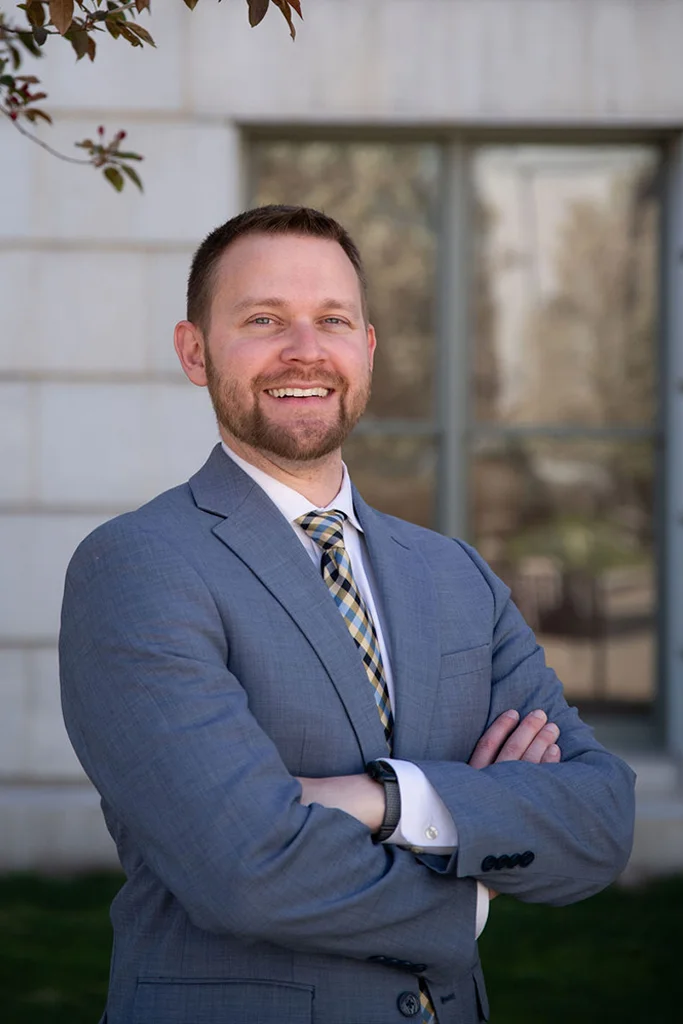
Reid DeChant’s background as a former public defender who trained at the Trial Lawyers College shapes every aspect of how DeChant Law approaches license defense cases. Understanding how investigators build files, how hearing officers weigh evidence, and how to challenge the factual basis of a complaint comes from real courtroom and hearing room experience, not just familiarity with administrative law textbooks.
Professional License Defense by Profession
Choose your profession to learn how a licensing investigation or board complaint may affect your practice in Colorado.
Colorado license defense
- Colorado Chiropractic License Defense
- Colorado CRNA License Defense
- Colorado Dental Hygienist License Defense
- Colorado Dental License Defense
- Colorado Funeral and Mortuary Science License Defense
- Colorado Funeral Director License Defense
- Colorado Medical License Defense
- Colorado Medical Resident License Defense
- Colorado Mortician License Defense
- Colorado Nurse Practitioner License Defense
- Colorado Nursing License Defense
- Colorado Pharmacy License Defense
- Colorado Physician Assistant License Defense
- Colorado Physician License Defense
- Colorado Podiatry License Defense
- Colorado Registered Nurse License Defense
Denver license defense
- Denver Chiropractic License Defense
- Denver CRNA License Defense
- Denver Dental Hygienist License Defense
- Denver Dental License Defense
- Denver Direct-Entry Midwife License Defense
- Denver Funeral and Mortuary Science License Defense
- Denver Funeral Director License Defense
- Denver Medical License Defense
- Denver Medical Resident License Defense
- Denver Mortician License Defense
- Denver Nurse Practitioner License Defense
- Denver Nursing License Defense
- Denver Pharmacy License Defense
- Denver Physician Assistant License Defense
- Denver Physician License Defense
- Denver Podiatry License Defense
- Denver Professional License Defense
- Denver Registered Nurse License Defense
- Denver Surgical Assistant and Surgical Technology License Defense
What Triggers a Professional License Investigation in Colorado
Board complaints come from many directions, and professionals are often blindsided by an investigation they did not see coming. A disgruntled patient, a terminated employee, a business competitor, or even an anonymous tip can initiate a review that the licensing board is then obligated to investigate. In some cases, a criminal arrest or charge automatically triggers notification to the relevant licensing authority. Colorado law requires certain regulated professionals to self-report criminal charges within a specific timeframe, and failure to self-report can itself become grounds for discipline, compounding whatever the original issue was.
Employment disputes are another common source of complaints. A nurse dismissed from a hospital system who then becomes the subject of a mandatory report to the Board of Nursing, a contractor whose client disputes the quality of finished work and files a complaint with the Colorado Department of Regulatory Agencies, a therapist accused of a boundary violation by a former patient, all of these scenarios initiate processes that feel more informal than a courtroom but carry consequences just as serious. License revocation, suspension, probation, required remediation, and public reprimand can all appear in the final record, and in most cases that record is publicly searchable.
The timing of intervention matters enormously. Engaging a Colorado professional license defense attorney early in the investigation, before any response is submitted to the board, before any voluntary interview takes place, and before any formal answer is filed, gives the defense the most options. Statements made to investigators can be used against you in subsequent proceedings. Failing to understand the scope of what is being investigated before responding can inadvertently expand it.
Licensing Boards and Common Proceedings DeChant Law Handles
- Medical and Healthcare Professionals: Physicians, nurse practitioners, registered nurses, dentists, pharmacists, and other healthcare providers face complaints before the Colorado Medical Board or the Colorado Board of Nursing, among others, often involving allegations of standard-of-care violations, prescription irregularities, or conduct issues that overlap with criminal investigations.
- Educators and School Employees: Teachers and administrators facing allegations before the Colorado Department of Education’s Educator Licensing division risk revocation of the licenses required to work in any Colorado public or licensed private school, a consequence that extends statewide.
- Real Estate Professionals: Agents, brokers, and appraisers regulated by the Colorado Division of Real Estate face complaints alleging fraud, misrepresentation, or failure to disclose, matters that frequently also carry civil and even criminal dimensions.
- Mental Health and Social Work Licensees: Licensed professional counselors, licensed clinical social workers, marriage and family therapists, and psychologists face complaints before their respective boards under the Colorado Mental Health Practice Act, with allegations frequently involving boundary violations or documentation failures.
- Contractors and Trades Professionals: Electricians, plumbers, and general contractors regulated by the Division of Professions and Occupations face complaints related to workmanship disputes, code violations, or unlicensed activity allegations.
- Law Enforcement and Security Professionals: Peace officers certified through POST (Peace Officer Standards and Training) in Colorado face decertification proceedings separate from any criminal or employment action, with POST investigations running independently of agency-level disciplinary processes.
- Criminal Charges That Affect Licensure: Any Colorado licensed professional arrested for DUI, assault, drug offenses, theft, or other crimes risks automatic reporting obligations and board scrutiny, regardless of how the criminal case ultimately resolves. Handling the criminal defense with an eye toward licensure consequences requires someone who understands both systems simultaneously.
How Colorado Board Investigations Actually Unfold
Most Colorado licensing board investigations begin with an intake review. The board’s staff counsel or investigative unit reviews the complaint to determine whether it falls within the board’s jurisdiction and whether it states facts that, if true, would constitute a violation. Many complaints are dismissed at this stage. When the board proceeds, it typically notifies the licensee and requests a written response. That initial response is not a casual communication. It is a formal document that investigators will scrutinize, compare against other evidence, and potentially use in any subsequent hearing.
If the investigation moves forward after the initial response phase, the board may conduct interviews, request records, and in some cases consult with expert reviewers. Healthcare boards frequently rely on peer review panels to assess whether clinical conduct met the standard of care. What emerges from that process is either a recommendation to dismiss the complaint or a proposed stipulation and final agency order, which is an agreement to accept certain findings and discipline in exchange for resolution without a formal hearing. Accepting a stipulation has lasting consequences, including a public record of discipline. Whether to accept or contest a proposed order is one of the most consequential decisions a licensed professional will face, and it is a decision that deserves careful analysis from someone who has studied the board’s track record with these cases.
If no stipulation is reached, the case proceeds to a formal administrative hearing before an administrative law judge through the Colorado Office of Administrative Courts. That hearing looks more like a bench trial than a typical government proceeding. Evidence is presented, witnesses testify, and both sides make legal arguments. The hearing officer’s recommended decision then goes back to the board, which makes the final licensing determination. Appeals from final board orders go to the Colorado Court of Appeals, a process that adds time and expense but is available when the board has acted improperly or the decision lacks evidentiary support.
Why Reid DeChant’s Background Fits This Work
Defending a professional license case is not a task for a generalist who occasionally files a response to a board complaint. The overlap between administrative proceedings and criminal law is where Reid DeChant’s experience becomes directly relevant. As a former public defender who handled cases across Denver, Broomfield, and Adams County courtrooms, Reid spent years learning how investigators build files, how to challenge the factual and legal basis of government allegations, and how to tell a client’s story in a way that changes outcomes.
The Trial Lawyers College, where Reid trained under the method developed by legendary attorney Gerry Spence, emphasizes something that licensing board hearings demand just as much as jury trials: genuine narrative advocacy. A hearing officer deciding whether a nurse should lose her license is not just evaluating regulation citations. That officer is forming a judgment about a human being. Reid’s approach, rooted in authentic client relationships and honest storytelling, applies directly to that dynamic.
Reid is a member of the National Association of Criminal Defense Lawyers and the Colorado Criminal Defense Bar, associations that keep him connected to the best defense strategies being developed nationally. His recognition by peer attorney rating organizations reflects the respect his work has earned across the Colorado legal community. For clients whose professional licenses are connected to situations that also involve criminal charges, having one attorney who can coordinate strategy across both proceedings is a significant advantage. Decisions made in the criminal case affect the license defense, and vice versa. Reid builds strategy with both fronts in view.
Questions Professionals Ask About Colorado License Defense
What should I do the moment I learn I am under investigation by a Colorado licensing board?
Do not respond to the board without legal counsel. The initial response the board requests seems like a routine formality, but it is not. Contact a Colorado professional license defense attorney before submitting any written response, agreeing to any interview, or producing any records. The Office of Administrative Courts in Denver handles formal hearings, and a lawyer familiar with that process can help you understand what stage the investigation is actually in before you say anything.
Can a criminal charge in Colorado automatically affect my professional license?
Yes. Many Colorado licensing statutes require self-reporting of criminal charges within a defined period, and some boards receive automatic notice from law enforcement or prosecutors when a licensee is charged. The boards assess charges independently and do not wait for the criminal case to resolve before beginning their own review. A DUI, a drug charge, or an assault allegation can all trigger board scrutiny even if charges are later reduced or dismissed.
What is the difference between a license suspension and a license revocation in Colorado?
A suspension is temporary, lasting a defined period or until conditions are met, such as completing remediation or passing an evaluation. A revocation terminates the license entirely. In some cases, a revoked licensee may reapply after a waiting period, but revocation triggers public records and often a presumption against reinstatement. Probation and public reprimand are lesser sanctions that still appear in public records and can affect employment and professional reputation.
Do Colorado licensing board proceedings follow the same rules as criminal court?
No. Administrative board proceedings are governed by the Colorado Administrative Procedure Act, not the Colorado Rules of Criminal Procedure or the Rules of Evidence as applied in criminal courts. The standard of proof is lower than in criminal cases. Hearsay rules are more flexible. Constitutional protections that apply in criminal settings, like the right to a public defender, do not apply in board proceedings. These differences make it easier for boards to pursue findings that criminal courts would reject.
If the criminal charges against me are dismissed, will the board drop its investigation?
Not necessarily. The board applies its own evidentiary standards and can proceed even when criminal charges are dismissed, reduced, or result in acquittal. A not-guilty verdict in criminal court is powerful evidence, but it does not bind the board. Conversely, a deferred judgment, a plea to a lesser offense, or a diversion agreement can still trigger board action despite never resulting in a criminal conviction. The relationship between criminal case resolution and board action is not automatic in either direction.
Can a Colorado licensing board discipline me for conduct that happened in another state?
Yes. If you hold a Colorado license, the Colorado board has jurisdiction over your fitness to hold that license regardless of where the underlying conduct occurred. Many boards also have reciprocal reporting arrangements through national licensing databases. A discipline action in another state will frequently trigger a review by the Colorado board, even if you were not practicing in Colorado at the time.
How long does a Colorado licensing board investigation typically take?
It varies significantly by board and complexity. Some complaint reviews are resolved within months. Others, particularly those involving clinical review panels or parallel criminal proceedings, can stretch considerably longer. During that period, a licensee typically remains active unless the board seeks an emergency suspension based on immediate public safety concerns, which requires a different and more urgent response.
What happens to my license if I cooperate fully with the board investigation?
Cooperation is a factor boards consider, but it does not guarantee a favorable outcome and can actually work against a licensee who cooperates without understanding the scope of what is being investigated. Providing documents or statements that go beyond what is requested, or waiving procedural rights without understanding them, can create problems that a more measured approach would have avoided. Cooperation should happen with legal guidance, not in place of it.
Can the hearing outcome affect my malpractice or professional liability insurance?
Potentially, yes. Insurers who cover licensed professionals often require disclosure of board actions. A formal finding of a standard-of-care violation, particularly for healthcare professionals, can affect insurability and premium rates. In some professions, maintaining insurance is itself a condition of licensure, creating a compounding problem if coverage becomes unavailable or unaffordable after a board action.
Is it worth contesting a proposed stipulation if the board is offering relatively minor discipline?
That depends on factors specific to your profession, employer, and future plans. A “minor” public reprimand that appears on a searchable state database can disqualify you from hospital privileges, prevent credentialing with insurance panels, create problems with future licensure applications in other states, or surface in background checks that affect employment. What looks like a manageable settlement today can have consequences for years. The decision deserves a complete analysis from someone who understands how board records follow professionals through their careers.
Protecting Colorado Licensed Professionals Across the State
DeChant Law represents licensed professionals facing board investigations and disciplinary proceedings throughout Colorado. From the Denver metro area, including clients in Aurora, Lakewood, Englewood, Commerce City, Thornton, Westminster, and Arvada, through the northern communities of Fort Collins, Greeley, Longmont, and Loveland, and across the western slope into Grand Junction, Glenwood Springs, and Durango, professional license cases arise wherever licensed work is performed. DeChant Law also serves clients in the Colorado Springs and Pueblo corridor to the south, the mountain communities of Breckenridge, Frisco, Steamboat Springs, and Vail, and the eastern plains communities of Pueblo, Lamar, and Sterling. When a Colorado license is at stake, geography does not limit the representation available to you.
Many clients first contact DeChant Law because of a criminal charge, and they learn during that conversation that the charge also threatens a professional license they hold. Others reach out when a board complaint arrives. Either way, the entry point matters less than what happens next, which is building a coordinated response that accounts for every forum where the situation will be decided.
Colorado Professional License Defense Attorney Ready to Help
Reid DeChant is a Colorado professional license defense attorney who brings genuine courtroom and hearing room experience to a practice area where that experience is rare. The combination of trial work as a former public defender, training at the Trial Lawyers College, and a practice focused on defending people against government action gives DeChant Law a distinct vantage point for clients whose licenses are under threat. Whether the challenge comes from a board complaint, a parallel criminal charge, or both, the goal is the same: protecting the career you have built and the license that makes it possible. Reach out to DeChant Law to schedule a consultation and talk through what is happening and what your options actually are.