
Colorado Optometry License Defense Lawyer
An optometry license represents years of education, clinical training, and professional investment. When that license comes under scrutiny from the Colorado State Board of Optometry, the process moves quickly and the consequences are permanent. A complaint that results in suspension or revocation does not just interrupt your practice; it ends it. Optometrists who receive a Board notice sometimes treat it as a paperwork issue or assume cooperation will resolve things. That assumption has cost careers. What the Board initiates is a formal regulatory proceeding with real investigative authority, and the outcome can follow you to any state where you hold or apply for licensure.
A Colorado optometry license defense lawyer represents a very different kind of client than a criminal defendant, but the stakes are comparable. You have built a professional identity around your license. Patients depend on you. Staff depend on you. The income you have structured your life around depends on you maintaining the right to practice. When a complaint or investigation threatens that, the decisions you make in the early stages, including whether to respond to the Board at all, what to say, and how to position your defense, often determine the outcome more than anything that happens later.
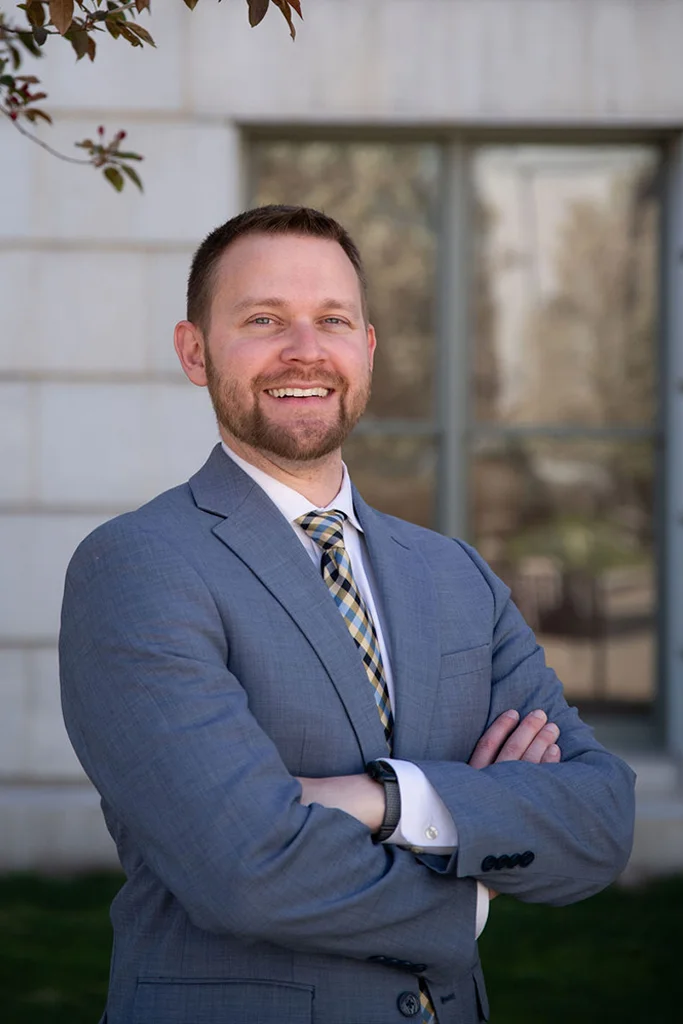
DeChant Law works with licensed healthcare professionals in Colorado facing regulatory proceedings, Board investigations, and disciplinary actions. Reid DeChant’s background as a trial attorney with extensive experience before administrative tribunals and Colorado courts translates directly to professional license defense, where advocacy, preparation, and the willingness to challenge government action matter more than most professionals expect.
What Colorado Optometry Board Investigations Actually Involve
The Colorado State Board of Optometry operates under the Division of Regulatory Agencies (DORA) and has authority to investigate complaints, conduct hearings, and impose discipline ranging from a letter of admonition to full revocation of licensure. When a complaint is filed against an optometrist, whether by a patient, a former employee, a competitor, an insurer, or a law enforcement agency, the Board opens a file and initiates an investigation through the Office of Investigations.
At this stage, many optometrists receive a letter asking them to respond to the allegations. This letter may appear routine. It is not. Anything you submit to the Board becomes part of your official record and can be used in subsequent proceedings. Responding without counsel, or submitting records without understanding how they will be interpreted, can harden a case against you even when the underlying conduct was defensible or the complaint was exaggerated.
If the Board’s investigation proceeds, the matter may move to a formal complaint filed with the Office of Administrative Courts, where an administrative law judge presides over an evidentiary hearing. That hearing functions like a trial. Witnesses testify. Documents are admitted into evidence. The Board’s legal team presents its case, and you have the right to present your own defense, cross-examine witnesses, and challenge the sufficiency of the evidence. Having a Colorado optometry license defense attorney who is genuinely comfortable in adversarial proceedings, not just paperwork management, matters at this stage in ways that are hard to overstate.
License Issues That Bring Colorado Optometrists Before the Board
- Scope of practice violations: Colorado law defines the authorized scope of optometric practice, including therapeutic pharmaceutical agents and specific procedures. Allegations that a practitioner performed procedures outside that scope are among the most common grounds for Board investigations.
- Prescribing and controlled substance concerns: Optometrists in Colorado have prescribing authority for certain medications. Complaints involving inappropriate prescribing, record-keeping deficiencies in prescription documentation, or referrals for controlled substances that draw law enforcement attention can trigger both Board and criminal investigations simultaneously.
- Patient record deficiencies: The Board requires adequate clinical documentation. Audit findings, insurer reviews, or patient complaints that reveal inconsistent, incomplete, or altered records frequently form the core of Board proceedings.
- Insurance fraud allegations: Billing disputes with insurers, including Medicaid and Medicare, sometimes generate referrals to the Board in addition to civil or criminal fraud investigations. These cases require coordination between a license defense attorney and counsel handling the parallel proceedings.
- Criminal convictions or charges: A conviction, guilty plea, or deferred judgment in a criminal matter may trigger mandatory reporting obligations to the Board and independent disciplinary proceedings. The same facts that were resolved in the criminal case can be relitigated in the regulatory forum.
- Boundary and ethical violations: Complaints involving inappropriate relationships with patients, sexual misconduct allegations, or conduct that falls below professional standards are treated with particular seriousness by the Board and often result in expedited proceedings.
- Continuing education non-compliance: Renewal of Colorado optometry licensure requires documented completion of continuing education requirements. Discrepancies or misrepresentations in CE records can result in disciplinary action separate from clinical performance concerns.
- Multi-state licensure complications: Optometrists licensed in multiple states face a cascading problem when one state imposes discipline. Most states require disclosure of adverse action in other jurisdictions, and failure to disclose can itself become a separate ground for discipline.
Why Reid DeChant Is the Right Choice for Colorado Professional License Defense
Professional license defense is not a passive practice. The Board is not neutral. The investigators work for the agency that is evaluating your conduct, and the process is structured to reach a conclusion, not to protect your career. What you need is someone who approaches a Board proceeding the same way they approach a courtroom: with preparation, skepticism toward the government’s narrative, and a willingness to contest every element that warrants challenge.
Reid DeChant trained at the Trial Lawyers College, founded by legendary attorney Gerry Spence, where the curriculum centers on authentic storytelling and genuine human connection in adversarial proceedings. That training matters here because professional disciplinary hearings before administrative law judges are not won on paperwork alone. They are won when a decision-maker understands who the practitioner actually is, what happened, and why the Board’s characterization does not hold up. Most lawyers who dabble in administrative law submit written responses. Reid builds a defense and, when necessary, tries a case.
Reid’s background as a public defender gave him extensive experience facing government agencies that hold significant power over individuals’ lives. He represented clients charged with crimes ranging from DUI to serious felonies across Denver, Broomfield, and Adams County courtrooms, and he has earned Not Guilty verdicts at trial and dismissals on motions in cases other attorneys might have settled. That willingness to take cases all the way through an adversarial proceeding rather than accepting the first offer from the government translates directly to professional license work, where the Board often expects practitioners to accept stipulated agreements that are worse than what could be achieved through vigorous defense. Reid is a member of the National Association of Criminal Defense Lawyers and the Colorado Criminal Defense Bar, staying current on defense strategy across practice areas. His recognition from national attorney rating organizations reflects a standard of practice he applies regardless of the type of proceeding he is handling.
How to Respond When the Board Contacts You
The moment you receive any communication from the Colorado State Board of Optometry or from DORA’s Office of Investigations, the clock starts. Colorado’s regulatory process has defined response deadlines, and missing them can result in a default finding or a waiver of defenses you would otherwise have. The first practical step is to preserve everything: patient records referenced in the complaint, any correspondence with the complaining party, billing documentation, employee communications, and your own notes about any incident at issue. Do not alter, delete, or supplement records after receiving Board notice. Document preservation is both a legal obligation and a strategic necessity.
Do not respond to the Board directly without counsel. This is the single most important practical guidance for anyone in this situation. The Board’s initial letter often reads like an invitation to explain yourself. It is not. Your explanation, if given without legal guidance, may resolve the minor questions the Board had and create entirely new lines of inquiry. Optometrists who respond cooperatively and thoroughly before consulting an attorney frequently do more damage to their own defense than the original complaint would have caused.
If the matter proceeds to a formal hearing, it will be conducted before an administrative law judge through the Colorado Office of Administrative Courts, located in Denver. The hearing follows rules of evidence, and the Board’s legal team from the Colorado Department of Law will present the case against you. Understanding this institutional setting matters. These judges handle regulatory matters daily, they are familiar with Board cases, and they apply standards drawn from the Colorado Administrative Procedure Act. A Colorado optometry license defense attorney who understands how these proceedings work in practice, not just in theory, is positioned to present your defense effectively in that environment.
One common mistake optometrists make is waiting to seek legal help until after they have already submitted initial responses to the Board. By that point, certain positions may be locked in and certain documents may have been provided that cannot be unsaid or un-submitted. Engaging counsel before any response is submitted gives you the most flexibility in how your defense is framed from the beginning.
Questions About Colorado Optometry License Defense
What is the first thing I should do after receiving a complaint notice from the Board?
Stop all communication with the Board until you have spoken with an attorney. Read the notice carefully and note any response deadline. Preserve all records related to the complaint. Do not contact the patient or employee who filed the complaint, and do not discuss the complaint with staff members beyond what is necessary for record preservation. The initial days after receiving a Board notice are often where the most consequential decisions are made.
Can the Board suspend my license before a formal hearing?
Yes. Colorado law allows the Board to impose summary suspension of a license when it determines there is an immediate threat to public health, safety, or welfare. A summary suspension takes effect immediately and does not require a full evidentiary hearing. A practitioner can request an expedited hearing to challenge a summary suspension, but the standard for lifting it is demanding. If you receive a summary suspension notice, the timeline for response is compressed and legal representation should be secured immediately.
If the Board offers a stipulation, should I accept it?
Not without having the terms reviewed by counsel. Stipulated agreements with the Board can resolve matters more quickly than a full hearing, but they involve admissions or findings that become part of your permanent record, may trigger disclosure obligations in other states, and can impose practice conditions, probationary periods, or fines that have long-term consequences. What appears to be a reasonable settlement may carry costs that only become apparent over time. An attorney can evaluate whether the offer is better than what a hearing would likely produce.
Does a Board complaint automatically become public record in Colorado?
Formal disciplinary actions, including letters of admonition, probation, suspension, and revocation, are posted on the DORA website and become publicly searchable. Informal disposition of complaints may not be publicly disclosed in the same way. Prospective employers, credentialing committees, hospitals, and insurers routinely check DORA records during the credentialing process, so the reputational consequences of a public disciplinary finding extend well beyond the immediate professional impact.
I practice in Colorado but am also licensed in two other states. How does Colorado Board action affect those licenses?
Most state licensing boards require you to disclose disciplinary action taken against your license in any other jurisdiction. Failure to disclose can itself become independent grounds for discipline in those states. When Colorado takes action, the affected practitioner typically must notify other state boards within defined deadlines and those states may open their own independent proceedings based on the Colorado findings. A Colorado license defense attorney can help you manage these multi-state implications and ensure required disclosures are handled properly.
Can I lose my license over a billing dispute or insurer audit finding?
Yes. Billing irregularities, upcoding findings, and insurer audit conclusions can be referred to the Board as evidence of dishonest or unprofessional conduct. Medicaid and Medicare audits in particular carry significant weight in Board proceedings because they are backed by federal investigations and carry parallel civil and potentially criminal consequences. These cases require careful coordination to ensure that positions taken in the regulatory proceeding do not create exposure in other forums, and vice versa.
What if the complaint against me is clearly retaliatory or fabricated?
The Board investigates complaints regardless of the complaining party’s motivation. A complaint filed by a disgruntled former employee, a patient disputing a bill, or a competitor is still investigated the same as any other complaint. The source of a complaint can be relevant to credibility in a hearing, and a skilled defense attorney will gather evidence that contextualizes the complaint and challenges the complaining party’s credibility. However, the Board does not simply close investigations because the respondent believes the complaint was motivated by bad faith.
How long does a Colorado Board investigation typically take?
Timelines vary considerably depending on the complexity of the allegations, the number of patient records under review, and the Board’s current caseload. Simple investigations may be resolved within several months. Cases involving extensive records review, multiple complainants, or parallel criminal or civil proceedings can take considerably longer. During the investigation period, you are generally still permitted to practice unless a summary suspension has been imposed, though the uncertainty itself can be professionally and personally disruptive.
Will my malpractice insurance cover the cost of license defense?
Many professional liability insurance policies include some coverage for licensing board defense costs, but the scope of that coverage varies significantly by policy. Some policies cover attorney fees up to a defined limit for regulatory proceedings; others exclude coverage for criminal referrals or certain categories of conduct. Review your policy carefully and notify your insurer when you receive a Board complaint, both to preserve potential coverage and because late notice can affect your rights. Even if coverage applies, the insurer’s appointed counsel may not be optimally positioned to defend your specific situation, and you retain the right to retain independent counsel.
What happens to my staff and practice while an investigation is pending?
Unless a summary suspension or practice restriction is imposed, you may continue operating your practice during an investigation. However, some practitioners face practical pressures from hospital credentialing committees, group practice agreements, or managed care contracts that require disclosure of pending investigations. These contractual obligations can create problems separate from the Board proceeding itself. An attorney familiar with professional license defense can help you understand what disclosures your specific contracts require and how to navigate them without unnecessarily jeopardizing your practice relationships.
Representing Colorado Optometrists Across the State
DeChant Law represents optometrists and other licensed healthcare professionals facing regulatory proceedings throughout Colorado. Reid DeChant handles Board defense matters for practitioners in the Denver metro area, including clients based in Aurora, Lakewood, Arvada, Westminster, Thornton, Commerce City, and Englewood. He also represents optometrists in Boulder, Longmont, and the northern Front Range communities of Fort Collins, Loveland, and Greeley. Clients in the southern Denver suburbs of Centennial, Littleton, Highlands Ranch, Parker, and Castle Rock have sought Reid’s representation in licensing matters that proceed before the Colorado Office of Administrative Courts in Denver regardless of where the practitioner is located. For optometrists in Colorado Springs, Pueblo, and the southern Colorado region, the geographic distance from Denver does not affect the quality of representation; Board proceedings are centralized and travel to hearings is handled as part of the representation. DeChant Law also works with practitioners in the mountain communities of Summit County, Eagle County, and the Western Slope, including Grand Junction and Montrose, where healthcare professionals often operate in smaller markets where a disciplinary finding carries amplified professional and personal consequences.
Colorado Optometry License Defense Attorney Ready to Help
A Board investigation is not something to manage on your own while continuing to run a busy practice. The decisions made early in the process, what to say, what to submit, whether to engage or contest, often determine whether the matter resolves favorably or results in permanent damage to your license. If you have received any communication from the Colorado State Board of Optometry or DORA, contact DeChant Law to speak with a Colorado optometry license defense attorney who approaches regulatory proceedings with the same preparation and tenacity that Reid DeChant brings to every matter he handles. Call to schedule a confidential consultation and understand exactly where you stand before responding to anything the Board has sent you.