
Colorado Athletic Trainer License Defense Lawyer
Your athletic trainer license represents years of education, clinical hours, and professional commitment. When a complaint lands at the Colorado Department of Regulatory Agencies or before the State Board of Athletic Trainers, what happens next can determine whether you continue that career. The board has authority to suspend, revoke, restrict, or place conditions on your license, and it does not take that authority lightly. A Colorado athletic trainer license defense lawyer can make a meaningful difference in whether the process ends with your license intact or in pieces.
Athletic trainers in Colorado occupy a regulated profession with real licensing teeth. The State Board of Athletic Trainers enforces standards governing clinical practice, supervision, scope of practice, and professional conduct. Complaints can come from patients, employers, colleagues, or arise from court records and criminal proceedings. Whatever the source, the board investigates, and investigations can escalate quickly toward formal disciplinary proceedings that carry permanent consequences.
The process is not designed to favor the licensee. Investigators gather information before you may even know a complaint exists. By the time you receive notice, the state has often built a substantial factual record. Responding without counsel, or with counsel unfamiliar with professional licensing proceedings, can mean conceding ground you did not have to give.
What Triggers Athletic Trainer License Investigations in Colorado
Understanding how investigations begin shapes how you respond to them. The Colorado Department of Regulatory Agencies, through its Division of Professions and Occupations, receives and screens complaints against licensed athletic trainers. Not every complaint results in full investigation, but once a matter clears the initial screening, the process moves with institutional momentum.
- Scope of Practice Violations: Athletic trainers in Colorado operate under defined statutory and regulatory scope of practice boundaries. Allegations that a trainer performed evaluations, applied therapeutic modalities, or rendered care outside those boundaries are among the most common grounds for disciplinary action.
- Supervision Requirement Failures: Colorado’s licensing framework imposes supervision requirements in certain practice settings. Complaints arising from improper or absent supervision arrangements, whether as the supervising physician or the trainer operating without required oversight, can produce serious findings.
- Criminal Convictions and Pending Charges: A conviction for any crime, particularly crimes involving dishonesty, controlled substances, or conduct that bears on fitness to practice, can trigger independent board review. The board is not bound by the criminal outcome and conducts its own analysis of whether the conviction reflects on professional fitness.
- Substance Abuse or Impairment Allegations: Reports that an athletic trainer practiced while impaired or that a licensee has a substance use disorder affecting professional judgment draw significant board attention. These matters may be routed toward monitoring programs rather than straight discipline, but they require careful handling either way.
- Documentation and Record Keeping Issues: Inadequate clinical documentation, altered records, or recordkeeping practices that fail professional standards are disciplinable and sometimes arise from institutional audits rather than individual patient complaints.
- Sexual Misconduct or Boundary Violations: Allegations involving inappropriate conduct with patients, student athletes, or others within the professional relationship represent the most serious category of complaint and typically prompt expedited investigation.
- Insurance Fraud or Billing Irregularities: Where athletic trainers bill insurers or provide documentation used in insurance billing, billing fraud or irregularities can result in both criminal referral and separate professional licensing action.
How DeChant Law Approaches License Defense for Colorado Athletic Trainers
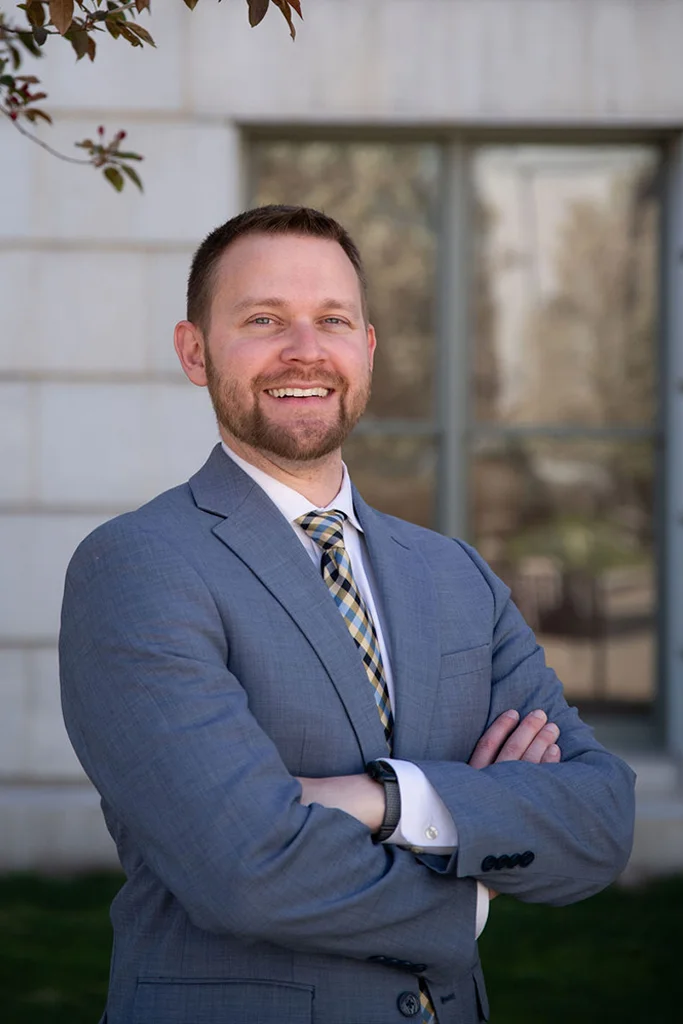
Reid DeChant built his practice on one principle: the person sitting across from him is not a case number. That principle matters as much in professional license defense as it does in criminal defense. Athletic trainers facing board investigations are dealing with more than a bureaucratic process. Their livelihood, their professional identity, and the patients and athletes who depend on them are all implicated in the outcome.
Reid’s background as a former public defender means he spent years handling cases at high volume across Denver, Broomfield, and Adams County courtrooms, developing the kind of practical litigation instinct that cannot be taught in a seminar. He trained at the Trial Lawyers College, founded by attorney Gerry Spence, where the emphasis was on authentic storytelling and genuine human connection, not just procedural mechanics. That training shapes how Reid presents client narratives before decision-makers who are evaluating not just facts but character and professional judgment.
Professional license proceedings often intersect with criminal matters. A DUI arrest, a domestic violence charge, a drug possession case, all of these can simultaneously affect a licensing proceeding. Reid’s depth in Colorado criminal defense means he can handle both tracks without handing off pieces of your case to a separate attorney who may not understand how the two proceedings interact. His recognition from national organizations including the National Association of Criminal Defense Lawyers and the Colorado Criminal Defense Bar reflects a commitment to staying current on defense strategy across all the legal contexts that affect his clients.
When your license is on the line, the attorney defending it should be someone who has stood in front of judges and juries and earned acquittals, not just someone who files paperwork and negotiates minor concessions. Reid has secured not-guilty verdicts and case dismissals across a wide range of charges and contexts, and that courtroom presence carries weight in administrative proceedings where credibility and preparation visibly matter.
What the Colorado Board Disciplinary Process Actually Looks Like
When the Division of Professions and Occupations receives a complaint, a program director makes an initial determination whether the facts alleged, if true, would constitute a violation of the Athletic Trainers Practice Act or applicable rules. If the complaint survives that screening, it moves to investigation. An investigator may contact the licensee directly, request records and documentation, interview witnesses, and compile a case file.
At some point, you will likely receive a request to provide a written response or participate in an interview. This is one of the most consequential moments in the entire process, and it is a point at which having a Colorado athletic trainer license defense attorney present is not optional. What you say, how you frame events, what documents you produce, and what you choose not to volunteer can all shape the outcome of the investigation in ways that may be difficult to correct later.
If the investigation finds sufficient basis, the matter may proceed to a formal complaint filed with the Office of Administrative Courts. At that stage, the case is handled similarly to civil litigation, with pleadings, discovery, and a hearing before an administrative law judge. The ALJ’s initial decision goes back to the Board of Athletic Trainers, which makes the final licensing determination. That determination can include revocation, suspension, probation, a public letter of admonition, or dismissal.
Colorado licensees also have the right to request an informal conference with the board before a formal complaint is filed. This can be an opportunity to present context, documentation, and mitigation that may resolve the matter short of formal proceedings. Whether to pursue that path, and how to approach it, requires judgment about the strength of the underlying complaint and the board’s likely posture. That judgment call alone can be the difference between a resolved matter and years of formal proceedings.
Do not ignore notice of a complaint or investigation. Do not respond to the board or its investigators without counsel. Do not produce documents without reviewing whether doing so is required and whether your response could inadvertently expand the scope of the investigation. These are the mistakes that compound initial problems into serious disciplinary outcomes.
Questions Athletic Trainers Often Ask About License Defense in Colorado
What is the first thing I should do if I receive notice of a board complaint?
Stop. Do not respond to the board or its investigators until you have spoken with an attorney who handles professional license defense. The notice will typically include a response deadline. That deadline is real and must be met, but meeting it with a poorly constructed response is worse than using available time to prepare a careful one. Contact an attorney as soon as you receive any correspondence from DORA or the Division of Professions and Occupations.
Can I lose my license over a single complaint?
Yes, in serious cases. The severity of potential discipline depends on the nature of the allegation, whether there is a pattern of conduct, prior disciplinary history, and factors in mitigation. A single serious allegation involving patient safety, sexual misconduct, or fraudulent conduct can result in revocation even without a prior record. Less serious or isolated complaints often resolve with lesser discipline or dismissal, particularly when well-represented from the outset.
Does a criminal charge automatically affect my athletic trainer license in Colorado?
Not automatically, but it can. The Board of Athletic Trainers has authority to review criminal charges and convictions and determine whether they reflect adversely on fitness to practice. A conviction, or in some circumstances a pending charge, may trigger a separate licensing investigation. How the criminal case resolves matters to the board, which is another reason why having representation that covers both the criminal and licensing proceedings is important.
What happens if I just ignore the board’s notice?
The investigation proceeds without your input. The board can issue a default order, take emergency action, or proceed to formal complaint based solely on the complainant’s account and the investigator’s findings. Silence does not protect you; it removes your ability to shape the record before it hardens against you.
Will my employer find out about a board investigation?
Not automatically during the investigation phase. Final disciplinary orders that result in formal action become public record. Emergency suspension orders, if issued, are typically public. The confidentiality rules during the investigation phase vary, but a formal disciplinary outcome will generally be accessible to employers conducting license verifications.
Can I continue practicing while under investigation?
In most cases, yes. An active license remains valid during a standard investigation unless the board issues an emergency cease and desist order based on findings of immediate threat to public safety. Emergency orders are reserved for the most serious circumstances, though they do occur. Understanding whether your situation carries emergency order risk is part of the early assessment your attorney should conduct.
What is the Office of Administrative Courts and why does it matter?
The Office of Administrative Courts is Colorado’s independent agency that provides administrative law judges to conduct hearings for state agencies, including professional licensing boards. If a formal complaint is filed against your license, the hearing will take place before an ALJ at the OAC, located in Denver. The ALJ conducts the hearing, receives evidence, and issues an initial decision. That decision is a critical document because the Board of Athletic Trainers uses it as the basis for its final order. Effective advocacy before the ALJ, including direct examination, cross-examination, and legal argumentation, requires genuine litigation skill.
Are there alternative resolutions to formal disciplinary proceedings?
Yes. Colorado provides mechanisms for informal resolution, including stipulations and consent orders that can be negotiated before a formal complaint is filed or during formal proceedings. These agreements allow for negotiated outcomes, sometimes including terms more favorable than what a hearing might produce. Whether to pursue a negotiated resolution or contest the matter through hearing depends on the strength of the evidence, the proposed terms, and the client’s professional circumstances. There is no universal answer; it requires a frank assessment of each case.
What if the complaint against me was filed by a disgruntled coworker or former employer?
The identity and motive of the complainant can be relevant to credibility but does not automatically render the complaint deficient. The board investigates the facts alleged regardless of who made the allegation. That said, motive and credibility of the complainant are absolutely part of the factual record, and demonstrating that a complaint arose from a personal dispute rather than genuine professional concern can be significant in how the board views the matter. Documenting the employment relationship and any preceding conflicts is part of early case preparation.
Can a license defense attorney help even if the underlying conduct actually occurred?
Yes. Mitigation, context, remediation, and the absence of patient harm or prior violations all bear on what discipline is appropriate, even when the underlying facts are not in serious dispute. A thoughtful presentation of professional history, steps taken to address any deficiencies, character evidence, and supporting documentation from supervisors, colleagues, or others familiar with your practice can make a material difference in outcome even when the board’s factual findings are largely accepted.
Athletic Trainer License Defense Across Colorado
DeChant Law represents athletic trainers facing board investigations and disciplinary proceedings throughout Colorado. The firm handles matters for licensees working in Denver and its surrounding neighborhoods, including Capitol Hill, Washington Park, Highland, and Baker, as well as practitioners based in the surrounding metro communities of Aurora, Lakewood, Englewood, Centennial, and Littleton. Reid DeChant regularly works with clients in the northern Front Range communities of Broomfield, Westminster, Thornton, Northglenn, and Arvada. The firm’s reach extends to Boulder County, including Boulder and Longmont, and east through Adams County communities including Commerce City and Brighton.
Athletic trainers working in Colorado Springs, Pueblo, Fort Collins, Greeley, and across the Western Slope in communities like Grand Junction and Durango can also reach DeChant Law for representation before the Colorado Board of Athletic Trainers. The administrative proceedings that govern licensing matters take place at the state level, meaning the attorney defending your license needs to understand Colorado’s administrative law framework, not just local court customs. Wherever you practice in Colorado, the process runs through Denver-based agencies and the Office of Administrative Courts.
Colorado Athletic Trainer License Defense Attorney Ready to Help
Your license is not something to defend on your own or with an attorney who treats it as an afterthought. A Colorado athletic trainer license defense attorney from DeChant Law understands what is actually at stake, how the board process works, and how to build a defense that reflects who you are as a professional, not just what a complaint alleges. Reid DeChant has demonstrated in courtrooms across Colorado that disciplined, thorough, and honest advocacy produces results where less careful representation fails.
Call DeChant Law to schedule a consultation. The sooner you have counsel engaged, the more options you have and the better positioned you are when the board comes looking for your response.