
Colorado Psychology License Defense Lawyer
A psychologist’s license represents years of graduate training, supervised clinical hours, doctoral work, and licensure examinations. It is the credential that makes a career possible, and losing it, even temporarily, can dismantle everything built around it. When the Colorado State Board of Psychologist Examiners opens a complaint investigation, the professional consequences extend far beyond the immediate disciplinary matter. Referral networks, hospital privileges, insurance panel memberships, and academic appointments can all be jeopardized before a hearing ever takes place. A Colorado psychology license defense lawyer who understands both the regulatory framework and the real-world stakes of a licensing board proceeding is not a luxury in these circumstances; it is what stands between a career and permanent damage to it.
The Board of Psychologist Examiners operates under the Colorado Department of Regulatory Agencies and has broad authority to investigate complaints, impose conditions, suspend licenses, and revoke credentials entirely. Most psychologists facing a complaint have never dealt with a professional licensing board before. The process looks nothing like what they know from their clinical work, and the rules governing Board investigations do not favor the uninformed respondent. Complaints can come from clients, former clients, employers, insurance companies, colleagues, or even other practitioners. Some arise from misunderstandings or retaliatory motives. Others involve genuine allegations that require a thoughtful, carefully constructed defense from the outset.
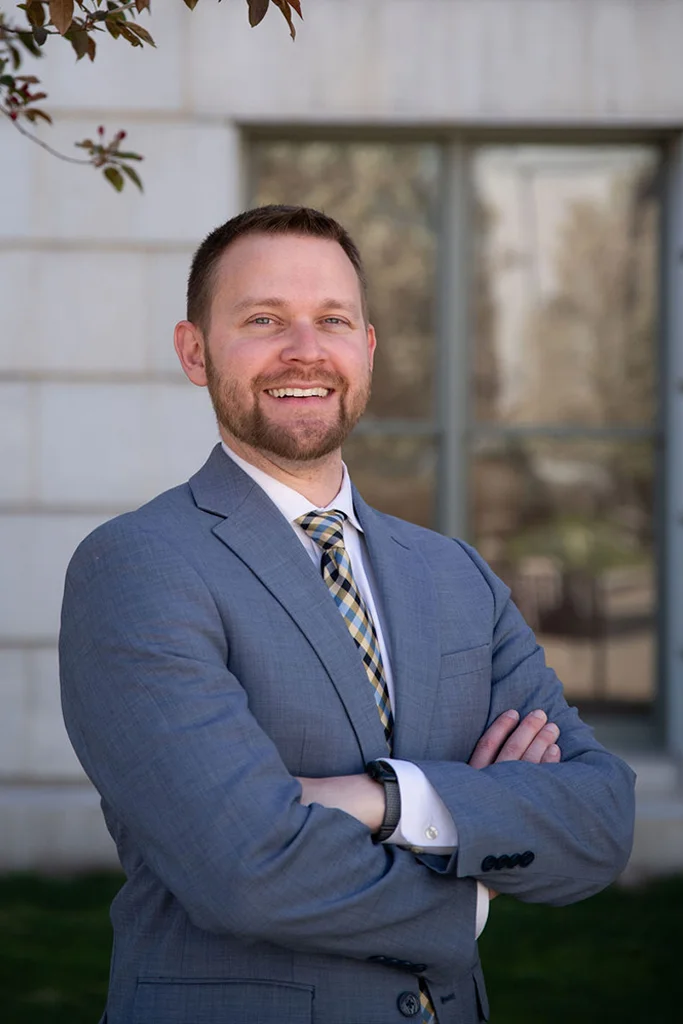
Reid DeChant represents professionals navigating high-stakes proceedings where the outcome determines whether they keep the career they built. His background as a former public defender, combined with his trial training at the Trial Lawyers College under the methods developed by Gerry Spence, means that when a licensing matter requires a formal hearing, Reid knows how to tell the full human story of a professional’s conduct and context, not just how to argue technical compliance. DeChant Law has defended clients in proceedings ranging from criminal courts to administrative tribunals, and the advocacy skills that produce results in one arena translate directly into the other.
What Colorado Psychologists Face When a Complaint Is Filed
The Board’s investigative process begins the moment DORA receives a complaint, and it moves on its own timeline regardless of how disruptive that is to a practitioner’s professional life. After the Board determines a complaint is sufficient to proceed, the respondent receives written notice and is required to respond within a specified timeframe. That initial response is one of the most consequential documents in the entire proceeding, and many psychologists make serious errors by drafting it without legal counsel, either saying too little and appearing evasive or saying too much and creating admissions that complicate the defense later.
Investigations may involve requests for client records, practice documentation, supervision records, billing records, and correspondence. The Board can also require the respondent to submit to a fitness-for-duty evaluation or psychological assessment as part of the investigation. If the Board’s investigation leads to a finding of probable cause, the matter proceeds toward a formal hearing conducted under the State Administrative Procedure Act. These hearings before an administrative law judge are adversarial proceedings where the Board is represented by the Attorney General’s office and the respondent must present a formal defense. Without preparation and advocacy, the respondent is facing a professional prosecution without a defense attorney.
Colorado psychologists should also be aware that certain complaint outcomes trigger mandatory reporting obligations that extend to national practitioner databanks. A disciplinary action that becomes part of the national record can affect licensure in any other state, employment with federally-funded programs, and credentials with numerous professional bodies. The downstream consequences of a Board finding are substantially wider than what happens at the Colorado level alone, which is why the defense strategy must account for the full picture from the beginning.
Licensing Issues That Require Immediate Attention
- Dual relationship and boundary complaints: These are among the most frequently filed complaints against psychologists in Colorado. Allegations may involve personal, financial, or other relationships with current or former clients, and the Board applies APA ethics standards alongside Colorado statutes in its analysis.
- Confidentiality and HIPAA-related violations: Unauthorized disclosures, improper record releases, and failures to maintain adequate privacy protections can form the basis of both Board complaints and separate regulatory enforcement actions, and the two tracks can run simultaneously.
- Supervision violations: Colorado imposes detailed supervision requirements for licensed psychologists who oversee trainees and provisional licensees. Complaints may allege inadequate supervision, improper delegation, or failure to document supervisory relationships as required by Board rules.
- Substance use and mental health fitness concerns: The Board has authority to impose monitoring conditions or suspend a license when there is credible evidence that a psychologist’s fitness to practice is impaired. These cases often arise from DUI convictions, self-reported health concerns, or third-party complaints, and they involve a completely different defense strategy than conduct-based complaints.
- Sexual misconduct allegations: The most serious category of licensing complaints. Colorado law treats sexual contact with a current or former client as a basis for mandatory disciplinary action. Defending these allegations requires careful attention to evidence, timelines, and the specific claims made.
- Billing fraud and insurance complaints: Upcoding, unbundling, billing for sessions not rendered, and other insurance-related allegations can come from insurance carriers, Medicaid audits, or patients, and they may involve coordination between the Board and law enforcement.
- Criminal conviction reporting failures: Colorado requires licensed psychologists to report criminal convictions to the Board within a specified period. A failure to report, even for a conviction the practitioner did not believe was relevant, can itself become a separate ground for disciplinary action.
- License renewal and continuing education issues: While these seem administrative, Board action over renewal deficiencies can create a disciplinary record if not addressed properly, and CE audit findings require a responsive approach to avoid further consequences.
What to Do From the Moment You Receive Board Notice
The single most important step a Colorado psychologist can take after receiving a complaint or Board notice is to contact a license defense attorney before preparing any written response. The Board’s initial notice may include a deadline for a response that feels urgent, and the instinct to explain yourself, to clarify misunderstandings, and to cooperate fully is natural for someone who has built a career on professional ethics. That instinct, however well-intentioned, must be channeled through legal counsel rather than acted on directly. Written statements made to the Board without legal review can be used against you in subsequent proceedings, and what you omit can be as damaging as what you include.
Gather all documentation relevant to the complaint before your first meeting with counsel. This includes the client’s file if the complaint involves a patient relationship, supervision records if the complaint touches on supervisory conduct, any contracts or agreements involved, relevant correspondence, and records of your malpractice insurance coverage. If you have already received any document requests from the Board, preserve those materials and do not discard anything, even documents that seem tangential. Evidence destruction, even unintentional, creates additional problems.
Colorado Board of Psychologist Examiners proceedings are administered through the Department of Regulatory Agencies. Formal hearings are conducted before the Office of Administrative Courts, located in Denver. If the matter involves a criminal conviction that triggered the licensing concern, the relevant criminal court proceedings in Colorado’s district courts may be intertwined with the licensing defense, and the approach to each track affects the other. Reid DeChant’s background defending clients in Colorado’s criminal courts, including Denver, Adams, Broomfield, Jefferson, Douglas, and Arapahoe Counties, means he understands how these two systems intersect and how to coordinate a defense across both when necessary.
Colorado does not have a specific statute of limitations that cuts off all Board complaints, which means historical conduct can sometimes be examined even years after it occurred. Document retention during a licensing investigation should be treated as an absolute priority. Notify your malpractice carrier of the complaint as soon as possible, as many professional liability policies include coverage for licensing defense costs and the carrier will want to be informed early.
How Licensing Defense Connects to Reid DeChant’s Broader Practice
License defense work sits at the intersection of criminal defense principles and administrative law, and the overlap is more significant than most practitioners realize. The investigative stage of a Board proceeding shares structural similarities with a criminal investigation: a government body is gathering evidence, interviewing witnesses, and building a case against you before you have had a full opportunity to respond. The adversarial hearing stage, if the matter reaches that point, requires the same courtroom skills that produce results in criminal defense; the ability to cross-examine witnesses, challenge the credibility of evidence, present a coherent narrative, and persuade a fact-finder who is not automatically inclined in your favor.
Reid DeChant’s training at the Trial Lawyers College, where he studied storytelling, psychodrama, and authentic courtroom advocacy under the methodology Gerry Spence developed, gives him tools that most administrative practitioners do not have. Board hearings are often decided not just on the documentary record but on how a respondent presents themselves, how credible their explanation is, and whether the administrative law judge understands the full context of what happened in a clinical relationship. Reid’s approach to defense is built on genuine engagement with the client’s story rather than formulaic legal arguments, which is precisely what distinguishes a compelling license defense from a procedural one.
In addition to his Trial Lawyers College training, Reid is a member of the National Association of Criminal Defense Lawyers and the Colorado Criminal Defense Bar, and he has earned recognition from national attorney rating organizations for the quality of his advocacy. His track record of results across diverse charges and proceedings, from domestic violence dismissals to acquittals on felony assault to DUI case dismissals across multiple Colorado counties, reflects a practitioner who performs across different types of adversarial proceedings, not just one narrow specialty.
Questions Psychologists Ask About Colorado Licensing Board Proceedings
What triggers a Colorado Board of Psychologist Examiners investigation?
The Board may open an investigation after receiving a formal complaint from any person, including patients, family members of patients, employers, other practitioners, or insurance companies. The Board can also investigate based on information it receives through other channels, such as court records, news reports, or mandatory conviction reporting by the licensee. Not every complaint leads to a full investigation; the Board screens complaints for sufficiency before proceeding.
Can I continue practicing while under investigation?
In most cases, yes. A complaint and investigation do not automatically suspend your license. However, if the Board believes there is an immediate public safety concern, it has authority to seek an emergency suspension before a full hearing. Outside of emergency situations, the process moves through investigation, probable cause determination, and formal hearing before any license action becomes final.
What happens at a formal hearing before an administrative law judge?
If the Board finds probable cause and the matter is not resolved through a settlement or stipulation, the case proceeds to a hearing before an administrative law judge at the Colorado Office of Administrative Courts. The hearing functions similarly to a bench trial: both sides present evidence, examine and cross-examine witnesses, and make legal arguments. The administrative law judge issues an initial decision, which the Board then reviews and may adopt, modify, or reject.
What disciplinary outcomes can the Board impose?
The Board has a range of available actions including letters of admonition, probationary conditions, required additional training or supervision, temporary suspension, and permanent revocation. In some cases, the Board may offer a stipulation allowing the licensee to accept certain conditions in exchange for resolving the complaint without a formal hearing. Whether accepting a stipulation is advisable depends heavily on the specific terms and the strength of the defense available at a formal hearing.
Will a Board disciplinary action appear on my public record?
Colorado DORA maintains a publicly searchable database of licensed professionals and their disciplinary history. Most formal disciplinary actions become part of that public record. This is one of the reasons that defending against a complaint aggressively from the earliest stage matters; a finding that becomes public can affect referrals, employment, credentialing, and the professional relationships that sustain a clinical practice.
What if the complaint was filed by a disgruntled former client with no factual basis?
The Board investigates complaints regardless of whether the complainant appears credible or motivated by personal grievance. The respondent’s opportunity to demonstrate the lack of merit in a complaint comes during the investigative response and, if necessary, at a formal hearing. A well-prepared initial response that marshals the relevant documentation and directly addresses the specific allegations is often the most effective way to prevent a frivolous complaint from advancing further.
Does a DUI arrest or conviction automatically jeopardize my psychology license?
A criminal conviction does not automatically result in license revocation, but Colorado requires psychologists to report convictions to the Board, and the Board will evaluate whether the conviction reflects on fitness to practice. A first-offense DUI, for example, is treated very differently than a pattern of alcohol-related offenses or a felony conviction involving dishonesty or harm. Coordinating the criminal defense strategy with licensing defense considerations from the beginning gives the practitioner the best chance of resolving both matters without compounding consequences.
Can a complaint that gets resolved through a private settlement with a patient still reach the Board?
Yes. A civil resolution or private settlement between a practitioner and a patient does not prevent the patient from also filing a Board complaint, and it does not bind the Board. The Board’s jurisdiction over professional conduct operates independently of civil litigation. Additionally, malpractice settlements above a certain threshold are reportable to the National Practitioner Data Bank, which can itself trigger Board review.
How long does a Board investigation typically take in Colorado?
Timelines vary significantly depending on the complexity of the complaint, the volume of records requested, and the Board’s current caseload. Investigations can run anywhere from several months to over a year. Formal hearing processes add additional time if probable cause is found. During this period, it is critical to maintain complete documentation and avoid any conduct that could be perceived as interfering with the investigation.
Should I contact the complainant directly to try to resolve the matter?
No. Direct contact with the complainant after a Board complaint has been filed can create additional allegations of improper conduct, witness tampering concerns, or HIPAA complications if the complainant is a patient. All communications related to the complaint should flow through counsel. This is one of the most common early mistakes that practitioners make before they have legal representation in place.
Colorado Psychology License Defense Representation Across the State
DeChant Law represents psychologists and other licensed mental health professionals across Colorado. In the Denver metro area, this includes practitioners working in Capitol Hill, Cherry Creek, the Baker neighborhood, Washington Park, the Highlands, and surrounding communities. The firm also serves clients based in Aurora, Lakewood, Arvada, Westminster, Thornton, and Northglenn in the immediate metro region. Beyond the metro, DeChant Law handles licensing matters for practitioners in Colorado Springs, Pueblo, Fort Collins, Greeley, Loveland, and Boulder. Practitioners in the mountain communities of Steamboat Springs, Grand Junction, Durango, Aspen, Telluride, and the I-70 corridor communities of Vail, Breckenridge, and Frisco can also reach DeChant Law for licensing defense representation. Geography should not be a barrier to quality representation when a license and career are at stake, and Board proceedings are conducted through the administrative process in Denver regardless of where in Colorado the practitioner is located.
Colorado Psychology License Defense Attorney Ready to Help
A Board complaint is not a finding of wrongdoing, and the outcome is not predetermined. What happens from the moment you receive notice depends on the quality of the defense you build starting from day one. Reid DeChant is a Colorado psychology license defense attorney who brings genuine courtroom advocacy experience and a thorough understanding of how high-stakes proceedings actually unfold. The same tenacity that produces not-guilty verdicts in felony trials and dismissals in DMV licensing hearings applies directly to professional licensing proceedings where a career is what’s on the line.
Call DeChant Law to schedule a consultation about your licensing matter. The earlier in the process you engage counsel, the more options are available to you, and the stronger your position will be when the Board is waiting for your response.