
Colorado Speech-Language Pathology License Defense Lawyer
A speech-language pathology license represents years of graduate education, supervised clinical hours, state examinations, and national certification. When the Colorado Department of Regulatory Agencies or its Office of Occupational and Professional Licensing opens an investigation into a speech-language pathologist, everything built on that foundation is suddenly at risk. Not just the license itself, but the career trajectory, the employer relationships, the professional reputation, and in some cases the ability to work in a regulated healthcare or school setting at all. A Colorado speech-language pathology license defense lawyer does not simply send letters and hope the board sees reason. The work requires understanding how DORA investigations actually proceed, what kinds of complaints trigger formal action, how disciplinary hearings differ from criminal proceedings, and where a well-constructed response can interrupt a process before it reaches the point of no return.
Colorado licenses speech-language pathologists under the Colorado Department of Regulatory Agencies, and the Office of Occupational and Professional Licensing handles the administrative mechanics of complaints, investigations, and hearings. SLPs practicing in school settings also operate under oversight from the Colorado Department of Education and may hold an educator endorsement that creates a second layer of licensure exposure. A complaint filed in one context can ripple into the other. Someone whose license is suspended or revoked by DORA may simultaneously lose their CDE endorsement, eliminating employment in both clinical and educational settings in one stroke. Understanding where these systems intersect is essential to any complete defense strategy.
The complaint process moves faster than most licensees expect, and the window for meaningful intervention is shorter than people realize. A formal complaint triggers a review that can result in a confidential letter of concern, a stipulated agreement, a formal disciplinary order, or a hearing before the Director or an administrative law judge. Each of those outcomes carries different long-term consequences for the license record, for national databases, and for future employment. The earlier a defense attorney is involved, the more options remain available.
What Triggers DORA Investigations Against Colorado SLPs
Complaints against speech-language pathologists come from several directions, and the nature of the complaint often determines how aggressively DORA investigates and what resolution looks like. Patients or their families are one source, particularly in adult care settings where communication disorders intersect with cognitive decline, stroke recovery, or traumatic brain injury. A family that believes a clinician was inattentive, failed to document progress accurately, or discharged a patient prematurely may file a complaint that sounds like a standard malpractice claim but is channeled instead through the licensing board.
Employers are another significant source. A hospital, school district, or outpatient clinic that terminates an SLP for alleged misconduct, billing irregularities, or policy violations may file a report with DORA as part of their own compliance obligations. In those situations, the SLP may have no warning that a licensing complaint has been filed until they receive DORA correspondence. Mandatory reporting obligations under Colorado law also mean that certain supervising clinicians, healthcare facilities, and others may be legally required to report specific conduct regardless of whether anyone intends to pursue formal discipline.
Billing and documentation irregularities are among the most serious triggers. Speech-language pathologists who work in settings where Medicare, Medicaid, or private insurance billing occurs face scrutiny not only from the licensing board but potentially from the Colorado Medicaid Fraud Control Unit, the U.S. Department of Health and Human Services Office of Inspector General, and other federal enforcement bodies. A DORA investigation that begins as an administrative matter can intersect with a federal investigation in ways that dramatically change the risk profile. Criminal exposure from alleged billing fraud operates on a completely different timeline and carries consequences that extend far beyond the license.
Types of Licensing Proceedings SLPs Face in Colorado
- Informal Confidential Agreements: DORA investigators may offer a confidential letter of concern or an informal agreement to resolve minor complaints without formal disciplinary action, but signing without legal review can create admissions that affect future proceedings or national database reporting.
- Stipulated Agreements and Consent Orders: Formal negotiated resolutions that typically impose conditions such as supervision requirements, continuing education, or practice restrictions. These agreements are public records and appear on the DORA license lookup, which employers routinely check during hiring.
- Summary Suspension Orders: In situations where DORA determines that a licensee poses an immediate threat to public health, it can issue a summary suspension before any hearing takes place. These are rare but devastating, immediately stopping all practice while the underlying matter proceeds.
- Formal Disciplinary Hearings: When DORA issues a notice of charges, the matter can proceed to an administrative hearing before the Director of DORA or an administrative law judge. The SLP has the right to present evidence, call witnesses, and cross-examine the investigators or complainants who support the charges.
- CDE Endorsement Actions: Colorado SLPs working in public schools hold a specialist endorsement issued by the Colorado Department of Education. A DORA disciplinary action can trigger a parallel CDE proceeding, and the two processes require coordinated defense to avoid outcomes in one that prejudice the other.
- National Practitioner Data Bank and HIPDB Reporting: Certain disciplinary actions trigger mandatory reports to national databases that healthcare employers and credentialing bodies access during hiring, privileges applications, and insurance paneling reviews. Understanding which outcomes trigger reporting is critical to evaluating any proposed resolution.
- License Reinstatement Proceedings: A revoked or lapsed license can sometimes be reinstated through a formal petition process. DORA evaluates rehabilitation, corrective steps, and fitness to practice. These proceedings require a well-documented showing that the circumstances leading to the prior action have been genuinely addressed.
- Criminal Conviction Reporting Obligations: Colorado requires licensed professionals to report certain criminal convictions to DORA within a specified timeframe. A criminal case involving an SLP, whether related to professional conduct or not, can independently trigger licensing consequences that a defense strategy must account for.
What to Do When You Receive a DORA Complaint or Investigation Notice
The first response to any DORA correspondence matters more than most people in this situation realize. DORA investigators will often request a written response from the licensee early in the investigation, before any hearing has been scheduled and before formal charges are filed. That request may seem routine or even friendly in tone. It is not. The response a licensee submits to that initial inquiry can shape every subsequent step of the process, either by establishing a coherent factual record that supports the defense or by creating contradictions, admissions, or omissions that investigators will use later. Responding without legal counsel at this stage is one of the most consequential mistakes an SLP can make.
Before submitting anything to DORA, gather and preserve the relevant documentation. That means the patient records, treatment notes, session logs, billing records, employer policies, supervision agreements, and any communications related to the conduct at issue. In school-based settings, it also means the IEP documentation, evaluation records, and written communications with parents, administrators, and the special education team. Do not alter or delete any records under any circumstances. Even inadvertent modifications to records during an investigation can transform a licensing complaint into a potential criminal obstruction matter.
DORA licensing complaints are handled by investigators and attorneys within the office, and hearings take place through Colorado’s administrative process, typically at DORA offices in Denver at 1560 Broadway or before the Office of Administrative Courts, which is located at 633 17th Street in Denver. Knowing the procedural rules that govern these proceedings, including timelines for responses, rights to subpoena records, and standards for appealing an adverse decision, is essential to a complete defense. An adverse ruling by DORA can be appealed to the Colorado Court of Appeals under the State Administrative Procedure Act, and preserving the appellate record begins at the administrative hearing level, not after it.
If you hold national certification through the American Speech-Language-Hearing Association, a DORA disciplinary action may also trigger a separate ethics review by ASHA’s Board of Ethics. Colorado-licensed SLPs who want to maintain their Certificate of Clinical Competence need to account for the ASHA proceeding as a parallel concern. ASHA and DORA operate independently, but their timelines and processes can interact in ways that affect both outcomes.
Why Reid DeChant Handles Colorado Professional License Defense
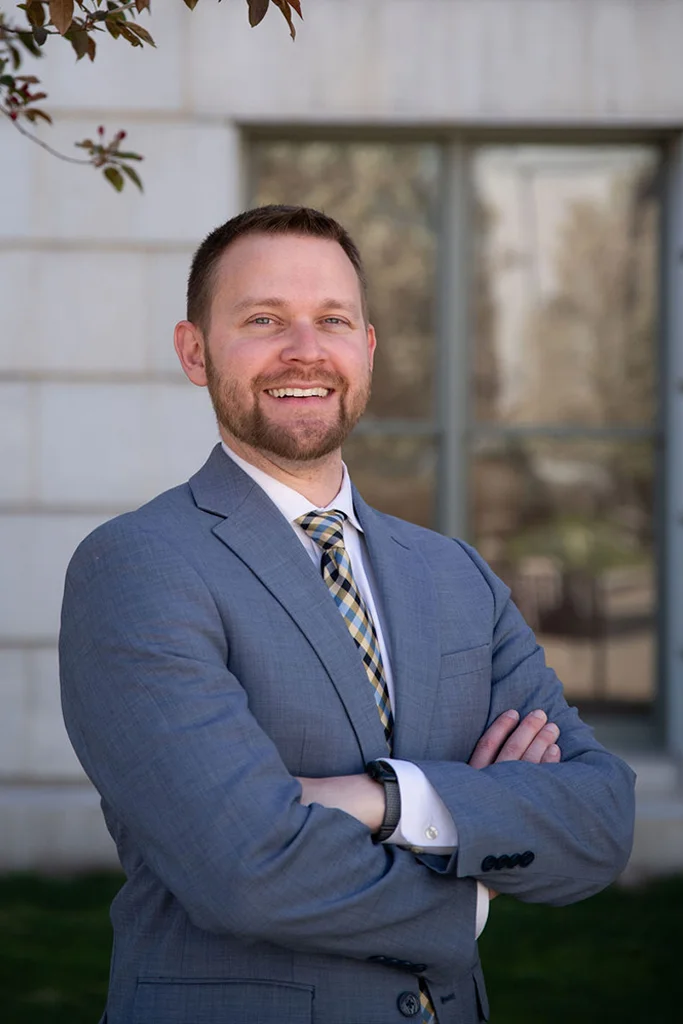
Defending a professional license requires a lawyer who knows how to work inside administrative processes, present evidence to decision-makers who are not juries, and negotiate outcomes that preserve as much of a career as possible when full vindication is not available. Reid DeChant built his practice on exactly that kind of adversarial skill. As a former public defender in Denver, Broomfield, and Adams County, Reid spent years handling cases across the full range of complexity, developing the cross-examination skills, evidentiary judgment, and strategic discipline that administrative defense demands. His training at the Trial Lawyers College, founded by Gerry Spence, sharpened an approach to advocacy rooted in thorough factual preparation and honest, effective communication with decision-makers.
The same instincts that serve criminal defense clients serve professional licensees facing DORA proceedings. Investigators build files. Administrative prosecutors develop theories of misconduct. Hearing officers evaluate credibility and apply legal standards to disputed facts. A Colorado speech-language pathology license defense attorney who has spent significant time in adversarial proceedings understands how to challenge factual narratives, expose gaps in investigation records, and present a client’s conduct in its full context. Reid’s recognition from national legal organizations and his membership in the National Association of Criminal Defense Lawyers and the Colorado Criminal Defense Bar reflect a commitment to the kind of rigorous defense work that licensing matters require. Clients working with DeChant Law will be informed, consulted, and prepared at every stage of the process, not managed from a distance or handed off to staff.
Questions About Colorado SLP License Defense
Does a DORA investigation mean I will lose my license?
Not necessarily. Many DORA investigations close without formal disciplinary action, either because the complaint lacks sufficient factual support or because the licensee’s response successfully addresses the underlying concern. The outcome depends significantly on the nature of the complaint, the documentation available, and how the response to the investigation is handled. Formal discipline is not a foregone conclusion at the investigation stage.
Can I continue practicing while a DORA investigation is pending?
In most cases, yes. Unless DORA issues a summary suspension order, which requires a finding of immediate threat to public health, a licensee retains the right to practice during the pendency of an investigation and hearing. However, some employers or credentialing bodies may take independent action upon learning of an investigation, which is a separate concern from DORA’s formal process.
What is the difference between a confidential letter of concern and formal discipline?
A confidential letter of concern is an informal resolution that does not constitute formal discipline, does not appear on the public license record, and does not trigger mandatory reporting to national databases in most circumstances. Formal disciplinary orders, including stipulated agreements, are public records. The distinction is significant for future employment, credentialing, and liability insurance purposes.
Will my employer be notified when DORA opens an investigation?
DORA does not routinely notify employers that an investigation has been opened against a licensee. However, if formal disciplinary action results in a public order, that order will appear on the DORA license lookup, which employers check independently. Whether and when to disclose an ongoing investigation to an employer is a strategic decision that depends on the specific circumstances and any contractual or regulatory reporting obligations the SLP may have.
What happens if a DORA complaint involves potential Medicaid billing fraud?
When a licensing complaint alleges billing irregularities that could constitute Medicaid or Medicare fraud, the exposure extends well beyond the license. Federal and state agencies investigate healthcare billing fraud separately from DORA, and the consequences can include criminal prosecution, civil monetary penalties, and exclusion from federal healthcare programs. These matters require a defense attorney who understands both the administrative licensing process and the intersection with potential criminal or civil fraud investigations.
Can a DORA complaint from a school district affect my CDE endorsement separately?
Yes. The Colorado Department of Education holds independent authority over educator endorsements, including the specialist endorsement that many school-based SLPs hold. A DORA disciplinary action can prompt CDE to initiate its own review, and the two proceedings operate under different standards and timelines. A defense strategy that resolves the DORA matter without considering the CDE implications may protect the clinical license while leaving the school-based endorsement exposed.
If I was terminated before the complaint was filed, does that change my defense options?
Employment status does not limit DORA’s authority over your license. The board regulates the license, not the employment relationship. A termination that preceded a complaint may actually inform the defense by providing context about the circumstances under which records were created or reviewed. However, a former employer’s cooperation with DORA investigators, or their voluntary disclosure of internal records, is something a defense attorney needs to account for early in the process.
How long does the DORA disciplinary process typically take for an SLP complaint?
The timeline varies considerably based on the complexity of the complaint, the responsiveness of all parties, and the hearing schedule of the Office of Administrative Courts. Straightforward complaints that resolve informally may close within a few months. Contested hearings involving extensive records and multiple witnesses can take considerably longer. The uncertainty of an extended timeline is one of the reasons early intervention matters. Resolving a matter before it reaches a formal hearing often produces a faster and more favorable outcome than waiting for the full administrative process to run its course.
Does a DORA disciplinary action affect my ability to get licensed in another state?
Yes. Most states ask applicants about prior disciplinary actions on other state licenses, and some participate in information-sharing through national licensing databases. A Colorado disciplinary order that is not addressed or disclosed can result in denial of licensure in a new state or discipline in a state where you are already licensed. If relocation or multi-state practice is part of your longer-term plan, the consequences of a Colorado disciplinary record extend far beyond Colorado.
What should I do if I already submitted a response to DORA without an attorney?
Engaging a defense attorney is still valuable even if you have already responded to DORA. An attorney can review what was submitted, assess how it might be interpreted by investigators, and begin developing a more complete factual record for the stages ahead. While an early response submitted without counsel can complicate the defense in some situations, it does not foreclose effective representation at the hearing stage or in subsequent negotiations.
Serving Colorado SLPs From Denver Through the Entire State
DeChant Law represents speech-language pathologists facing Colorado licensing proceedings across the entire state. From clinicians practicing in Denver’s medical district, the Stapleton and Park Hill neighborhoods, and the Highland and Washington Park communities, to SLPs working in the Aurora school districts, the Lakewood and Arvada hospital systems, and the Englewood and Littleton outpatient clinics, the geographic reach of the representation extends wherever Colorado licensees need it. Reid DeChant also works with SLPs and school-based clinicians in Colorado Springs, Pueblo, Fort Collins, Loveland, Greeley, Longmont, Boulder, Broomfield, Thornton, Westminster, Commerce City, Wheat Ridge, Golden, Evergreen, Castle Rock, Parker, Highlands Ranch, Centennial, Greenwood Village, and across the mountain communities along the Front Range and Western Slope. Whether you practice in a pediatric clinic in Douglas County, a skilled nursing facility in Weld County, a hospital in Jefferson County, or a public school district in Arapahoe County, the licensing exposure you face runs through the same DORA processes in Denver, and the defense approach is the same regardless of where you hold your clinical position.
Colorado Speech-Language Pathology License Defense Attorney
A licensing investigation is not resolved by waiting to see what happens next. The earlier a Colorado speech-language pathology license defense attorney is involved, the more options exist for shaping the outcome before the process reaches formal charges or a public disciplinary record. DeChant Law provides direct, informed representation to SLPs navigating DORA investigations, stipulated agreement negotiations, and contested administrative hearings, with the same commitment to thorough preparation and honest client communication that defines the firm’s criminal defense practice.
If you have received correspondence from DORA, been notified of a complaint, or received any indication that your license is under review, contact DeChant Law to discuss what you are facing and what an effective defense looks like from this point forward. Do not respond to investigators or sign any agreement before speaking with a lawyer who understands how these proceedings work and what the long-term consequences of each possible resolution actually mean for your career.