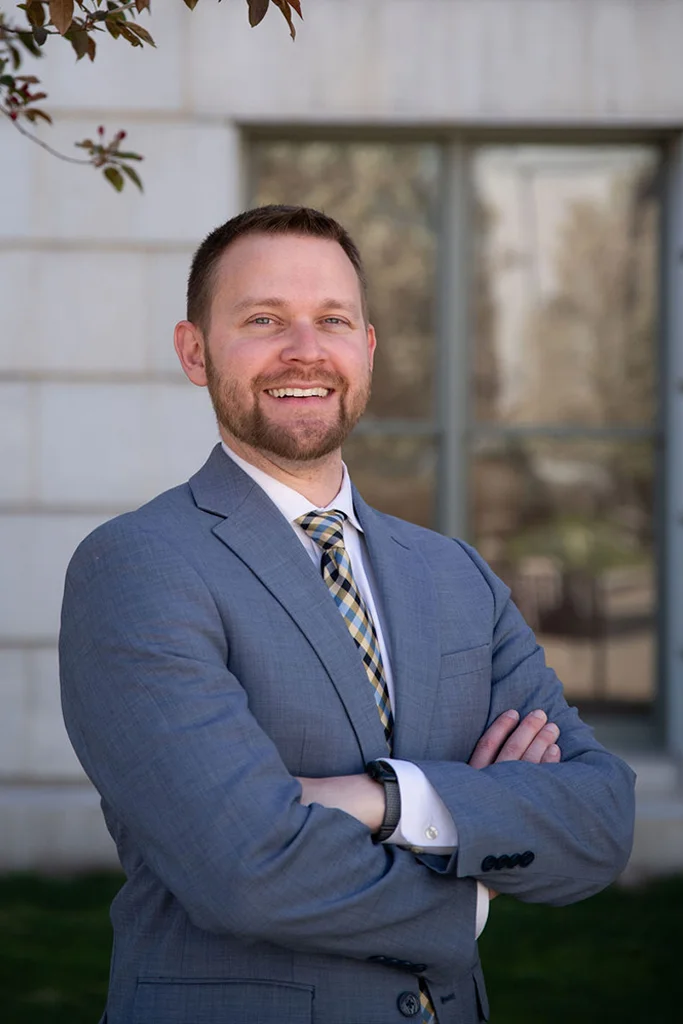

Denver Arson Lawyer
Arson charges in Colorado carry some of the most severe penalties in the criminal code, and the evidence used to prosecute them is often highly technical. Fire investigators, accelerant detection dogs, lab reports, and expert witnesses all play a role in how the state builds its case. When someone is charged with arson in Denver, the path forward requires an attorney who understands how to challenge that evidence at its foundation, not just argue about intent at sentencing. Reid DeChant has defended serious felony charges in Denver, Adams County, Jefferson County, and surrounding jurisdictions, and brings the kind of courtroom preparation that arson cases demand.
How Colorado Classifies Arson and What Each Charge Actually Means
Colorado divides arson into four degrees, and the distinctions between them matter enormously for what penalties you face and how the case is likely to proceed.
First degree arson applies when someone knowingly sets fire to or burns a building or occupied structure. Because these cases involve places where people live or work, the charge is a class 3 felony, and it is treated with corresponding seriousness by prosecutors. If the fire results in injury, or if law enforcement suspects the motive involved insurance fraud, charges can compound quickly.
Second degree arson covers property that is not a building, typically a vehicle, field, or other structure. This is a class 4 felony when the property value meets a threshold, and a class 5 or class 2 misdemeanor at lower values. The distinction between degrees often comes down to how investigators classify the structure and what the fire spread to during the incident.
Third degree arson is charged when a person intentionally damages property by fire to collect insurance proceeds or cause another person to collect insurance. It is a class 4 felony regardless of the value of the property, because the fraud element elevates the offense on its own.
Fourth degree arson is the most frequently charged of the four degrees and also the broadest. It covers recklessly starting a fire or causing an explosion that places another person in danger or damages property. Depending on circumstances, it can be charged as a misdemeanor or a class 4 felony. Outdoor burns that get out of control, campfires in restricted areas, and industrial accidents are common fact patterns that generate fourth degree charges, even when no criminal intent was present.
The Investigation That Comes Before the Arrest
Arson investigations are unlike most criminal cases because the scene itself becomes the central piece of evidence. The Denver Fire Department, in cooperation with local and state investigators, typically conducts a cause and origin investigation any time a fire results in significant property damage or injury. These investigators are trained to identify burn patterns, examine electrical systems, test for accelerants, and reconstruct the sequence of events that led to the fire.
The problem is that fire science, while legitimate, is not perfectly reliable. Courts across the country have revisited arson convictions based on outdated forensic methods. Techniques that were once considered definitive indicators of intentional fire-setting have since been challenged by independent researchers. A low burn pattern or irregular char, for example, was historically treated as proof of accelerant use, but modern fire science recognizes that ventilation, construction materials, and natural combustion dynamics can produce identical results. Challenging the methodology behind an expert’s conclusions is one of the most consequential moves a defense attorney can make in an arson case.
Investigations also frequently examine the financial circumstances of the person accused, looking at insurance policies, recent appraisals, outstanding debts, and prior claims. These financial threads become part of the narrative the prosecution presents to a jury, which is why the defense needs to anticipate and address them early rather than waiting for trial.
Common Reasons Arson Charges Get Challenged or Reduced
The strength of an arson case depends almost entirely on the quality of the investigation. Errors, shortcuts, or reliance on discredited science create openings that a prepared defense attorney can use.
Contaminated or mishandled samples are one of the most frequent issues. Accelerant residue must be collected, stored, and analyzed according to strict protocols. If investigators used improper containers, failed to document chain of custody, or allowed samples to sit without refrigeration, the lab results can be excluded. Without a positive accelerant finding, many first and second degree arson cases become significantly harder to prove.
Misidentification of the origin point is another common problem. If the fire investigation incorrectly identifies where the fire started, the entire theory of intentional burning may collapse. Defense experts who can independently analyze photographs, burn patterns, and witness accounts sometimes reach very different conclusions than the state’s experts.
Electrical and accidental causes are frequently overlooked or dismissed too quickly in investigations motivated by a suspicion of arson. Faulty wiring, space heaters, dryer lint, and construction defects all cause structure fires that can look suspicious without being criminal. An attorney who retains a qualified fire investigator to review the same evidence independently may find that the state’s conclusion simply does not hold up.
The role of insurance policies and financial motive also needs careful examination. Prosecutors sometimes present evidence of a defendant’s financial stress as proof of arson motive, but financial difficulty alone proves nothing. Plenty of people with financial problems do not commit arson, and presenting that context effectively to a jury is part of what shifts the dynamic at trial.
Questions People Ask About Denver Arson Cases
Can I be charged with arson if I accidentally started a fire?
Accidental fires do not typically support first or second degree arson charges because those require knowing conduct. However, fourth degree arson can apply to reckless conduct, which means that if a fire resulted from unreasonably risky behavior, a charge is possible even without intent. The facts of how the fire started, what precautions were taken, and what was foreseeable all matter significantly in how a case like this plays out.
What happens if someone was injured in the fire?
Injuries substantially increase the severity of an arson case. Depending on the circumstances, additional charges like assault or reckless endangerment may be filed alongside the arson count. If someone died, prosecutors may pursue more serious charges that go beyond the arson statutes. These are the cases where experienced trial representation is most critical, because the consequences of conviction at trial versus a negotiated resolution can be dramatically different.
Does it matter whether I own the property that burned?
Ownership is relevant but does not automatically protect against arson charges. Colorado law allows arson charges even when a person sets fire to their own property if the act endangered other people or structures, or if the intent was insurance fraud. Arson is not solely about destroying someone else’s property. The risk created by the fire and the intent behind it both factor into how charges are applied.
How is arson different from insurance fraud in Colorado?
They are separate charges that can be filed together. Insurance fraud under Colorado law involves misrepresenting facts to an insurer to obtain a payment. Third degree arson specifically targets the act of setting fire to property to generate an insurance claim. A person can face both charges simultaneously, and the combined sentencing exposure is significant. Defense in these overlapping cases requires attention to the financial evidence as much as the physical evidence from the fire scene.
Will an arson conviction follow me on a background check?
Felony arson convictions appear on criminal background checks and can affect employment, housing, professional licensing, and for non-citizens, immigration status. Colorado’s record sealing law does not extend to most felony convictions, so the implications of a conviction are long-term. This is one reason why fighting the charge aggressively from the beginning, rather than accepting a quick plea, often makes more sense when the facts support a real defense.
What is the difference between the Denver DA’s office and state fire marshal involvement?
Arson investigations in Denver may involve multiple agencies. The Denver Fire Department investigates the fire’s origin and cause. The state fire marshal’s office may be involved in larger or more complex cases. Prosecutors at the Denver District Attorney’s office handle the criminal charge. Each agency produces its own reports and conclusions, and those reports do not always align perfectly, which creates opportunities for a defense attorney to probe inconsistencies across agency findings.
How long does an arson investigation take before charges are filed?
Arson investigations are rarely quick. The physical investigation, lab analysis of accelerant samples, financial investigation, and witness interviews can take months before prosecutors file charges. This timeline is actually important from a defense standpoint because it creates opportunities to hire an independent investigator early, preserve evidence, and begin building a counter-narrative before the state’s version of events solidifies in the minds of law enforcement and prosecutors.
Facing Arson Charges in Denver Requires Trial-Ready Representation
Many arson cases hinge on expert testimony. The state’s fire investigator takes the stand and presents a technical narrative about burn patterns, accelerant detection, and point of origin. Without a defense attorney who can cross-examine that expert effectively and introduce competing scientific analysis, a jury hears only one version of a highly technical story. Reid has tried serious felony cases to verdict in Denver and surrounding Colorado counties, including cases involving assault with a deadly weapon, domestic violence charges, and cases where the government’s evidence looked overwhelming on paper. He understands what it takes to challenge an expert witness before a jury, and he approaches each case with the preparation that kind of cross-examination requires. If you are dealing with an arson investigation or have already been charged, speaking with a Denver arson attorney as early as possible gives the defense the best chance to examine the evidence on its own terms before the case reaches a courtroom.