Colorado Medical License Defense Lawyer
A medical license represents years of education, training, and sacrifice. When that license comes under threat from a complaint, investigation, or disciplinary proceeding before the Colorado Medical Board, the consequences extend far beyond a professional reprimand. Physicians, surgeons, nurses, and other licensed healthcare providers in Colorado face the real possibility of suspension, revocation, probationary conditions, or mandatory treatment orders that can end careers and unravel everything they have built. A Colorado medical license defense lawyer who understands both the regulatory framework and the human stakes involved can make an extraordinary difference in how these proceedings conclude.
The Colorado Medical Board and the Division of Professions and Occupations within the Department of Regulatory Agencies operate with investigative authority that most licensees underestimate until they are already deep inside a proceeding. A complaint from a patient, a hospital peer review outcome, a malpractice settlement disclosure, a criminal charge, or even an anonymous tip can trigger a formal investigation. What begins as a seemingly routine inquiry can escalate to a formal complaint, an administrative hearing, and ultimately an order that permanently alters the conditions under which you practice, or strips your ability to practice entirely.
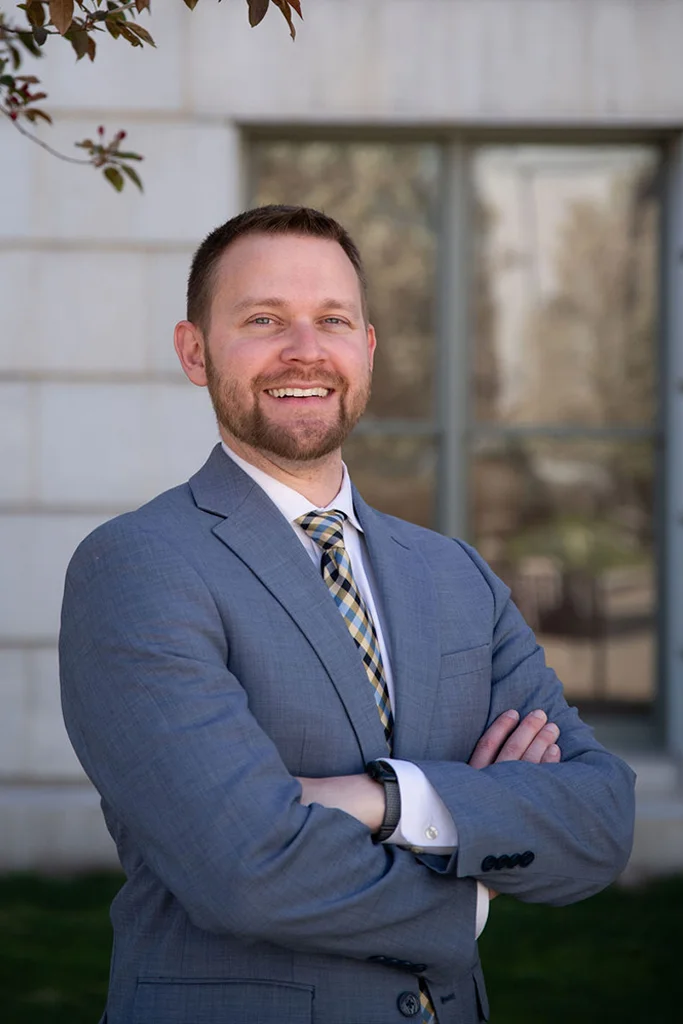
Reid DeChant at DeChant Law brings a background rooted in aggressive advocacy and genuine understanding of what is at stake when the government comes after someone’s livelihood. The courtroom skills that have produced not-guilty verdicts in criminal cases translate directly to the adversarial environment of professional license defense, where the burden is on a licensee to defend their record against investigators and prosecutors who are paid to pursue discipline.
What Triggers a Medical License Investigation in Colorado
Understanding where these investigations originate matters because the source of a complaint often shapes both the evidence gathered and the procedural path that follows. The Colorado Medical Board receives complaints from a wide range of sources, and each comes with its own dynamics.
- Patient or Family Complaints: Allegations of negligent treatment, inappropriate communication, failure to obtain informed consent, or billing irregularities filed directly with DORA can initiate a formal investigation that proceeds independent of any civil lawsuit.
- Mandatory Reporting from Hospitals and Employers: Colorado law requires hospitals, managed care organizations, and certain employers to report physician terminations, resignations under investigation, and adverse peer review findings to the Board, often placing a licensee under scrutiny before they have been formally notified.
- Criminal Charges or Convictions: An arrest or conviction, even for an offense unrelated to direct patient care, can trigger a separate Board investigation focused on whether the licensee’s conduct reflects on their fitness to practice medicine safely and ethically.
- Substance Abuse or Impairment Allegations: Reports of impairment at work, positive drug screens, or self-referrals to treatment programs intersect with Board authority in ways that can lead to HPSP enrollment requirements or practice limitations even when no patient harm is alleged.
- Prescribing Practice Concerns: Colorado regulators scrutinize controlled substance prescribing closely. High-volume prescribers, licensees whose patients have suffered overdoses, and those flagged by Prescription Drug Monitoring Program data are all potential subjects of investigation.
- Billing and Coding Issues: Patterns that suggest fraudulent billing, upcoding, or Medicaid and Medicare irregularities can lead to both state Board action and federal investigations that proceed simultaneously, each with its own procedural requirements.
- Boundary Violations: Allegations involving inappropriate personal or sexual conduct with patients represent some of the most serious Board complaints, often carrying the greatest risk of permanent revocation and potentially intersecting with criminal charges.
How Colorado Medical License Defense Proceedings Actually Work
When the Board receives a complaint, its staff determines whether the allegation falls within the Board’s jurisdiction and whether it presents a credible basis for investigation. If it does, the Board’s investigative staff, which may include licensed investigators and clinical consultants, begins gathering records, interviewing witnesses, and requesting a written response from the licensee. This response opportunity is not optional in any practical sense. What a licensee says, how they frame it, and what documentation they provide at this initial stage can either help resolve the matter quickly or create a record that prosecutors will use against them in a formal hearing.
If the Board concludes that an investigation warrants further action, the matter proceeds to what is called a formal complaint, which triggers the administrative hearing process under the State Administrative Procedure Act. This is not an informal conversation. It is an adversarial proceeding before an administrative law judge, with rules of evidence, witness examination, and a formal record. The ALJ issues an initial decision, and the Board itself reviews that decision and issues a final order. Appeals go to the Colorado Court of Appeals, meaning that mistakes made at the administrative level are difficult to undo later.
In parallel with any formal hearing track, the Board sometimes offers a settlement process through a stipulated agreement. These agreements can resolve matters short of a formal hearing but often include conditions, probationary terms, practice restrictions, or public orders that follow a licensee permanently. Accepting a stipulation without fully understanding what it says, what it costs, and whether a better outcome was achievable is one of the most consequential mistakes a medical professional can make during a Board proceeding.
DeChant Law approaches these proceedings with the same preparation and tenacity applied to criminal defense cases. Reid has trained at the Trial Lawyers College, the program founded by Gerry Spence that builds lawyers capable of authentic, compelling advocacy. That means every client receives individualized attention to their story, not a fill-in-the-blank defense. And as a graduate of the public defender system where he tried cases ranging from misdemeanors to homicides across Denver, Broomfield, and Adams County courts, Reid understands what it means to stand between a client and the full weight of government authority.
Why DeChant Law Is the Right Choice for Colorado Medical License Defense
Medical license defense sits at the intersection of regulatory law, administrative procedure, and high-stakes advocacy. The attorney handling this work needs to be comfortable in adversarial proceedings, skilled at cross-examining government witnesses, and genuinely motivated by the client’s outcome rather than the path of least resistance. Reid DeChant has built a practice on exactly those qualities.
Reid’s background as a public defender gave him volume and variety that few private attorneys accumulate. He handled hundreds of cases in Colorado courtrooms across Denver County, Adams County, Jefferson County, Arapahoe County, Douglas County, and Broomfield, developing the kind of procedural fluency and witness examination skill that formal administrative hearings require. His case results, which include not-guilty verdicts at trial in DUI cases, domestic violence matters, assault charges, and a failure to register as a sex offender case, reflect a lawyer who does not look for the easy exit when a real fight is what the client needs.
Reid is also a member of the National Association of Criminal Defense Lawyers and the Colorado Criminal Defense Bar, organizations that keep him connected to the best defense strategies being developed nationally. For a licensee facing Board action that also involves potential criminal exposure, having one attorney who can coordinate both tracks is practically invaluable. Reid’s recognition from national attorney rating organizations and his peer recognition within the defense bar reflect the consistent quality of his advocacy across different types of cases.
Perhaps most importantly, Reid has always treated clients as partners in their own defense. For a medical professional whose career is under threat, that means being informed at every decision point, consulted before any statement or submission goes to the Board, and represented by someone who understands that your license is not just a credential but the foundation of your professional identity.
Questions About Colorado Medical License Defense
What should I do the moment I receive a notice from the Colorado Medical Board?
The first and most important step is to retain defense counsel before submitting any written response to the Board. The request for a response looks routine but it is the beginning of the formal record. What you write, what you omit, and how you characterize events will be used throughout the proceeding. An attorney can help you understand exactly what is being investigated, what documentation to gather, and how to frame your response in a way that serves your interests rather than inadvertently supplying the Board with additional grounds for action.
Can I lose my license even if no patient was actually harmed?
Yes. Colorado’s Medical Practice Act allows the Board to discipline licensees for conduct that falls below the accepted standard of care, even when no patient suffered quantifiable injury. The same is true for boundary violations, dishonesty, impairment, criminal conduct, and certain prescribing irregularities. Harm to a patient is an aggravating factor but it is not a prerequisite for disciplinary action.
Is the Board investigation confidential?
During the investigative phase, Board proceedings in Colorado have some confidentiality protections. However, once the Board files a formal complaint and the matter becomes a public proceeding, the record becomes accessible. Final Board orders are public documents and are routinely reported to the National Practitioner Data Bank, which means the consequences extend well beyond Colorado to any state where you hold or seek a license.
How long does a Colorado Medical Board investigation typically take?
Timelines vary considerably based on the complexity of the complaint, the volume of medical records involved, whether expert review is needed, and the Board’s current caseload. Investigations that resolve early, before a formal complaint is filed, can conclude in several months. Matters that proceed to a formal hearing and subsequent Board review commonly take one to two years from initial complaint to final order. This timeline has real implications for employment, hospital privileges, and ongoing licensure in other states.
What happens if I also face criminal charges related to the same conduct?
Criminal and administrative proceedings are legally distinct, but they interact in ways that demand careful coordination. Statements made in a Board response can potentially be used in criminal proceedings if not properly handled. Conversely, a criminal conviction typically triggers a separate mandatory reporting obligation and a parallel Board investigation. Having one attorney who understands both tracks, and who can structure your overall defense to avoid damaging one proceeding while managing the other, is significantly more protective than retaining separate counsel who are not coordinating with each other.
Can the Board require me to undergo a physical or psychological examination?
Yes. The Colorado Medical Practice Act authorizes the Board to order a licensee to submit to a physical or mental health examination when there is reason to believe the licensee may be unable to practice safely. Declining to submit to an ordered examination can itself constitute grounds for discipline. The results of those examinations become part of the Board’s record and can lead to conditions on a license, supervised practice requirements, or suspension pending treatment completion.
If I voluntarily surrender my license, does that end the Board’s investigation?
Not necessarily, and in many cases a voluntary surrender is treated as an admission that has consequences equivalent to a revocation. It gets reported to the National Practitioner Data Bank and may affect licensure in other states. Before taking any action, including voluntary surrender, licensees should discuss the full downstream consequences with a Colorado medical license defense attorney who can evaluate whether surrender serves any strategic purpose or simply closes an escape route while leaving the public record unchanged.
How does a Board investigation affect my hospital privileges?
Most hospital credentialing agreements require physicians to self-report pending investigations and any disciplinary action taken against their license. Failing to report can create additional grounds for termination of privileges. An active Board investigation may trigger a parallel hospital peer review, and a Board order restricting your practice or placing you on probation will almost certainly prompt the hospital’s credentialing committee to take its own action. Coordinating your defense strategy across both fronts matters from the very beginning of the process.
Can nurses, dentists, pharmacists, and other licensed healthcare professionals use this type of defense representation?
Yes. While the Medical Board specifically regulates physicians and some other providers, Colorado has separate licensing boards for nurses, dentists, pharmacists, physical therapists, mental health professionals, and many other licensed healthcare providers, all housed within DORA. The procedural framework across these boards is similar, and the same skills that apply to physician license defense apply to any licensee facing an administrative proceeding before a Colorado professional licensing authority.
Is it possible to resolve a Board complaint without any public record?
In some cases, the Board’s investigation concludes with an informal action such as a confidential letter of concern, which does not constitute formal discipline and does not become part of the public record. Whether this outcome is achievable depends entirely on the nature of the complaint, the strength of the evidence, and how effectively the licensee’s response is constructed. This is one reason why the quality of early advocacy, before a formal complaint is ever filed, matters so much. A well-prepared response supported by documentation and thoughtful legal framing sometimes resolves matters at the investigative level that would otherwise proceed much further.
Colorado Communities Where DeChant Law Represents Medical Professionals
DeChant Law represents Colorado healthcare licensees facing Board investigations and administrative proceedings throughout the state. Medical professionals practicing in Denver, including those affiliated with hospitals and clinics along Colorado Boulevard, in the Cherry Creek medical district, near the Anschutz Medical Campus in Aurora, and throughout the central metropolitan area, can reach Reid directly for representation. The firm also serves licensees in Boulder, Fort Collins, Greeley, Loveland, and across the Northern Front Range corridor where medical practices and health systems employ thousands of licensed professionals.
Beyond the urban core, DeChant Law represents clients in Colorado Springs, Pueblo, and the Southern Front Range, as well as in Jefferson County communities including Lakewood, Arvada, Golden, and Wheat Ridge. Arapahoe County licensees in Centennial, Englewood, Littleton, and Aurora have access to the same level of defense representation, as do practitioners in Douglas County, including Castle Rock and Parker. The firm handles matters for professionals in Adams County, Broomfield, and throughout the western suburbs. For rural and mountain community practitioners in areas such as Grand Junction, Durango, Steamboat Springs, and Vail, the administrative proceeding itself typically occurs in Denver regardless of where you practice, and DeChant Law is prepared to represent you throughout that process.
Colorado Medical License Defense Attorney Ready to Represent You
The window between receiving a Board notice and submitting a response is one of the most consequential periods in any medical license proceeding. What happens in those early days shapes everything that follows. A Colorado medical license defense attorney who understands both the regulatory process and the art of vigorous advocacy can change the trajectory of your case in ways that matter for years.
Reid DeChant at DeChant Law is available to speak with physicians, nurses, dentists, pharmacists, and other licensed healthcare professionals across Colorado who are facing Board complaints, DORA investigations, or related criminal charges. Call to schedule a consultation and start building a defense grounded in honesty, preparation, and the kind of relentless advocacy your license deserves.