
Golden Vehicular Assault and Homicide Defense Lawyer
Charges involving a vehicle and serious injury or death sit at one of the most consequential intersections in Colorado criminal law. The evidence is often technical, the emotions surrounding the case run high, and prosecutors in Jefferson County treat these cases as priorities. A Golden vehicular assault and homicide defense lawyer at DeChant Law works through that evidence methodically, challenges the assumptions built into the prosecution’s theory, and builds a defense grounded in the actual facts of what happened on that road.
How Colorado Defines Vehicular Assault and Vehicular Homicide
Colorado statute draws a clear line between vehicular assault and vehicular homicide based on the outcome of the incident. Vehicular assault requires that a driver’s conduct caused serious bodily injury to another person. Vehicular homicide requires that the conduct caused death. Both charges come in two forms depending on what prosecutors allege drove the behavior: driving under the influence or reckless driving. That distinction has major consequences for how aggressively the case is charged and what penalties follow.
Vehicular assault while DUI is a class 4 felony in Colorado, carrying two to six years in prison, with a mandatory minimum of ninety days for a conviction. Vehicular assault while reckless is a class 5 felony. Vehicular homicide while DUI is a class 3 felony, carrying four to twelve years in prison. Vehicular homicide while reckless is a class 4 felony. In cases where the alleged conduct involved extreme indifference to human life, prosecutors sometimes push for vehicular homicide charges under the framework used for second-degree murder, which elevates exposure dramatically. Understanding which charge you are actually facing, and why, shapes every strategic decision from the earliest stage of the case.
What Prosecutors Must Establish, and Where That Case Can Fracture
These cases often appear straightforward from the outside. A collision occurred, someone was hurt or died, and the driver is now charged. But the legal question is whether the specific statutory elements can be proved beyond a reasonable doubt, and that question opens several lines of inquiry that matter enormously to the outcome.
The first is causation. Prosecutors must prove that the defendant’s conduct, not another driver’s actions, not a road defect, not a mechanical failure, actually caused the injury or death. Accident reconstruction in Jefferson County cases frequently involves state patrol investigators whose methodology and conclusions can be contested. Expert testimony about speed, sight lines, the geometry of the collision, and the sequence of events can introduce real doubt about whether the narrative prosecutors present is accurate.
The second is the DUI element if that is how the case is charged. Blood or breath tests taken after a serious crash are subject to the same constitutional and procedural requirements that apply to any DUI stop. Was the draw conducted within two hours of driving? Was the officer’s probable cause for the stop legitimate? Was the testing equipment properly calibrated and the sample properly handled? These are not technicalities in any dismissive sense. They are the foundation the DUI charge rests on, and if that foundation is weak, the more serious felony version of the charge may not hold.
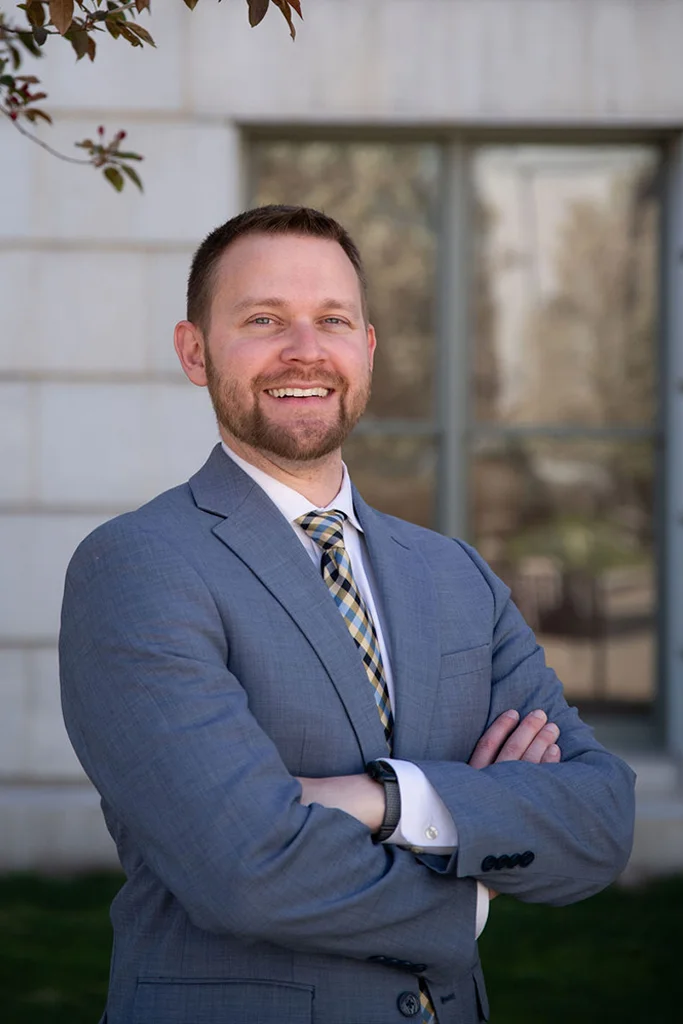
The third is the mental state required. Vehicular homicide and vehicular assault are not strict liability crimes. Recklessness requires a conscious disregard of a substantial and unjustifiable risk. That is a specific mental state, and in cases where the driver had no reason to perceive a risk before the collision, the evidence may simply not support it. Reid has handled serious felony matters in Denver, Jefferson County, and surrounding courts and understands how prosecutors in Golden build these cases and where they can be challenged.
Jefferson County Courts and the Reality of Where These Cases Are Prosecuted
Golden is the county seat of Jefferson County, and serious vehicular offenses arising in Golden, Lakewood, Arvada, Morrison, Evergreen, and along corridors like US-6, C-470, and I-70 through the foothills are typically prosecuted in Jefferson County District Court. The Jefferson County District Attorney’s Office handles these cases with dedicated prosecutors who regularly work alongside accident reconstruction teams and toxicologists. They move quickly after charges are filed, and that pace creates pressure on defendants who do not have counsel in place early.
Jefferson County juries tend to be highly attentive to expert testimony and to the credibility of the investigation. Cases that turn on reconstruction evidence, blood alcohol methodology, or disputed witness accounts require a defense approach that is technically grounded and persuasively presented at trial. Reid’s background includes trial experience across Jefferson County and other Front Range courts, including cases where the government’s evidence looked substantial until it was tested in front of a jury.
When Accidents Become Felonies: What Distinguishes Prosecution from Tragedy
Not every crash that injures or kills someone results in criminal charges, and the line between a tragic accident and a prosecutable felony is drawn by the element of recklessness or impairment. Prosecutors have discretion in how they charge these cases, and that discretion is often exercised based on the early narrative that gets established in the hours immediately after a crash. Statements made at the scene, the results of an immediate blood draw, the impressions of the first responders, and social media posts can all shape that early narrative before a defense attorney is involved.
One of the most consequential things someone facing these charges can do is stop making statements without counsel present. This is not a matter of appearing uncooperative. It is a recognition that in a vehicular homicide or vehicular assault investigation, the questions being asked by law enforcement are designed to establish the elements of the charge, and answers given in the confusion and distress following a serious crash are often incomplete, inconsistent, or later taken out of context. The right to counsel exists precisely for these situations, and invoking it early is not guilt. It is judgment.
Questions Reid Hears Most Often in These Cases
Can a vehicular homicide charge be reduced to a lesser offense?
Yes. Reduction to a class 4 or class 5 felony, or in some cases a misdemeanor traffic offense, depends on the strength of the evidence supporting the DUI or recklessness element and on how effectively those elements are challenged. Charge reductions in Jefferson County cases happen through pretrial motion practice, successful suppression of evidence, and negotiation that demonstrates the weaknesses in the government’s case. Reid has obtained dismissals and not-guilty verdicts in serious felony matters across Colorado courts.
What happens if the other driver was also at fault?
Comparative fault does not operate the same way in criminal cases as it does in civil cases, but evidence that another driver’s negligence contributed to or caused the collision is directly relevant to the causation element. If the prosecution cannot prove that the defendant’s specific conduct caused the injury or death, the charges should not survive. This is a critical area where accident reconstruction experts and thorough investigation of the other driver’s actions can change the outcome of a case.
Does a prior DUI conviction affect a vehicular assault or homicide charge?
A prior DUI conviction does not create an automatic enhancement of vehicular assault or homicide charges in the way it does for standard DUI offenses, but it can influence prosecutorial decisions, sentencing arguments, and how a jury receives the evidence. In felony cases involving prior DUI history, the sentencing exposure at the higher end of the range becomes a real risk if the case goes to verdict without a strong defense.
How does the DMV process work alongside a criminal case?
A felony vehicular charge triggers not only the criminal prosecution but also action by the Colorado Division of Motor Vehicles against your driving privileges. These are separate proceedings. The outcome of the DMV hearing can affect your license independent of the criminal case, and the two processes run on different timelines. Missing the window to request a DMV hearing, which is very short after a DUI arrest, forfeits your right to contest the suspension administratively. Handling both tracks simultaneously is essential.
Is jail time mandatory for vehicular assault in Colorado?
For vehicular assault while DUI, Colorado law imposes a mandatory minimum of ninety days in county jail as a condition of any sentence, including probation. For vehicular homicide convictions, the sentencing ranges are driven by the class of felony and can result in substantial prison sentences under the Colorado sentencing grid. Whether mandatory minimums apply, and whether the court has any discretion to depart from them, depends on how the specific charge is structured.
What if there were no witnesses besides the people in the vehicles?
The absence of independent witnesses often means the case rests more heavily on physical evidence, accident reconstruction, and the statements of the parties. In those situations, the quality of the investigation itself becomes a central issue. Reconstruction methodology, whether the scene was properly documented, whether data from vehicle event data recorders was properly preserved and analyzed, these are all areas where a defense can successfully challenge the prosecution’s account.
How long does a vehicular homicide case take to resolve in Jefferson County?
Felony cases in Jefferson County District Court, particularly those involving complex evidence like accident reconstruction and toxicology, routinely take a year or more from filing to resolution. That timeline reflects the volume of discovery, the need to retain and prepare expert witnesses, pretrial motion practice, and the court’s docket. Cases that go to trial take longer. Early engagement of defense counsel allows that timeline to be used strategically rather than reactively.
Contact DeChant Law About a Golden Vehicular Assault or Homicide Case
These charges carry consequences that reach far beyond the immediate criminal case, affecting employment, professional licenses, immigration status, and family stability for years. Reid’s background as a public defender and in private practice has given him a deep understanding of how to approach serious felony charges with the kind of tenacity and client-focused representation that these situations demand. If you are facing a Golden vehicular assault or homicide charge, contact DeChant Law to discuss your case and what a real defense looks like for your specific situation.