Colorado Physician License Defense Lawyer
A medical license represents decades of education, sacrifice, and professional identity. When the Colorado Medical Board opens an investigation, sends a complaint letter, or initiates formal disciplinary proceedings, the career you built is not just at risk from a legal standpoint. It is at risk from a practical one. Hospitals revoke privileges. Credentialing committees flag your history. Insurance panels drop providers. The consequences of a board action reach far beyond whatever sanction the board itself might impose, and they can follow you permanently. A Colorado physician license defense lawyer who understands how these proceedings actually work is not a luxury for extreme situations. For any physician who has received formal notice from the Colorado Medical Board, it is the most important call you will make.
The Colorado Medical Board operates under the Colorado Medical Practice Act and is housed within the Department of Regulatory Agencies, known as DORA. The Board has broad authority to investigate complaints, compel disclosure of records, require independent medical evaluations, impose practice restrictions, and pursue formal hearings that can result in suspension or permanent revocation. What many physicians do not realize when they first receive a complaint is that the Board is not a neutral tribunal. It employs investigators, prosecuting attorneys, and expert witnesses whose job is to build a record against you. Responding to a complaint without legal representation, or responding in a way that feels cooperative but legally unguarded, can cement the Board’s case before any formal process ever begins.
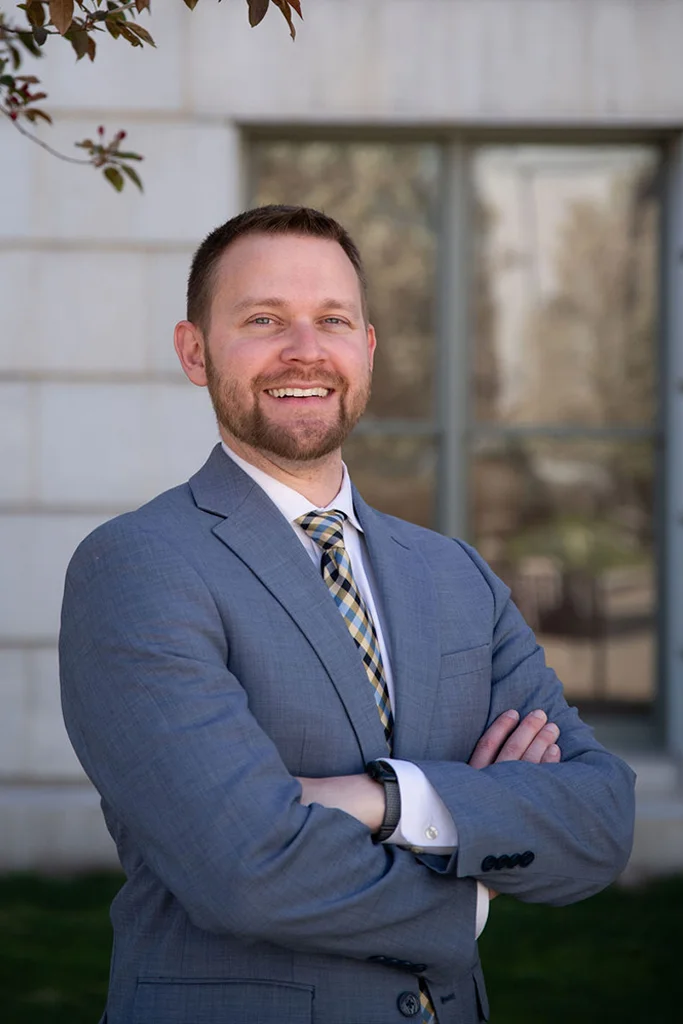
DeChant Law represents Colorado physicians and other licensed medical professionals facing regulatory scrutiny, Board complaints, and formal disciplinary proceedings. Reid DeChant’s background as a trial attorney and former public defender gives him a specific edge in the administrative and quasi-criminal environment of professional license defense, where the lines between regulatory investigation, criminal exposure, and career consequences frequently blur.
What Triggers a Colorado Medical Board Investigation
Board complaints originate from sources physicians often do not anticipate. A patient who feels dismissed or mistreated files a complaint without any clinical basis. A disgruntled former employee reports a physician to DORA. A hospital reports an adverse event under mandatory reporting obligations. A divorce or child custody dispute results in a family member contacting the Board. A malpractice lawsuit generates parallel Board scrutiny. Sometimes the complaint comes from another physician, a peer reviewer, or a hospital credentialing committee.
The Board also receives referrals from law enforcement and from the Colorado Physician Health Program when substance use or mental health concerns have been flagged. Criminal charges, even charges that are ultimately dismissed, can trigger automatic Board review. A DUI conviction, a domestic violence charge, a drug-related arrest, all of these can result in the Board questioning whether a physician’s conduct reflects adversely on fitness to practice. This is one of the areas where a physician’s criminal defense attorney and license defense attorney must coordinate, because what happens in one forum affects the other.
Other common triggers include billing irregularities or insurance fraud allegations, prescribing practice investigations especially in the context of controlled substances, documentation deficiencies identified during an audit, sexual boundary violations alleged by patients or staff, and impairment-related concerns. Each category carries its own investigative track and its own strategic considerations from a defense perspective.
How DeChant Law Approaches Colorado Medical License Defense
Reid DeChant trained at the Trial Lawyers College, a program founded by legendary trial attorney Gerry Spence that teaches lawyers to connect with fact-finders through authentic narrative rather than procedural maneuvering. That training translates directly into professional license defense. Administrative law judges and hearing officers are people. They are moved by context, by character, by the full picture of who a physician is and what actually happened. A defense strategy that reduces a physician to a case number and a set of documented incidents misses the most powerful tool available.
Reid’s time as a public defender gave him experience at volume, in real courtrooms, with real consequences for real people. He has defended clients facing charges ranging from DUI and assault to felonies and homicides, which means he is not unfamiliar with the kind of pressure physicians face when both their freedom and their livelihood are at stake simultaneously. Professional license proceedings often carry that dual pressure. A prescribing investigation that starts with the Board can result in a referral to the DEA. A patient complaint that involves allegations of criminal conduct sits at the intersection of criminal defense and regulatory defense. Reid handles both, which matters when the two are intertwined.
Membership in the National Association of Criminal Defense Lawyers and the Colorado Criminal Defense Bar keeps Reid at the forefront of defense strategy and connected to legal professionals across the country who handle complex, high-stakes cases. For Colorado physicians, this means working with a physician license defense attorney who brings genuine courtroom experience and evidence-based advocacy, not just administrative paperwork management.
Types of Physician License Matters We Handle in Colorado
- Colorado Medical Board complaint response: The initial response to a Board complaint letter is one of the most critical moments in any license defense case. Statements made during this phase can define the entire proceeding, and unrepresented physicians frequently say things that complicate their defense in ways that cannot be undone.
- Controlled substance prescribing investigations: The Colorado Medical Board and state and federal law enforcement have intensified scrutiny of opioid and other controlled substance prescribing. A prescribing pattern that was considered acceptable under prior standards may now draw investigative attention, and the defense requires both medical expertise and legal strategy.
- Criminal charges affecting physician licensure: Convictions and even pending charges for DUI, assault, domestic violence, fraud, or drug offenses can trigger mandatory Board reporting obligations and independent disciplinary proceedings. Coordinating criminal defense strategy with license defense strategy is essential to avoiding outcomes that damage both.
- Substance use and impairment proceedings: The Colorado Physician Health Program serves as a monitoring and treatment referral resource, but participation in CPHP or referrals from CPHP to the Board carry their own procedural implications. Understanding the difference between voluntary participation and compelled disclosure matters.
- Sexual misconduct and boundary violation allegations: These complaints receive particularly aggressive investigation and carry severe potential sanctions. Physicians facing these allegations need representation from the moment the complaint is filed, not after an initial response has already created a record.
- Formal disciplinary hearings before the Office of Administrative Courts: When a matter proceeds to a formal hearing, it is conducted by an administrative law judge at the Colorado Office of Administrative Courts. Trial preparation, witness examination, and evidentiary argument are as critical here as in any courthouse proceeding.
- License reinstatement petitions: Physicians whose licenses have been previously suspended or revoked have avenues to petition for reinstatement. These proceedings require demonstrating rehabilitation, changed circumstances, and fitness to return to practice, and they are best approached with the same seriousness as the original disciplinary matter.
What to Do If You Receive a Colorado Medical Board Notice
The first document you receive from the Board may be a letter advising you that a complaint has been filed and requesting a written response, or it may be a subpoena for records, or a formal notice of charges. Whatever the form, the clock starts immediately. Do not attempt to respond to any Board communication without first consulting a Colorado physician license defense attorney. The urge to explain yourself, to correct the record, or to demonstrate cooperation is understandable, but the Board’s investigators are skilled at eliciting information that builds their case, not yours.
Colorado Medical Board proceedings are handled through DORA, which is located in Denver. Formal disciplinary hearings take place at the Colorado Office of Administrative Courts, also in Denver. If your matter involves parallel criminal proceedings, those cases are filed in the applicable county district court, and the courts serving the Denver metro area include Denver County, Arapahoe County, Jefferson County, Douglas County, Adams County, and Broomfield County, all jurisdictions where Reid DeChant has direct courtroom experience.
Preserve and organize your records now. Patient charts, prescribing records, clinic policies, correspondence with the complainant, and any relevant credentialing documents should be secured and reviewed before they are produced to anyone. Do not alter, delete, or supplement any records after receiving Board notice. Even well-intentioned documentation changes can be interpreted as evidence of consciousness of guilt. Your attorney needs to see the actual records as they existed when the complaint was filed.
Physicians sometimes believe that because they know they did nothing wrong, the process will reflect that. Board proceedings do not always work that way. The standard of proof in most Colorado Medical Board disciplinary proceedings is a preponderance of the evidence, which means the Board needs to believe only that it is more likely than not that a violation occurred. You need an advocate who can challenge that finding at every stage, not someone who assumes the truth will carry the day without professional guidance.
Questions Colorado Physicians Ask About License Defense
Do I have to respond to the Colorado Medical Board’s initial complaint letter?
Yes, but the manner and content of your response are entirely within your control, and they matter enormously. The Board typically sets a response deadline, and ignoring the letter is not an option. What you say in response, however, can either help build your defense or inadvertently give investigators material they will use against you. Always consult a physician license defense attorney before submitting any written response to the Board.
Can a complaint be filed against me anonymously?
The Colorado Medical Board does accept anonymous complaints in some circumstances. Even if a complaint is anonymous, the Board will investigate it if the allegations fall within its jurisdiction. You may not know who filed the complaint, and the identity of the complainant is not always central to the defense strategy, but the allegations themselves and the evidence gathered must be addressed regardless of the source.
Will my malpractice insurance cover license defense costs?
Some professional liability policies include a license defense benefit, but coverage varies significantly by insurer and policy. Many policies have sub-limits for license defense that are substantially lower than malpractice coverage limits, and some exclude certain types of proceedings entirely. Review your policy with your insurance broker and inform your carrier of the complaint. Do not assume coverage applies, and do not assume that the insurer’s retained counsel has the same priorities you do in protecting your license.
What happens if the Board finds a violation?
The range of Board sanctions in Colorado includes informal letters of concern, formal letters of admonition, probationary conditions, practice restrictions, license suspension, and license revocation. The Board can also require remedial education, supervised practice, psychological or substance abuse evaluation and treatment, or conditions specific to the area of the complaint. Not every finding results in the most severe sanction, and the defense process includes opportunities to negotiate outcomes short of formal discipline in appropriate cases.
Is a Colorado Medical Board investigation public record?
Formal disciplinary actions taken by the Colorado Medical Board are published and public. However, investigations that are resolved without formal discipline may not appear on your public profile. This distinction is one reason why early intervention and effective defense matter. An investigation that is resolved informally, or a complaint that is dismissed, may leave no lasting public mark. A formal sanction becomes part of your publicly accessible Board history and must be disclosed in credentialing and re-credentialing applications, which has downstream effects on hospital privileges, insurance panel participation, and employment.
If I was acquitted of criminal charges, does the Medical Board still have grounds to discipline me?
Yes. The Board applies its own evidentiary standard and its own legal framework, which is independent of the criminal justice system. An acquittal in criminal court means the prosecution could not prove its case beyond a reasonable doubt. The Board’s preponderance standard is lower, and the Board may weigh evidence differently than a criminal jury. Additionally, the Board can consider conduct that is not criminal at all, including professional judgment, documentation practices, and patient care standards that have nothing to do with criminal liability.
Can I continue practicing while under investigation?
In most circumstances, yes. A pending investigation does not automatically restrict your license unless the Board has sought an emergency action or interim suspension, which requires a specific showing of immediate threat to public health or safety. However, your employer or hospital medical staff may have their own reporting and response obligations, and some credentialing agreements require disclosure of pending Board investigations. Your attorney can help you understand what you are and are not required to disclose in those contexts while the investigation is ongoing.
What if I self-reported a substance use issue to the Colorado Physician Health Program?
Self-reporting to CPHP before a Board investigation begins is treated differently in Colorado’s regulatory framework than a referral that comes from an external complaint or a criminal arrest. Physicians who voluntarily engage with CPHP may be eligible for confidential monitoring agreements that keep them out of formal Board proceedings, depending on the circumstances. However, the boundaries of that confidentiality and the specific terms of any monitoring agreement require careful legal review before you sign anything. What feels like a supportive process can become a source of compelled disclosures if not handled correctly.
How does a Medical Board complaint affect my DEA registration?
DEA registrations are separate from state medical licenses, but the two are interconnected. A state license suspension or revocation typically triggers DEA action because DEA registration requires a valid state license in the state where the practitioner is registered. Conversely, DEA investigations involving controlled substance prescribing can generate parallel state Board scrutiny. Physicians facing prescribing investigations need to understand that responding to one authority in a way that creates liability in the other is a real risk, and coordinated representation in both forums is important.
What if the complaint involves a patient I treated several years ago?
There is no rigid statute of limitations that prevents the Board from investigating older conduct in all circumstances. The Board can examine medical records from years past, and some categories of allegations, particularly those involving pattern conduct or serious harm, may not be time-barred in the way criminal charges would be. Older complaints do present evidentiary challenges for both sides: records may be harder to reconstruct, witnesses may have different recollections, and the clinical standards in place at the time may differ from current expectations. A strong defense uses these factors strategically.
Colorado Physician License Defense Representation Across the State
DeChant Law represents physicians and licensed medical professionals throughout Colorado. From the Denver metro area, including neighborhoods such as Capitol Hill, Cherry Creek, Washington Park, Stapleton, and LoDo, through the surrounding communities of Aurora, Lakewood, Englewood, Littleton, Arvada, Westminster, and Thornton, Reid DeChant handles professional license defense cases across the Front Range. Representation extends to Colorado Springs and the El Paso County area, to Fort Collins and Larimer County, to Boulder and Boulder County, to Greeley and Weld County, and to the mountain communities and resort areas including Summit County, Eagle County, and Pitkin County. Physicians practicing in Grand Junction and the Western Slope are also represented, as are those in Pueblo, Durango, and the San Luis Valley region. Colorado Medical Board proceedings take place primarily in Denver, which means geographic distance from the capital rarely prevents effective representation regardless of where a physician’s practice is located.
Colorado Physician License Defense Attorney Ready to Help
A Board complaint is not a conversation you want to have alone, and it is not one you want to approach without someone who has stood in front of judges, cross-examined witnesses under pressure, and built defenses for clients when the consequences were severe. Reid DeChant is a Colorado physician license defense attorney who brings the full weight of trial experience and narrative advocacy to every matter he handles.
Contact DeChant Law to schedule a consultation. The earlier you have representation in a Board proceeding, the more options you have, and the better positioned you are to protect the license you worked your entire career to earn.