

Common Laboratory Errors in Denver DUI Blood Tests (And How They’re Challenged)
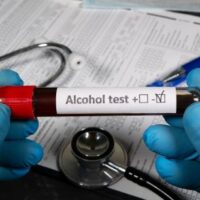
After a driver is arrested in the Denver area for driving while ability impaired (DWAI) or driving under the influence (DUI), a breath or blood sample is typically drawn in order to determine the person’s blood alcohol concentration (BAC). With both breath and blood samples, various types of errors can occur in the process of obtaining the chemical sample, testing the chemical sample, storing the chemical sample, and transporting the chemical sample. According to a recent study published by the journal Forensic Science International: Synergy, toxicology errors are much more common than many people might think, especially in cases involving blood testing.
When it comes to DUI blood tests in particular, there are common laboratory errors that you should be aware of, and which may be relevant to your defense. Consider the following laboratory errors, as well as information about how these mistakes can be challenged in your DWAI or DUI case.
Improper Calibration of the Machines Used to Determine Blood Alcohol Concentration
Machines that are used to determine the amount of alcohol in a blood sample must be properly calibrated in order to provide an accurate result. As the journal article referenced above underscores, calibration issues are one of the major reasons that blood testing provides inaccurate results in DWAI and DUI cases.
How can you challenge these results? A DUI defense attorney who has an ACS-CHAL Forensic Lawyer-Scientist Designation has the training to assess and challenge the calibration issues in the blood sample and the results, citing scientific methods and evidence.
Contamination of Blood Sample Obtained in Chemical Testing
In order for DUI blood test results to be accurate, it is essential that no type of cross-contamination occurs. Accordingly, any testing machine must be properly cleaned prior to new samples going in. If contamination occurs, the results of the test can be invalidated.
How can you challenge results with this error? A Denver DUI defense lawyer can properly assess the blood test results and provide, scientifically, that contamination occurred.
Improper Storage of Blood Sample Prior to Testing
Blood samples must be properly stored before they are tested. If a sample gets too hot, it can ferment, and the results can be invalidated.
How can you challenge a result from improperly stored blood? Our defense team can assess the sample and show that fermentation occurred, proving that the sample was not properly stored.
Preservation Errors
Blood samples in DUI cases must be properly preserved, often with chemicals to prevent fermentation.
If too little or too much of a preservation is used, our DUI defense team can show that the scientific results prove the sample should be invalidated as evidence of your BAC.
Contact a Denver DUI Defense Lawyer for Assistance Challenging the Results of Your Chemical Test
Chemical test results are not always accurate, and in fact, these tests can be compromised by a wide range of errors as we have discussed above. If you are facing DWAI or DUI charges in the Denver area based on the results of a chemical test, it is important to seek legal advice about how to challenge the results. At our firm, our ACS-CHAL Forensic Lawyer-Scientist with DUIDLA certification has the knowledge and experience to fully assess your DUI blood test and to determine the best method for challenging the results. Do not hesitate to reach out to one of the experienced Denver DUI defense attorneys at DeChant Law today to find out more about how our firm can assist you with your DWAI or DUI defense in Colorado.
Source:
pmc.ncbi.nlm.nih.gov/articles/PMC12284658/
