Denver Dental License Defense Lawyer
A dental license represents years of education, clinical training, board examinations, and professional sacrifice. When the Colorado Dental Board initiates an investigation or formal disciplinary proceeding against a licensed dentist, that license, and everything built around it, sits in genuine jeopardy. A Denver dental license defense lawyer serves a function that is entirely different from the defense work done in criminal courtrooms, though the stakes can feel just as severe. Regulatory proceedings before professional licensing boards follow their own procedural rules, apply their own standards of proof, and produce consequences that a criminal acquittal cannot reverse. A dentist who loses their license does not simply face a fine; they lose their livelihood, their practice, their staff, and often the identity they spent a decade building.
The Colorado Dental Board, operating under the Colorado Department of Regulatory Agencies, holds broad authority to investigate complaints filed by patients, insurance companies, competitors, employees, or even law enforcement referrals. That investigation can begin with nothing more than a single complaint letter. From there, it can escalate through a formal hearing process that determines whether a license is suspended, restricted, or permanently revoked. Dentists facing this process often discover, too late, that they treated it like a customer service problem rather than a legal one. Responding to a board inquiry without legal representation is one of the most consequential mistakes a professional can make.
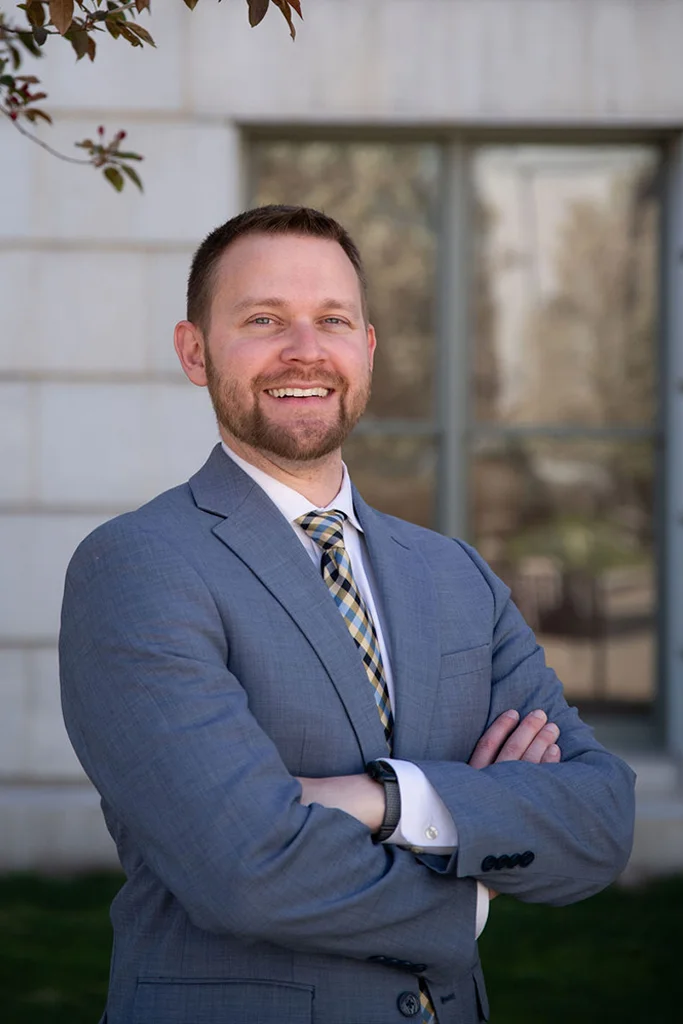
Reid DeChant has built his practice at DeChant Law on the principles of genuine client advocacy, relentless preparation, and the kind of trial-tested litigation instincts that translate directly into administrative and regulatory proceedings. Whether you are a general dentist facing a patient complaint, an oral surgeon under investigation for prescribing practices, or a dental professional whose criminal case is now triggering a licensing review, DeChant Law brings the same tenacious preparation to your board defense that it applies in Colorado’s courtrooms.
What Triggers a Colorado Dental Board Investigation
Not every investigation begins with obvious wrongdoing. In fact, a significant number of dental license matters arise from disputes that the dentist considered routine: a patient who was dissatisfied with a cosmetic outcome, a billing disagreement that escalated, an employee who filed a complaint after being terminated, or a documentation lapse discovered during an audit. The Board investigates the complaint regardless of whether it has merit at the outset, and the dentist’s response during the investigation often shapes the trajectory of the entire proceeding.
Colorado law requires the Dental Board to investigate written complaints that fall within its jurisdiction. Once a complaint is logged, an investigator is assigned, and the respondent dentist typically receives a letter requesting records, a written response, and sometimes a formal interview. Dentists who treat this letter as a routine administrative request and respond without legal review frequently provide statements or records that inadvertently supply the Board with its case. Anything submitted to the Board can be used in subsequent formal hearings, and those hearings are conducted before an administrative law judge with full authority to recommend disciplinary action.
The range of allegations that trigger Board investigations is broad. Clinical complaints involving alleged negligent treatment, unnecessary procedures, or failure to meet the standard of care are common. Prescription-related complaints, particularly those involving controlled substances, are rising in frequency given the regulatory environment around opioid prescribing. Boundary violations, improper patient relationships, and sexual misconduct allegations represent a category where the stakes for the licensee are particularly severe. Billing fraud complaints referred by insurance carriers or Medicaid can run parallel to criminal investigations, creating a situation where a dentist faces simultaneous exposure in two separate legal systems. Understanding which proceeding to prioritize, and how each affects the other, requires an attorney who understands both.
What Dental License Defense in Denver Actually Involves
- Patient Complaint Defense: Complaints alleging substandard care or poor outcomes are the most common trigger for Board investigations; a thorough response requires gathering contemporaneous records, expert review of the clinical standard of care, and a written response that frames the facts before the Board begins forming conclusions.
- Controlled Substance and Prescribing Investigations: Colorado’s Prescription Drug Monitoring Program generates data that regulators and law enforcement actively review; dentists whose prescribing patterns draw scrutiny may face simultaneous Board and DEA inquiries, making early legal intervention especially consequential.
- Criminal Charge Crossover: A conviction or even a pending criminal charge for DUI, assault, fraud, or drug-related offenses can independently trigger a licensing review under Colorado’s unprofessional conduct statutes; the Dental Board is not bound by the outcome of the criminal case when making its own determination.
- Billing and Insurance Fraud Allegations: Medicaid fraud referrals and private insurer complaints can lead to license suspension proceedings entirely separate from any criminal prosecution; a dental license defense attorney in Denver can coordinate the response across both forums to avoid compounding the problem.
- Boundary Violations and Sexual Misconduct: These allegations carry mandatory reporting obligations and often lead to emergency license suspension before any formal hearing; responding quickly and correctly from the moment the allegation surfaces can be decisive.
- Impairment and Substance Abuse Proceedings: Colorado offers a confidential monitoring alternative for licensed professionals who self-report substance use issues under certain conditions; understanding when voluntary participation in a monitoring program is advantageous versus when it creates additional risk requires careful legal analysis.
- License Reinstatement Petitions: Dentists who have already had a license revoked or surrendered under pressure can petition for reinstatement; these proceedings require demonstrating rehabilitation, fitness to practice, and a credible commitment to professional standards that satisfies the Board’s evidentiary threshold.
Why DeChant Law Belongs in Your Corner During a Board Proceeding
Reid DeChant’s background is built on high-stakes litigation in Colorado courtrooms. As a former public defender who handled cases ranging from traffic offenses through homicides in Denver, Broomfield, and Adams County, Reid developed a cross-examination and evidentiary skill set that most practitioners who work exclusively in regulatory settings have never tested. Cross-examining a Board investigator or expert witness in an administrative hearing requires the same command of foundational advocacy principles that wins jury trials. It is not a softer form of legal work; it is the same discipline applied in a different forum.
Reid’s training at the Trial Lawyers College, the program founded by legendary attorney Gerry Spence, reinforced an approach to advocacy centered on honest storytelling, genuine connection with the decision-maker, and the courage to contest allegations that a lesser advocate might accept. Administrative law judges and Board hearing panels are not naive; they see dozens of cases and know when a professional’s response is genuine and when it is scripted defensiveness. Reid’s method of preparing clients to participate in their own defense, not just to sit quietly while a lawyer reads a prepared statement, reflects the same philosophy that has produced not-guilty verdicts at trial across Colorado counties including Jefferson, Arapahoe, Douglas, Adams, and Broomfield.
Reid is a member of the National Association of Criminal Defense Lawyers and the Colorado Criminal Defense Bar, and he has earned recognition from national legal rating organizations for his client-centered practice. These professional affiliations connect him to resources and peer relationships that extend his ability to analyze novel regulatory situations and bring in specialized expertise when a case requires it. For a Denver dental license defense attorney, that network matters when a case involves intersecting criminal and regulatory exposure.
When the Board Opens an Investigation, How You Respond in the First Thirty Days Shapes Everything After
The most important window in any Colorado Dental Board investigation is the period between receiving the initial inquiry letter and submitting the first formal response. Dentists who contact an attorney during this window have a meaningful opportunity to shape the narrative. Dentists who respond on their own, or who delay seeking counsel until after they have already submitted documentation and a written statement, face a harder road because those initial submissions become part of the permanent record.
The Colorado Dental Board operates within the Department of Regulatory Agencies, and formal hearings are conducted through the Office of Administrative Courts, located in Denver at 1525 Sherman Street. An administrative law judge presides over these hearings. The process is more structured than many dentists expect: there are pre-hearing conferences, discovery exchanges, witness disclosures, and formal hearing dates that function much like trial proceedings. The standard of proof in most disciplinary proceedings is preponderance of the evidence, a lower threshold than the criminal beyond-a-reasonable-doubt standard. That distinction matters enormously, and it means that a defense approach calibrated to criminal court is not sufficient without modification.
One of the most common strategic mistakes in Board proceedings is assuming that demonstrating good intentions is enough. The Board’s mandate is to protect the public, not to rehabilitate professionals, and its decisions reflect that mission. A response strategy that focuses exclusively on explaining why something happened rather than on contesting whether it happened at all, or whether it violated a cognizable standard, tends to yield consent agreements and disciplinary outcomes that the dentist later regrets. Contesting allegations that are contestable is not aggressive or adversarial in a counterproductive sense; it is the legitimate exercise of a licensee’s procedural rights, and those rights exist for a reason.
If you have already received a Board inquiry letter, avoid contacting the investigator directly without counsel. Anything said in informal conversations can be documented and introduced later. Preserve all patient records related to the complaint without alteration; tampering with records is a separate ground for disciplinary action that can transform a manageable situation into a serious one. Gather any communications relevant to the underlying complaint, including staff notes, appointment records, and any prior written exchanges with the patient or insurer involved.
Questions Dentists Ask When Their License Is Under Threat
What is the difference between a Colorado Dental Board investigation and a formal hearing?
An investigation is the Board’s fact-gathering phase. It begins when a complaint is received and typically involves requesting records, a written response from the licensee, and sometimes an investigative interview. If the investigation does not result in a dismissal or informal resolution, the matter may be referred for a formal complaint, which leads to a hearing before an administrative law judge. That hearing is an evidentiary proceeding where both sides present testimony and exhibits, and the ALJ issues a recommended decision that the Board then adopts, modifies, or rejects.
Can I lose my dental license in Colorado based solely on a patient complaint, without any proof of wrongdoing?
The Board cannot revoke a license without conducting a proceeding that meets due process requirements, including notice and an opportunity to respond. However, in cases involving allegations of immediate public danger, the Board can impose an emergency suspension before a full hearing. Outside of emergency circumstances, the formal hearing process exists precisely to provide an opportunity to contest the allegations. Whether the evidence ultimately sustains a disciplinary finding depends heavily on how the defense is constructed and presented.
Will a DUI arrest affect my dental license in Colorado?
Yes, it can. Colorado’s unprofessional conduct statutes allow the Dental Board to take action based on criminal convictions, and in some circumstances based on criminal charges that have not yet been resolved. A DUI conviction does not automatically result in license revocation, but it triggers a separate Board review. The outcome of that review depends on factors including the circumstances of the offense, the dentist’s history, and how the matter is presented to the Board. Coordinating the criminal defense and the regulatory response from the outset is considerably more effective than addressing them in sequence.
What happens if I just cooperate with the Board and agree to whatever they propose?
Consent agreements and stipulations that result from unrepresented cooperation frequently contain terms that licensees later find more burdensome than expected: monitoring requirements, continuing education mandates, limitations on certain procedures, or public notations on the license that are visible to patients and credentialing committees. These agreements also become public record and can affect hospital privileges, insurance panel participation, and future licensing applications in other states. Signing a consent order without understanding its full scope is one of the costliest mistakes a dental professional can make in a Board proceeding.
Can the Colorado Dental Board act on a complaint that was already investigated and dismissed by law enforcement?
Yes. The Board applies its own statutory standards and is not bound by law enforcement conclusions. A prosecutor’s decision not to file criminal charges, or a police department’s decision to close an investigation, has no preclusive effect on Board proceedings. The Board’s jurisdiction is separate, its evidentiary standard is different, and it regularly opens or continues investigations in matters where criminal prosecution was declined.
If I self-report a substance use issue to the Colorado Dental Board, will that automatically result in suspension?
Not necessarily. Colorado has a confidential program designed to address impairment among licensed professionals in a way that prioritizes rehabilitation alongside public protection. Self-reporting under the appropriate conditions can, in some circumstances, result in participation in a monitoring agreement rather than formal public discipline. However, whether voluntary disclosure is strategically beneficial depends on the specific facts, the timing of the report, whether a complaint is already pending, and the nature of the substance use. This is a decision that should never be made without legal guidance, because the protections available to a self-reporting licensee are conditional.
How long does a Colorado Dental Board disciplinary proceeding typically take?
Timelines vary considerably depending on the complexity of the complaint, the volume of records involved, and the scheduling availability of the Office of Administrative Courts. From the initial complaint letter to a final Board decision following a formal hearing, the process can span a year or more in contested cases. During that period, the dentist continues to practice unless an emergency suspension has been imposed. Understanding the timeline helps with planning both the legal strategy and the practical management of the practice during the proceeding.
Can a disciplinary action by the Colorado Dental Board affect my license in another state?
Yes. Most states participate in licensing compacts or require disclosure of disciplinary actions taken by other jurisdictions. A public disciplinary order from the Colorado Dental Board will typically need to be disclosed when renewing or applying for a license in another state, and many state boards treat out-of-state discipline as independent grounds for their own review. If you practice in Colorado but maintain a license in another state, or anticipate applying for one, the consequences of a Colorado Board action extend beyond this jurisdiction.
What if the complaint was filed by a former employee who was terminated for cause?
The Board investigates complaints based on the allegations themselves, not the complainant’s motivation. Even if a complaint originates from a disgruntled former employee, the Board will evaluate the underlying allegations on their merits. That said, the complainant’s credibility, the circumstances of their departure, and any documented misconduct on their part are all potentially relevant to the proceeding and can be addressed through proper presentation of the evidence.
Do I need a lawyer who specifically handles dental license defense, or can any attorney help?
The combination of administrative law procedure, Colorado Dental Board regulatory authority, and the potential for parallel criminal exposure creates a situation where general legal knowledge is not sufficient on its own. What matters is an attorney who understands administrative hearing procedure, who is experienced with regulatory agency dynamics, and who has the litigation instincts to contest allegations effectively rather than simply negotiate damage control. Those qualities matter more than a narrow specialty label, and they reflect exactly what Reid DeChant brings to every client he represents.
DeChant Law’s Representation of Dental Professionals Across the Denver Metro and Beyond
Dental professionals facing licensing investigations across the Denver metropolitan area rely on DeChant Law for representation that combines courtroom-tested advocacy with a thorough understanding of Colorado’s regulatory framework. Reid DeChant represents clients from throughout Denver proper, including practices in Capitol Hill, Cherry Creek, Congress Park, LoDo, Washington Park, and the Highland neighborhood, as well as dentists operating in Lakewood, Wheat Ridge, Golden, and Arvada in Jefferson County. The firm also serves dental professionals in Aurora, Centennial, Englewood, and Greenwood Village in Arapahoe County, as well as clients in Littleton, Parker, Castle Rock, and Lone Tree in Douglas County.
To the north, DeChant Law represents licensees from Westminster, Thornton, Northglenn, and Brighton in Adams County, along with dental professionals in Broomfield County, Erie, Longmont, and the broader Boulder County region. Dentists practicing in the mountain communities west of Denver, including Evergreen, Conifer, and Morrison, as well as those serving the growing communities along the I-25 corridor from Fort Collins through Colorado Springs, can also access representation through DeChant Law. Distance is not a barrier in professional licensing matters, which are conducted before the Office of Administrative Courts in Denver regardless of where in Colorado the dental practice is located.
Talk to a Denver Dental License Defense Attorney Before Your Next Response to the Board
Your license is the foundation of everything your career is built on. When the Colorado Dental Board sends a letter, the moment you read it is the moment to act, not the moment to respond. A Denver dental license defense attorney at DeChant Law will evaluate the complaint, identify the strategic options, and help you understand what the investigation is likely to focus on before you put a single word in writing to the Board.
Reid DeChant built this practice on the belief that every client deserves genuine representation and complete transparency about where they stand and what their realistic options are. That philosophy applies as fully to professional licensing defense as it does to the criminal courtroom. If your dental license is under investigation in Colorado, call DeChant Law and speak with a dental license defense attorney in Denver who will give your situation the attention it requires.