Denver Chiropractic License Defense Lawyer
A chiropractic license is the product of years of education, clinical training, board examinations, and professional investment. For Colorado chiropractors, that license is also the foundation of a livelihood, a practice, and a career built over time. When the Colorado Department of Regulatory Agencies or the State Board of Chiropractic Examiners opens an investigation or files a complaint, every one of those years is suddenly at risk. A Denver chiropractic license defense lawyer who understands how professional license proceedings work, and how to respond effectively at each stage, can make the difference between keeping your license intact and losing the ability to practice entirely.
License investigations against chiropractors in Colorado do not follow the same rules as criminal proceedings, but the consequences can be equally severe. The State Board of Chiropractic Examiners has authority to suspend, revoke, place conditions on, or formally reprimand a practitioner’s license. Unlike a criminal case where the state must prove guilt beyond a reasonable doubt, board proceedings use an administrative standard that is easier for regulators to meet. That procedural reality means that practitioners who treat these investigations as routine administrative formalities, or who assume cooperation alone will resolve the matter, often find themselves in a far worse position than they anticipated.
Colorado chiropractors face complaints from patients, referrals from insurers, mandatory reports from employers or colleagues, and DORA investigations triggered by civil litigation or criminal proceedings. Understanding the shape of the process before receiving a formal notice, and securing legal representation as early as possible, gives a practitioner the strongest position from which to respond.
What the State Board of Chiropractic Examiners Can Do to Your License
The State Board of Chiropractic Examiners operates within the Colorado Department of Regulatory Agencies and has broad authority to investigate and discipline licensed chiropractors. When a complaint is filed, DORA’s Office of Investigations typically conducts the initial inquiry. If investigators find sufficient grounds to proceed, the matter can be referred for formal disciplinary action, which may include a statement of allegations and an opportunity for a formal hearing before an administrative law judge.
Board discipline can take several forms depending on the severity and nature of the underlying allegations. A letter of admonition represents the least severe outcome but still becomes part of the public record. A formal reprimand carries greater weight and can affect hospital privileges, insurance panel participation, and future employment opportunities. Probation imposes conditions on practice, sometimes including supervised practice, continuing education requirements, or practice restrictions. Suspension removes a practitioner’s ability to see patients for a defined period. Revocation is permanent, or effectively so, ending the ability to practice chiropractic in Colorado.
Even an investigation that ultimately closes without discipline can cause lasting harm if it is handled poorly. Statements made during an investigation without legal counsel have been used against practitioners in subsequent proceedings. A chiropractor working with a professional license defense attorney in Denver who understands these proceedings can avoid the most damaging mistakes while presenting the strongest possible response to the allegations.
Common Grounds for Chiropractic License Complaints in Colorado
- Patient billing and insurance fraud allegations: Complaints involving upcoding, billing for services not rendered, or improper documentation can originate from private insurers, Medicare, or Medicaid audits and trigger parallel investigations by DORA and law enforcement agencies.
- Standard of care disputes: Allegations that a chiropractor’s treatment fell below the accepted standard of care in Colorado, often arising from patient injuries, adverse outcomes, or expert review following a civil malpractice claim, frequently prompt board complaints.
- Sexual misconduct or boundary violations: The Board takes patient relationship boundary violations extremely seriously, and allegations in this category often result in immediate emergency suspension petitions pending the outcome of a formal investigation.
- Substance abuse or impaired practice: Investigations into whether a practitioner was impaired by alcohol or controlled substances while treating patients can arise from patient complaints, workplace incidents, or arrests that trigger mandatory reporting obligations under Colorado law.
- Failure to maintain adequate records: Colorado law imposes specific documentation requirements on licensed chiropractors. Audits, malpractice litigation discovery, or insurer reviews that reveal inadequate or altered records commonly lead to board referrals.
- Criminal conviction disclosure obligations: Colorado chiropractors are generally required to report certain criminal convictions or charges to the Board within a defined period. Failure to disclose, or a conviction for crimes involving moral turpitude, dishonesty, or patient harm, can independently trigger license discipline.
- Scope of practice violations: Practicing outside the authorized scope of chiropractic care in Colorado, including performing procedures not authorized by a chiropractic license or representing credentials not held, can form the basis for a disciplinary complaint.
How to Respond When a Complaint or Investigation Begins
If you receive correspondence from the Colorado Department of Regulatory Agencies, the Office of Investigations, or the State Board of Chiropractic Examiners, the most consequential decision you will make is whether to retain a professional license defense attorney before you respond to anything. Practitioners frequently receive an initial inquiry letter asking for a written response to the allegations. That response, if submitted without legal guidance, can inadvertently confirm facts the investigator has not yet established, volunteer damaging context, or foreclose defenses that would otherwise be available. An attorney who handles professional license matters can review the complaint, identify what has and has not been alleged, and craft a response that addresses the inquiry without creating new exposure.
Your records are likely to be the central evidence in any chiropractic license proceeding. Before responding to any DORA inquiry, preserve all patient records related to the complaint, all billing documentation, correspondence, and scheduling information. Do not alter, delete, or selectively compile records at this stage. Producing records that appear to have been modified after the fact is far more damaging than whatever the underlying records may show. A defense attorney can help you understand exactly which records are responsive to a given request and how to produce them properly.
The Colorado Office of Administrative Courts handles formal hearings in DORA disciplinary proceedings. If the investigation proceeds to a formal complaint and hearing, the matter will be heard by an administrative law judge according to the Colorado Administrative Procedure Act. The timeline from initial complaint to formal hearing can span many months, and practitioners should expect the process to require active participation, including discovery, document production, and potentially expert witness preparation.
One common and costly mistake is assuming that a complaint will be dismissed on its own because the allegations are unfounded. Board investigations are not resolved simply because a practitioner believes they acted appropriately. Regulators are not advocates for the practitioner; they are tasked with evaluating compliance with Colorado law and professional standards. Presenting a well-organized, documented defense through experienced legal counsel is the most effective way to reach a favorable outcome, whether that means an early dismissal, a negotiated resolution that avoids formal discipline, or a successful defense at a formal hearing.
Why DeChant Law Is the Right Choice for Colorado Chiropractic License Defense
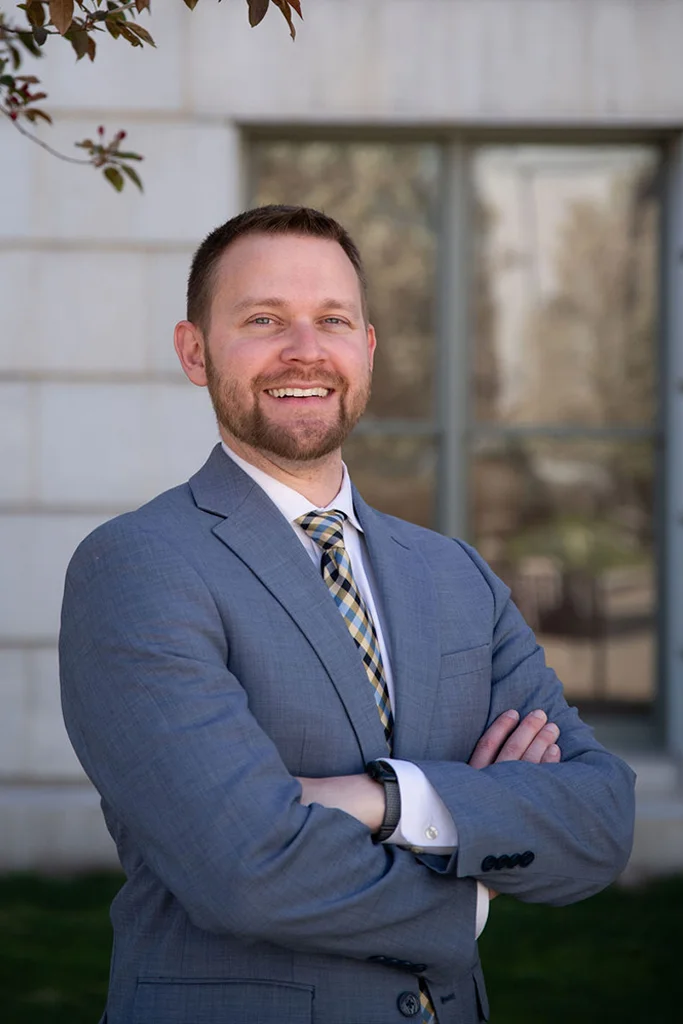
Reid DeChant built his practice around clients facing situations where the outcome carries real, lasting consequences. As a former public defender, Reid handled a high volume of cases across Denver, Broomfield, Adams County, and surrounding courts, developing the kind of trial and administrative advocacy experience that matters when a formal hearing is on the table. His training at the Trial Lawyers College, the program founded by Gerry Spence that focuses on authentic storytelling and genuine human connection as the foundation of advocacy, directly shapes how Reid approaches cases where a practitioner’s professional story needs to be told clearly and compellingly to a decision-maker who has only seen a complaint file.
Professional license proceedings share important structural elements with criminal defense, including the need to respond precisely to allegations, the importance of how facts are framed, and the high cost of unguided cooperation. Reid’s background in criminal defense, including cases ranging from DUI and assault to serious felony charges, means he approaches regulatory proceedings with the same discipline he brings to courtroom defense: understanding what the state has, identifying what it lacks, and building a response that protects the client’s position at every stage.
Reid is a member of the National Association of Criminal Defense Lawyers and the Colorado Criminal Defense Bar, organizations that keep him connected to developments in advocacy strategy and procedure. His case results in criminal proceedings, including outright dismissals and not guilty verdicts at trial across multiple Colorado jurisdictions, reflect a practice that does not accept an unfavorable outcome when a better result can be pursued. Chiropractors whose licenses and careers are on the line deserve that same standard of representation.
Questions About Chiropractic License Defense in Colorado
What triggers a chiropractic license investigation in Colorado?
Investigations can be triggered by patient complaints filed directly with DORA, mandatory reports from employers or healthcare facilities, referrals from law enforcement or other licensing boards, audits by Medicare or private insurers, or adverse outcomes in civil malpractice litigation. Any of these pathways can initiate a DORA inquiry even when the underlying conduct was entirely appropriate.
Do I have to respond to a DORA inquiry letter?
You typically have an obligation to cooperate with a licensing board investigation, and failure to respond can itself constitute a basis for discipline. However, the form, timing, and content of your response are not dictated by DORA. Speaking with a professional license defense attorney before submitting any written response is the most important step you can take at this stage.
Can a chiropractic license investigation lead to criminal charges?
Yes. Investigations involving billing fraud, insurance fraud, substance diversion, or patient harm can result in referrals to the Colorado Attorney General, local district attorneys, or federal prosecutors. The administrative and criminal proceedings can run simultaneously, which creates serious complexity and makes early legal representation critical.
Will the public know about my license investigation?
Under Colorado law, formal disciplinary actions that result in any form of discipline become part of the public record and are typically accessible through the DORA license lookup database. An investigation that closes without discipline is generally not publicly disclosed. This makes early, effective representation especially important, as the goal of avoiding any public disciplinary record depends on resolving the matter before formal findings are issued.
Can I continue practicing while under investigation?
In most cases, yes. A DORA investigation alone does not suspend a license. However, if the Board believes a practitioner poses an immediate public health risk, it has authority to seek an emergency suspension before a formal hearing. Understanding whether emergency action is a realistic risk in your specific situation is something a license defense attorney can evaluate based on the nature of the allegations.
What happens if the Board and I reach an agreement rather than going to a formal hearing?
DORA has authority to resolve investigations through stipulated agreements, which function similarly to plea agreements in criminal proceedings. These can include agreed conditions, reprimands, or other terms in exchange for avoiding a formal hearing. Entering a stipulated agreement has lasting consequences for your license record and any future disciplinary proceedings, so understanding the full implications before agreeing to any terms is essential.
How does a Colorado chiropractic malpractice lawsuit affect my license?
A civil malpractice judgment or settlement does not automatically result in license discipline, but it can prompt a board investigation, particularly if the underlying facts suggest a pattern of care issues or if a court proceeding produces findings that reflect on professional conduct. Malpractice insurers also have reporting obligations in certain circumstances, which can independently notify the Board of a resolved claim.
Can out-of-state disciplinary action affect my Colorado chiropractic license?
Yes. Colorado chiropractors who hold licenses in other states may have disclosure obligations to the Colorado Board if they receive discipline in another jurisdiction. Discipline in one state can trigger a Colorado investigation even when the underlying conduct did not occur in Colorado. Practitioners licensed in multiple states should understand their disclosure obligations and respond carefully to any out-of-state proceedings.
What if the complaint against me was filed by a competitor or out of personal animus?
The motivation behind a complaint does not determine whether DORA investigates it. Even complaints filed in bad faith must be responded to properly. The appropriate avenue for addressing a retaliatory or bad-faith complaint is through the legal response process itself, presenting evidence that undermines the credibility of the allegations and the complainant, not by ignoring the inquiry or attempting to resolve it informally.
How long does a chiropractic license investigation typically take in Colorado?
Timelines vary significantly depending on the complexity of the allegations, the volume of records involved, and whether the matter proceeds to a formal hearing. An investigation that closes at the inquiry stage may resolve within several months. A matter that proceeds through a formal administrative law judge hearing can take well over a year. The length of the process makes early representation more valuable, not less, since decisions made at the earliest stages shape everything that follows.
Chiropractic License Defense Representation Across the Denver Metro and Colorado
DeChant Law represents chiropractors and other licensed professionals facing board investigations and disciplinary proceedings throughout the Denver metropolitan area and across Colorado. This includes practitioners based in downtown Denver, Capitol Hill, the Cherry Creek corridor, Wash Park, Highland, and LoDo, as well as those working in the eastern suburbs of Aurora and Centennial, the southern communities of Englewood, Littleton, and Lone Tree, and the western areas of Lakewood and Wheat Ridge. Practitioners in Arvada, Westminster, Thornton, Northglenn, and Broomfield, as well as those in Boulder and the surrounding communities of Lafayette, Louisville, and Longmont, can also reach our office for representation in proceedings before the State Board of Chiropractic Examiners. We also serve clients in Fort Collins, Greeley, Loveland, Colorado Springs, Pueblo, Castle Rock, Parker, and other communities across the state where DORA investigations and Colorado Office of Administrative Courts proceedings may arise.
Denver Chiropractic License Defense Attorney Ready to Help
A DORA investigation or board complaint is not the kind of situation that benefits from a wait-and-see approach. The record you create in the first weeks of an investigation follows the case through every subsequent stage. Working with a Denver chiropractic license defense attorney who understands how these proceedings are built and how to respond at every step gives you the clearest path to protecting your license, your practice, and the career you have worked to build. Reid DeChant represents practitioners who need focused, direct legal advocacy when their professional standing is on the line. Call DeChant Law to schedule a consultation and discuss your situation before the next deadline in your case.