Winter Park Felony Lawyer
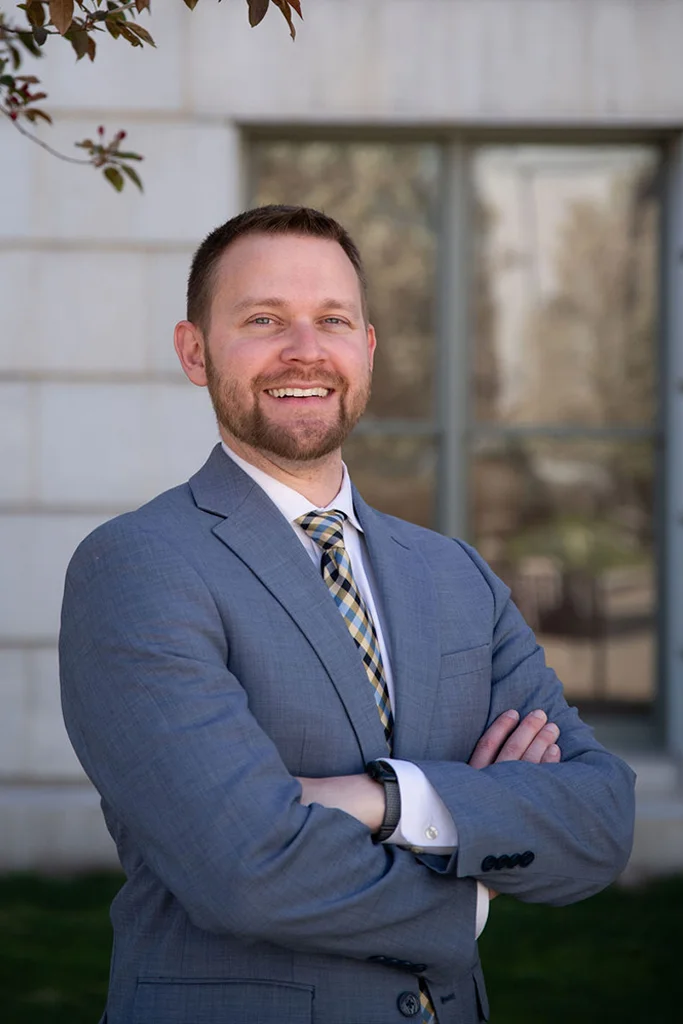
A felony charge in Grand County changes things fast. Your job, your housing, your ability to own a firearm, your visa status if you’re not a citizen, the custody arrangement you fought for, all of it sits in the balance. Winter Park felony lawyer Reid DeChant has handled serious charges at every level, from public defender work across the Front Range to private practice, and he knows what prosecutors look for, where cases have weaknesses, and what it actually takes to defend someone effectively at trial.
What Makes Felony Charges in Grand County Different from a Misdemeanor
The practical difference between a felony and a misdemeanor is not just sentencing. Felonies in Colorado are prosecuted in district court, not county court. That means different judges, longer timelines, more formal pretrial procedures, and a prosecution team that is better resourced and more experienced than what you typically see on a misdemeanor docket.
Grand County District Court handles felony cases out of Hot Sulphur Springs. Prosecutors at the district level are not interested in quick resolutions unless they believe their case has real vulnerabilities. They’re preparing for trial from day one. If your defense attorney is not doing the same thing, you are already behind.
Felony classes in Colorado carry dramatically different penalty ranges. A Class 6 felony, the lowest level, still carries up to 18 months in prison and a fine. Class 1 and Class 2 felonies carry decades, sometimes life. Extraordinary risk classifications, aggravators like weapons use or vulnerable victims, and prior criminal history can all push the sentence above the presumptive range. Understanding where your charge sits on that spectrum, and what arguments might push it lower, is the first conversation worth having.
Charges That Come Up Frequently in the Winter Park Area
Grand County sees a distinct pattern of felony charges compared to urban Front Range counties. The resort economy brings thousands of visitors and seasonal workers into a relatively small, rural environment. That combination produces specific recurring charge types.
Drug possession and distribution charges are common, particularly involving methamphetamine and cocaine. Felony drug cases here often involve weight thresholds that determine whether a charge is simple possession or a distribution offense. Those thresholds matter enormously for sentencing purposes and for whether mandatory minimum provisions apply.
Felony assault charges, including domestic violence-related assault, arise with regularity. Remote living situations, alcohol, and strained relationships produce serious incidents. A domestic violence felony triggers mandatory arrest policies and no-contact orders that can pull you out of your own home before anything is adjudicated. Attorney Reid has obtained Not Guilty verdicts and dismissals in domestic violence cases at the trial level, including strangulation charges that the DA took to trial and lost.
Theft and burglary charges also arise in resort communities. Property crimes involving amounts over $2,000 move into felony territory under Colorado law, and vacation home burglaries get prosecuted aggressively. Vehicular crimes, including felony DUI (fourth offense or injury-involved), also appear on the Grand County docket. If you’ve had prior DUI convictions elsewhere in Colorado, a new charge doesn’t stay a misdemeanor just because you’re in a different county.
Evidence Problems That Actually Move Felony Cases
This is where outcomes get decided. The legal standard on paper tells you what the prosecution needs to prove. The actual case gets won or lost on what evidence they have and whether it was obtained and handled properly.
In Grand County, law enforcement coverage is thin. A single officer conducting a traffic stop on Highway 40 near Winter Park Resort may be making judgment calls without backup, without dashcam footage, or without a reliable chain of custody for physical evidence. Those gaps matter. Search and seizure issues are common, particularly in vehicle stops where the officer needs reasonable suspicion to initiate and probable cause to search. An unlawful stop can suppress everything that came from it.
Witness reliability is another pressure point. In a small mountain community, witnesses often know each other. In seasonal environments, witnesses may be unavailable by the time a case goes to trial. The prosecution’s case can thin out considerably between arrest and the trial date, especially if the investigation was hasty or relied heavily on a single witness’s statement taken at an emotionally charged moment.
Forensic evidence in drug cases requires careful scrutiny. Lab testing procedures, chain of custody documentation, and the qualifications of the analysts who processed the evidence all affect admissibility. These are not technicalities in the dismissive sense. They are the actual mechanisms that ensure the science presented in a courtroom is reliable. When they’re not met, the evidence comes out.
Why Trial Readiness Is Not Optional on a Felony
Some attorneys negotiate every case to a plea. That approach may serve their caseload. It doesn’t always serve their client. At DeChant Law, Reid trained at Trial Lawyers College, where the focus was on courtroom storytelling and connecting a jury to the actual human being sitting at the defense table. That kind of preparation changes how negotiations go too, because prosecutors know the difference between a lawyer who will never take a case to trial and one who genuinely will.
Reid’s case results include Not Guilty verdicts on two counts of Assault with a Deadly Weapon, a Not Guilty on Failure to Register as a Sex Offender, and multiple DUI-related Not Guilty verdicts across Jefferson, Douglas, and other Colorado counties. These were contested cases that went to trial and were won. That background is directly relevant to felony defense work, where the willingness to fight a case through verdict is often what produces the best resolution, whether that resolution is a dismissed charge, a reduced plea, or an acquittal.
Questions Clients Ask About Winter Park Felony Cases
Can a felony charge in Grand County be reduced to a misdemeanor?
Yes, it is possible in certain circumstances. Charge reductions often come through plea negotiations where defense counsel presents factual, legal, or evidentiary weaknesses in the prosecution’s case. First-time offenders facing lower-level felonies may also be eligible for deferred judgments or diversion programs that avoid a felony conviction entirely. Whether that’s available in your case depends on the specific charge, your history, and what leverage your defense attorney brings to the table.
What happens to my driver’s license if I’m charged with a felony DUI in Colorado?
A felony DUI, typically a fourth offense or an offense involving serious bodily injury, triggers DMV express consent proceedings that are separate from the criminal case. Your license can be revoked through the DMV process even before the criminal case is resolved. Those DMV hearings have their own deadlines and procedures, and they require separate attention. DeChant Law has handled numerous express consent proceedings and obtained dismissals in many of them.
If I’m charged with a felony in Winter Park, where does the case get heard?
Felony cases in Grand County are handled by the District Court in Hot Sulphur Springs. This is the 14th Judicial District. It covers Grand and Routt Counties. Cases move through pretrial conferences, motions hearings, and either a jury or bench trial at that courthouse.
How long does a felony case in Grand County typically take?
Felony cases move slower than misdemeanors. From arraignment through trial can easily take a year or more, depending on the complexity of the case, the backlog in the district, and how many pretrial motions are litigated. A contested case with forensic evidence and multiple witnesses will take longer than a straightforward charge with a single incident. Your attorney should give you realistic timelines, not reassurances.
Can I get a felony conviction sealed in Colorado after the fact?
Colorado’s record sealing laws were expanded in recent years and now allow certain felony convictions to be sealed after a waiting period. Drug offenses, in particular, have relatively accessible sealing pathways. However, serious violent felonies and sexual offense convictions remain largely ineligible. An evaluation of your specific conviction, the offense date, and your conduct since sentencing is necessary to determine eligibility.
What should I do if law enforcement contacts me before charges are filed?
Do not give a statement. This is not about having something to hide. It is about the reality that statements made to investigators before an attorney is involved are almost always used against defendants, not for them. You have the right to counsel before answering questions. Use it.
Does it matter that Reid practices primarily in the Denver metro area?
Reid handles cases throughout Colorado, including in mountain and rural district courts. Court appearance and travel logistics do not change the quality of the defense work. What matters is whether your attorney knows Colorado felony law, how to prepare a case for trial, and how to read a courtroom. That doesn’t depend on geography.
Speak with a Grand County Felony Defense Attorney
Felony charges in a small mountain community carry big consequences, and the distance from Denver doesn’t make them easier to fight on your own. If you or someone you know is facing serious criminal charges in the Winter Park area, DeChant Law offers direct access to a Colorado felony defense attorney who has tried cases and obtained results that matter. Reid will review your situation honestly, tell you what he sees in the case, and give you a clear picture of what your defense options actually look like. Reach out to DeChant Law to start that conversation.