
Wheat Ridge Drug Crimes Lawyer
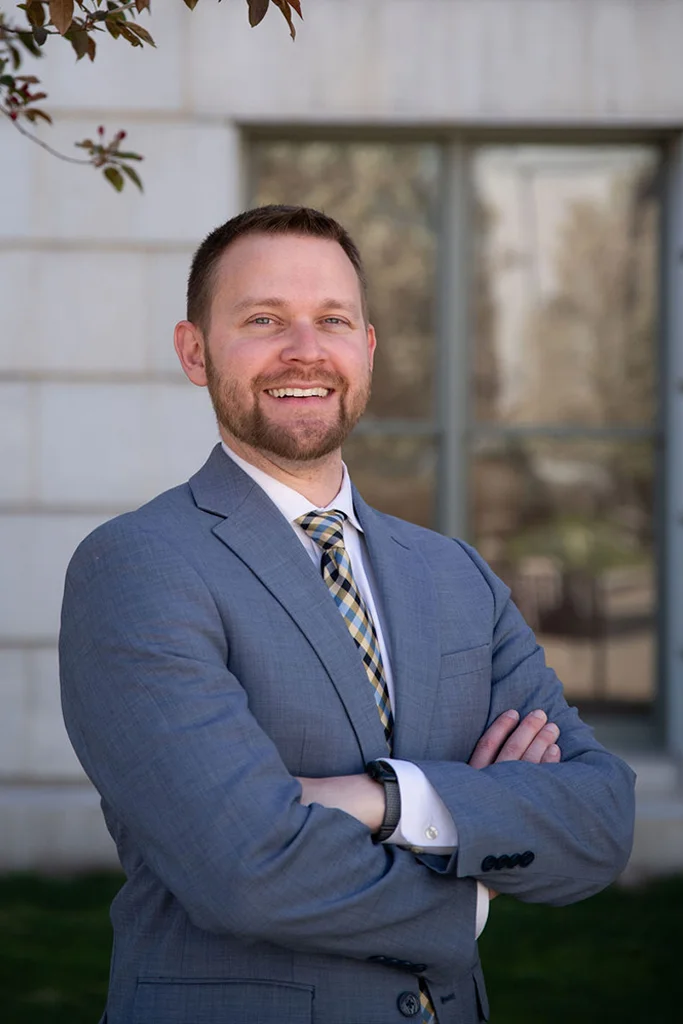
Drug charges in Wheat Ridge carry consequences that reach well beyond a courtroom. A conviction can close doors to housing, employment, professional licensing, and immigration status, sometimes permanently. Wheat Ridge drug crimes lawyer Reid DeChant approaches these cases with the same tenacity he has applied throughout his career as a public defender and in private practice, defending clients across Jefferson County and the surrounding metro area. Whether charges stem from a traffic stop on Wadsworth Boulevard or a longer investigation, the path forward depends on understanding exactly what happened, what the evidence actually shows, and where prosecutors may be vulnerable.
What Jefferson County Drug Prosecutions Actually Look Like
Wheat Ridge sits in Jefferson County, meaning drug charges filed here will move through Jefferson County District Court in Golden. That court has its own culture, its own judges, and prosecutors who handle a significant volume of drug cases drawn from communities along the Highway 93 and I-70 corridors, the Wadsworth corridor, and the denser residential blocks near the Denver border. Understanding that local context matters because prosecutorial discretion, diversion program availability, and plea negotiation norms vary by jurisdiction.
Colorado classifies controlled substances into schedules, and the charge you face depends on the substance involved, the quantity, whether distribution is alleged, and your prior history. Possession of a schedule I or II substance is a level 4 drug felony as a baseline, carrying up to 12 months in the county jail and fines. Distribution or manufacturing charges elevate quickly to level 1 drug felonies, which can bring years in the Department of Corrections. Even misdemeanor possession of schedule III or IV substances carries real consequences that will appear on background checks for years.
Jefferson County prosecutors have actively pursued distribution charges in cases that began as simple possession stops. If law enforcement finds quantities they believe are inconsistent with personal use, digital evidence of transactions, cash, or packaging materials, they often charge possession with intent to distribute rather than possession alone. That distinction matters enormously at sentencing.
Where Drug Cases Break Down Before They Reach Trial
Many drug cases have significant problems in the evidence long before a jury ever hears them. The Fourth Amendment governs how police may stop a vehicle, search a person, or enter a residence, and violations of those limits can result in suppression of the evidence that forms the entire prosecution. A traffic stop that lacked reasonable suspicion, a search that exceeded the scope of a consent, or a warrant obtained on stale or unreliable information can render the drugs, cash, and statements gathered during that encounter inadmissible.
Wheat Ridge Police and Jefferson County Sheriff deputies both patrol the areas where many of these stops occur. The tactics used at Wadsworth and 44th, along the I-70 on-ramps near Ward Road, and throughout Wheat Ridge’s commercial corridors have been challenged in suppression hearings before. Challenging a stop or a search is not a long shot. It requires a careful review of the police report, the body camera footage, the dispatcher logs, and any lab documentation to identify where procedures were not followed or where officers’ stated justifications do not hold up under scrutiny.
Beyond constitutional issues, the reliability of lab testing is another point of attack. Colorado’s CBI crime lab handles the chemical analysis of suspected controlled substances, and the chain of custody from the field to the lab to the analyst’s report involves multiple steps where documentation errors can undermine the prosecution’s ability to prove what the substance actually was. Delays, backlogs, and procedural missteps in lab handling have affected cases in Jefferson County before.
Diversion, Deferred Judgments, and What Happens to Your Record
Not every drug case proceeds to trial or ends in a conviction. Jefferson County has diversion programs and Colorado allows deferred judgment agreements in drug cases, where a defendant enters a guilty plea that is held in abeyance while they complete conditions like treatment, community service, and regular check-ins. If the conditions are met, the case is dismissed. If they are not, the deferred judgment converts to a conviction. These options exist, but they are not automatically offered and they are not always the right choice depending on the specific charge and the individual’s circumstances.
Colorado’s drug code also includes a provision allowing courts to place certain drug offenders into treatment rather than incarceration. Senate Bill 13-250 and its successor provisions restructured sentencing to prioritize rehabilitation for lower-level drug offenders. However, these provisions come with conditions, and repeat offenses or distribution charges may place someone outside their reach. Understanding eligibility requires looking at the specific charge, the individual’s history, and how the Jefferson County court has applied these options in recent cases.
Colorado’s record sealing laws allow certain drug arrests and convictions to be sealed, reducing their visibility in background checks. Possession convictions may be eligible for sealing after a waiting period, while dismissed cases and deferred judgments that were successfully completed may be sealable sooner. For someone whose case is over but whose record continues to affect their life, exploring record sealing can be as important as the original defense.
Common Questions About Wheat Ridge Drug Charges
Does Colorado’s legalization of marijuana affect my drug charge?
Colorado’s legalization of recreational marijuana means personal possession within legal limits is not a crime. But charges still arise from possession of quantities beyond those limits, possession in prohibited locations, distribution without a license, and possession of other controlled substances entirely. Marijuana-related charges outside of legal limits continue to be prosecuted, and out-of-state travelers sometimes face charges when they do not understand where the legal lines fall.
What happens if the drugs were not mine?
Constructive possession, the legal theory that you controlled or had access to a substance even if it was not physically on your person, is how many drug charges are filed. Prosecutors frequently charge everyone in a vehicle or residence when drugs are found. Constructive possession requires the state to prove you knew the substance was there and that you had the ability to exercise control over it. Those elements are not always easy to establish, and proximity alone does not automatically equal possession.
Can a drug conviction affect my professional license?
Yes. Colorado’s professional licensing boards for healthcare providers, attorneys, teachers, contractors, and many others have independent authority to discipline or revoke licenses following a drug conviction. The consequences before those boards operate entirely separately from the criminal case, which is why the outcome of the criminal matter can have ripple effects far beyond the sentence imposed in court.
I was offered a plea deal immediately. Should I take it?
Early plea offers sometimes reflect a prosecutor’s uncertainty about the strength of their evidence. Accepting a plea without first having the evidence reviewed, understanding whether suppression motions might succeed, and knowing what the full collateral consequences are is a significant decision that deserves more than a quick answer. What looks like a reasonable offer on the surface may carry consequences that outlast the sentence itself.
What if law enforcement pressured me to cooperate or become an informant?
This happens, and the pressure applied can be significant. Any conversations with law enforcement about providing information or assistance in exchange for consideration in your own case should not happen without counsel present. What is offered and what is delivered in those arrangements are not always the same, and there are serious safety and legal implications to navigate.
How long do Jefferson County drug cases typically take?
Timelines vary considerably. Misdemeanor cases often resolve within a few months. Felony cases, particularly those involving significant discovery, expert witnesses, or suppression hearings, can take a year or more from arraignment to resolution. Lab backlogs at CBI have historically extended timelines in some cases. The length of the process is one reason why understanding the full picture early matters.
Does hiring a private attorney actually change outcomes compared to a public defender?
Public defenders are capable lawyers who often handle very high caseloads. Reid DeChant’s background as a public defender in Denver, Broomfield, and Adams County gives him direct perspective on the difference that time and focused attention can make. A private attorney can invest more time in reviewing discovery, pursuing suppression motions, and exploring every resolution option. That time investment frequently changes how cases are resolved.
Defending Wheat Ridge Drug Charges Requires More Than a Plea
Reid DeChant’s background spans both the public defender’s office and private practice, and he has tried drug-related matters before Jefferson County courts. He understands that a drug charge arrives at one of the harder moments in a person’s life, and that what happens in court has lasting effects that extend well past any fine or probation term. At DeChant Law, defense in Wheat Ridge drug cases begins with a real review of what happened, what the evidence reflects, and what options exist before any decision about how to proceed is made. Reach out to discuss your situation with a Wheat Ridge drug defense attorney who will look at your case on its own terms.