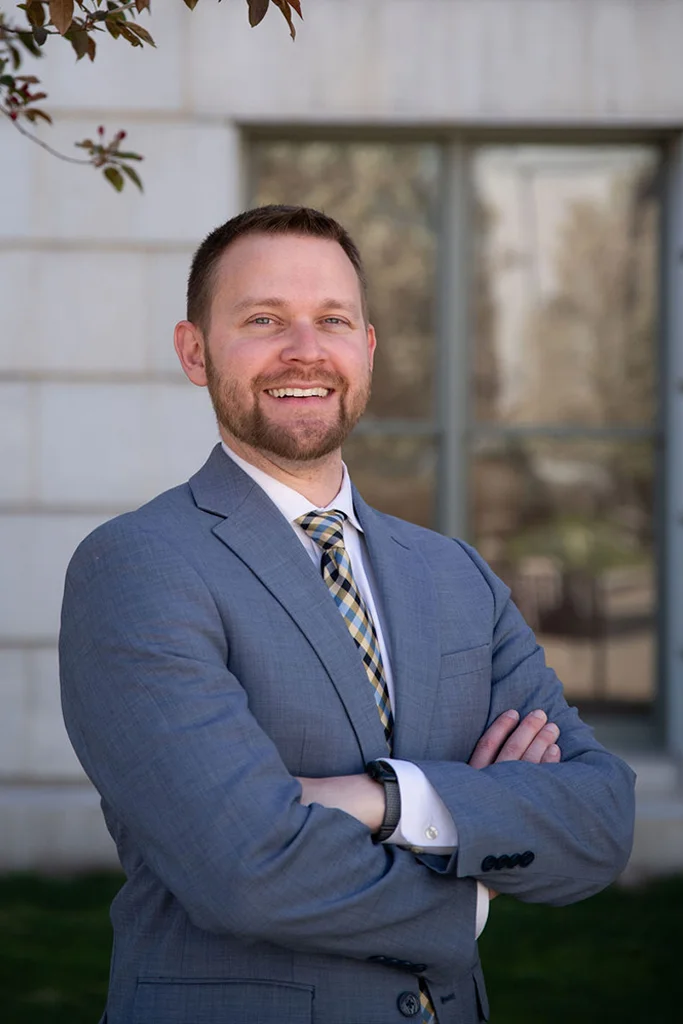

Weld County Drug Crimes Lawyer
Drug charges in Weld County carry real weight. Whether the arrest happened near Greeley, Evans, or out on one of the county’s rural highways, the outcome of a drug case here can touch nearly every part of a person’s life: employment, housing, custody, professional licenses, and for non-citizens, immigration status. Reid DeChant is a Weld County drug crimes lawyer who has spent his career defending people at exactly these moments, understanding that what happens in the courtroom matters well beyond the courtroom itself.
What the Prosecution Is Actually Working With in Weld County Drug Cases
Understanding what the government has, and what it doesn’t, is where a defense begins. Drug prosecutions in Weld County tend to rely on a few standard pillars: a traffic stop or search, physical evidence of a controlled substance, and sometimes a statement made by the person arrested. Each of those pillars has pressure points.
Traffic stops along U.S. 85, U.S. 34, and I-25 through Weld County produce a significant number of drug arrests. That matters because the legality of the stop itself is foundational to whether any evidence found can actually be used. If a stop lacked reasonable suspicion, or if a search extended beyond what the law permits, the evidence recovered may be suppressible. A suppression motion, if successful, can collapse a case entirely.
Constructive possession is another recurring issue in Weld County drug cases. This comes up when drugs are found in a car or home with multiple people present. The prosecution must connect the substance to you specifically, not just to the general vicinity. That connection is often weaker than it first appears, and defense work often involves picking apart whether the government can actually prove knowledge and control beyond a reasonable doubt.
Lab analysis matters too. Colorado law requires the prosecution to produce certified lab results confirming the identity of the substance. Field tests used at the scene are notoriously unreliable, and defense attorneys who know the science can challenge results that courts and prosecutors sometimes treat as settled fact.
How Weld County Charges Are Structured and What They Mean for Your Situation
Colorado divides drug crimes into drug petty offenses, drug misdemeanors, and drug felonies, with the felony category further broken into levels DF1 through DF4. The level of charge depends on the substance, the quantity, and the circumstances of the alleged offense, particularly whether distribution or intent to distribute is alleged.
Simple possession of a small amount of most Schedule I or II substances typically lands as a DF4, which carries a presumptive sentence in the range of six months to two years with a fine. That said, Colorado courts often allow first-time offenders to pursue deferred judgment or drug treatment alternatives, especially under the state’s Drug Offender Surcharge Act framework. The availability of those options depends heavily on how the case is managed from the start.
Distribution charges are a different situation. A DF2 or DF1 charge for distribution or manufacture carries sentences that can reach eight, sixteen, or even thirty-two years depending on aggravating factors. These cases also tend to involve more complex evidence, including confidential informants, controlled buys, and surveillance, each of which brings its own set of issues around reliability and constitutional compliance.
Charges involving fentanyl or methamphetamine in Weld County have drawn particularly aggressive prosecution in recent years, consistent with statewide enforcement priorities. If the alleged amount crosses certain weight thresholds, enhanced sentencing provisions can apply. This is where the difference between a DF3 and a DF2, or a DF2 and a DF1, can mean years in actual sentencing range.
Consequences That Reach Beyond the Criminal Case
A conviction for a drug felony in Colorado triggers consequences that the sentence itself doesn’t capture. Federal student loan eligibility can be affected. Professional licenses, including nursing, teaching, and commercial driving, face mandatory review processes that can result in suspension or revocation. Security clearances are at risk. And for anyone who is not a U.S. citizen, drug convictions trigger federal immigration consequences that can range from deportation bars to permanent inadmissibility, regardless of how long someone has lived in this country or what legal status they hold.
These downstream effects are part of what Reid considers when developing a defense strategy. The goal isn’t simply to minimize time in custody. It’s to understand the full picture of what a particular outcome means for that specific person, and to make decisions accordingly. That requires knowing the client’s situation and treating it as individual, not as a standard case file to be processed.
Questions People in Weld County Actually Ask About Drug Charges
Can a drug charge be sealed or expunged from my record in Colorado?
Colorado doesn’t use the term expungement for adults except in very limited juvenile contexts. What the law does allow is record sealing, and Colorado has expanded those eligibility windows in recent years. Many drug misdemeanor and DF4 convictions can be sealed after a waiting period, as can arrests that did not result in conviction. The waiting period and eligibility depend on the specific charge and outcome. It is worth having that conversation with an attorney even if the case is old.
I was pulled over and the officer used a drug dog. Does that make the search legal?
Not automatically. A drug dog alert can provide probable cause to search, but the stop itself must have been lawful to begin with, and the dog’s reliability can be challenged. Courts have also placed limits on how long a stop can be extended for the purpose of waiting for a dog to arrive. If the timeline of the stop stretches beyond what a lawful stop would justify, suppression is a legitimate argument.
What is the difference between a deferred judgment and a plea to the charge?
A deferred judgment means the court accepts a guilty plea but does not enter a conviction immediately. Instead, you serve a probationary period with conditions. If completed successfully, the case is dismissed and the record sealed. It is not a guaranteed offer in every case, and the terms matter, but for someone whose primary concern is avoiding a permanent record, it can be the right outcome when available.
Does it matter that I only had a small amount for personal use?
Quantity is a factor in how the charge is graded, but Colorado’s thresholds can be surprising. Some substances trigger felony possession at weights that feel small in practice. Additionally, the packaging of a substance, even in small individual amounts, can support an intent to distribute inference that changes the entire trajectory of the case.
Will I have to go to trial or can this be resolved without one?
Most criminal cases, including drug cases, resolve through negotiation rather than trial. But the strength of a negotiated outcome depends almost entirely on what the defense has developed before any offer is made. Prosecutors respond to well-prepared defense files. That means the investigation, the motions work, and the evidentiary analysis happen before any resolution conversation is productive.
I was charged along with someone else. Can the prosecution use what that person says against me?
Co-defendant statements and cooperating witnesses are among the most complicated pieces of evidence in drug cases. There are constitutional limits on how prior out-of-court statements can be used, and the reliability of a cooperating witness who may be seeking a benefit from the government is always a legitimate line of attack. These situations require careful, case-specific analysis.
What happens at a first appearance in Weld County?
At first appearance, the judge reviews the charges, advises you of your rights, and sets conditions of release. Bond can be set at a level that makes release difficult depending on the charge level. Having an attorney present at this stage can make a material difference in bond conditions, which in turn affects your ability to participate in your own defense while the case is pending.
Working with DeChant Law on a Weld County Drug Case
Reid’s background includes time as a public defender handling cases across multiple Colorado counties before moving to private practice. That experience matters because it shapes how he reads a case file, what he looks for in police reports and lab results, and how he engages with prosecutors who are making charging and plea decisions. Drug cases in Weld County deserve counsel who approaches them with that kind of hands-on, case-specific attention. If you are dealing with a drug charge in Weld County, reach out to DeChant Law to talk through the facts and get a clear sense of what the defense actually looks like for your situation.