
Silverthorne Vehicular Assault and Homicide Defense Lawyer
A crash on I-70 through the Eisenhower Tunnel corridor, a collision on Highway 9 near Dillon Reservoir, a winter night on a mountain road that ends with someone seriously hurt or dead. These are the circumstances that bring vehicular assault and vehicular homicide charges in Summit County. They carry prison sentences measured in years, not days, and they land in courts where prosecutors treat them with the same gravity as other violent felonies. A Silverthorne vehicular assault and homicide defense lawyer at DeChant Law understands what is actually at stake in these cases and what it takes to challenge how they get built by law enforcement and the DA’s office.
What Separates These Charges from an Ordinary Traffic Case
Colorado draws a sharp line between a traffic offense and a criminal one, and that line runs through the concept of fault and conduct, not just outcome. A fatal crash does not automatically produce a vehicular homicide charge. What matters is whether the driver was operating recklessly or while impaired. That distinction carries real weight because it shapes the entire theory of prosecution.
Vehicular assault under Colorado law applies when a driver operates a vehicle recklessly and causes serious bodily injury to another person. The charge also attaches when impairment is alleged, and in that version prosecutors do not have to prove recklessness at all. Vehicular homicide works the same way: the reckless conduct track and the DUI track. Both versions of vehicular homicide are Class 3 or Class 4 felonies depending on the track, and both carry potential prison time under the Colorado presumptive sentencing ranges.
What this means in practice is that a case labeled “vehicular homicide DUI” is not the same legal fight as one labeled “vehicular homicide reckless driving,” even though both involve a fatal collision. The evidence the prosecution needs, the defenses available, and the way the case moves through Summit County District Court all differ based on that underlying theory. Understanding exactly which version of the charge is being pursued is step one in building a defense.
How the Mountain Corridor Shapes These Investigations
Summit County is not a place where these cases work the same way they do in a flat, urban setting. The terrain matters. Roads like I-70 through the Eisenhower-Johnson Tunnel, US-6 over Loveland Pass, and Highway 9 through Frisco and Breckenridge carry a unique combination of high-speed interstate traffic, ski season congestion, tourist drivers unfamiliar with altitude and black ice, and a mountain driving environment that changes minute to minute in winter. What looks like impaired driving on a dashcam or in a crash report can be a driver encountering conditions that would challenge anyone.
Colorado State Patrol handles the majority of serious crash investigations on these corridors, and their reconstructionists will analyze vehicle speeds, braking distances, road surface conditions, sight lines, and point of impact to establish a narrative of fault. That narrative is not always correct. Reconstruction experts hired by the defense regularly find errors in those calculations, overlooked physical evidence, or conclusions that do not hold up under scrutiny. Summit County’s mountain roads also introduce weather data, road treatment records, and witness visibility issues that are absent in most urban crash cases.
The DUI component of these charges, when present, draws on blood test results, field sobriety testing done often at altitude where physiological effects differ from sea level, and the arresting officer’s observations. Each of those pieces has specific vulnerabilities that a defense attorney who handles impaired driving cases seriously should know how to examine.
Defenses That Actually Apply in These Cases
The defense in a vehicular assault or homicide case is not a single argument. It is a set of questions that each deserve a careful answer before trial strategy gets set.
Was the driver’s conduct actually reckless under Colorado’s legal definition, or was it a mistake or misjudgment? The statute requires conscious disregard of a substantial and unjustifiable risk. That is a specific mental state, and prosecutors have to prove it. A driver who made a poor decision in a sudden emergency does not necessarily meet that standard.
If the DUI track is the theory, was the blood or breath test obtained properly? Colorado’s express consent laws govern how chemical testing is requested and administered. If the testing process had procedural errors, or if the blood draw was mishandled or delayed in ways that affected the result, those issues belong in the defense.
Was the driver actually the cause of the collision? In a multi-vehicle accident, causation is not always obvious. Another driver’s actions, a road defect, a mechanical failure, or sudden weather can contribute to or fully explain a crash. If causation is contested, the prosecution’s case can fracture.
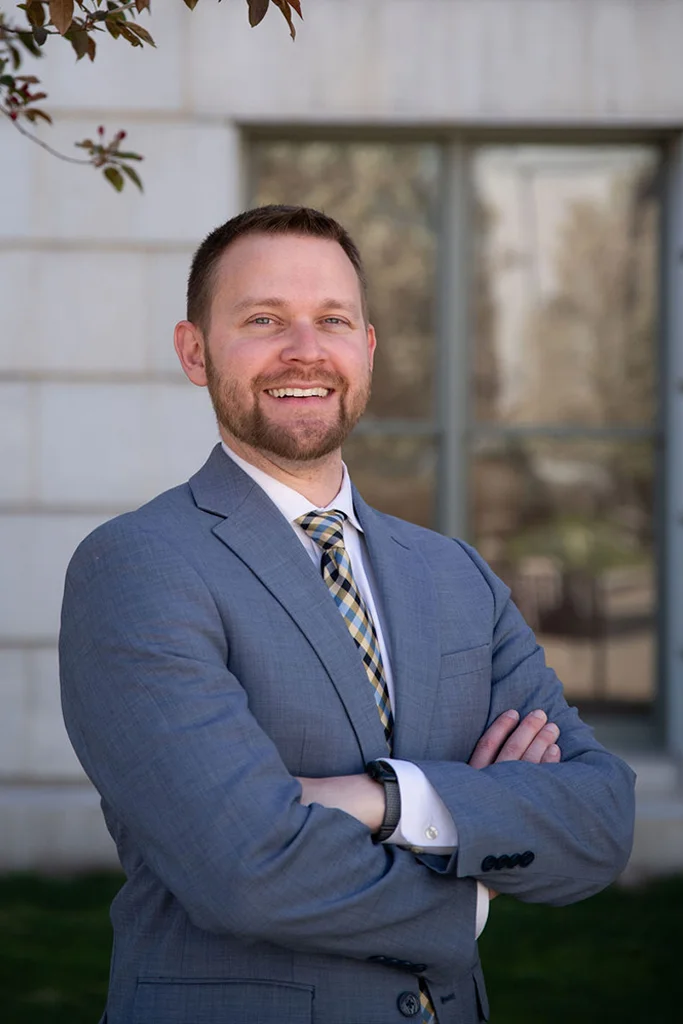
Reid DeChant has handled serious criminal cases including assault and domestic violence charges at trial, and he understands that the courtroom is where stories get told and tested. That preparation begins long before any trial date, in the investigation, the motions practice, and the way evidence gets scrutinized from the start.
Questions People Ask About These Charges in Silverthorne and Summit County
What is the difference between vehicular assault and vehicular homicide in Colorado?
The distinction is the injury outcome. Vehicular assault applies when serious bodily injury results. Vehicular homicide applies when a death results. Both charges come in two versions: a reckless driving track and a DUI track, and the DUI track generally carries more severe penalties.
Will I face both criminal charges and a DMV hearing?
If the charge involves impairment, yes. Colorado’s express consent framework triggers a separate DMV action to revoke your license independently of the criminal case. DeChant Law handles both proceedings, which is important because what happens in one can affect the other.
Can a vehicular homicide charge be reduced or dismissed?
It depends entirely on the facts. Charges have been dismissed and reduced in cases where the investigation had flaws, where causation was genuinely disputed, or where the evidence of impairment or recklessness was weaker than it initially appeared. No outcome can be guaranteed, but these cases are not automatically closed to defense arguments.
What courts handle these cases in Summit County?
Summit County District Court in Breckenridge handles felony charges, including vehicular assault and vehicular homicide. Familiarity with how the DA’s office in that judicial district operates and how local judges approach these cases matters in how defense strategy gets built.
Does being from out of state complicate the case?
Summit County sees a large volume of visitors from Colorado’s Front Range and from out of state. That does not change the charges, but it does raise practical issues around court appearances, driving privileges in the home state, and professional consequences for licensed individuals. These factors need to be considered early.
How does altitude affect field sobriety testing?
This is a legitimate defense consideration in mountain communities. Research has documented that altitude affects balance and coordination in people who are not acclimated, which can produce false positives on standardized field sobriety tests. Officers trained primarily at lower elevations may not account for this adequately.
What happens to my driver’s license while the criminal case is pending?
If a revocation action was triggered by the arrest, there is a short window to request a DMV hearing to contest it. Missing that deadline can result in automatic suspension while the criminal case is still in progress. That timeline makes early legal involvement important.
Facing Vehicular Assault or Homicide Charges in the Silverthorne Area
The mountain communities along I-70, including Silverthorne, Dillon, Frisco, and Breckenridge, sit in Summit County’s jurisdiction and see these cases regularly due to the volume of traffic on the corridor and the difficulty of driving conditions year-round. A Silverthorne vehicular assault or homicide defense attorney who handles DUI cases with the same seriousness as serious felonies is the right fit for what these cases actually require. Reid DeChant has built his practice on understanding both sides of that equation, the impaired driving mechanics and the criminal defense that serious felony charges demand. Transparent communication, genuine investment in the outcome, and preparation to take a case all the way through trial are what DeChant Law brings to clients in Summit County and across Colorado’s mountain communities.