San Miguel County Vehicular Assault and Homicide Defense Lawyer
A crash that results in serious injury or death changes everything. Within hours, law enforcement is reconstructing the scene, drawing blood, and building a file. By the time charges are formally filed, the prosecution may already have months of investigative work behind them. San Miguel County vehicular assault/homicide defense demands a lawyer who understands how quickly these cases take shape and what it actually takes to push back against that momentum.
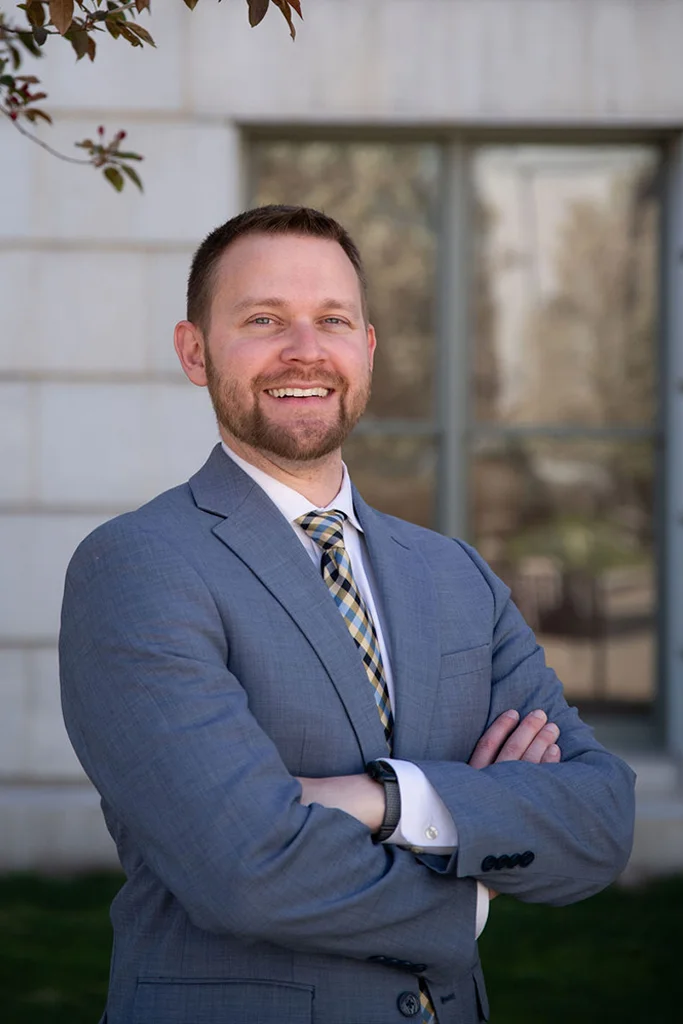
Reid DeChant has handled serious felony charges throughout Colorado, including cases involving violence, death, and the kinds of consequences that follow people for life. His time as a public defender across Denver, Broomfield, and Adams County exposed him to the full spectrum of criminal charges, from traffic offenses through homicide. He brings that experience to clients in San Miguel County and the surrounding mountain communities.
What Colorado Actually Charges, and Why the Distinction Matters
Vehicular assault and vehicular homicide are not the same charge, though they are often confused with each other and with standard DUI offenses. The distinction shapes everything: the sentencing range, the class of felony, the collateral consequences, and the defense strategy.
Vehicular assault under Colorado law applies when a driver causes serious bodily injury to another person while operating a vehicle under the influence of alcohol or drugs, or while driving recklessly. Serious bodily injury has a specific legal definition. Not every injury clears that threshold, and whether the injury qualifies is often contested.
Vehicular homicide applies when someone dies. A DUI-related vehicular homicide is a Class 3 felony in Colorado. A recklessness-based vehicular homicide, where no impairment is alleged, is a Class 4 felony. The difference between a Class 3 and Class 4 felony can mean years of additional prison exposure, so how the prosecution frames your conduct is not a minor detail.
These charges are also distinct from a standard DUI in a critical way: they do not require proof that your BAC exceeded any particular threshold. A person can be charged with vehicular homicide without being legally drunk. Recklessness, the kind of driving that substantially deviates from how a reasonable person would drive, is enough. That broader hook means the state has more paths to a conviction, and the defense has to account for all of them.
How These Cases Are Built in Mountain Counties
San Miguel County sits in the southwestern corner of Colorado, centered on Telluride. The terrain, the road conditions, and the nature of the local driving environment all factor into how these cases get investigated and prosecuted.
Highway 145, the primary corridor connecting Telluride and Ridgway to the rest of the state, runs through mountain passes with sharp curves, steep grades, and conditions that change rapidly. Single-vehicle crashes and multi-vehicle collisions on that road get investigated by the Colorado State Patrol or the San Miguel County Sheriff’s Office. Those agencies bring in accident reconstruction specialists on serious injury or fatal crashes.
The reconstruction report is often the centerpiece of the prosecution’s case. It assigns a cause, estimates speeds, maps skid marks and points of impact, and draws conclusions about driver behavior. That report is not always correct. Reconstruction methodology has known limitations, and the conclusions drawn from physical evidence can be challenged by independent experts. Getting that report early, before the defense’s own reconstruction becomes impossible, is one reason time matters in these cases.
Blood draws are another critical piece. Colorado’s express consent law requires drivers to submit to chemical testing when a law enforcement officer has reasonable grounds to believe impairment. In a serious crash with injuries, blood is typically drawn at the hospital. The chain of custody, the timing of the draw relative to the crash, and the testing methodology are all subject to scrutiny. A result that looks damning on paper can sometimes be challenged on procedural or scientific grounds.
Felony DUI Charges in Serious Crash Cases
Many vehicular assault and homicide charges are filed alongside, or sometimes instead of, separate DUI counts. The prosecution may charge both and let the jury sort out the theory. That means defendants can face multiple felony counts arising from a single incident.
A fourth DUI conviction in Colorado triggers a Class 4 felony on its own, before any injury is involved. When a serious crash is added to the picture, the potential charges multiply. It is not unusual for someone in this situation to see a charging document with three or four separate counts, each carrying independent sentencing exposure that can stack.
Mandatory prison sentences apply to vehicular homicide convictions under certain circumstances in Colorado. That is not a guideline; it is a statutory requirement. Understanding what is mandatory and what the court has discretion over is essential to evaluating any potential resolution, whether that means a negotiated disposition or taking the case to trial.
Reid has tried cases to verdict in Colorado courts. He has also won dismissals on DUI charges through DMV hearings and motion practice. That range matters in cases like these, where the right path might be a hard-fought trial or a carefully negotiated reduction, depending on the specific facts.
Questions People Ask About Vehicular Assault and Homicide Charges in Colorado
Can I be charged with vehicular homicide even if I was not drunk?
Yes. Colorado charges vehicular homicide based on recklessness as well as impairment. If prosecutors can establish that your driving involved a gross departure from reasonable conduct, they do not need to prove a BAC above any threshold. The recklessness theory is a Class 4 felony, while the DUI-based theory is a Class 3 felony, so impairment still escalates the charge, but the absence of intoxication does not guarantee a lesser charge.
What does serious bodily injury mean under Colorado law?
Colorado defines serious bodily injury as injury that carries a substantial risk of death, causes permanent disfigurement, causes protracted loss or impairment of a body part or organ, or causes breaks or fractures of certain types. Not every injury qualifies. Whether the alleged injury meets the statutory definition is often a legitimate defense argument, particularly in vehicular assault cases.
What happens to my driver’s license after a vehicular assault arrest?
The DMV process runs parallel to the criminal case. A blood or breath test result above the legal limit triggers an express consent revocation proceeding at the DMV, which is entirely separate from the criminal charge. Both processes have their own timelines and deadlines. Missing the DMV deadline can result in an automatic revocation that a hearing might have prevented.
How are these cases prosecuted in San Miguel County specifically?
San Miguel County is part of the 7th Judicial District, which also covers Montrose, Delta, Ouray, and Gunnison counties. The district attorney’s office handles serious felony cases across a large geographic area. These are not high-volume urban dockets. Prosecutors in mountain judicial districts often have more time to focus resources on serious cases, which means preparation and early engagement with the prosecution matters more, not less.
What can actually be challenged in a vehicular homicide case?
Plenty. The accident reconstruction conclusions, the chain of custody on the blood draw, the accuracy of the BAC result given the timing of the draw, whether the officer had proper grounds to require testing, and whether the conduct actually rose to the level of recklessness rather than ordinary negligence. These are all contested issues in real cases. The defense in a vehicular homicide case is rarely all-or-nothing.
Does the civil case affect the criminal case?
They are separate proceedings, but they run in parallel, and what happens in one can create complications in the other. Statements made in civil depositions can potentially be used in criminal proceedings. Coordinating how you respond to civil litigation while a criminal case is pending requires careful handling. The two should not be treated in isolation.
Is a plea deal common in these cases, or do they usually go to trial?
It depends entirely on the facts, the strength of the evidence, and what the prosecution is willing to offer. Some vehicular assault cases resolve through negotiated pleas that reduce the felony classification or result in probation rather than prison. Others go to trial when the evidence is genuinely contested or when the prosecution’s offer does not reflect the actual strength of their case. Having a lawyer who is prepared and willing to try the case is part of what creates leverage in any negotiation.
Facing Vehicular Injury Charges in Colorado’s Mountain Communities
When a crash in San Miguel County results in a felony charge, the distance from a major metro area does not make the case simpler. The courts are smaller and the dockets less crowded, but the consequences of a conviction are identical to those anywhere else in Colorado. Prison time, a permanent felony record, loss of driving privileges, and the collateral effects on employment, housing, and immigration status do not scale down based on geography.
DeChant Law handles San Miguel County vehicular assault and homicide defense for clients across southwestern Colorado. Reid approaches these cases the same way he approaches every serious felony: by understanding the client’s full story, scrutinizing the government’s evidence, and building a defense that reflects what the facts actually support, not what the initial arrest report says. Reach out to discuss your situation directly.