
San Miguel County DUI Defense Lawyer
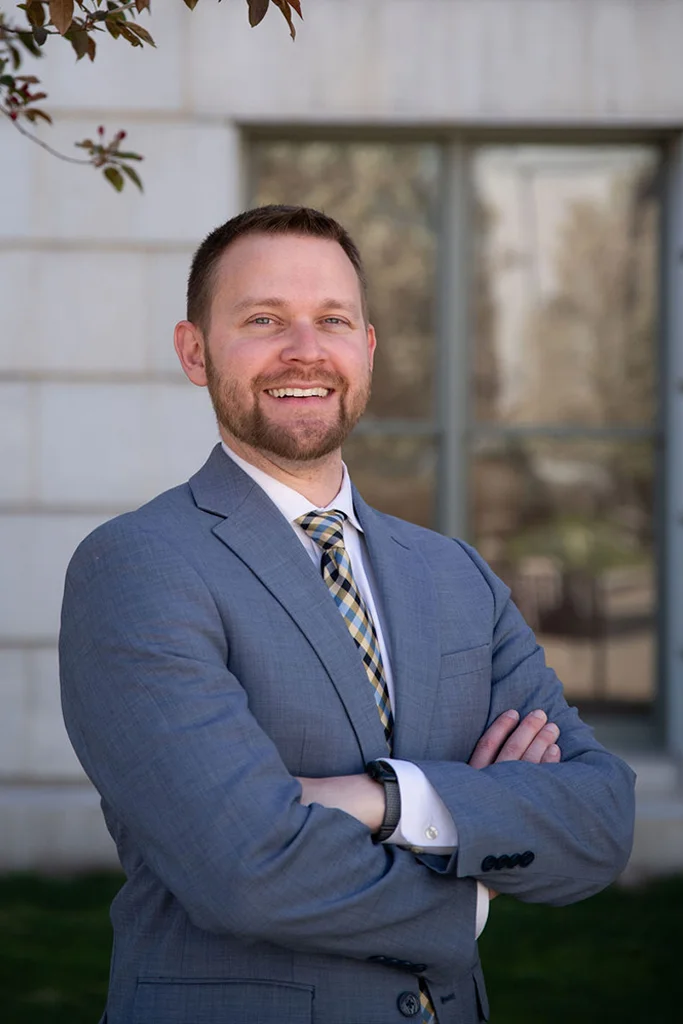
San Miguel County sits at the far southwestern edge of Colorado, and Telluride’s combination of ski season crowds, summer festivals, and mountain roads creates a steady stream of DUI investigations that can catch both locals and visitors off guard. A stop on Highway 145 or Last Dollar Road, a checkpoint after a Music Festival night, a breath test at a ski resort parking lot, and suddenly you are looking at a criminal charge, a DMV hearing, and the possibility of losing your license in a place where driving is not optional. Reid DeChant is a San Miguel County DUI defense lawyer who handles these cases with the same focused attention he brings to every impaired driving matter, whether it originates in Denver or in a small mountain county courthouse hours away.
What Colorado’s DUI Laws Actually Mean for San Miguel County Drivers
Colorado draws a distinction that matters a great deal at the moment of a stop. A DUI charge applies when a driver’s blood alcohol concentration reaches 0.08 percent or higher, but a DWAI charge can follow if law enforcement believes your ability to drive was even slightly impaired, typically corresponding to a BAC between 0.05 and 0.079 percent. That threshold is low enough that a couple of drinks after skiing can put someone in range, even if they feel entirely functional.
Colorado’s express consent law is worth understanding before you are ever in that situation. By holding a Colorado driver’s license and operating a vehicle in the state, you have already agreed in advance to submit to chemical testing when an officer has reasonable grounds to believe you are impaired. Refusing a chemical test does not make the criminal case disappear. It triggers a separate DMV proceeding to revoke your license and can be used against you in the criminal case itself. The refusal route has costs that people rarely appreciate until after the fact.
For drivers under 21, the threshold drops to 0.02 percent, which is effectively zero tolerance. Commercial drivers face a 0.04 percent limit. And Colorado treats drug impairment the same way it treats alcohol impairment, meaning prescription medications, marijuana, and other substances can all support a DUI or DWAI charge if an officer concludes they affected your driving.
How DUI Cases Move Through San Miguel County’s Court System
San Miguel County’s criminal cases are heard at the San Miguel County Combined Courts in Telluride. The courthouse handles everything from arraignments to jury trials, and the scale of the docket is very different from the high-volume urban courthouses in Denver or Jefferson County. That smaller setting does not make cases easier to resolve. Prosecutors in rural counties often have close working relationships with local law enforcement, and the community dynamics are distinct from what you encounter in a metro courthouse.
After an arrest, the sequence typically looks like this. There will be an advisement hearing where formal charges are entered and bond conditions are set. Then come pretrial conferences where the defense reviews the prosecution’s evidence, including any dashcam footage, bodycam recordings, officer notes, and chemical test results. Negotiations about the charges happen in that window. If those negotiations do not produce a resolution, the case moves toward motions hearings and eventually trial.
The DMV side runs on a separate track entirely. After a DUI arrest, you generally have seven days to request a hearing with the Colorado Division of Motor Vehicles or your license will be automatically suspended. That hearing is administrative, not criminal, and it happens independently of whatever is occurring at the courthouse. Winning the criminal case does not automatically resolve the DMV action, and vice versa. Reid has secured dismissals in DMV express consent hearings specifically, which shows how important it is to treat those proceedings as seriously as the criminal charge itself.
Where DUI Investigations Commonly Happen in San Miguel County
Highway 145 is the primary corridor connecting Telluride and the surrounding region to the rest of Colorado, and it sees significant enforcement activity, particularly during ski season and around major events like the Telluride Film Festival, Bluegrass Festival, and Mushroom Festival. These events draw large crowds into a small town with a concentrated nightlife scene, and Colorado State Patrol and San Miguel County Sheriff’s deputies are well aware of the patterns.
The Mountain Village access road and parking areas near ski lifts are also locations where officers pay attention, especially during afternoon and evening hours at the end of a ski day. Rural DUI stops on roads like Society Turn Road and Illium Road happen too, often late at night when there is essentially no other traffic and an officer notices a vehicle drifting or traveling below the speed limit.
Altitude matters in these cases in a way that does not come up in flatland DUI investigations. A person who drinks the same amount at sea level and at 8,750 feet, which is Telluride’s elevation, may exhibit different physiological responses. Field sobriety tests were developed and standardized at lower elevations, and there is legitimate scientific discussion about whether those tests perform the same way at high altitude. That is not a magic defense, but it is the kind of detail that belongs in any careful analysis of a San Miguel County DUI case.
What Makes a DUI Case Worth Challenging
Not every case goes to trial, but every case deserves a thorough review of what the prosecution actually has. A traffic stop has to be legally justified. An officer needs reasonable articulable suspicion to pull you over, and if that foundation is weak, everything that follows can potentially be suppressed. Stops made without dashcam footage are harder for the prosecution to defend when the officer’s account is contested.
Chemical tests, whether breath or blood, carry their own vulnerabilities. Breathalyzer devices require proper maintenance, calibration, and operator certification. Blood draws must follow strict chain-of-custody procedures, and the lab analysis has to meet evidentiary standards. If any of those requirements were not met, the test result can be challenged. Reid’s track record includes DUI dismissals based on improper express consent advisements, failure to administer the chemical test within the required two-hour window, and other procedural deficiencies that might not be obvious without careful review of the documentation.
Field sobriety tests are standardized, but they are administered by human beings in conditions that vary widely. Cold mountain air, uneven terrain, nerves, fatigue from a day of skiing, and the inherent awkwardness of performing coordination tasks on the side of a highway can all affect performance in ways that have nothing to do with impairment. An officer’s subjective interpretation of those tests is not the same as proof of impairment, and a jury can be asked to evaluate whether the test conditions were fair.
Questions About San Miguel County DUI Cases
Do I have to attend court in Telluride even if I live far away?
Generally, yes. San Miguel County Combined Courts in Telluride is where your case will be heard, and court appearances are typically mandatory. An attorney can sometimes appear on your behalf for certain hearings, which can reduce the number of trips you have to make, but that depends on the nature of the proceeding and what the court allows.
What happens to my driver’s license after a DUI arrest in Colorado?
After an arrest, you have a short window, typically seven days, to request a DMV express consent hearing. If you do not request that hearing in time, your license will be suspended automatically. The DMV hearing is entirely separate from the criminal case, and you need to address both simultaneously.
Can a first DUI in San Miguel County be reduced to a lesser charge?
It depends on the specific facts and the strength of the evidence. Some first-offense cases do result in reduced charges through negotiation, particularly when there are evidentiary weaknesses in the prosecution’s case. There is no guarantee, but a careful analysis of the evidence is the only way to know what leverage exists.
How does Colorado handle DUI for out-of-state visitors to Telluride?
Colorado can charge and prosecute you regardless of where you are licensed. A conviction or license revocation in Colorado will typically be reported to your home state under interstate compacts, and your home state may impose its own consequences on top of Colorado’s. This makes it especially important for visitors not to dismiss a DUI charge as something they can simply walk away from after leaving the state.
What is the difference between a DUI and a DWAI in terms of penalties?
A DWAI carries slightly lower minimum penalties than a DUI on a first offense, but both appear on your criminal record, both trigger DMV consequences, and both can be used to enhance penalties on future offenses. A DWAI is not a minor matter, even though the charge sounds less serious.
Does it matter that marijuana is legal in Colorado?
Legal marijuana does not protect you from a DUI charge. Colorado law prohibits driving while impaired by any substance, including marijuana. There is no precise per se limit for THC the way there is for alcohol, which means impairment is evaluated more subjectively, but prosecutors and officers regularly bring marijuana DUI cases.
What should I look for when choosing a DUI attorney for a San Miguel County case?
Look for someone who has actual trial experience with DUI cases specifically, not just general criminal defense work. DUI law involves technical evidence, administrative proceedings, and specific procedural rules that require focused knowledge. Ask directly about their experience handling DMV hearings and what their approach is to challenging chemical test results.
Talk to Reid About Your San Miguel County DUI Charge
Mountain county DUI cases move quickly and involve consequences that extend well beyond any single court date. Reid DeChant handles impaired driving defense with the attention to technical detail and genuine concern for each client’s situation that this work requires. If you are dealing with a San Miguel County drunk driving charge, reach out to DeChant Law to go over what the evidence actually shows and what options exist in your specific case.