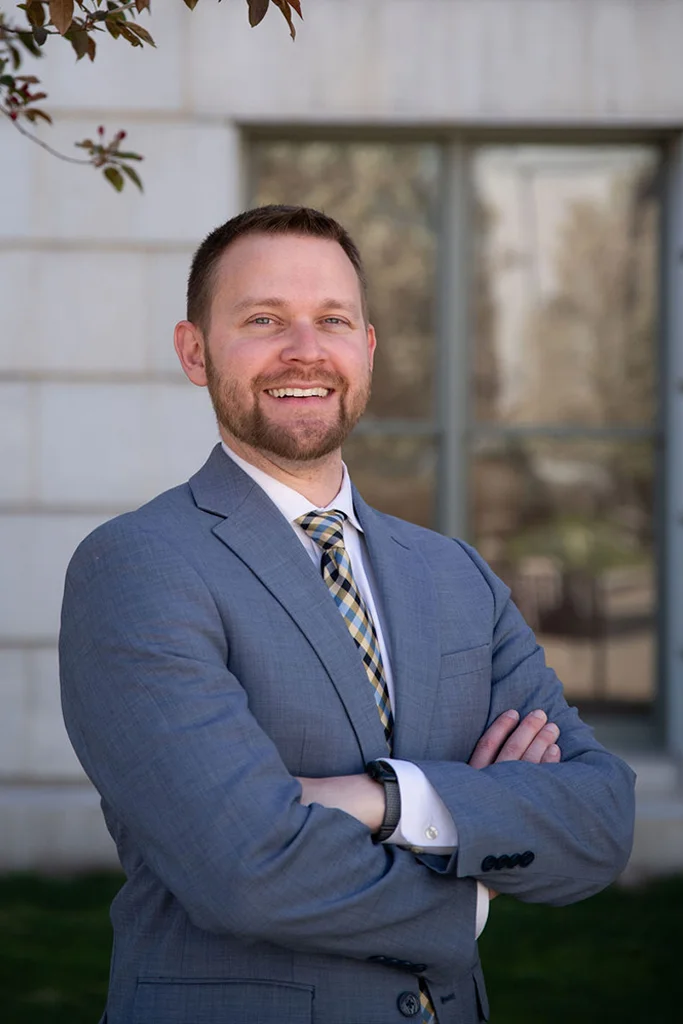
Parker Felony Lawyer
A felony charge in Parker carries consequences that extend far beyond a courtroom verdict. We are talking about prison sentences measured in years, fines that reach into the tens of thousands of dollars, and a permanent criminal record that follows you into every job application, housing search, and professional licensing process for the rest of your life. At DeChant Law, Parker felony lawyer Reid DeChant approaches these cases with the same tenacity and courtroom preparation he has brought to felony defense across the Denver metro, including Douglas County, where Parker cases are prosecuted.
What Douglas County Felony Prosecution Actually Looks Like
Parker sits in Douglas County, and understanding how the Douglas County District Attorney’s office handles felony cases matters when you are building a defense. Douglas County is one of the more well-resourced prosecution offices along the Front Range. Cases are staffed aggressively, and the DA’s office does not routinely offer favorable plea resolutions simply because a defendant has no prior record. Prosecutors there have the personnel and the caseload management to take cases to trial, and they do.
Felony charges in Colorado are filed in district court, which means a more formal, procedurally complex process than county court misdemeanor cases. You will face a preliminary hearing or a grand jury indictment, pretrial motions, and potentially a multi-day jury trial. Each stage carries strategic consequences. A defense that fails to suppress illegally obtained evidence early in the process cannot undo that failure at trial. A lawyer who has not tried serious felonies in district court is not the same as one who has.
Reid has handled felony cases as both a public defender and in private practice, including assault with a deadly weapon, domestic violence felonies, and sex offense matters. That background in high-stakes cases informs how DeChant Law approaches every felony file, regardless of the county.
Colorado’s Felony Classification and What Each Level Actually Means
Colorado divides felonies into six classes, plus drug felonies that carry their own sentencing framework. The difference between a class 4 and a class 2 felony is not just a number. It is the difference between a 2-to-6-year presumptive range and a sentence of 8 to 24 years in the Colorado Department of Corrections.
Class 1 felonies, which include first-degree murder, carry life imprisonment or the death penalty. Class 2 felonies cover offenses like first-degree kidnapping and second-degree murder. Class 3 felonies include second-degree kidnapping and crimes committed with aggravating circumstances. Class 4, 5, and 6 felonies cover a broader range of offenses, including many assault cases, theft over certain thresholds, and certain drug possession charges. Drug felonies run from DF1 to DF4, with DF1 carrying sentences that rival violent felony classifications.
Beyond the prison term itself, Colorado’s sentencing scheme includes mandatory parole periods, extraordinary risk enhancements for certain offense types, and habitual criminal statutes that can dramatically increase exposure if you have prior felony convictions. The sentencing math in a Colorado felony case is genuinely complicated, and understanding it before you decide how to respond to a charge is not optional.
Where Felony Cases in Parker Turn on the Evidence
Every category of felony charge has specific evidentiary pressure points, and a defense that does not identify and press on those points is leaving the most important work undone. For violent felony charges, the credibility and consistency of witness testimony often carries the case. Reid’s training at Trial Lawyers College emphasized the power of storytelling and the ability to expose inconsistency in a witness’s account through cross-examination, not through theatrical tricks, but through preparation and genuine engagement with what the evidence actually shows.
For drug felonies, Fourth Amendment challenges to the stop, search, or seizure of evidence are frequently where cases get won or lost. If law enforcement in Parker or Douglas County conducted a search without proper legal justification, evidence suppression is a real possibility, and suppression of the drugs often ends the case entirely.
For theft and white-collar felonies, the question is often one of intent, and documentary evidence, digital records, and financial data become the battlefield. These cases require a lawyer who can engage with complex records, understand what the prosecution needs to prove the mental state element, and find the gaps in their documentary chain.
Felony assault cases, particularly those involving domestic violence allegations, carry their own evidentiary dynamics. Douglas County law enforcement operates under mandatory arrest policies in domestic violence situations. That does not mean every arrest reflects what actually happened. Reid has taken domestic violence felony cases to trial and obtained not-guilty verdicts and dismissals when the evidence did not support the charge.
The Collateral Consequences That Do Not Show Up in the Sentencing Grid
The formal sentence in a felony case is only part of what you are facing. For many people, the collateral consequences are equally significant and in some cases more permanent than the criminal sentence itself.
A Colorado felony conviction results in the loss of your right to possess firearms under both state and federal law. For anyone who owns firearms for personal protection, hunting, or professional reasons, this consequence alone can be life-altering. Professional licenses are another pressure point. Colorado licensing boards for healthcare professionals, attorneys, real estate agents, contractors, and others have authority to deny, suspend, or revoke a license based on a felony conviction. If you hold a CDL and drive commercially, a felony conviction has immediate and potentially permanent consequences for your eligibility to drive commercially.
Immigration status is a critical consideration for non-citizen clients. Certain felony convictions trigger mandatory deportation proceedings under federal immigration law, regardless of how long someone has lived in the United States or what legal status they hold. This is not a hypothetical risk. It is a documented consequence in felony cases involving aggravated felonies or crimes involving moral turpitude as defined under federal immigration law.
Housing and employment barriers created by a felony record are significant in the Parker and Douglas County area, where many employers conduct thorough background checks. Understanding the full scope of what a conviction means, not just the prison term, shapes how DeChant Law approaches the defense and what outcomes are worth pursuing.
Questions Parker Residents Ask About Felony Charges
Can a felony charge in Douglas County be reduced to a misdemeanor?
In some cases, yes. Whether a reduction is available depends on the specific charge, the strength of the evidence, your criminal history, and how the prosecution has assessed the case. Deferred judgments and deferred prosecution agreements are also mechanisms that can, in some situations, lead to a charge being dismissed or reduced. These outcomes are not guaranteed, but they are pursued where the facts support them.
What happens at a preliminary hearing for a Colorado felony?
At a preliminary hearing, a judge determines whether there is probable cause to believe you committed the charged offense. This is a lower standard than the trial standard, but the hearing gives defense counsel the opportunity to cross-examine witnesses, lock in testimony, and expose weaknesses in the prosecution’s case. Not every felony case includes a preliminary hearing, as defendants can waive it, but that decision has strategic consequences that should be made with counsel.
How long does a felony case in Parker typically take to resolve?
Timelines vary widely depending on the complexity of the charge, the evidence involved, whether expert witnesses are needed, and the court’s docket. Straightforward cases might resolve in several months. More complex felony cases, particularly those heading to trial, can take a year or longer from arrest to verdict.
If I was arrested in Parker, will my case be heard in Castle Rock?
Yes. The Douglas County District Court, located in Castle Rock, handles felony cases arising from anywhere in Douglas County, including Parker, Highlands Ranch, and Castle Rock itself. Understanding the court’s local procedures and the tendencies of judges in that courthouse is part of preparation for any Douglas County felony case.
Does DeChant Law handle felony drug cases in Douglas County?
Yes. Drug felonies are a significant category of cases, and the defense strategy in a drug felony often centers on the legality of the search or seizure that produced the evidence. Reid has handled drug cases across the Denver metro, including Jefferson County and Broomfield County, and applies the same methodical approach to Douglas County cases.
What does it mean that Colorado has a habitual criminal statute?
If you have prior felony convictions, Colorado law allows prosecutors to seek dramatically enhanced sentences under the habitual criminal statute. The enhancement can multiply your sentence several times over. This is one reason why prior record matters so much in felony sentencing discussions, and why a thorough review of your record should happen early in the defense process.
Can a Colorado felony conviction ever be sealed from public records?
Certain felony convictions are eligible for record sealing in Colorado after a waiting period following completion of the sentence. Not all felonies qualify, and eligibility depends on the offense class and type. For charges that were dismissed or resulted in acquittal, sealing is generally more accessible. This is worth discussing once the case is resolved, as a sealed record can make a significant difference in employment and housing.
Talking to a Parker Felony Defense Attorney at DeChant Law
A felony charge demands defense counsel who has actually stood in a courtroom and tried these cases, not just negotiated them to a plea. Reid DeChant’s background as a public defender handling serious felonies, combined with private practice experience, reflects the kind of preparation that a Douglas County felony case requires. If you are facing a felony charge in Parker or anywhere in Douglas County, reaching out to a Parker felony defense attorney at DeChant Law is how you start getting a real picture of where your case stands and what your options actually are.