Monument Felony Lawyer
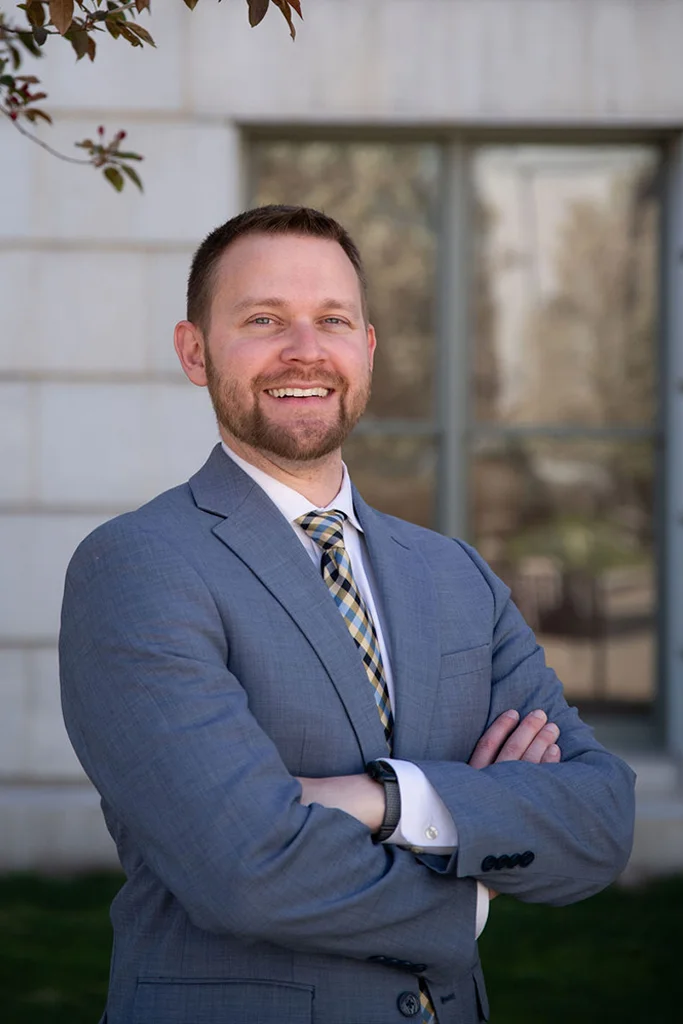
A felony charge in Monument changes everything that comes after it. Employment, housing, professional licenses, firearm rights, immigration status, the ability to vote. Colorado’s felony classification system runs from class 6 at the low end to class 1 at the top, and the distance between those two points spans from a year of probation to decades in prison. For Monument residents, felony charges are typically prosecuted through the Fourth Judicial District, which covers El Paso and Teller Counties and operates out of the Colorado Springs courthouse. Reid DeChant, a Monument felony lawyer at DeChant Law, has handled felony cases ranging from assault and drug offenses to sex crimes and homicides, and he brings that depth of experience to clients throughout the Denver metro area and surrounding communities.
How Colorado’s Felony Classification Actually Shapes Your Case
Colorado divides felonies into six classes, plus a separate “unclassified” category for specific statutory crimes. The class determines sentencing ranges, presumptive and aggravated ranges, and whether mandatory minimum terms apply. A class 6 felony, often charged in cases involving lower-value theft or minor drug distribution, carries a presumptive range of 12 to 18 months in prison. A class 2 felony, such as second-degree murder or kidnapping with aggravating factors, carries 8 to 24 years. Class 1 felonies, reserved for first-degree murder, carry life in prison.
What these statutory ranges do not capture is how much discretion actually exists within them. Prosecutors have authority to charge cases at different severity levels depending on how they weigh the facts, and defense counsel has legitimate tools to challenge how that charging decision was made. A theft charged as a class 4 felony because the alleged value exceeded $2,000 might be contested on the valuation itself. An assault charged as a class 3 felony because a deadly weapon was alleged might be contested on whether the object meets that legal definition under Colorado law. The charge as filed is a starting point, not a conclusion.
Colorado also has sentence-enhancing provisions that can push a case into the aggravated range. Prior felony convictions, crimes committed while on bond, and offenses involving vulnerable victims can all trigger aggravated sentencing. Understanding which of these provisions apply, and whether they can be challenged or negotiated away, is often where felony defense work gets done.
What Prosecutors in the Fourth Judicial District Tend to Prioritize
The Fourth Judicial District, which handles cases originating in Monument and the surrounding communities of Palmer Lake, Tri-Lakes, and northern El Paso County, runs a well-resourced prosecution office. Cases involving domestic violence, sexual assault, and methamphetamine distribution have historically received particular attention from that office, and those priorities shape how aggressively cases are pursued and whether early resolution is on the table.
Monument sits in a community with a significant military presence, given its proximity to Fort Carson and the Air Force Academy. That demographic reality matters for felony defense. Military members and veterans facing felony charges often have parallel proceedings to contend with, including the possibility of court-martial, military discharge proceedings, or loss of security clearance. Civilians in the same community may have professional licenses at stake, whether in healthcare, education, finance, or contracting. These downstream consequences often dwarf the criminal penalties themselves, and a defense strategy that does not account for them is incomplete from the start.
Drug felonies in northern El Paso County frequently involve fentanyl and methamphetamine, both of which are treated with heightened severity under current Colorado law. Fentanyl distribution charges, in particular, carry significant mandatory elements under legislation passed in recent years. Cases involving firearms, whether unlawful possession or use during another offense, also carry enhanced exposure that can stack on top of the underlying charge.
Where Defense Arguments Actually Get Built
Felony cases rarely turn on a single dramatic moment at trial. They are won or lost through decisions made at every prior stage: how evidence was collected, whether search and seizure procedures were followed, how witnesses were interviewed, whether identification procedures were constitutional, whether statements made to law enforcement are actually admissible. Reid’s background as a public defender in Denver, Broomfield, and Adams County, where he handled DUI, assault, sexual assault, and homicide cases, gave him a working understanding of how law enforcement builds cases and where those cases develop weaknesses.
In cases involving physical evidence, chain of custody matters. Laboratory analysis matters. Whether the officer who conducted the search had a valid basis for doing so matters. In cases built primarily on witness testimony, prior inconsistent statements, motive to fabricate, and perception issues matter. In cases where the accused made statements to police, the circumstances of that interview, whether Miranda advisements were given, whether the person was in custody, and whether the statement was voluntary are all contestable questions.
At Trial Lawyers College, Reid studied the power of storytelling in the courtroom, grounded in genuine attention to each client’s experience and situation. That approach is not simply technique. It reflects a recognition that jurors are human beings evaluating human beings, and the defense that treats a client’s story as an obstacle to manage rather than a truth worth telling is already starting behind. Some felony cases belong in front of a jury. Others resolve through negotiation. Knowing which is which, and being genuinely prepared to try a case when that is the right answer, shapes how prosecutors approach settlement conversations.
Common Questions About Felony Charges in Monument
What happens to my driver’s license if I am convicted of a felony?
It depends on the nature of the felony. A DUI felony (a fourth or subsequent offense in Colorado) triggers license revocation. Drug felonies historically carried mandatory license suspension under federal law, though Colorado has moved away from automatic revocation in recent years for most drug offenses. Other felony convictions do not automatically affect driving privileges, though probation conditions sometimes restrict driving or vehicle use.
Can a felony conviction be sealed in Colorado?
Colorado’s record sealing statute allows certain felony convictions to be sealed after a waiting period, depending on the offense class and category. Drug felonies are generally eligible for sealing after a defined period following completion of the sentence. Violent felonies and sex offenses are typically excluded. An arrest that did not lead to conviction is often sealable sooner. Reid can evaluate eligibility based on the specific conviction and circumstances.
Does being charged in Monument mean my case will be heard in Colorado Springs?
Yes. Monument is in El Paso County, and felony cases from that area are handled by the Fourth Judicial District Court, located in Colorado Springs. All district court proceedings, including preliminary hearings, motions hearings, and trials, will take place at that courthouse unless a change of venue is granted, which is rare.
What is the difference between a direct file and a grand jury indictment in Colorado?
In Colorado, prosecutors can bring felony charges either by filing an information directly after a preliminary hearing establishes probable cause, or by presenting the case to a grand jury for an indictment. Grand jury proceedings are used more selectively, often in complex or politically sensitive cases. The practical difference for the defendant is that a grand jury proceeding is conducted without defense participation, which makes the indictment itself a less reliable signal of evidence strength than a finding at a contested preliminary hearing.
How does a prior criminal record affect a felony case in Colorado?
Prior convictions, particularly prior felonies, affect sentencing in specific and significant ways. Colorado’s extraordinary aggravating circumstances provision allows courts to impose sentences above the standard presumptive range when the defendant was on parole, probation, or bond at the time of the offense, or has prior felony convictions within a certain window. Prior record also affects the prosecution’s leverage in plea negotiations and can affect the judge’s discretion at sentencing even within a standard range.
Is probation possible for a felony conviction in Colorado?
For many class 4, 5, and 6 felonies, probation is a legitimate sentencing option, particularly for first offenses and cases without violent elements. Some felonies carry mandatory prison terms that cannot be suspended. Drug offenses often have statutory pathways to community corrections or probation through designated treatment provisions. The specific offense, the defendant’s history, and the strength of the mitigation presented all influence whether prison or a community-based sentence is the actual outcome.
What should I do if law enforcement wants to question me about a felony investigation?
Speak with an attorney before agreeing to any interview. This applies whether you believe you are a suspect, a witness, or anything in between. Colorado law enforcement officers are permitted to use deception during interviews, and statements made without counsel present have a way of becoming central to the prosecution’s case regardless of how they were intended. There is no situation in which declining to answer questions before consulting an attorney makes a case worse.
Facing a Felony Charge in Monument or El Paso County
A felony arrest is not the end of the road, but the decisions made in the days and weeks that follow it significantly shape where the road leads. The right defense does not start at trial. It starts with a careful review of the charging decision, the evidence collected, the procedures law enforcement followed, and the specific consequences that matter most to that individual client. Reid DeChant represents clients facing felony charges from Monument and throughout the surrounding communities as a Monument felony attorney who brings real courtroom experience and genuine investment in each client’s outcome. Contact DeChant Law to discuss your case.