
Loveland Vehicular Assault and Homicide Defense Lawyer
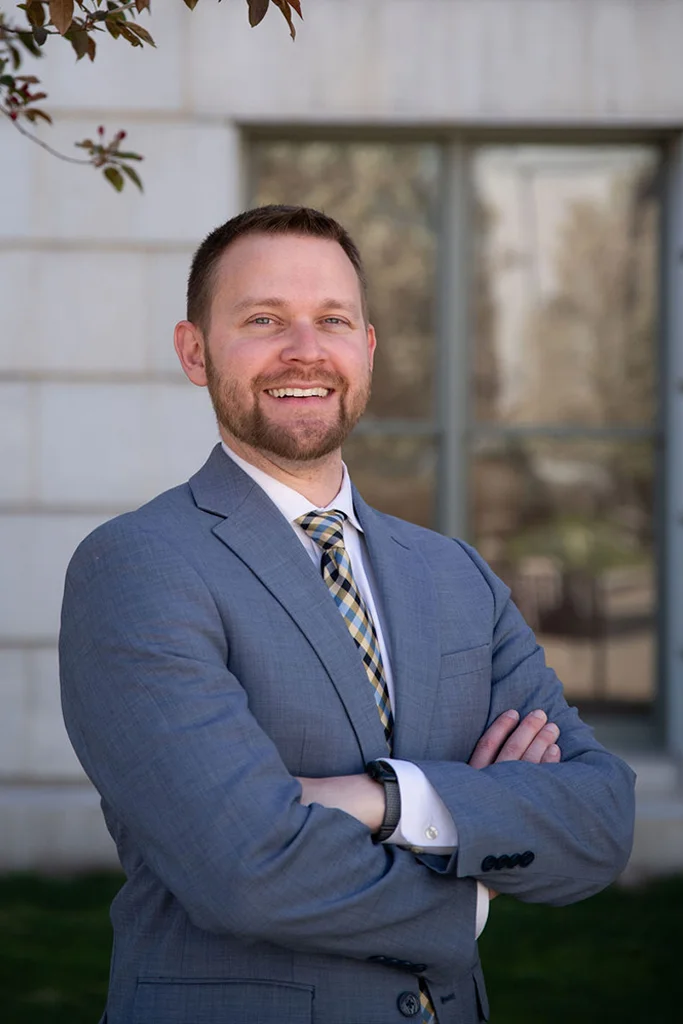
A single crash can produce criminal charges that carry decades in prison. Vehicular assault and vehicular homicide are among the most aggressively prosecuted offenses in Larimer County, and the gap between a conviction and a dismissal often comes down to the quality of investigation done before trial. At DeChant Law, attorney Reid handles these cases with the same tenacity he has brought to DUI trials, assault prosecutions, and felony defense across the Denver metro and Northern Colorado. This page explains what you are actually facing, how these cases are built against defendants, and where defenses are found.
What Colorado Law Actually Charges in Serious Crash Cases
Colorado distinguishes between vehicular assault and vehicular homicide based on outcome, but both require the prosecution to prove that impairment or reckless driving caused the crash. Vehicular assault arises when a driver is accused of causing serious bodily injury to another person. Vehicular homicide arises when someone dies.
The impairment-based versions of both charges are charged as class 4 felonies when alcohol or drugs are alleged. A DUI conviction in the same incident can stack on top of a vehicular assault or homicide charge, compounding both the penalties and the complexity of the case. The reckless version of vehicular homicide, where no impairment is alleged, is a class 5 felony, but that distinction sometimes gets lost when prosecutors are deciding how to charge.
Colorado’s presumptive sentencing ranges for class 4 felonies run from two to six years in the Department of Corrections, with an additional three years of mandatory parole. Extraordinary risk designations can push those numbers higher. Parole conditions after a vehicular homicide conviction are often restrictive and long-lasting.
There is also an administrative side. A vehicular assault or homicide charge triggers DMV action against your license separately from the criminal case. That process runs on its own timeline and requires its own response. Missing the hearing request window can cost you your license even before the criminal case is resolved.
How Prosecutors Build These Cases in Larimer County
Law enforcement agencies in Loveland and Larimer County treat fatal or serious injury crashes as crime scenes from the moment a crash is reported. Colorado State Patrol often takes primary jurisdiction on highway crashes, particularly those on US 34, US 287, and I-25 near the Loveland corridor. The Fort Collins-Loveland area’s growth means these roads carry heavy traffic and see a disproportionate share of serious crashes.
Investigators collect blood samples, often before you leave the hospital. They photograph skid marks, debris fields, and vehicle damage. They download data from event data recorders, sometimes called black boxes, which capture speed, braking, and steering inputs in the seconds before impact. Accident reconstructionists write reports that attempt to establish speed and fault. All of that evidence is gathered before you have spoken to a lawyer.
One thing prosecutors rely on: defendants who talk. Statements made at the scene, to paramedics, or to hospital staff get treated as admissions. Anything you said about what you were doing before the crash, how much you had to drink, or how fast you were going will be in the police report and potentially in front of a jury.
By the time charges are filed in Larimer County District Court, the prosecution has often had weeks or months to build its case. The defense needs to start its own investigation just as quickly.
Where These Charges Can Be Challenged
Vehicular assault and homicide cases are not simple. Even when the injuries or death are not in dispute, the prosecution still has to prove that the driver’s conduct, specifically impairment or recklessness, caused the outcome.
Blood draw procedure is one of the first places to look. Colorado’s express consent law requires specific advisements and procedures. If the blood was drawn improperly, collected too long after driving, or analyzed with an unreliable methodology, that evidence can be challenged. Reid has handled DMV express consent hearings and DUI cases where blood evidence was successfully attacked. Many of those dismissals are reflected in the firm’s case results.
Accident reconstruction is another area where defense experts matter. Reconstruction opinions are only as reliable as the data and assumptions behind them. Speed estimates based on tire marks, damage profiles, and road conditions involve real uncertainty. An independent expert reviewing the prosecution’s reconstruction report sometimes reaches a different conclusion, and those differences can be significant at trial.
Causation is not always as obvious as it appears. If another driver’s actions, a road hazard, a mechanical failure, or a medical event contributed to the crash, the prosecution’s theory of what happened may be incomplete. Colorado requires the defendant’s conduct to be the proximate cause of the injury or death. Introducing doubt about causation can change the outcome of a case.
Recklessness, for the non-impairment version of vehicular homicide, requires proof that the driver consciously disregarded a substantial and unjustifiable risk. Not every serious crash involves that level of culpability, even when the consequences are devastating.
Questions People Ask When Facing These Charges in Loveland
Can I still be charged with vehicular homicide if I was under the legal limit?
Yes. The reckless vehicular homicide charge does not require any impairment. If the prosecution argues that your driving was reckless regardless of your BAC, you can face a felony charge even if your blood alcohol was below 0.08 percent. The impairment-based charge requires impairment, but prosecutors sometimes pursue both theories simultaneously.
What happens to my driver’s license while the criminal case is pending?
If a blood or breath test was administered, the DMV can move to revoke your license under Colorado’s express consent law on a separate administrative track. You have a limited window after the incident to request a hearing. If you do not request that hearing in time, the revocation proceeds without any review. The criminal case and the DMV case run on different timelines and require separate attention.
Is it possible to avoid prison on a vehicular homicide charge?
Every case turns on its specific facts, and past results do not guarantee any particular outcome. That said, class 4 felony sentences in Colorado are not automatically prison sentences. Probation and alternatives to incarceration are sometimes available depending on prior record, facts of the incident, and the strength of the defense. The possibility of avoiding prison is one reason early, thorough representation matters.
What if the other driver was also at fault?
Shared fault in the underlying crash does not automatically defeat a vehicular assault or homicide charge, but it is relevant. If another party’s negligence or reckless conduct was a contributing cause of the crash, that goes directly to whether the prosecution can prove your conduct was the proximate cause of the injury or death. That argument belongs in the courtroom with supporting evidence.
Can statements I made at the hospital be used against me?
Potentially yes. Statements made to law enforcement, including officers stationed in a hospital, are often admissible. Spontaneous statements to medical staff can sometimes come in as well depending on the context. There are legal arguments about the admissibility of statements made while impaired, under medical distress, or without proper Miranda advisements. Whether those arguments succeed depends on the specific circumstances.
How long do these cases typically take in Larimer County?
Felony cases at Larimer County District Court in Fort Collins can take anywhere from several months to well over a year from arrest to resolution, depending on the complexity of the investigation, lab backlogs, and whether the case goes to trial. Cases involving accident reconstruction experts and contested blood evidence tend to take longer. That timeline is not wasted time. It is the window in which the defense builds its case.
Does having a prior DUI affect a vehicular assault or homicide charge?
Yes. A prior DUI or DWAI on your record affects both the charging decision and the sentencing exposure. A vehicular homicide charge where the defendant has a prior alcohol-related driving conviction can result in elevated penalties and more aggressive prosecution. It does not eliminate defenses, but it changes the calculus on strategy and resolution.
Facing Vehicular Assault or Homicide Charges in Northern Colorado
DeChant Law represents clients in Loveland, Fort Collins, and across the Northern Colorado region, including cases that originate from crashes on US 34 through the Big Thompson Canyon, the US 287 corridor, and the I-25 stretch that runs through Larimer and Weld counties. Reid’s background includes trial work across multiple counties in the Denver metro and a deep familiarity with how Colorado DUI and serious traffic offense cases are investigated and prosecuted. He has taken cases through trial, handled DMV hearings, and navigated felony proceedings at all levels.
A vehicular assault or homicide case in Loveland is handled by the Larimer County District Attorney’s Office, and trials take place at Larimer County District Court in Fort Collins. Understanding how that office approaches serious driving cases, and how the local courts operate, is part of building an effective defense. If you are facing these charges, contact DeChant Law to talk through what happened and what your options are.