
Lone Tree Felony Lawyer
A felony charge changes the math on nearly everything. Your job, your housing, your right to vote, your ability to own a firearm. Before any of that, there is the immediate reality of potential prison time. Douglas County courts handle felony cases with serious institutional weight behind them, and the prosecutors at the 18th Judicial District are not inclined to go easy. If you are looking for a Lone Tree felony lawyer, the decision matters more than most legal decisions you will ever make.
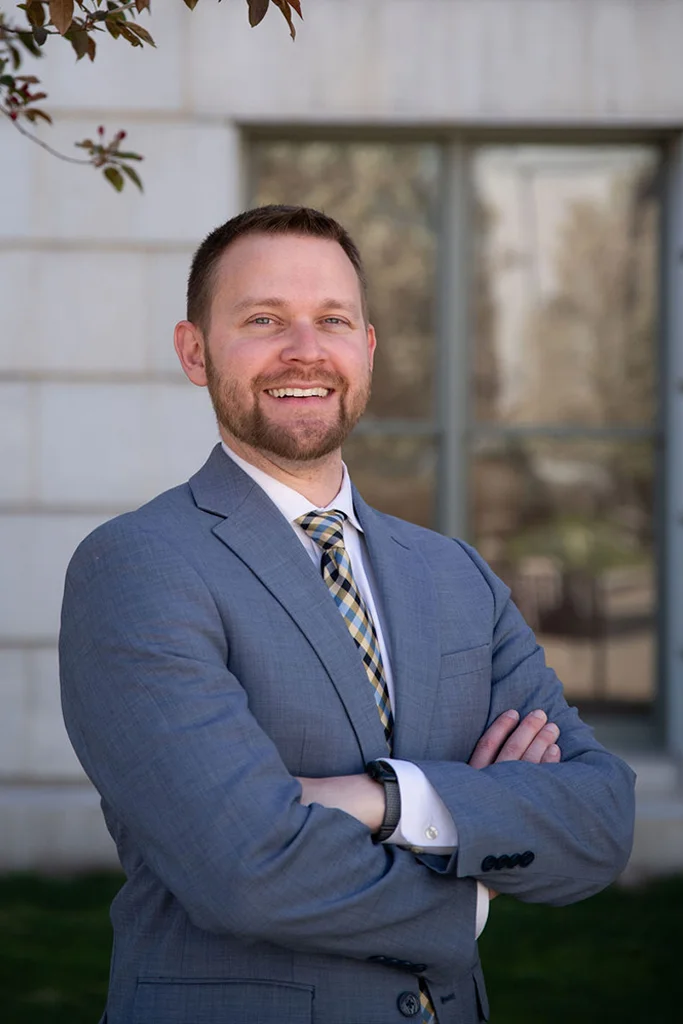
Reid DeChant brings experience that most private defense attorneys cannot match. He worked as a public defender handling cases across Denver, Broomfield, and Adams County before moving into private practice, and that background covered the full range of Colorado criminal charges: DUI, theft, sexual assault, homicide, and everything in between. That kind of caseload teaches you how prosecutors think, how judges run their courtrooms, and how to build a case that holds up when it counts.
What Colorado Felony Classifications Actually Mean for You
Colorado divides felonies into six classes, with Class 1 being the most serious and Class 6 being the least. The difference between classes is not just a number on paper. A Class 6 felony carries a presumptive sentence of 12 to 18 months in the Department of Corrections, while a Class 2 felony can mean 8 to 24 years. Extraordinary risk crimes and aggravated ranges push those numbers even higher.
There are also unclassified felonies, drug felonies with their own DF1 through DF4 structure, and sentence enhancers that prosecutors routinely add to bump up a charge. A felony menacing charge, for instance, becomes a Class 5 felony ordinarily, but add a deadly weapon and it escalates. A theft charge shifts class based on the dollar amount of the alleged loss. These classifications are not technical trivia. They determine which plea offers are on the table and what the real exposure looks like at trial.
In Lone Tree and the broader Douglas County area, felony cases are filed in the Douglas County District Court in Castle Rock. That is where preliminary hearings happen, where motions to suppress evidence get argued, and where trials are conducted before a jury drawn from Douglas County residents. Understanding how that court operates and how the 18th Judicial District’s prosecutors approach different charge categories matters when you are building a defense.
The Charges Most Likely to Bring Felony Exposure in Douglas County
Lone Tree generates a particular profile of felony cases given its demographics and location along the C-470 and I-25 corridor. Drug charges arise frequently from traffic stops on those highways, where law enforcement conducts high-volume stops and occasionally pushes the boundaries of what constitutes reasonable suspicion or probable cause. Possession with intent to distribute carries felony exposure from the first charge, and those cases often hinge on whether the stop itself was lawful in the first place.
Assault charges come through domestic violence incidents and barroom confrontations alike. A second-degree assault charge, which can involve alleged serious bodily injury or the use of a deadly weapon, is a Class 4 felony with mandatory prison time if the conviction carries violence. White-collar charges also appear, including identity theft, fraud, and computer crime, reflecting the population of professionals and corporate employees in the area.
Felony DUI is another category that catches people off guard. A third DUI conviction in Colorado is a Class 4 felony, and a fourth is a Class 4 felony as well. Someone who received two DUI convictions years apart may not be thinking of themselves as someone facing prison time, but that is the reality of Colorado’s enhanced DUI laws. Reid has taken DUI cases to trial successfully, including third offense DUI cases in Jefferson County and Douglas County, and understands how these prosecutions are built and where the weaknesses tend to appear.
How a Felony Defense Actually Gets Built
Defense work starts before the first court date. Discovery has to be requested and reviewed carefully. Police reports, body camera footage, lab reports, witness statements, and dispatch records all tell parts of the story, and sometimes they contradict each other in ways that matter. In drug cases, chain of custody for seized evidence is a legitimate issue. In assault cases, the complaining witness’s prior statements may be inconsistent. In DUI cases, the chemical testing process itself is subject to challenge.
Reid’s approach centers on the client’s actual story. That is not a soft concept. It means understanding what happened from the client’s perspective, which details the jury needs to hear, and how to present a narrative that gives them a real reason to doubt the government’s version. He trained at Trial Lawyers College, where the emphasis is on how juries actually process cases and how a lawyer communicates in ways that resonate rather than just inform.
Pretrial motions can alter the entire shape of a case. A successful motion to suppress evidence obtained through an unlawful stop or search can gut a prosecution. A motion to dismiss based on charging defects or speedy trial violations can end it entirely. These are not automatic outcomes, but they are real possibilities that a competent defense lawyer pursues systematically before ever considering what a trial would look like.
When a case does go to trial, Reid has a track record there too. Not guilty verdicts in two counts of assault with a deadly weapon, not guilty on DUI drug cases in Jefferson County, not guilty in felony failure to register as a sex offender. These are the kinds of cases that require a lawyer who actually tries cases rather than one who processes pleas and bills hours.
Felony Convictions and What They Follow You Into
The sentence is one part of what a felony conviction means. The collateral consequences extend much further and in directions that defendants often do not anticipate when they are trying to decide whether to accept a plea deal.
A felony conviction in Colorado can result in deportation or denial of naturalization for non-citizens, depending on the charge. It disqualifies people from many professional licenses, including those required for healthcare workers, real estate agents, and financial services professionals. It triggers permanent loss of firearm rights. It can affect child custody determinations and visitation rights if a family court judge weighs it against you. For anyone with a commercial driver’s license, certain felony convictions are disqualifying.
Colorado’s record sealing laws do allow some felony convictions to be sealed after a waiting period, and arrests that did not result in conviction are sealable in many circumstances. But sealing is not available for all felony convictions, and the waiting periods are long. The better path, when possible, is getting the outcome right the first time.
Questions About Felony Charges in Lone Tree
What is the difference between a felony and a misdemeanor in Colorado?
Misdemeanor convictions in Colorado are punishable by up to 364 days in county jail. Felony convictions are punishable by sentences served in the state prison system, starting at 12 months and going up depending on the class. Felonies also carry far heavier collateral consequences, including permanent firearm prohibitions and the professional licensing impacts described above.
Can a felony charge get reduced to a misdemeanor?
Yes, in some cases. Prosecutors sometimes offer plea agreements that reduce a charge to a misdemeanor in exchange for a guilty plea and possibly other conditions. Whether that is a good outcome depends on the strength of the evidence and what the misdemeanor plea actually requires. A reduction is not automatically a win if it still carries jail time and serious consequences.
Do all felony cases go to trial?
No. Many felony cases resolve before trial, whether through dismissal, diversion, or a negotiated plea. The goal is the best outcome, and sometimes that is a negotiated resolution rather than a trial. But the lawyer’s willingness and ability to go to trial affects how seriously a prosecutor takes the defense, which affects the quality of any offer on the table.
What happens at a preliminary hearing in a Douglas County felony case?
At a preliminary hearing, a judge evaluates whether there is probable cause to believe a crime was committed and that the defendant committed it. It is a lower standard than proof at trial, but the hearing gives the defense a chance to see the prosecution’s evidence, cross-examine witnesses, and sometimes expose weaknesses that affect the entire direction of the case.
How long does a felony case in Douglas County typically take?
Timelines vary considerably. A relatively straightforward case might resolve within several months. More serious charges involving complex evidence, expert witnesses, or multiple hearings can run a year or longer. Speedy trial rights apply, and understanding how to use or strategically waive those rights is part of building the defense.
What is a deferred sentence and is it available for felonies?
A deferred sentence means a defendant pleads guilty but sentencing is postponed while they complete a period of probation. If they complete the conditions successfully, the case is dismissed and the conviction does not enter. Colorado law allows deferred sentences for some felony charges, though not all. Eligibility depends on the charge, the defendant’s criminal history, and the prosecutor’s agreement.
Does it matter which attorney I hire, or are felony outcomes mostly determined by the facts?
The facts matter, obviously. But the attorney determines how those facts are developed, challenged, and presented. Evidence gets suppressed or doesn’t based on how motions are written and argued. Witnesses get cross-examined effectively or don’t. Juries convict or acquit based in large part on how the defense story is told. The facts are the raw material. What happens with them depends on the lawyer.
Talk to a Felony Defense Attorney in Lone Tree
DeChant Law handles felony cases across the Denver metro area, including Douglas County, and Reid DeChant has the trial experience and courtroom track record that this kind of representation requires. A Lone Tree felony attorney who has tried assault cases, DUI cases, and sex offense cases to not guilty verdicts is a different resource than one who has not. If you are facing felony charges, contact DeChant Law to discuss what happened and what the realistic path forward looks like.