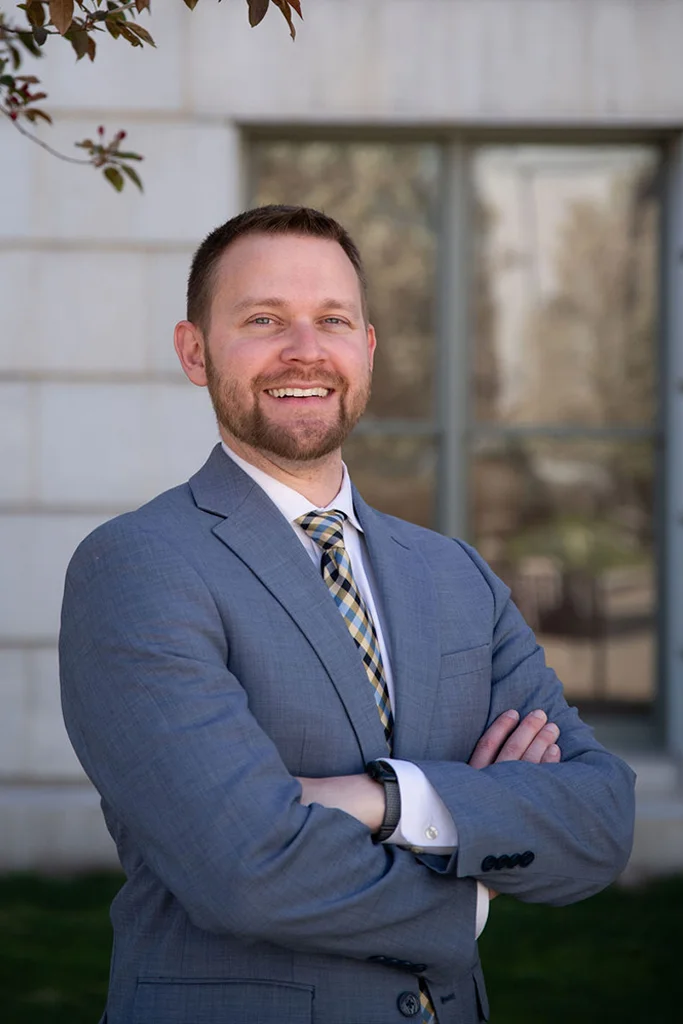
Johnstown DUI Defense Lawyer
A DUI stop on US-34 or Highway 60 near Johnstown can move fast. Within minutes you are dealing with field sobriety tests, a breath or blood test, and decisions that will follow you long after that night ends. Johnstown DUI defense lawyer Reid DeChant handles these cases with the same intensity he brings to Denver courts, because the science, the procedure, and the stakes are the same regardless of which agency made the arrest.
How DUI Cases Get Built in Weld County
Johnstown sits in Weld County, and DUI arrests in this area are handled by a combination of Johnstown Police, the Weld County Sheriff’s Office, and Colorado State Patrol. Cases prosecuted out of Weld County go through the 19th Judicial District. That court has its own prosecutors, its own tendencies, and its own way of evaluating cases. Knowing that environment matters when you are deciding how to fight a charge.
The stop is where most DUI cases either begin to crack or harden. Colorado law requires reasonable articulable suspicion before an officer can pull you over. A weaving observation, a turn signal violation, a broken tail light, these are the justifications officers most commonly write into their reports along the Johnstown area’s highway corridors. If the stop itself was questionable, that issue can be raised directly in court and, in some cases, leads to suppression of everything that followed.
After the stop, the officer is building a case in real time. Everything goes into the report: the odor of alcohol, slurred speech, bloodshot eyes, how you performed on the roadside tests. These observations are subjective. They are also the foundation the prosecution will rely on if your blood or breath result is close to the legal limit or if the chemical test results are disputed.
What the Blood and Breath Results Actually Show (and Don’t Show)
Colorado uses a 0.08% BAC threshold for a DUI charge and a 0.05% threshold for DWAI. These numbers feel precise, but the methods used to produce them are not perfect. Breathalyzers require regular calibration and must be administered according to strict protocols. Blood samples must be collected, stored, and tested under controlled conditions. Breakdowns in any of these steps can affect the reliability of the result.
The gap between when you were driving and when your blood was drawn matters too. Alcohol continues to absorb into the bloodstream after you stop drinking. A result taken an hour or more after a traffic stop may not accurately reflect what your BAC was at the time you were behind the wheel. Colorado’s express consent law requires that the chemical test be administered within two hours of driving. DeChant Law has had DMV cases dismissed specifically because that two-hour window was not met.
Drug DUI cases carry their own complications. There is no universally accepted impairment threshold for cannabis the way there is for alcohol, and the presence of THC metabolites in blood does not prove impairment at the time of driving. Officers use Drug Recognition Evaluations in these cases, a process that has significant evidentiary limitations. Challenging a drug DUI charge requires understanding those limitations in detail.
The DMV Case Runs Parallel to the Criminal Case
Most people focus on the criminal charge and miss the administrative case unfolding at the same time. When you are arrested for DUI in Colorado, the arresting officer typically initiates an express consent action against your driver’s license. You have a short window after arrest to request a DMV hearing. If you do not request one in time, your license is revoked automatically.
The DMV hearing is separate from the criminal case in Weld County District Court. It has its own rules, its own burden of proof, and its own timeline. Reid has secured dismissals in DMV express consent proceedings on grounds including improper advisement of the express consent law and failure to administer the chemical test within the required timeframe. Winning the DMV hearing does not end the criminal case, but losing it without a fight means accepting a revocation that might have been avoidable.
For Johnstown residents who commute to Loveland, Fort Collins, or the Denver metro, losing a license is not a minor inconvenience. It affects employment, childcare, and daily life in ways a fine alone does not. The DMV case deserves the same attention as the criminal charge.
Questions Johnstown Residents Ask About DUI Charges
I refused the breath test at the roadside. Does that help or hurt me?
The roadside portable breath test is different from the evidentiary test administered after arrest. You are not legally required to take the portable test, and refusing it generally cannot be used against you in the same way. However, once you are placed under arrest, Colorado’s express consent law applies. Refusing the evidentiary test at that stage triggers an automatic one-year license revocation and the refusal can be introduced in court. These are two different decisions with different consequences.
What happens if this is my second DUI offense?
A second DUI conviction in Colorado carries mandatory jail time, higher fines, a longer license suspension, and a required alcohol evaluation and treatment program. The look-back period in Colorado means a prior offense from many years ago can still count. The prosecution tends to push harder on second offenses, which makes early intervention by a defense attorney more important, not less.
Can a DUI be dismissed or reduced to a lesser charge?
Yes, and this happens more often than people realize when the evidence is challenged effectively. A reduction to a DWAI carries fewer penalties than a DUI conviction. Dismissal is possible when procedural problems undermine the prosecution’s case, from an unlawful stop to a flawed chemical test. The strength of the defense depends heavily on the specific facts of the arrest.
Will a Johnstown DUI affect my commercial driver’s license?
CDL holders face a different and harsher set of consequences. A DUI conviction, even in a personal vehicle, can disqualify a CDL holder from driving commercially for at least one year. A second offense typically results in lifetime disqualification. Because the consequences extend directly into your livelihood, CDL cases require careful handling from the start.
I was charged with DUI drugs, not alcohol. How is that different?
Colorado does not distinguish between alcohol and controlled substances when defining DUI. Any substance that renders you substantially incapable of safely operating a vehicle can support a charge. Drug DUI cases often hinge on the Drug Recognition Evaluation conducted by the officer and on blood test results for specific substances. These cases can be challenged on the methodology used to establish impairment and the qualifications of the officer conducting the evaluation.
Does DeChant Law handle DUI cases that go to trial?
Yes. Reid has tried DUI cases in front of juries and obtained not guilty verdicts. Having a defense lawyer who is actually prepared to take a case to trial changes the dynamic of the entire case. Prosecutors know the difference between a lawyer who will fight and one who will not.
How does the process start after a DUI arrest in Johnstown?
After arrest, you will receive a court date in Weld County. Your license may be revoked automatically unless a DMV hearing is requested within the required timeframe. The earlier you have a lawyer reviewing the arrest reports, the chemical test records, and the dash or body camera footage, the better positioned you are to identify weaknesses in the prosecution’s case before the first court appearance.
Defending a DUI Charge in Johnstown and Weld County
Reid DeChant brings experience from public defender work across Denver, Broomfield, and Adams County to every case he handles, including cases in communities like Johnstown. He understands that a DUI arrest often comes at an already difficult moment, and that what a client needs is not just courtroom advocacy but honest communication about what the evidence actually shows and what the realistic outcomes look like.
At Trial Lawyers College, Reid focused on the craft of presenting a client’s full story to a jury. That training applies directly to DUI cases, where the jury’s impression of the client and the credibility of the arresting officer’s account can be just as decisive as the technical evidence. Winning a DUI trial in Weld County requires both the technical knowledge to challenge the science and the trial skill to make the challenge land.
A Johnstown DUI attorney who understands both the administrative and criminal sides of these cases gives you a more complete defense. If you have been charged with DUI near Johnstown or anywhere in Weld County, contact DeChant Law to discuss what happened and what your options are.