Johnstown Criminal Defense Lawyer
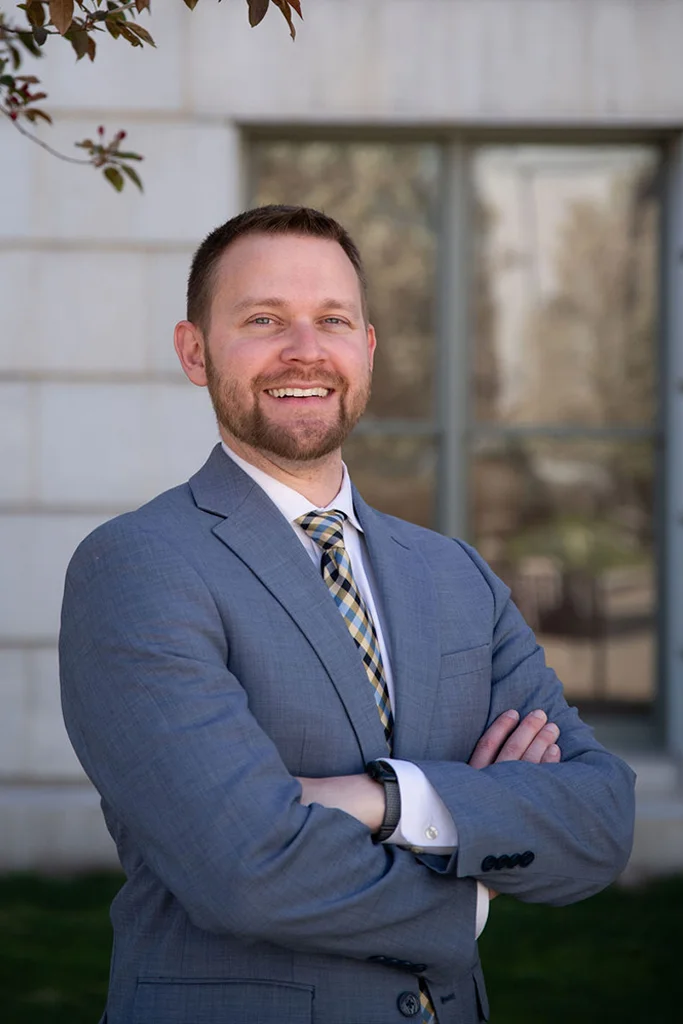
Weld County prosecutors move quickly on criminal cases, and Johnstown residents who find themselves facing charges often discover that the gap between an early mistake and a lasting consequence closes faster than expected. Johnstown criminal defense lawyer Reid DeChant brings courtroom experience earned across the Denver metro, Broomfield, Adams County, and the broader Front Range to clients who need someone who knows how Colorado’s criminal system actually operates, not just what the statutes say.
How Criminal Cases Get Built Against Johnstown Residents
Weld County law enforcement, the Johnstown Police Department, and Colorado State Patrol all operate in and around this area of northern Colorado. When a case begins, officers are already building a record. Patrol reports, body camera footage, witness statements, and field sobriety documentation all come together before an arrest is fully processed. By the time a defendant hears the formal charges, that file may already contain material that will be used against them at trial.
What matters in the earliest stage is how that evidence was gathered. Colorado’s constitutional protections require that stops, searches, and interrogations meet specific legal standards. If an officer lacked reasonable suspicion to stop a vehicle, or if a search exceeded what a warrant authorized, that evidence may be challenged. Reid’s approach starts with a thorough review of the state’s evidence, because what looks like a strong prosecution case on the surface sometimes has structural problems that can change the outcome entirely.
Cases handled out of Weld County are typically prosecuted in Weld County District Court in Greeley. Understanding the tendencies of local prosecutors, how that court schedules hearings, and what kinds of arguments have traction with local judges matters in ways that general legal knowledge cannot substitute for.
Charges Commonly Filed in the Johnstown Area and What They Actually Mean
DUI and DWAI cases make up a significant portion of criminal filings in northern Colorado, particularly along US-34 and I-25, both of which run through or near Johnstown. Colorado’s express consent law means that if you’re stopped on suspicion of impaired driving, declining a chemical test triggers an automatic license revocation separate from any criminal case. That DMV proceeding runs on its own timeline and requires immediate attention, often within seven days of the arrest. Reid has obtained dismissals in DMV express consent hearings and understands both tracks that a DUI arrest sets in motion.
Assault charges, including domestic violence-related assault, are another area where early decisions shape the entire case. Colorado’s mandatory arrest policy in domestic situations means that once officers are called, someone frequently goes to jail regardless of what either party wants. A protective order typically follows, which can restrict where someone lives and whether they can see their children. At DeChant Law, the approach to these cases includes understanding not just the criminal charge but the downstream consequences on housing, family arrangements, and firearms rights that flow from a domestic violence designation.
Drug possession charges in Weld County can range from municipal-level citations to felony filings depending on the substance and quantity. Colorado’s approach to drug offenses has evolved, but possession of methamphetamine, cocaine, or certain prescription drugs without authorization still carries serious criminal exposure. Theft, trespass, and criminal mischief charges also arise frequently in communities experiencing rapid residential growth like Johnstown, sometimes involving disputes between neighbors or contractors that escalate into criminal complaints.
What Actually Happens Between Arrest and Resolution
After an arrest in Johnstown, the process moves through several stages where choices made, or not made, carry real weight. At the initial advisement, the court sets bond conditions. At the preliminary hearing or arraignment, the defendant enters a plea and the case begins its track toward either a negotiated resolution or trial. Motions to suppress evidence, challenge probable cause, or dismiss charges based on procedural defects are typically filed well before any trial date, and they can change the course of a case without ever setting foot in front of a jury.
Many cases do resolve through plea agreements, but a plea agreement is only as good as the leverage behind it. Prosecutors offer different terms to defendants whose attorneys have demonstrated they are prepared to go to trial than they do to those who signal early that trial is not a realistic option. Reid tried cases as a public defender in Denver, Broomfield, and Adams County before moving into private practice. That trial experience is not just a credential, it affects how the other side calculates its offers.
For cases that do proceed to trial, Reid’s approach draws on training at Trial Lawyers College, which emphasizes the human dimension of storytelling in the courtroom. Jurors respond to context, not just legal argument. A client’s full story, their circumstances, their character, and what actually happened, needs to be communicated in a way that resonates. That requires preparation that goes far beyond reviewing the police report.
Questions Johnstown Residents Ask Before Hiring a Defense Attorney
Do I have to go to Greeley for my court appearances?
Most criminal cases filed in Weld County are heard at the Weld County District Court in Greeley. Depending on the charge, some matters may be handled at the municipal level. Your attorney should clarify which court has jurisdiction over your specific charge and what the appearance requirements are from the start.
What happens if I already gave a statement to police?
Statements made to law enforcement can be used as evidence, but they are not automatically disqualifying. The context in which a statement was made, whether Miranda warnings were given, whether the statement was accurately recorded, and what it actually says all factor into how your attorney addresses it. Having spoken to police is a reason to act quickly, not to give up on a defense.
Will a conviction in Weld County affect my record statewide?
Yes. Colorado criminal convictions appear on state background checks regardless of which county the case was filed in. However, Colorado’s record sealing laws allow certain convictions and arrests to be sealed under specified conditions, which can limit what employers and landlords see. Whether your record qualifies for sealing depends on the offense type and other factors that can be evaluated once your case resolves.
Can the DMV revoke my license even if the criminal DUI charge is dropped?
Yes. The DMV proceeding and the criminal case are legally separate. A dismissal of the criminal charge does not automatically reverse a license revocation. That is why addressing both tracks from the beginning matters, and why the seven-day window to request a DMV hearing after a DUI arrest is so consequential.
What is the difference between a DUI and a DWAI under Colorado law?
A DUI requires a BAC of 0.08% or higher, or impairment to a substantial degree by drugs or alcohol. A DWAI, which stands for driving while ability impaired, applies when BAC is between 0.05% and 0.079%, or when a substance affects the driver even slightly. DWAI carries fewer mandatory penalties than DUI, but it is still a criminal offense and still affects your driving record and insurance.
How long does a criminal case in Weld County typically take?
Misdemeanor cases can resolve in a few months. Felony cases often take considerably longer, sometimes over a year, depending on the complexity of the evidence, whether motions are filed, and court scheduling. Speedy trial rights under Colorado law set outer limits on how long a case can remain pending, and those timelines are something your attorney should be tracking from the first court date.
Does hiring a private attorney make a real difference compared to using a public defender?
Public defenders are often skilled lawyers, but they carry very high caseloads. A private defense attorney can dedicate more time to investigating your case, responding to your questions, and preparing for hearings and trial. Reid himself worked as a public defender and understands both sides of that comparison from direct experience.
Facing Criminal Charges in Northern Colorado
Johnstown has grown quickly, and the legal issues residents face reflect a community that is part rural Colorado and part expanding Front Range suburb. Whether a charge arose from a traffic stop on I-25, a domestic dispute at home, or an accusation involving a business or neighbor, the stakes attached to a criminal record in this state are real and durable. A Johnstown criminal defense attorney who has stood in Weld County courtrooms, argued suppression motions, taken cases to verdict, and represented clients in DMV hearings brings something concrete to the table. DeChant Law handles cases across the Denver metro and northern Colorado, and Reid is available to speak directly with people in Johnstown who are trying to understand what they are actually facing and what options are realistically in front of them.