Jefferson County Vehicular Assault and Homicide Defense Lawyer
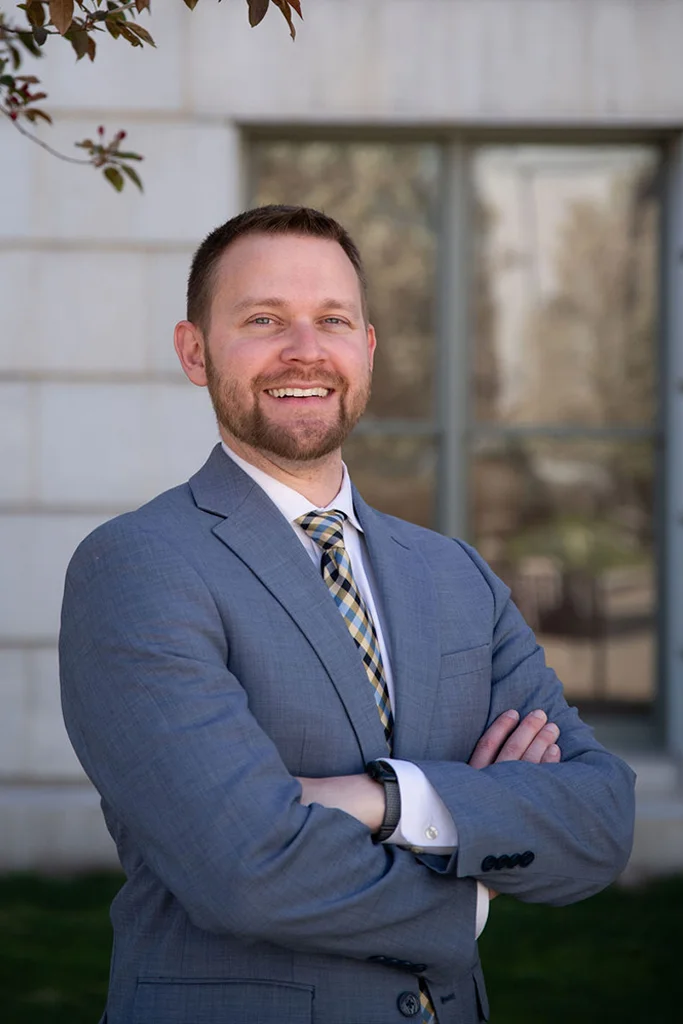
Charges involving a vehicle and serious injury or death carry a different weight than most criminal cases. The evidence is often physical and forensic. The victims are real people with families who show up in court. Prosecutors in Jefferson County treat these cases as priorities, and the charging decisions they make, whether vehicular assault or vehicular homicide, carry consequences that can define the rest of your life. Reid DeChant has handled serious felony cases at every level, from public defender work across Adams, Denver, and Broomfield counties to private practice, and he understands what it actually takes to defend a Jefferson County vehicular assault and homicide case from the first hearing to verdict. This page explains what you are actually facing and how this kind of defense gets built.
How Colorado Law Draws the Line Between Vehicular Assault and Vehicular Homicide
Colorado’s vehicular assault statute covers situations where a driver’s conduct causes serious bodily injury to another person. The statute operates on two distinct theories. Under the DUI theory, the prosecution must show the driver was under the influence of alcohol or drugs at the time of the crash. Under the reckless driving theory, the prosecution must show the driver operated the vehicle in a manner that amounted to reckless disregard for the safety of others. Both paths can lead to a felony conviction, but the DUI-based charge is a Class 4 felony carrying two to six years in the Department of Corrections, while the reckless theory carries a Class 5 felony with a somewhat lower range. Mandatory parole periods apply either way.
Vehicular homicide follows the same two-theory structure but with a death involved. A DUI-based vehicular homicide is a Class 3 felony with a presumptive range of four to twelve years in prison. The reckless version is a Class 4 felony. Colorado’s sentencing framework for these offenses often includes mandatory minimum terms, and judges have limited discretion to depart downward in certain circumstances. Beyond the prison exposure, a conviction means a felony record, an extended license revocation, and, in DUI-based cases, collateral consequences that affect everything from professional licenses to housing and immigration status.
Jefferson County handles these cases through the 1st Judicial District, with proceedings at the Jefferson County Combined Courts in Golden. The district attorney’s office in Jefferson County has a track record of pursuing maximum charges in high-profile traffic fatality cases, particularly where DUI is alleged. Understanding how these cases typically move through that specific courthouse matters when building a defense strategy.
Where the Evidence Gets Challenged in These Cases
Vehicular assault and homicide prosecutions are built on layers of physical and forensic evidence, and each layer contains potential vulnerabilities. The investigation typically involves crash reconstruction analysis performed by law enforcement specialists. These analysts examine skid marks, vehicle damage patterns, final resting positions, and road geometry to produce opinions about speed, point of impact, and driver behavior. But crash reconstruction is not a perfect science. The methods used, the assumptions built into the analysis, and the qualifications of the officer or specialist who performed it are all subject to challenge through independent expert review.
In DUI-based cases, the blood alcohol or drug evidence introduces an entirely separate category of issues. Colorado’s express consent law requires drivers to submit to chemical testing, and most vehicular cases involve a blood draw rather than a breath test. The chain of custody for that blood sample, the testing laboratory’s protocols, the margin of error in the analysis, and whether the tested BAC accurately reflects the driver’s level of impairment at the moment of the crash rather than at the time of the draw are all legitimate grounds for scrutiny. Reid has specifically focused his training and experience on fighting impaired driving charges, which means he approaches the forensic side of a vehicular case with a working knowledge of how these results are produced and where errors are introduced.
Witness accounts are another significant piece of evidence in most vehicular cases. Eyewitness memory is fallible, especially in high-stress, fast-moving situations. The sequence of events, who had the right of way, road and weather conditions at the time, and what the other driver or pedestrian was doing are all contested facts in many of these cases. Cell phone records, surveillance footage from nearby businesses or traffic cameras along corridors like US-285, C-470, or Wadsworth Boulevard, and data from the vehicle’s own event data recorder can either support or undermine the prosecution’s narrative.
Recklessness Is Not the Same as Negligence, and That Difference Can Determine the Outcome
One of the most consequential legal questions in any vehicular assault or homicide case is whether the driver’s conduct actually meets the statutory definition of recklessness. Colorado law defines recklessness as consciously disregarding a substantial and unjustifiable risk. This is a higher standard than ordinary negligence, which covers careless or inattentive driving. A momentary lapse in attention, misjudging a gap in traffic, or reacting too slowly to a hazard may be tragic but may not legally constitute reckless driving under Colorado’s standard.
Prosecutors sometimes charge vehicular assault under the reckless theory when the evidence of impairment is weak, using the crash itself as circumstantial evidence of reckless behavior. Defending against that theory requires a careful analysis of what the driver actually did in the moments before the collision, whether the conduct departed so substantially from what an ordinary reasonable person would do that it crosses into conscious disregard, and whether the crash was caused by the driver’s conduct at all versus road conditions, mechanical failure, or the actions of another party. This is a genuinely contested legal and factual question in many cases, not just an argument for argument’s sake.
What People in Jefferson County Ask About These Charges
Is vehicular assault always a felony in Colorado?
Yes. Under current Colorado law, both theories of vehicular assault, whether based on DUI or reckless driving, result in felony charges. The specific class of felony, and therefore the potential sentence, differs depending on which theory applies, but neither can be reduced to a misdemeanor through the charging statutes themselves.
Can a vehicular assault or homicide charge be dismissed before trial?
Yes. Charges can be challenged at the preliminary hearing stage, through motions to suppress evidence, or through motions to dismiss based on legal insufficiency. If critical evidence, such as the blood test results or the crash reconstruction report, is suppressed or successfully challenged, prosecutors may not have enough to proceed. Dismissals and reductions happen in these cases, though the outcome depends entirely on the specific facts and what the evidence actually shows.
What happens to my driver’s license while the criminal case is pending?
If the vehicular charge involves DUI or DWAI, there will typically be a parallel DMV proceeding that can result in license revocation independent of the criminal case outcome. Colorado’s express consent framework means the DMV action moves on its own timeline. Requesting a hearing with the DMV quickly after the arrest is important because the window to contest the revocation is limited. Reid has a strong track record in DMV express consent hearings, including multiple dismissed revocations listed in DeChant Law’s case results.
What is the role of expert witnesses in a vehicular homicide defense?
Expert witnesses are often central to these cases. Crash reconstruction experts can counter the prosecution’s accident analysis. Toxicologists can challenge blood test results or address absorption and elimination rates that affect what the BAC actually shows about impairment at the relevant time. Medical experts may address causation questions, particularly in cases where the victim’s injuries had other contributing factors. Building a strong defense in a vehicular homicide case often requires identifying, retaining, and properly preparing these experts well before trial.
Does it matter that I did not intend to hurt anyone?
Intent matters for how the charge is framed, but these statutes do not require specific intent to harm. The recklessness standard focuses on whether you consciously disregarded a risk, not whether you meant to cause an injury. However, the absence of intent is still relevant context for how the defense is presented and how a jury understands your conduct. It also influences plea negotiations and, if there is a conviction, sentencing arguments.
Can someone be charged with vehicular homicide even if the other driver was also at fault?
Yes, Colorado law does not require that the defendant be the sole cause of the collision. Comparative fault or shared responsibility can be raised in certain contexts, but the prosecution will argue that your conduct was a sufficient contributing cause regardless of what the other party did. The degree to which another driver’s negligence or a road hazard contributed to the crash is a factual question that a defense can develop and present to a jury.
Defending Vehicular Assault and Homicide Charges in Jefferson County
Reid DeChant’s background as a public defender gave him direct exposure to the most serious felony cases courts handle, including violent crimes, sexual assaults, and homicides. His training at Trial Lawyers College reinforced the approach he brings to every serious case: start with the client’s story, build a theory of the case grounded in the actual evidence, and be prepared to take the fight to trial when the prosecution’s case does not hold up. Jefferson County vehicular assault and homicide cases are tried, not just plea bargained, and having a defense lawyer who has actually litigated serious felonies in front of juries is the difference between a strategy that works and one that collapses under the pressure of a real trial. If you are facing these charges in Jefferson County, contact DeChant Law to talk through your situation with a defense attorney who understands exactly what is at stake.