Grand County Vehicular Assault and Homicide Defense Lawyer
A crash that injures or kills someone can transform an ordinary Colorado driver into a criminal defendant facing decades in prison. These cases move fast. Law enforcement typically begins its investigation at the scene, and prosecutors start building a case long before a driver fully understands what charges are coming. If you or someone close to you is under investigation or has been charged in Grand County, working with a Grand County vehicular assault/homicide defense lawyer is not something to delay while waiting to see how serious things get. They are already serious.
What Colorado Law Actually Requires for a Vehicular Assault or Homicide Conviction
Colorado treats vehicular assault and vehicular homicide as separate charges depending on whether the victim survived, and both carry significant prison exposure. Vehicular homicide while under the influence is a Class 3 felony, carrying four to twelve years in prison, and that range can extend if aggravating circumstances apply. Vehicular assault while DUI is a Class 4 felony. When alcohol or drugs are not involved, the charges become Class 4 and Class 5 felonies respectively, but the state must then prove the driver operated recklessly, which is a higher bar than merely being negligent.
The distinction between reckless and negligent driving is one of the most consequential questions in these cases. Speeding, running a red light, or momentarily losing control of a vehicle does not automatically establish recklessness under Colorado law. Recklessness requires proof that the driver consciously disregarded a substantial and unjustifiable risk. That legal standard gives defense attorneys real room to work, and it is a central battleground in cases where the prosecution cannot point to a blood alcohol level above the legal limit.
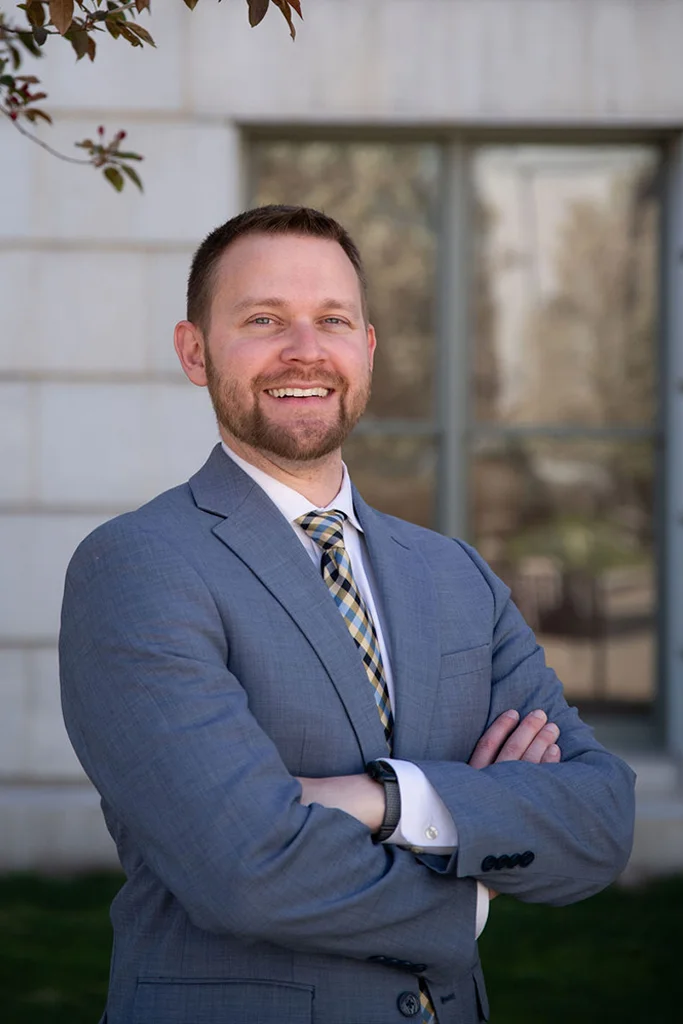
When impairment is alleged, the prosecution typically rests heavily on chemical test results and the observations of the responding officer. Reid DeChant has focused substantial energy on understanding how blood and breath testing works, and where those processes break down. Errors in blood draw procedures, improper chain of custody, calibration issues with testing equipment, and contamination of samples are not abstract concerns. They arise in real cases, and when the evidence is challenged effectively, it can change what the prosecution can actually prove at trial.
How Grand County Geography Shapes These Cases
Grand County covers a large stretch of the Colorado Rockies, including Winter Park, Granby, Kremmling, and the area around Grand Lake. US-40 through Berthoud Pass and the Fraser Valley is one of the primary corridors, and it carries a significant volume of traffic from Front Range commuters, ski season visitors, and summer recreation travelers. The road conditions along that stretch, combined with elevation changes, mountain weather, and wildlife crossings, create a set of hazards that do not exist in urban settings.
A collision on a snow-covered section of US-40 in January looks different from an impairment-related crash on a dry road in Denver. Accident reconstruction experts will examine skid marks, vehicle data, road conditions, visibility, and dozens of other variables. In mountain terrain, the physical evidence is more complex to interpret, and the conclusions drawn from it deserve the same scrutiny as any other piece of the prosecution’s case. Grand County cases are handled through the Fifth Judicial District, and understanding how cases move through that court system matters for every strategic decision a defense attorney makes.
The Investigation Period Before Charges Are Filed
One of the most underappreciated aspects of vehicular assault and homicide cases is how much of the critical work happens before anyone is formally charged. Law enforcement agencies, sometimes including the Colorado State Patrol’s Serious Accident Investigation team, gather evidence in the hours and days immediately following a crash. Surveillance footage can be overwritten. Vehicle black box data can be accessed by investigators without a defendant’s knowledge. Witnesses give initial statements while memories are fresh, and those statements lock people into positions they may later struggle to explain away.
Retaining counsel during this window, even before charges are filed, allows an attorney to begin preserving evidence on the defense side, identify potential witnesses, monitor what investigators are gathering, and advise on what to say and, critically, what not to say. Statements made voluntarily to law enforcement in the aftermath of a crash, when a driver is shaken and believes they are simply cooperating, have a way of appearing later as admissions or inconsistencies. That early period is consequential in a way that most people do not realize until much later in the process.
Questions Grand County Residents Ask About These Charges
Can vehicular homicide charges be filed even if the driver was not drunk?
Yes. When impairment is not at issue, the prosecution must show the driver acted recklessly, not just carelessly or negligently. But recklessness can be argued from driving behavior alone, including excessive speed, distracted driving, or prior traffic violations close in time to the accident. Whether the prosecution can actually prove recklessness beyond a reasonable doubt is a different question, and one that depends heavily on the specific facts of each case.
What role does a vehicle’s event data recorder play in these cases?
Modern vehicles record data including speed, throttle position, braking, and seatbelt use in the seconds before a collision. Prosecutors frequently seek this data, and it can cut both ways. It may support the driver’s account or contradict the prosecution’s theory. An attorney should ensure this data is properly obtained, that the device was analyzed correctly, and that any conclusions drawn from it are actually supported by the recording.
Is it possible to negotiate a plea to a lesser charge in a vehicular homicide case?
It depends on the evidence, the circumstances, and the prosecution’s position. Plea negotiations in these cases often involve reducing charges to criminally negligent homicide, careless driving causing death, or similar offenses that carry lower sentences. Whether that outcome is realistic, and whether it is in a client’s interest, requires an honest assessment of the strength of the evidence and what a jury would likely conclude at trial.
How does a vehicular assault or homicide conviction affect a driver’s license?
A conviction under either statute typically results in license revocation through the DMV, separate from any criminal sentence. In DUI-related vehicular assault and homicide cases, the express consent framework also comes into play, and there may be a parallel DMV action to address. Reid DeChant has extensive experience with DMV proceedings alongside criminal defense work, which matters in cases where both tracks are running at the same time.
What happens if the driver had a valid prescription for the substance found in their system?
Colorado’s DUI statute covers prescription medications as well as alcohol and illegal drugs. A valid prescription is not a legal defense to driving while impaired by that substance. However, the prosecution still must establish that the driver was actually impaired, and the mere presence of a substance in the blood does not always resolve that question. The impairment analysis becomes more complex with prescription medications, and that complexity is worth examining closely in any case where it arises.
Will a vehicular homicide conviction result in prison time?
A Class 3 felony conviction for vehicular homicide while DUI carries a presumptive range of four to twelve years in the Colorado Department of Corrections, though the sentence imposed by the court depends on criminal history, aggravating and mitigating factors, and what the evidence showed. Not every conviction results in a sentence at the top of the range, and in some cases where the underlying facts support it, probation may be available for Class 4 and 5 felony convictions.
How does the civil case interact with the criminal defense?
Families of victims in vehicular homicide cases often pursue civil wrongful death claims alongside the criminal prosecution. What a defendant says or admits in one proceeding can affect the other. These two tracks do not always move at the same pace, and coordinating the approach across both requires attention from defense counsel early in the process.
When You Need Someone Who Has Actually Tried These Cases
Hiring an attorney without meaningful trial experience in felony cases is a real risk in charges this serious. Reid DeChant has tried cases to verdict across the Denver metro area and surrounding counties, including DUI-related offenses and felony assault charges. His background as a public defender gave him experience handling serious cases from the beginning of his career, and his time at Trial Lawyers College shaped how he approaches storytelling and case theory in front of a jury. Vehicular assault and vehicular homicide cases almost always involve competing narratives about what happened and why. Building the right narrative, grounded in the actual evidence, is where verdicts are won and lost.
If you are facing a Grand County vehicular assault or homicide case, this is not the time to wait on legal representation. DeChant Law handles these cases with the seriousness the charges demand and the tenacity the outcome requires. Contact the firm to speak directly about your situation.