Glenwood Springs Vehicular Assault and Homicide Defense Lawyer
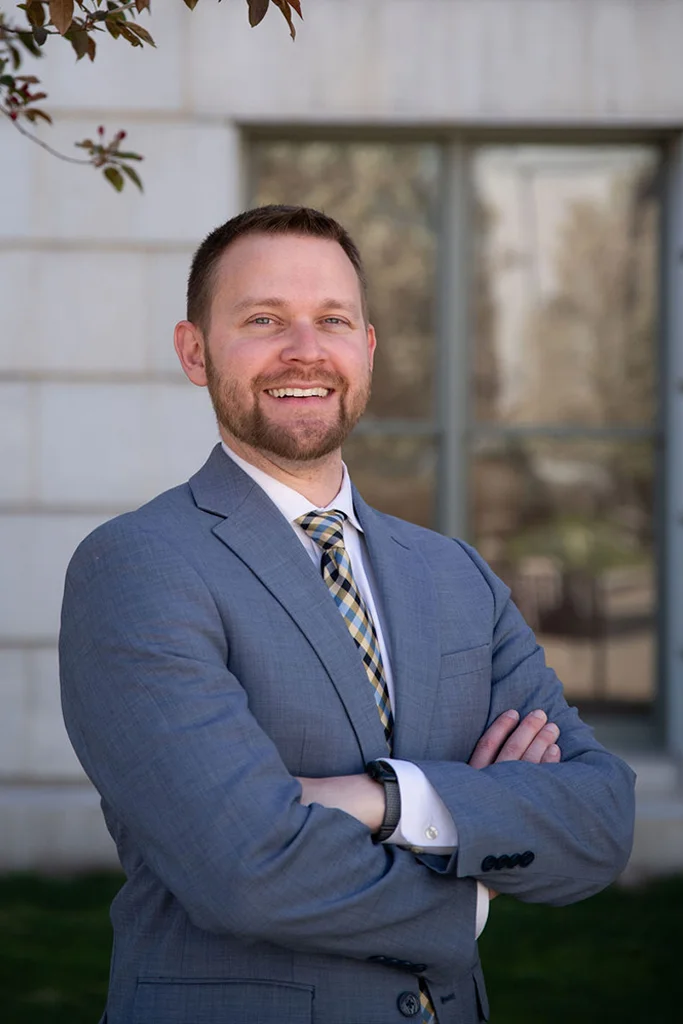
A crash happens in seconds. The criminal case that follows can take years and carry consequences that reshape every part of a person’s life. Vehicular assault and vehicular homicide are among the most aggressively prosecuted charges in Colorado, in part because prosecutors can point to a real victim and a real outcome. When those charges arise in Garfield County, the case lands in the Fifth Judicial District, and the path forward depends on understanding exactly what the state is trying to prove and where the gaps in that proof actually exist. Reid DeChant, Glenwood Springs vehicular assault and homicide defense lawyer, has handled serious felony charges across the Front Range and Western Slope, and he brings that trial experience to bear on cases where a conviction would mean prison time, permanent license revocation, and a felony record that follows a person for life.
What Colorado Actually Charges and Why It Matters Which One
Vehicular assault and vehicular homicide are separate charges with different elements, different penalty ranges, and different defense strategies. Knowing which charge you are facing, and on what theory, shapes everything that follows.
Vehicular assault under C.R.S. 18-3-205 requires that the driver caused serious bodily injury to another person while either driving under the influence or with conduct that rises to the level of reckless driving. The DUI theory is a Class 4 felony. The recklessness theory is a Class 5 felony. That distinction matters because the DUI route does not require the prosecution to prove the driver was subjectively aware of the risk, only that they were impaired and that impairment caused the injury.
Vehicular homicide under C.R.S. 18-3-106 applies when a death results. Again, there are two routes: the DUI theory, a Class 3 felony, and the recklessness theory, a Class 4 felony. A Class 3 felony in Colorado carries four to twelve years in the Department of Corrections with mandatory parole. When prosecutors charge the DUI theory in a fatal crash, they are effectively combining a DUI prosecution with a homicide prosecution, and they will pursue both with the resources that reflects.
Charges also do not always match the facts, especially in the immediate aftermath of a crash when law enforcement is still gathering information and making rapid decisions. Overcharging happens. Reid’s job is to evaluate what the evidence actually supports and push back where the state has reached beyond it.
How These Cases Are Built, and Where They Can Be Challenged
Colorado State Patrol and Garfield County law enforcement respond to serious crashes on Highway 6, I-70 through Glenwood Canyon, and State Highway 82 between Glenwood Springs and Aspen. These are mountain corridors with variable conditions, wildlife crossings, steep grades, and weather that changes fast. The cause of a crash in that environment is rarely as straightforward as a toxicology number and a police report.
Prosecutors build vehicular assault and homicide cases around several categories of evidence. Blood or breath testing is central when the DUI theory is charged, and challenges to how that evidence was collected, stored, and analyzed are one of the most productive areas of defense. The express consent statute in Colorado has procedural requirements, and deviations from those requirements can affect admissibility. Colorado courts have seen cases dismissed at the DMV level and suppressed at the criminal level over advisement issues and testing timeline problems, which is why Reid’s work on DUI defense extends directly into these more serious charges.
Accident reconstruction is another critical piece. Investigators use speed calculations, skid marks, vehicle damage patterns, and sometimes data from event data recorders to establish how a crash occurred. These methods can be accurate, but they rest on assumptions, and those assumptions can be contested with independent expert analysis. In Glenwood Canyon and the surrounding corridor, road conditions and the canyon’s unique geography introduce variables that a one-size-fits-all reconstruction can miss.
Causation is also a genuine issue in many cases. The prosecution must show that the defendant’s conduct, not some other factor, caused the injury or death. Road hazards, another driver’s behavior, mechanical failure, and sudden medical events are all possibilities that deserve serious investigation before the defense concedes the government’s theory of what happened.
The Consequences That Reach Beyond the Prison Sentence
A conviction for vehicular assault or vehicular homicide in Colorado does not end when a sentence is served. The downstream consequences are significant and long-lasting.
License revocation is automatic following a conviction, and reinstatement requires navigating the DMV process separately from the criminal case. For anyone whose livelihood depends on driving, whether a commercial driver, a tradesperson, or someone who commutes across Garfield County, this can be economically devastating before a day of prison is served.
Felony convictions create permanent record barriers for employment, housing, and professional licensing. For non-citizens, a felony conviction in this category can trigger immigration consequences including removal proceedings. For those who hold professional licenses, a conviction triggers reporting obligations and potential discipline by the licensing board, regardless of whether the underlying profession has anything to do with driving.
Civil liability often runs parallel to the criminal case. A criminal defense lawyer is not a civil attorney and does not handle the civil claim, but what happens in the criminal case can directly affect how a civil case resolves. Admissions made without counsel, or a plea entered without a full understanding of its downstream effects, can cause compounding damage.
Questions Clients Ask About These Charges in Colorado
Can a vehicular homicide charge be reduced to something less serious?
Yes, and it happens. The strength of the prosecution’s evidence, the causation theory, the reliability of the chemical testing, and the specific facts of the crash all affect how much negotiating leverage the defense has. Cases that start as vehicular homicide have resolved as lesser charges when the evidence did not support the original charge or when significant issues with the state’s case emerged during investigation.
Does the crash victim’s family have any say in whether charges are filed?
No. In Colorado, the decision to charge and prosecute rests with the district attorney’s office, not with victims or their families. Victims may provide input through the victim’s rights process, but they cannot compel or prevent a prosecution. That said, the relationship between law enforcement, the DA’s office, and the affected family can influence how aggressively a case is pursued.
What if the accident was partly caused by road conditions or another driver?
This is directly relevant to causation, which the prosecution must prove. If road conditions, a defect in the roadway, another driver’s negligence, or some other external factor contributed meaningfully to the crash, that affects whether the defendant’s conduct was the proximate cause of the injury or death. These arguments require investigation and often expert testimony.
Will I automatically lose my license while the case is pending?
The DMV proceeding is separate from the criminal case. Following an arrest that triggers express consent, you have a limited window to request a hearing. Missing that window typically results in automatic suspension. The criminal case can also result in additional license action upon conviction. Managing both proceedings at the same time, with strategy applied to both, is part of what a defense attorney does in these cases.
How long do vehicular assault and homicide cases take to resolve?
These are serious felonies, and the cases are rarely quick. Investigation, discovery, expert review, pretrial motions, and potential trial preparation take time. Cases in the Fifth Judicial District, which covers Garfield County and several surrounding counties, move through a court system that serves a large and sometimes remote geographic area. A case that proceeds to trial can take a year or more from arrest to verdict.
Does hiring a private attorney rather than using a public defender make a difference?
It can, not because public defenders are poor lawyers, but because of time and resources. A private attorney handling a serious vehicular assault or homicide case can dedicate investigative resources, retain independent experts, and give the case the attention it requires without a full public defender caseload operating in parallel. Reid’s background as a public defender means he understands the system from both sides.
What is the difference between recklessness and DUI in these charges, practically speaking?
Practically, the DUI theory is often easier for prosecutors to pursue because they can anchor the case to a chemical test result. The recklessness theory requires showing that the driver consciously disregarded a substantial and unjustifiable risk. That is a higher bar in one sense, but it applies in cases involving excessive speed, racing, or other conduct independent of impairment. The charging theory shapes which defenses are available and how aggressively each one applies.
Facing a Vehicular Assault or Homicide Case in the Glenwood Springs Area
These cases demand the kind of attention that starts at the beginning, not after critical deadlines have passed and evidence has been lost. Reid DeChant takes the time to understand the actual facts of what happened, not just the version described in the police report, because that is where a real defense starts. If you are dealing with a vehicular assault or vehicular homicide charge in Glenwood Springs or anywhere in Garfield County, contact DeChant Law to talk through what you are facing and what your options actually look like.