
Glenwood Springs Felony Lawyer
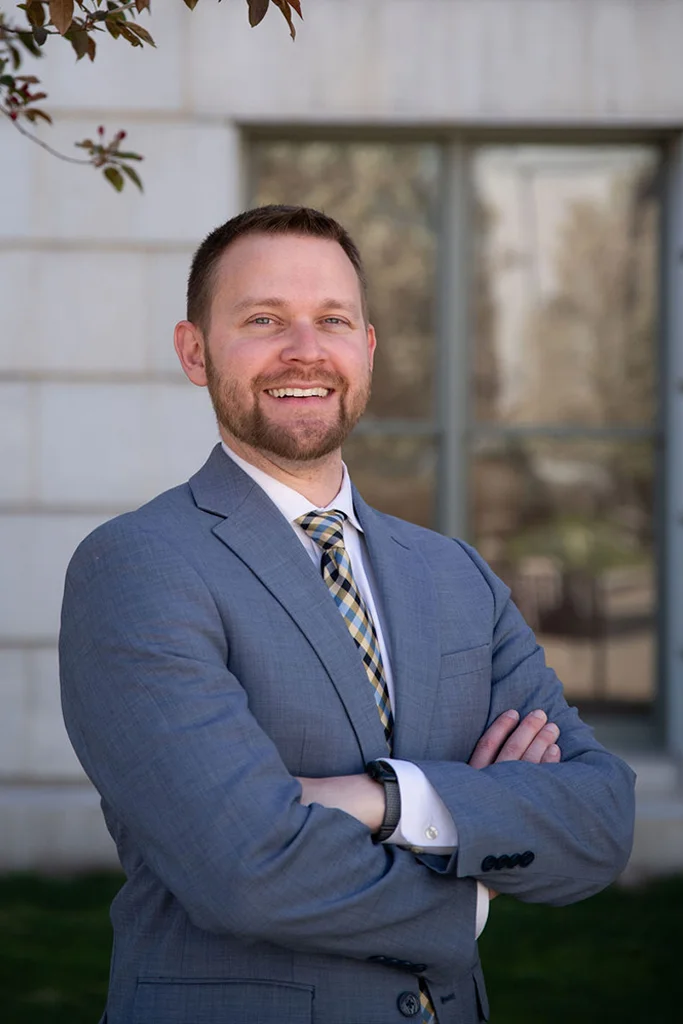
Garfield County prosecutes felony charges with considerable resources and institutional knowledge of local courts. A felony conviction in Colorado carries consequences that reach far beyond any sentence imposed, touching employment, housing, professional licensing, firearm rights, and immigration status for years or decades. When those stakes are on the table in Glenwood Springs, the quality of defense representation is not a secondary concern. Glenwood Springs felony lawyer Reid DeChant brings courtroom experience earned as a public defender and in private practice, handling cases across the full spectrum of Colorado criminal law, from misdemeanors to serious violent felonies.
How Colorado Classifies Felonies and Why It Changes Everything
Colorado divides felony offenses into six classes, with Class 1 carrying the most severe penalties and Class 6 representing the least serious end of the felony spectrum. Where a charge lands on that scale determines presumptive sentencing ranges, mandatory minimum exposure, and whether the offense is subject to Colorado’s extraordinary risk crime sentencing, which can push maximum terms significantly higher than the standard presumptive range.
Drug felonies operate under a separate classification system with their own sentencing structure, and the distinction between a level 1 drug felony and a level 4 drug felony is enormous, both in terms of prison exposure and in the pathways available for diversion, treatment, or probation. In Garfield County, prosecutors will often look at prior criminal history, the quantity of any controlled substance, and whether distribution or manufacturing is alleged when deciding how aggressively to pursue a case. These are not abstract legal considerations. They directly shape what a realistic outcome looks like and how a defense strategy should be built.
Sentence-enhancing allegations can also attach to underlying charges, and these carry separate consequences that must be addressed on their own terms. A crime of violence allegation, for example, triggers mandatory sentencing provisions that strip the court of the flexibility it would otherwise have. Understanding which enhancers are properly supported by the evidence, and which ones can be challenged, is among the most practically significant work a felony defense attorney does before a case ever reaches trial.
Felony Cases That Arise Frequently Along the I-70 Corridor
Glenwood Springs sits along I-70, one of Colorado’s major east-west arteries connecting the Front Range to the Western Slope. That geography shapes the types of felony cases that arise in Garfield County in specific, identifiable ways. Drug trafficking cases are common precisely because law enforcement agencies, including both Colorado State Patrol and local authorities, actively work I-70 looking for interstate transport of controlled substances. A vehicle stop that begins as a routine traffic contact can escalate into a felony distribution or possession with intent charge when officers claim to find quantities that suggest more than personal use.
Assault charges, including felony assault, arise in the resort and outdoor recreation communities surrounding Glenwood Springs. Alcohol, unfamiliar environments, and disputes that escalate at restaurants or lodging can result in charges that are classified as felonies based on the nature of the alleged injury or the involvement of a weapon. Domestic violence allegations in these contexts often carry felony designations and mandatory arrest policies that leave little room for de-escalation before charges are filed.
Theft offenses, particularly those involving construction equipment, vehicles, or property values that push cases into felony territory, are also common in this part of Garfield County. And crimes related to the outdoor recreation economy, including incidents at Glenwood Canyon, the Roaring Fork Valley, or surrounding public lands, sometimes involve a federal jurisdictional component that adds a separate layer of complexity to the defense.
What Actually Gets a Felony Charge Reduced or Dismissed in Garfield County
Cases in Garfield County are prosecuted out of the 9th Judicial District, which covers Garfield, Rio Blanco, and Pitkin counties. The dynamics of that district, including how the District Attorney’s office approaches plea negotiations, what local judges expect at pretrial hearings, and what arguments have historically gained traction, are not the same as in Denver or Jefferson County. Experience with the courts and prosecutors in this specific judicial district matters in ways that are hard to overstate.
Reduction or dismissal of a felony charge usually comes through one of several concrete pathways. Suppression of evidence is one. When law enforcement stops a vehicle, conducts a search, or administers questioning without adhering to constitutional requirements, the evidence obtained in violation of those requirements may be excludable. If the prosecution’s case rests on that evidence, suppression can effectively end the case or force a dramatically different offer. This analysis requires a careful reading of police reports, body camera footage, and the specific legal standards governing the type of search or seizure at issue.
A second pathway involves challenging the sufficiency of the evidence. Colorado requires the prosecution to establish probable cause at a preliminary hearing for felony charges, and that hearing is an opportunity to force the state to show its hand early. If witness credibility is weak, forensic evidence is contested, or the chain of custody for physical evidence has gaps, those problems can be developed through pretrial litigation rather than waiting for trial.
Deferred prosecution and diversion agreements are a third pathway in appropriate cases, particularly for defendants with limited or no prior criminal history facing drug-related or lower-level felony charges. These agreements typically require the completion of treatment, community service, or other conditions in exchange for dismissal. They are not available in every case, and they require careful evaluation of how the terms of any agreement interact with collateral consequences like professional licensing or immigration status.
Questions About Felony Charges in Glenwood Springs
What happens at an arraignment in Garfield County for a felony?
At arraignment, a judge formally advises you of the charges against you and you enter an initial plea. For felonies, this usually follows a filing in District Court after the case has been bound over from a county court advisement. The arraignment is also when conditions of bond are set or reviewed. It is not a hearing where evidence is presented, but how you are represented at this early stage can influence conditions of release and set the tone for how the case proceeds.
Can a felony charge be reduced to a misdemeanor in Colorado?
Yes, and this happens in a meaningful number of cases. Reduction can occur through plea negotiation, where the prosecution agrees to amend the charge in exchange for a guilty plea to the lesser offense. It can also happen when pretrial litigation weakens the prosecution’s position sufficiently that the state is willing to resolve the case at a lower level. Whether a reduction is achievable depends on the specific charge, the facts, the defendant’s history, and the posture of the particular prosecuting office.
Will I go to prison if convicted of a felony in Colorado?
Not necessarily. Many felony convictions in Colorado result in probation rather than incarceration, particularly for Class 5 and Class 6 felonies and for drug offenses where treatment alternatives are available. That said, certain convictions, especially those involving crimes of violence, sexual offenses, or repeat offenses, carry mandatory prison terms. The sentencing exposure varies significantly by charge class and by what enhancements the prosecution alleges, which is one reason understanding the specific charges and available defenses from the outset matters so much.
Does a felony conviction affect professional licenses in Colorado?
Yes, and this is one of the most practically significant collateral consequences of a felony conviction. Colorado licensing boards for healthcare providers, attorneys, real estate professionals, contractors, and many other occupations have authority to deny, suspend, or revoke licenses based on criminal convictions. The analysis is not always automatic, and some boards apply a multi-factor review. However, certain convictions create near-automatic disqualification for specific license categories. This is a consequence that needs to be part of any evaluation of how to approach a felony case.
What is the difference between a preliminary hearing and a trial?
A preliminary hearing is a pretrial proceeding where a judge determines whether there is probable cause to believe a felony was committed and that the defendant committed it. The standard is lower than proof beyond a reasonable doubt, and the hearing is often shorter and more limited than a full trial. Its value lies in the opportunity to test the prosecution’s evidence early, cross-examine witnesses, and potentially establish grounds for dismissal or reduction. A trial is where the ultimate determination of guilt or innocence is made, either by a judge or jury, under the beyond a reasonable doubt standard.
How long does a felony case in Garfield County typically take to resolve?
Timelines vary considerably depending on the complexity of the case, whether pretrial motions are filed, and the court’s docket. Straightforward matters that resolve through plea negotiation may conclude within a few months. Cases that require extensive pretrial litigation or proceed to trial can extend over a year or longer. The 9th Judicial District, like most Colorado district courts, manages a substantial caseload, and scheduling constraints on the court’s end are a real factor.
Can I seal a felony conviction from my record in Colorado?
Colorado’s record sealing laws were expanded in recent years and now permit sealing of certain felony convictions, though eligibility depends on the offense class, the specific crime of conviction, and the amount of time that has passed since the sentence was completed. Some categories of offenses, including many sexual offenses and serious violent crimes, remain ineligible for sealing. An evaluation of sealing eligibility should account for all prior convictions, not just the one at issue.
Facing Felony Charges in Western Colorado
DeChant Law represents clients charged with serious felonies throughout the Denver metro area and the surrounding region. Reid’s background as a public defender across multiple Colorado counties, combined with private practice focused on criminal defense and trial work, informs how he approaches cases that require both careful pretrial strategy and the genuine readiness to take a case to a jury when that is what the situation demands. For anyone dealing with a Glenwood Springs felony attorney search, the conversation about options, realistic outcomes, and what a defense actually looks like in Garfield County is the right place to start.