Garfield County Vehicular Assault and Homicide Defense Lawyer
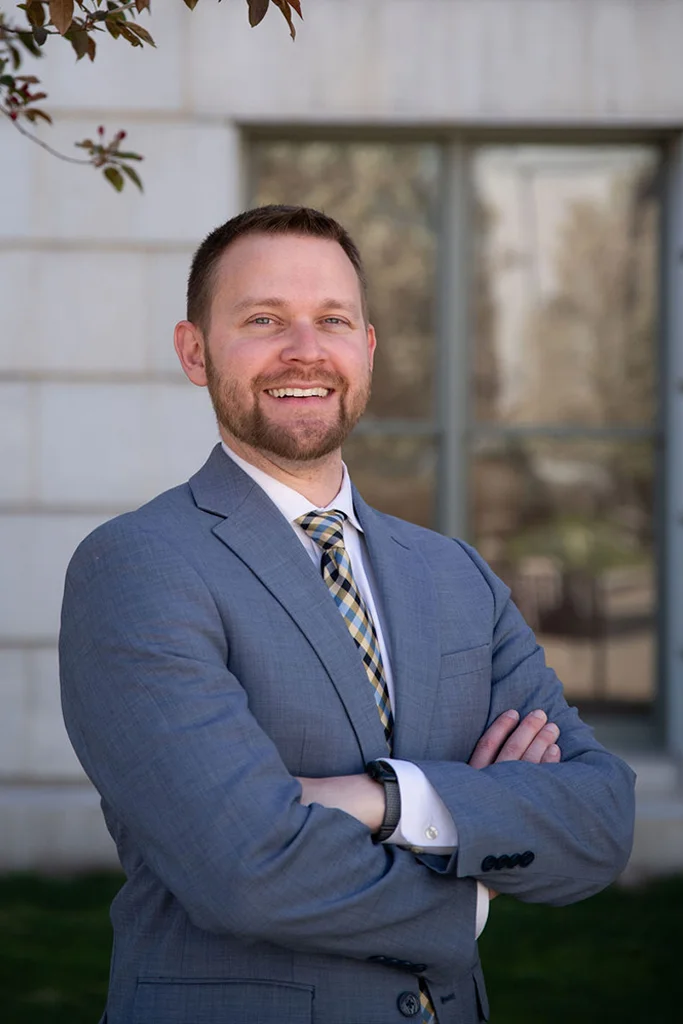
A crash that injures or kills someone can transform a driver from a victim of circumstance into a defendant facing some of the most serious charges in Colorado’s criminal code. Garfield County vehicular assault and homicide defense demands a lawyer who understands both the science behind accident reconstruction and the local prosecution tendencies that shape how these cases move through the 9th Judicial District. Reid DeChant brings courtroom experience across Colorado’s Front Range and mountain counties, including work as a public defender where he handled everything from traffic offenses to homicide cases.
What Colorado Actually Charges in These Cases
Vehicular assault and vehicular homicide are distinct from standard assault or manslaughter charges, and prosecutors frequently have discretion about which statute to pursue. In Colorado, vehicular assault under C.R.S. 18-3-205 applies when a driver causes serious bodily injury to another person while driving under the influence or in a reckless manner. DUI-based vehicular assault is a class 4 felony. Reckless vehicular assault is a class 5 felony. The difference in classification matters because it directly controls the sentencing range a judge can impose.
Vehicular homicide under C.R.S. 18-3-106 follows the same two-track structure. A death caused by DUI driving is a class 3 felony, one of the most serious charges outside of first-degree murder. A death caused by reckless driving, without an impairment component, is a class 4 felony. Prosecutors in Garfield County will often look at blood toxicology results, witness statements, and the physical evidence at the scene before deciding how to charge. That decision shapes everything that follows.
One detail that comes up repeatedly in these cases: a driver does not need to have been the primary cause of a crash to face charges. Colorado law requires that the defendant’s impairment or recklessness contributed to the injury or death, not that it was the sole cause. That distinction opens the door to meaningful defense arguments around comparative fault, road conditions on Highway 82 or I-70, and the actions of other drivers involved in the collision.
How Garfield County Cases Typically Move Through the 9th Judicial District
Cases in Garfield County are handled by the 9th Judicial District, which covers Garfield, Pitkin, and Rio Blanco counties. The courthouse in Glenwood Springs is where most felony matters are heard. Vehicular assault and homicide cases tend to move more deliberately than misdemeanor matters. There are frequently multiple preliminary hearings, motions addressing the admissibility of blood test results, and extended discovery periods driven by accident reconstruction evidence, surveillance footage, and toxicology analysis.
Local prosecutors take these cases seriously, particularly when the victim was a cyclist, pedestrian, or motorcycle rider on the narrow mountain corridors that define road travel in this region. Highway 82 between Glenwood Springs and Aspen generates significant traffic volume from seasonal workers, tourists, and construction crews, and serious crashes on that corridor receive attention. I-70 through Glenwood Canyon, one of the most congested and technically challenging highway segments in Colorado, also produces cases where weather, road design, and multi-vehicle dynamics complicate the narrative significantly.
The timing of a defense investigation matters. Evidence degrades quickly. Skid marks disappear after traffic and weather. Surveillance systems overwrite footage. Witnesses move on. Engaging defense counsel early gives the lawyer the opportunity to hire an independent accident reconstruction expert, preserve evidence before it is lost, and develop a case theory before the prosecution has locked in its own narrative.
The Evidence That Drives These Prosecutions
Vehicular assault and homicide cases are built on layers of scientific and physical evidence that require careful scrutiny. Blood alcohol or drug concentration results are often central to the DUI-based charge. These tests have documented vulnerabilities: improper storage of blood samples, chain of custody failures, testing instrument calibration errors, and timing issues around when the blood was drawn relative to when the person was actually driving. Colorado’s express consent laws require that chemical testing occur within two hours of driving. When that two-hour window is missed or disputed, the results and the charge that depends on them can be challenged directly.
Accident reconstruction is the other major pillar. Law enforcement agencies use reconstruction software, physical measurements, and data from vehicle event data recorders to generate conclusions about speed, braking, and point of impact. Those conclusions are not infallible. The methodology can be challenged, the data inputs can be questioned, and an independent reconstructionist often develops a materially different picture of what occurred. In mountain driving environments like Garfield County, variables like grade, curve radius, roadway surface condition, and visibility at the time of the crash introduce complexities that a thorough defense expert can use to rebut the government’s reconstruction.
Witness statements collected at the scene are frequently taken when a driver is in shock, before legal counsel is involved, and without full understanding of what those statements might mean later. Inconsistencies between early statements and later accounts can work in either direction, and a defense lawyer needs to understand the complete record before deciding how to address it.
Honest Questions People Ask When They Are Facing These Charges
Can a vehicular homicide charge be reduced to vehicular assault?
In some cases, yes. Whether a charge reduction is available depends on the specific facts, the strength of the prosecution’s evidence, the severity of the victim’s injuries, and the approach of the assigned prosecutor. These negotiations are case-specific and outcome is never guaranteed, but exploring reduction early in the process is part of a complete defense strategy.
What is the difference between reckless driving and DUI for purposes of these charges?
They carry different penalties and require the prosecution to prove different things. DUI-based vehicular assault or homicide requires proof that the driver was impaired, typically through chemical testing. Reckless-based charges require proof of a conscious disregard of a substantial and unjustifiable risk. The reckless track does not require any impairment at all, which means it can be charged even when a driver passes a blood test.
What happens to a driver’s license after a vehicular assault or homicide charge?
Colorado’s DMV operates independently of the criminal court, and a license revocation action can proceed on a parallel track alongside the criminal case. If the charge stems from a DUI, the express consent framework triggers a revocation proceeding that must be challenged separately through a DMV hearing. Failing to address the DMV side can result in a long-term suspension regardless of what happens in court.
Does it matter if the other driver was also at fault?
Yes, and this is one of the more important factual questions in any serious collision case. Colorado law does not require that the defendant be the sole cause of the accident. But the degree to which another party’s conduct contributed to the crash is relevant to the defense and to sentencing. An independent reconstruction can sometimes reveal that road conditions, another driver’s actions, or a mechanical failure played a more central role than initial law enforcement reports suggest.
Are these cases ever resolved without a prison sentence?
Outcomes vary significantly. Class 3 felony vehicular homicide carries a presumptive range of 4 to 12 years in prison. However, prior criminal history, the specific facts of the crash, cooperation with authorities, and the strength of the defense all factor into how a case resolves. Judges have some discretion, particularly at lower felony levels, and not every conviction results in incarceration. That said, these are serious charges, and the path to a non-custodial outcome typically requires building a strong record throughout the case.
What should someone do immediately after being involved in a fatal or serious injury crash?
Beyond attending to medical needs and complying with immediate legal obligations at the scene, the most consequential decision a driver can make is to stop talking to investigators without legal counsel present. Law enforcement will conduct a thorough investigation. Statements made before a lawyer is involved frequently become the prosecution’s most useful evidence.
Can vehicular assault or homicide charges affect immigration status?
Felony convictions in Colorado can have severe immigration consequences, including potential deportation or bars to naturalization. Non-citizens facing these charges need defense counsel who accounts for immigration exposure as part of the overall case strategy, not an afterthought.
Facing a Vehicular Assault or Homicide Case in Glenwood Springs
The weight of a vehicular assault or vehicular homicide case in Garfield County is real, and how the defense is built from the start makes a difference in where the case ends. Reid DeChant has handled serious felony cases across Colorado’s courts, including work on cases involving assaults, DUI defense, and trial matters where the outcome was not guilty. He learned as a public defender that clients in the hardest moments need someone who understands both the courtroom and the human reality of what they are going through. For anyone navigating a Garfield County vehicular assault or homicide charge, the first conversation with defense counsel is the right place to start.