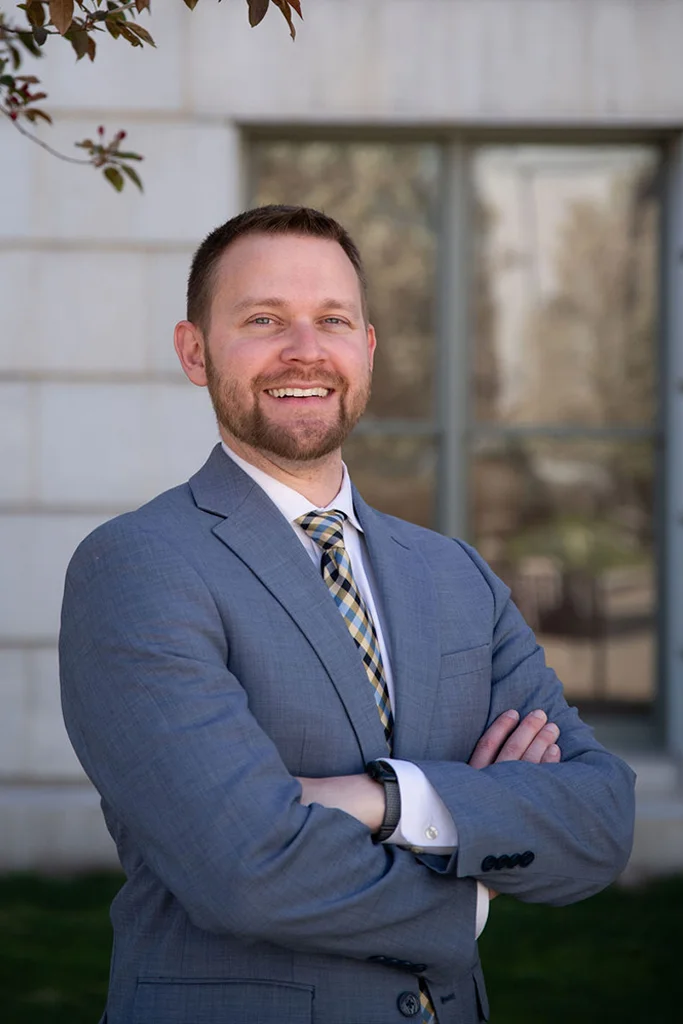

Garfield County Felony Lawyer
Felony charges in Garfield County carry a different weight than most people anticipate until they are standing inside the Garfield County Justice Center in Glenwood Springs. A conviction can mean years in the Colorado Department of Corrections, tens of thousands of dollars in fines, and a permanent record that follows you through employment background checks, housing applications, and professional licensing for the rest of your life. Garfield County felony lawyer Reid DeChant works with clients facing exactly this kind of exposure, bringing the same trial readiness that has produced not guilty verdicts and dismissals across Colorado’s Front Range and Western Slope.
What Garfield County Prosecutors Actually Pursue Aggressively
The 9th Judicial District, which covers Garfield, Pitkin, and Rio Blanco counties, sees a distinct mix of felony charges shaped by the region’s economy and geography. Natural gas extraction along the Interstate 70 corridor through Rifle and Silt brings a significant transient workforce, and with it a steady volume of drug distribution cases, particularly methamphetamine and fentanyl trafficking. Law enforcement in this corridor has strong working relationships with federal task forces, which means a state drug case can sometimes carry federal implications worth examining early.
Assault and domestic violence felonies are prosecuted with mandatory minimum sentencing considerations that limit how much room a judge has to deviate downward at sentencing. A class 4 felony assault conviction, for example, carries a presumptive range of two to six years in the Department of Corrections. Prosecutors in smaller district offices often know their judges well and can assess how far they need to push a case. That familiarity runs in both directions, and a defense attorney who also knows how the 9th Judicial District operates is not starting from zero.
Property crimes, including burglary and theft involving amounts over $2,000, round out the docket in Garfield County. These cases frequently involve circumstantial evidence, surveillance footage, cell phone data, and co-defendant cooperation with prosecutors, all of which require careful evaluation before any strategy takes shape.
How Colorado Classifies Felonies and Why the Level Matters Immediately
Colorado uses a class system ranging from class 1 (the most serious, reserved for first-degree murder) down to class 6 felonies. Where your charge lands on that spectrum determines the presumptive sentencing range, parole eligibility, and in many cases whether a plea to a lower class is a meaningful improvement or merely symbolic.
A class 6 felony carries a presumptive range of one year to eighteen months in the Department of Corrections, with mandatory parole to follow. That sounds manageable until you realize that even a class 6 conviction creates a permanent felony record that survives attempts at later sealing in many circumstances. Colorado’s record sealing laws do allow certain felony convictions to be sealed after a waiting period, but drug felonies, crimes involving minors, and crimes of violence carry restrictions that limit those options significantly.
Extraordinary risk crimes, a designation under Colorado law that applies to certain assault, stalking, and other offenses, push the presumptive range higher than the class alone would suggest. A class 5 extraordinary risk felony has a presumptive range of one to three years, but the aggravated range can reach five years. Knowing whether your charge carries that designation shapes every conversation about resolution from the first pretrial conference forward.
Defense Work That Goes Beyond the Surface of the Case File
Prosecutors in Garfield County build their cases around the materials law enforcement gives them. That means the defense investigation needs to run parallel, not reactive. In drug cases, the chain of custody for any evidence collected during a traffic stop on I-70 near Glenwood Springs or a search at a Rifle address matters from the moment of collection. If officers deviated from proper procedure at any point, suppression becomes a live argument, and without the physical evidence, many drug distribution cases cannot survive.
In assault cases, witness credibility is often the entire case. Garfield County has rural areas where incidents are witnessed by very few people, and it also has tight-knit communities where a witness’s relationship to the alleged victim shapes what they say. Cross-examination strategy built on knowing those dynamics, rather than treating every witness as interchangeable, is the difference between an effective trial and a mechanical one.
Reid DeChant’s training at Trial Lawyers College centers on exactly this, the storytelling that makes a jury understand not just what happened but who his client actually is. That is not a soft skill. It is the work that determines whether twelve people believe the defense theory of the case or default to what the prosecutor presented.
Questions About Felony Cases in Garfield County
Can a felony charge in Garfield County be reduced to a misdemeanor?
Yes, in some cases. Whether that happens depends on the strength of the evidence, the class of the original charge, the specific facts, and the prosecution’s position. Deferred judgments and plea agreements that involve entering a guilty plea to a lesser charge are both possible paths, though neither is guaranteed. The goal in any negotiation is understanding what the prosecution believes they can prove at trial and whether that assessment is accurate.
What happens at a preliminary hearing in the 9th Judicial District?
For class 1 through 3 felonies, a defendant has a right to a preliminary hearing where the prosecution must establish probable cause that the crime was committed and that the defendant committed it. This is a lower standard than trial, but it is still an opportunity. A skilled cross-examination at a preliminary hearing can lock witnesses into testimony, expose weaknesses in the prosecution’s case, and occasionally result in the charge being dismissed or reduced before it reaches the trial stage.
How long does a felony case in Garfield County typically take?
Cases in the 9th Judicial District can move faster than in larger urban districts because of the smaller docket volume, but complex cases involving multiple charges, co-defendants, or forensic evidence can still take a year or more from arrest to resolution. The timeline also depends on whether the case goes to trial or resolves through a plea, and trial preparation itself takes time done correctly.
Does DeChant Law handle felony cases outside of Denver?
Yes. Reid DeChant represents clients across Colorado, including in Garfield County and the surrounding region. Familiarity with how a specific courthouse operates, who the prosecutors are, and how the local judges approach sentencing is something that develops over time, and Reid brings that preparation to cases wherever they are filed.
What is the difference between a deferred judgment and a dismissed case?
A deferred judgment involves pleading guilty with the understanding that if you complete the conditions set by the court, including probation, treatment, community service, or other requirements, the guilty plea is withdrawn and the case is dismissed. A dismissal is an outright termination of the charges. Both outcomes avoid a felony conviction on your record, but they arrive through very different procedural paths and involve different risks if conditions are not met.
Can I be charged in both state and federal court for the same conduct?
Yes. The Double Jeopardy Clause does not prevent both state and federal prosecution for the same conduct because they are considered separate sovereigns. This comes up most often in drug trafficking cases, particularly those involving interstate activity along the I-70 corridor. When federal agencies are involved in the investigation from the start, that is a signal worth taking seriously when evaluating how the case might evolve.
What role does the preliminary hearing play in a defense strategy?
Beyond the probable cause determination, the preliminary hearing is one of the few pre-trial opportunities to hear live testimony under oath. How a key witness describes events at a preliminary hearing, and how that account compares to their prior statements, creates a record that matters at trial. Waiving this hearing without understanding what might be learned is a decision with real strategic consequences.
Facing a Felony Charge in Garfield County, Talk to DeChant Law
A felony case does not wait for you to feel ready. Evidence gets processed, witnesses get interviewed, and prosecutors build their theory of the case on a timeline that is already running. DeChant Law has handled felony defense across Colorado, from the Denver metro to the Western Slope, and Reid brings genuine trial experience, not just negotiation familiarity, to every case he takes. If you are looking for a Garfield County felony attorney who prepares as though the case is going to trial even when it might not, contact DeChant Law to talk through what you are facing.