Garfield County DUI Defense Lawyer
Garfield County sits along a stretch of I-70 that sees some of the heaviest law enforcement scrutiny in western Colorado. Between the resort corridor traffic flowing toward Aspen and Vail, the commercial activity around Glenwood Springs, and the year-round tourist draw of Glenwood Canyon, DUI stops happen here at a rate that surprises many people who live or travel through the region. A Garfield County DUI defense lawyer who understands how these cases are built, how the local courts handle them, and where the evidence tends to break down will give you a fundamentally different defense than one who treats every DUI as a routine matter.
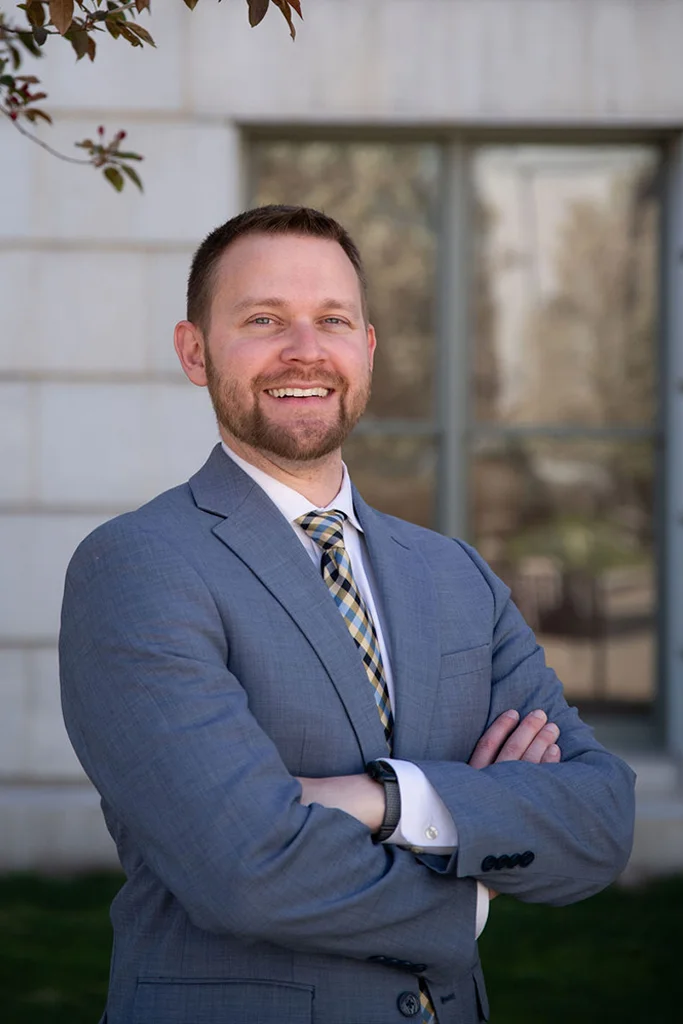
Reid DeChant built his practice around impaired driving defense. His background includes time as a public defender across multiple Colorado jurisdictions, where he handled DUI and DWAI cases from the initial stop through trial. That experience taught him something important: the quality of the state’s case depends entirely on whether law enforcement followed the right procedures at every step. When they did not, the case against you can unravel quickly. When they did, there are still meaningful ways to challenge what the evidence actually shows.
What a DUI Arrest in Garfield County Actually Looks Like
Most DUI arrests in Garfield County begin along I-70, US-6, or the roads running through Glenwood Springs and Carbondale. Officers may initiate a stop based on a moving violation, a lane departure, or a call from another driver. What happens in the next twenty minutes shapes virtually everything about how the case proceeds. The officer will look for signs of impairment during the stop, which includes how you communicate, your physical coordination getting out of the vehicle if asked, and how you perform on standardized field sobriety tests.
Field sobriety tests are designed to give officers a reason to arrest, not to exonerate. The horizontal gaze nystagmus test, the walk-and-turn, and the one-leg stand were developed under laboratory conditions that rarely match the side of a highway at night, in cold air, on uneven gravel. Results from these tests are not as objective as they look in a police report. An officer who was not properly trained in administering them, or who scored the tests incorrectly, may have built an arrest on a foundation that a Garfield County DUI attorney can effectively challenge.
After arrest, Colorado’s Express Consent law kicks in immediately. You will be asked to submit to a chemical test, either a breath test at the scene or a blood draw at a medical facility. Refusing that test triggers automatic consequences with the DMV, separate from anything that happens in criminal court. The test result, if one was taken, becomes the centerpiece of the prosecution’s case. But chemical tests have their own set of requirements: blood draws must be handled and stored properly, breath test machines must be calibrated and maintained, and the two-hour testing window matters. DeChant Law has had DMV actions dismissed specifically because the chemical test was not administered within two hours of driving.
The Criminal Case and the DMV Hearing Are Two Separate Fights
One thing that catches many Garfield County residents off guard is that a DUI arrest triggers two entirely separate proceedings. The first is the criminal case handled through the Garfield County District Court in Glenwood Springs. The second is a DMV Express Consent action seeking to revoke your driver’s license. These proceedings run on different timelines, involve different standards of proof, and are decided by different decision-makers. Losing one does not mean you lose the other, and winning one does not automatically protect you from consequences in the other.
The DMV hearing is time-sensitive. You have a limited window after your arrest to request a hearing to challenge the revocation of your license. If that window closes without action, your license will be revoked automatically regardless of what happens in court. This is one of the clearest examples of where having a DUI defense lawyer from the beginning, not after you have time to think about it, directly affects your outcome. DeChant Law has a track record of successfully challenging DMV Express Consent actions, including dismissals for improper advisement and procedural failures during the testing process.
In the criminal case itself, charges can range from DWAI, which applies when your BAC falls between 0.05 and 0.079, to DUI at 0.08 or higher, to felony DUI for a fourth offense. The difference between a misdemeanor and a felony matters enormously for your future employment, housing, professional licensing, and in some cases your immigration status. If you hold a commercial driver’s license, the consequences under federal regulations are far more severe than what the state imposes, and those consequences apply even if you were driving a personal vehicle at the time of the arrest.
Specific Circumstances That Change How a Case Gets Defended
Not every DUI case in Garfield County looks the same. Someone arrested on a routine traffic stop with a borderline BAC and no prior record is in a very different position than someone whose stop arose from an accident, or whose case involves an allegation of driving under the influence of drugs rather than alcohol. Drug DUI cases present a different evidentiary problem altogether. There is no reliable per se limit for marijuana or prescription drugs the way there is for alcohol. Officers often rely heavily on Drug Recognition Evaluator assessments, which are subject to their own procedural requirements and challenges.
Prior DUI convictions from any state, not just Colorado, count toward the escalating penalty structure. A second DUI brings mandatory jail time, longer license suspension, and ignition interlock requirements. A third offense carries potential felony consequences in certain circumstances. For people in professional fields, including physicians, nurses, pilots, and CDL holders, the collateral licensing consequences can exceed the criminal penalties in terms of long-term impact. These are not abstract concerns. They require a defense strategy that accounts for more than just the criminal docket.
Reid’s approach draws directly on his experience trying DUI cases through verdict. He has taken DUI matters to trial and secured not-guilty verdicts and dismissals across multiple Colorado counties. That trial experience changes how a case is negotiated, because prosecutors understand when they are dealing with someone who will actually try the case rather than simply push for a plea to close the file.
Questions Garfield County Clients Actually Ask
Can I refuse the roadside breath test without consequences?
Colorado distinguishes between the preliminary breath test at the roadside, which you can decline without triggering Express Consent penalties, and the evidentiary chemical test administered after arrest, which carries mandatory license revocation if refused. Most people do not know this distinction exists, and officers are not always clear about which test they are requesting. Understanding what you agreed to or refused is part of a thorough review of your case.
What happens to my license while the criminal case is pending?
If you requested a DMV hearing in time, your license may remain valid while that hearing is scheduled and decided. If you did not request a hearing, revocation begins automatically. The DMV timeline moves independently of the court case and cannot be paused simply because your criminal case is ongoing.
How long does a Garfield County DUI case typically take to resolve?
Cases without a trial can take anywhere from a few months to close to a year, depending on the court’s schedule, whether lab results are pending, and how negotiations proceed. Cases that go to trial take longer. The timeline is rarely as predictable as people hope, and rushing a resolution to get it over with often produces worse outcomes than taking the time to build a real defense.
Will a DUI conviction stay on my record permanently in Colorado?
Colorado does not allow DUI convictions to be sealed or expunged. A conviction becomes a permanent part of your driving and criminal record. This is one of the strongest reasons to invest in a real defense rather than accept whatever outcome the process produces by default.
What if I was arrested for DUI in Garfield County but I live somewhere else?
Out-of-state drivers face an additional complication: the impact on their home state’s license, which is governed by that state’s laws but often triggered by a Colorado conviction or license action under the Driver License Compact. Your Colorado case has to be handled in Colorado regardless of where you live, and the consequences often follow you home.
Does DeChant Law handle DMV hearings as well as the criminal case?
Yes. Handling both proceedings together allows for a more coordinated defense strategy, and evidence developed for one proceeding can inform the other. Separating representation between the two is rarely in a client’s interest.
What if the officer did not read me my Miranda rights?
Miranda applies to custodial interrogation, meaning statements you made after arrest in response to police questioning. Statements made before you were formally arrested or during routine traffic stop questions are generally outside Miranda protections. Whether a Miranda issue affects your case depends on what was said and when it was said, which is something worth reviewing carefully.
Talk to a Garfield County DUI Attorney Before Assuming the Outcome
The outcome of a DUI case in Garfield County is not fixed the moment you are arrested. Evidence can be challenged, procedures can be scrutinized, and cases that look airtight on paper sometimes have significant weaknesses once every step of the stop, arrest, and testing process is examined. DeChant Law works DUI cases from that premise. Reid brings the trial experience and the working knowledge of how Colorado DUI law operates in practice to every case he takes on in Garfield County and across the Denver metro region. If you were arrested for impaired driving in the Glenwood Springs area, contact a Garfield County DUI defense attorney at DeChant Law to go through what actually happened and what your options are.