
Fort Morgan Vehicular Assault and Homicide Defense Lawyer
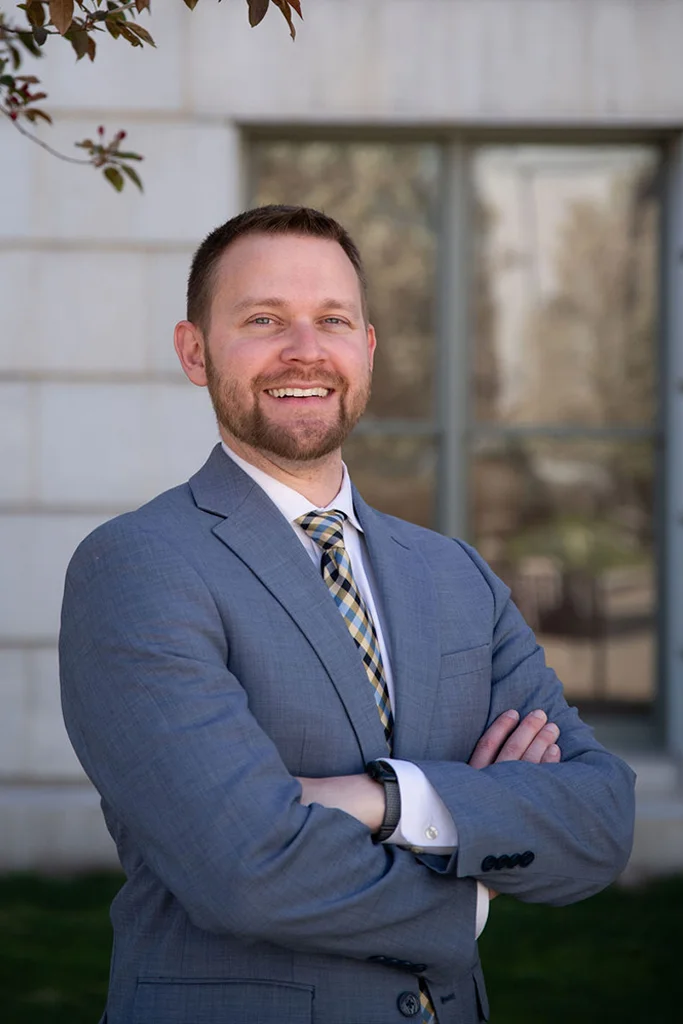
A vehicular assault or vehicular homicide charge in Morgan County is not a traffic ticket that got out of hand. These are felony charges that Colorado prosecutors pursue with significant resources, and a conviction can mean years in prison, the permanent loss of your driving privileges, and a record that follows you for life. When Reid DeChant takes on a vehicular assault or Fort Morgan vehicular homicide defense case, he brings the same courtroom tenacity he has used to win not-guilty verdicts on DUI, assault, and other serious felonies along the Front Range and in the surrounding counties. What happens next depends in large part on who is working the defense.
What Colorado Actually Charges, and Why the Distinction Matters
Colorado separates these offenses into two distinct statutes, and the gap between them has enormous consequences for how a case is charged, plea-negotiated, and tried.
Vehicular assault under C.R.S. 18-3-205 applies when a driver causes serious bodily injury to another person while driving under the influence or while driving recklessly. The DUI version is a class 4 felony. The recklessness version, absent impairment, is a class 5 felony. Both carry presumptive prison sentences rather than the probation dispositions available in many other felonies.
Vehicular homicide under C.R.S. 18-3-106 applies when a driver causes the death of another person. The DUI-based version is a class 3 felony. That carries a presumptive range of four to twelve years in the Department of Corrections. The reckless driving version, without impairment, is a class 4 felony.
The charging decision the Morgan County District Attorney makes, and specifically whether they allege DUI or recklessness, determines the entire arc of the case. Defense strategy has to be built around that distinction from the very first day. A defense that treats both statutes as interchangeable will miss the specific weaknesses in each approach.
How These Cases Are Built, and Where They Can Be Challenged
Morgan County sits along I-76, the main corridor connecting Denver to Nebraska through the northeastern plains. Crashes on this stretch, around Fort Morgan, Brush, and Wiggins, frequently involve highway speeds, low visibility conditions at dawn or dusk, weather, and long-haul truck traffic. The Colorado State Patrol typically responds and leads the investigation. Their reports, blood draw procedures, and reconstruction analyses form the core of the prosecution’s case.
Blood evidence is often central. Under Colorado’s express consent law, drivers suspected of DUI who are involved in a serious crash are subject to mandatory chemical testing. The chain of custody for a blood draw at Morgan County Hospital or another local facility, the timing of the draw relative to the time of driving, the lab analysis, and the preservation of the sample all present legitimate areas for challenge. Reid has focused substantial attention on DUI blood evidence throughout his career, and he understands how procedural gaps in that process can affect the reliability of the BAC result the prosecution wants to use.
Accident reconstruction is another battleground. The prosecution will often rely on a crash reconstructionist to argue that speed, lane position, or driver behavior caused the collision. But reconstruction is not an exact science. Tire marks, point of impact, vehicle damage patterns, and road conditions all feed into an analysis that can be tested with a qualified defense expert. In cases where a second driver, a road defect, an unlit vehicle, or poor signage contributed to the collision, the reconstruction becomes even more contested.
Recklessness as a legal element, in cases not involving impairment, requires proof of a conscious disregard of a substantial and unjustifiable risk. That is a specific mental state, and prosecutors sometimes overcharge by treating an accident, even a catastrophic one, as though it automatically meets that standard. It does not. A driver who made an error in judgment is not necessarily a driver who consciously disregarded known risk. That distinction is worth fighting for at trial if the evidence supports it.
License Consequences and DMV Proceedings Separate from the Criminal Case
Anyone charged with vehicular assault or vehicular homicide in Morgan County faces two simultaneous legal tracks. The criminal case moves through the Morgan County District Court. But the Colorado DMV will also initiate a revocation proceeding against the driver’s license, and that hearing happens on its own schedule, often within weeks of the arrest.
Reid handles both. His background in fighting DMV express consent revocations, reflected in the multiple dismissed DMV actions in DeChant Law’s case results, means the license defense is not an afterthought. Losing driving privileges before the criminal case even resolves can cost someone their job, their ability to meet family obligations, and ultimately their ability to support a defense. Addressing the DMV action promptly matters.
A revocation tied to a vehicular homicide or assault allegation can result in a lengthy or permanent loss of Colorado driving privileges. The outcome of the DMV proceeding and the criminal proceeding are technically separate, but they are not unrelated, and how testimony and evidence are handled in the administrative hearing can have downstream effects on the criminal case. That requires careful coordination from a lawyer who handles both.
Questions People Ask About These Charges in Morgan County
Can a vehicular homicide charge be reduced or dismissed?
Yes. Charges at this level can be reduced or dismissed depending on the strength of the evidence, the accuracy of the blood testing, whether the reconstruction withstands scrutiny, and whether the prosecution can actually prove the legal elements beyond a reasonable doubt. Reduction to a lesser felony or even a misdemeanor is possible in the right circumstances. Dismissal happens when evidence was unlawfully obtained or the factual foundation collapses. Nothing is predetermined.
What if I was not impaired but the accident was still serious?
Reckless driving vehicular homicide or assault does not require proof of intoxication. It requires proof that you consciously disregarded a substantial risk. If the crash was caused by a momentary error, a mechanical failure, a road hazard, or the conduct of another driver, those facts matter to the legal analysis. The charge requires more than a bad outcome.
Does it matter where in Morgan County the crash happened?
The location determines jurisdiction and which law enforcement agency investigated. I-76 crashes are typically handled by the Colorado State Patrol, while incidents on county roads or in Fort Morgan city limits may involve the Morgan County Sheriff or city police. Each agency has different protocols for chemical testing and documentation, and those differences affect how evidence is challenged.
Will I automatically go to prison if convicted?
Colorado’s sentencing statute for vehicular homicide and vehicular assault creates a presumption of prison rather than probation for the DUI-based versions. That makes sentencing harder to avoid than in many other felony cases. However, presumptive does not mean automatic. Sentencing outcomes depend on the specific facts, the defendant’s background, and how the case was handled throughout. Fighting the conviction is the most direct path to avoiding incarceration.
What happens to my commercial driver’s license or professional license?
A felony conviction tied to a driving offense will almost certainly result in disqualification from holding a commercial driver’s license. For professionals holding licenses in healthcare, aviation, or other regulated fields, a conviction triggers separate reporting obligations and potential disciplinary proceedings with licensing boards. These consequences extend well beyond the criminal sentence itself and need to be factored into how the defense is approached from the start.
How soon should I contact a defense lawyer after a serious crash?
Immediately. Law enforcement begins building its case at the scene. Blood is drawn, statements are taken, and reconstruction measurements are gathered in the first hours after a crash. Early intervention allows a defense attorney to preserve evidence, advise on what not to say, and, in DMV matters, request a hearing before any automatic revocation takes effect.
Can Reid DeChant handle a case in Morgan County even though the firm is based in Denver?
Yes. DeChant Law handles cases throughout the Denver metro and surrounding counties. Reid has appeared in courts across the Front Range and the neighboring jurisdictions. Distance from the Denver office does not limit the representation that is available.
Facing a Fort Morgan Vehicular Assault or Homicide Charge
The days immediately after a serious crash, when charges have not yet been filed or are just being filed, are often the most consequential for the defense. Evidence is fresh, witnesses still have memories, and the prosecution’s theory is still forming. Reid DeChant built DeChant Law around the idea that clients come to him at one of the lowest points of their lives, and that they deserve someone who actually engages with their story, not just the paperwork. If you are dealing with a Fort Morgan vehicular assault or homicide case, contact DeChant Law to talk through what happened and what the defense actually looks like for your specific situation.