
Fort Collins Vehicular Assault and Homicide Defense Lawyer
A collision that results in serious injury or death can transform a driver from a victim of circumstances into a defendant facing decades in prison. Colorado’s vehicular assault and vehicular homicide statutes carry some of the most severe penalties in the state’s criminal code, and Larimer County prosecutors handle these cases with the same intensity reserved for violent felonies. If you or someone you care about has been charged after a crash in Fort Collins or the surrounding area, attorney Reid DeChant provides the kind of Fort Collins vehicular assault and homicide defense that these charges genuinely require.
What Colorado Actually Charges in Serious Crash Cases
Colorado law creates two separate offense tracks depending on the level of harm caused and what prosecutors allege the driver was doing. Vehicular assault under C.R.S. 18-3-205 applies when a driver causes serious bodily injury to another person, and the statute divides the charge based on conduct. If prosecutors allege the driver was under the influence of alcohol or drugs at the time, it becomes a Class 4 felony. If the theory is reckless driving rather than impairment, it is a Class 5 felony. The sentencing ranges are substantially different, and so is the prosecution’s approach to evidence.
Vehicular homicide under C.R.S. 18-3-106 applies when a death results from the crash. The DUI-based version is a Class 3 felony with a presumptive range of four to twelve years in the Department of Corrections. The reckless driving version is a Class 4 felony. Colorado also layers mandatory parole onto any prison sentence, and courts can impose restitution to surviving family members that can run into hundreds of thousands of dollars.
What makes these cases particularly complicated is how quickly the charging decision happens. Law enforcement reconstructs the scene, draws blood, interviews witnesses, and consults with the district attorney’s office, sometimes within hours of the collision. By the time most people think to call a defense attorney, the investigation has already shaped itself into a narrative with a defendant at its center.
How These Cases Are Built Against Drivers in Fort Collins
The Colorado State Patrol, the Larimer County Sheriff’s Office, and the Fort Collins Police Services all respond to major crash scenes along corridors like US-287, Timberline Road, College Avenue, and Mulberry Street, as well as the I-25 interchange areas where serious accidents occur regularly. What happens at that scene in the first hour matters enormously to any eventual defense.
Crash reconstruction is the backbone of most vehicular assault and homicide prosecutions. Officers trained in accident investigation will document skid marks, impact points, road surface conditions, traffic controls, and vehicle resting positions. They will pull electronic data from the vehicles’ event data recorders, which can capture speed, braking, acceleration, and seatbelt use in the seconds before impact. They will also seek surveillance footage from businesses, traffic cameras, and nearby residences before it is overwritten.
If DUI is alleged, prosecutors will add a toxicology dimension built on blood draw results, field sobriety testing, and officer observations. Larimer County prosecutors are experienced with these cases, and they understand that juries respond emotionally to evidence of a death or severe injury. The charging decision often reflects what evidence the state believes will be most persuasive at trial rather than a dispassionate analysis of the driver’s actual culpability.
One critical and often misunderstood element is the definition of recklessness. Colorado law requires that a reckless driver consciously disregard a substantial and unjustifiable risk. Inattentiveness, distraction, or even negligence does not automatically meet that standard, though prosecutors and investigators will often frame the narrative to suggest it does. How the evidence is framed early in the investigation can follow a case all the way to trial.
Defense Approaches That Actually Move the Needle
Every vehicular assault or homicide case is a contest over what the physical evidence actually shows and what it can fairly be made to mean. A defense built on storytelling, forensic scrutiny, and a willingness to challenge the government’s reconstruction is the only kind that matters in Larimer County District Court.
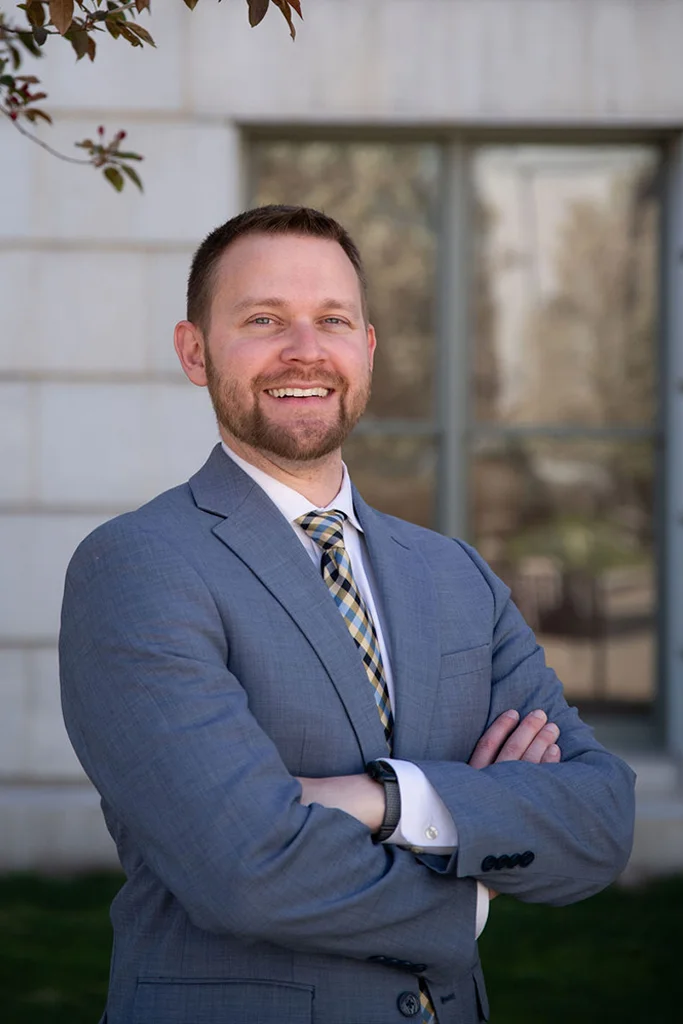
Reid DeChant’s background as a public defender, where he handled cases ranging from traffic offenses to homicides, prepared him for the specific demands of cases built around physical evidence, expert testimony, and the emotional weight of serious injury or death. He learned that what a client needs is someone who takes the time to understand their full story, not just the slice of events the prosecution chooses to highlight.
On the forensic side, challenging the government’s crash reconstruction often requires retaining an independent accident reconstruction expert who can review the same data and offer a different analysis. Event data recorder information has error margins, and extraction methodologies can be challenged. Toxicology results in DUI-based vehicular assault cases carry their own set of issues, from collection timing to chain of custody to retrograde extrapolation of blood alcohol levels. A breath or blood test taken thirty or sixty minutes after a collision does not necessarily represent what was present in a driver’s system at the moment of impact.
On the legal side, the definition of “serious bodily injury” is frequently litigated. Not every injury that sounds serious in a police report meets the statutory definition under Colorado law. The distinction between recklessness and ordinary negligence is also a genuine legal battleground, not just a technicality. How the jury is instructed and what arguments are made about the driver’s state of mind can determine the difference between a felony conviction and an acquittal or reduced charge.
Questions Worth Asking Before You Make Any Decisions
Should I speak with investigators before I have an attorney?
No. Statements made in the aftermath of a serious crash, even statements that sound neutral or explanatory, can be used to establish recklessness, impairment, or knowledge of risk. Get legal representation first.
Can vehicular assault or homicide charges be reduced?
Yes, in some cases. Whether through negotiation or motion practice, charges can sometimes be reduced based on insufficient evidence of the specific required mental state, problems with the toxicology evidence, or issues with the crash reconstruction methodology. Outcomes depend heavily on the specific facts and what the investigation actually produced.
What happens at the DMV level on top of the criminal case?
Colorado’s DMV operates independently of the criminal courts. A DUI-related vehicular assault charge will likely trigger an Express Consent proceeding seeking to revoke your license, separate from whatever happens in the Larimer County criminal case. Both proceedings need attention, and the timelines on the DMV side move quickly.
Does it matter that I was not under the influence?
Yes, significantly. A vehicular homicide charge based on reckless driving as opposed to DUI is a Class 4 rather than Class 3 felony, and the prosecution must establish a higher level of conscious disregard for risk. The absence of impairment also affects how a jury is likely to receive the evidence.
How long do these cases typically take in Larimer County?
Vehicular homicide cases in particular tend to be lengthy. Between the initial investigation, preliminary hearings, discovery involving crash reconstruction reports and expert disclosures, motions, and any trial preparation, a year or more from filing to resolution is not uncommon. The complexity of the forensic evidence drives the timeline.
What if I was involved in the crash and was also injured?
Your own injury does not insulate you from criminal charges, though it may be relevant to the defense. If a road hazard, mechanical failure, or another driver’s conduct contributed to the crash, that evidence can be critical to challenging the government’s theory that your conduct was the proximate cause of the injury or death.
Is it possible to avoid prison even if convicted?
Colorado’s sentencing ranges for these felonies include both probation-eligible and prison-mandatory components depending on the specific charge and any prior record. A Class 4 or Class 5 vehicular assault conviction may allow for a probation sentence in the right circumstances. DUI-based vehicular homicide, as a Class 3 felony, carries presumptive prison. Sentencing advocacy matters as much as trial defense.
Facing a Vehicular Homicide or Assault Charge in Northern Colorado
Larimer County District Court in Fort Collins handles all felony vehicular assault and vehicular homicide cases originating in the county. Reid also handles cases arising in nearby counties throughout northern Colorado. If you are facing a Fort Collins vehicular assault or homicide charge, contact DeChant Law to talk through what the evidence in your case actually shows and what a realistic defense looks like.