
Firestone Felony Lawyer
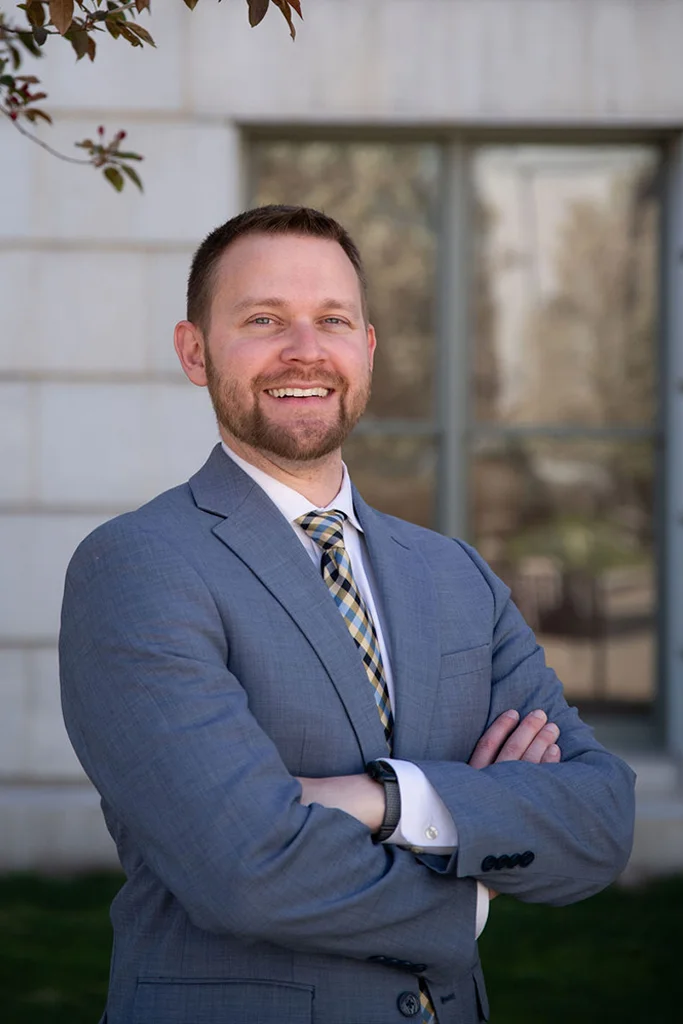
A felony charge in Firestone carries consequences that reach far beyond any sentence a judge hands down. Employment, housing, professional licenses, firearm rights, immigration status, and child custody arrangements can all be reshaped by a felony conviction. Attorney Reid DeChant has handled felony cases at every level of severity, from his time as a public defender in Denver, Adams, and Broomfield counties to private practice, and he understands that when someone comes to him facing a Firestone felony lawyer search, they are usually at the lowest point of their life. That is precisely where this work begins.
What Colorado Felony Classes Actually Mean for Someone in Firestone
Colorado organizes felonies into six classes, with Class 1 being the most serious and Class 6 carrying the lightest felony penalties. Where your charge falls in that structure determines the presumptive sentencing range a judge works within, though many factors can push a sentence above or below those benchmarks.
Class 4, 5, and 6 felonies are often what people in Firestone encounter on charges like low-level drug possession, certain theft thresholds, criminal mischief involving property damage above specific dollar amounts, or a third DUI elevated to felony status. These are not minor matters. A Class 6 felony still carries up to 18 months in prison and a fine of up to $100,000. A Class 4 felony can mean two to six years in the Department of Corrections.
Class 2 and Class 3 felonies appear in cases involving serious assault, weapons charges, sexual offenses, and certain drug distribution allegations. The sentencing ranges at these levels are measured in decades, not months, and extraordinary risk or aggravated sentencing can push outcomes even higher. When a charge carries that kind of exposure, every decision made before trial, from how to engage with investigators to what motions to file, shapes what ultimately happens.
How Weld County Prosecutes Felony Cases and Why It Matters
Firestone sits in Weld County, and the Weld County District Attorney’s office handles felony prosecutions in the Nineteenth Judicial District. Understanding how that office approaches cases is not an abstraction. It affects plea negotiations, how aggressively charges are initially filed, and what kind of trial preparation actually matters in that courtroom environment.
Weld County has historically maintained a reputation for prosecuting cases firmly. That reality shapes how defense strategy needs to be built from the beginning. A defense that might resolve a case efficiently in one jurisdiction requires a different structure in Weld County, and a lawyer who practices primarily elsewhere may not appreciate that distinction until it is too late to adjust.
The Weld County Justice Center in Greeley handles district court proceedings for Firestone defendants. Misdemeanors may be handled at the county court level, but once charges are elevated to felony status, cases move to district court, where procedural rules are more demanding, discovery more voluminous, and the consequences of procedural missteps more significant. Reid has trial experience in district courts across the Denver metro and adjacent counties, which gives him a working foundation in how these proceedings actually unfold.
Felony Charges That Frequently Arise in Firestone and the Surrounding Area
Firestone’s growth along the US-85 corridor has brought with it the full range of criminal activity that accompanies any expanding Front Range community. Drug cases are common, particularly involving methamphetamine and fentanyl, where possession quantities can cross the line into distribution charges that carry mandatory minimums. Assault charges arising from domestic disputes reach felony status when allegations involve strangulation, use of a weapon, or serious bodily injury. Theft cases involving amounts above $2,000 become felonies under Colorado law, and construction and property crime in growing communities like Firestone can push charges into that range quickly.
Vehicular assault and vehicular homicide charges follow traffic incidents on US-85, I-25, and the roads feeding into Firestone’s newer subdivisions. These cases frequently involve DUI as an underlying allegation, which is why Reid’s deep focus on impaired driving defense intersects directly with felony defense work in this region. A vehicular assault charge built on a flawed DUI investigation is a case with real angles for challenge.
Sex offense allegations carry their own gravity. Beyond prison time, a conviction typically requires registration as a sex offender, a requirement that affects where someone can live and work for years or decades. Reid handled sex offense cases as a public defender and understands both the legal complexity and the human reality of these charges.
What Changes When a Case Goes to Trial
Most felony cases in Colorado are resolved through negotiation rather than trial. But the quality of a plea offer is directly tied to how seriously the prosecution views the defense. A lawyer who lacks real trial experience signals to the other side that going to trial carries low risk. That shifts bargaining leverage away from the defendant in ways that quietly affect outcomes.
Reid trained at Trial Lawyers College, where the focus is on how to tell a client’s story in a way that actually reaches jurors. That is not a rhetorical skill. It is the product of understanding the client’s full circumstances, what they were facing, what drove the events in question, and why a jury should see them as a complete human being rather than a collection of allegations. A case prepared for trial is a case that the prosecution knows could go to a jury. That changes conversations.
DeChant Law’s case results include Not Guilty verdicts on two counts of Assault with a Deadly Weapon, Failure to Register as a Sex Offender, and DUI charges elevated to serious status, along with multiple dismissals obtained through motion practice and evidentiary challenges. Past results do not guarantee future performance, but they reflect a practice built around going the distance when it matters.
Questions People Ask About Felony Charges in Firestone
Can a felony charge be reduced to a misdemeanor in Colorado?
Yes, and it happens more often than people expect when defense counsel can identify weaknesses in the prosecution’s case or present mitigating factors that change how the charge is viewed. Charge reductions are often negotiated during the pretrial phase, though they can also result from plea agreements structured around completing specific requirements.
What happens at a felony advisement in Weld County?
The advisement is your first appearance in district court after a felony filing. The judge informs you of the charges and your rights, and bail conditions may be reviewed. You do not enter a plea at this stage. Having counsel present from this point forward matters because bail arguments and early procedural positioning can affect how the rest of the case unfolds.
Will a felony conviction show on a background check permanently?
Under Colorado law, most felony convictions can be sealed after a waiting period that depends on the offense class, provided certain conditions are met. Some offenses, including most sex offenses and class 1 and 2 felonies, are not eligible for sealing. An attorney can evaluate your specific charge and timeline to assess whether sealing is an option.
Does a prior misdemeanor affect how a current felony is charged or sentenced?
Prior convictions can affect both. Certain repeat offense statutes in Colorado trigger enhanced sentencing for subsequent felonies, and prosecutors often factor criminal history into charging decisions and plea negotiations. This is one reason why how a prior case was resolved can matter years later.
What is the difference between a deferred judgment and a plea of guilty?
A deferred judgment allows a defendant to enter a plea that is held, rather than accepted, while the defendant completes probation conditions. If the conditions are met, the case is dismissed and the plea is withdrawn. If violated, the court accepts the plea and proceeds to sentencing. For some charges, a deferred judgment represents a meaningful path away from a permanent conviction record.
How long does a felony case typically take in Weld County?
Timelines vary considerably based on the charge, the volume of discovery, whether expert witnesses are involved, and court scheduling. Straightforward cases may resolve in a few months. Complex cases with extensive forensic evidence or multiple defendants can take a year or longer from filing through resolution. Rushing a case to resolution before it is ready rarely produces good outcomes.
Can a felony conviction affect immigration status?
Yes. Felony convictions can trigger deportation proceedings, bars to naturalization, and grounds of inadmissibility depending on the specific offense and a person’s immigration status. This intersection requires careful attention early in a case, not after a plea is entered.
Facing Felony Charges in Firestone Means Building a Defense Now
Evidence is perishable. Witnesses’ memories change. Surveillance footage is overwritten. The time between an arrest and the first court date is not downtime. It is the window where investigation, preservation of evidence, and early legal positioning either happen or are lost permanently. DeChant Law works with clients facing felony charges in Firestone, throughout Weld County, and across the Front Range communities where Reid has built his practice. If you are looking for a Firestone felony attorney who will invest in understanding your situation completely before making any moves, contact DeChant Law to start a conversation about what defense actually looks like in your case.