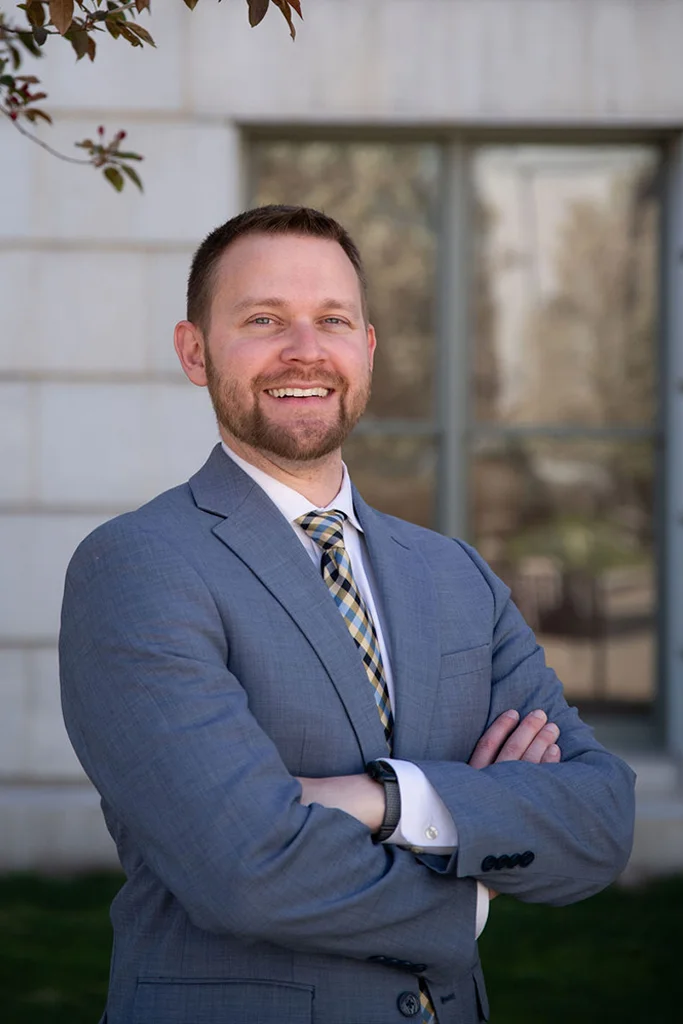

Evans Felony Lawyer
A felony charge in Evans, Colorado puts more than your freedom at stake. It affects where you can live, whether you can work in your field, your right to vote, your right to own a firearm, and how future employers, landlords, and licensing boards will see you for the rest of your life. Reid DeChant at DeChant Law has handled felony cases across the Front Range, from first appearances through jury verdict, and he approaches each case the way it deserves: with genuine care for what a person stands to lose and the tenacity to fight for the best possible result.
What Colorado Felony Classifications Mean for People Charged in Weld County
Colorado organizes felonies into six classes, with Class 1 being the most serious and Class 6 the least. Where your charge falls on that spectrum matters enormously because it dictates the presumptive sentencing range a judge can impose, and prosecutors know that too. A Class 6 felony carries a presumptive range of 12 to 18 months in the Department of Corrections, while a Class 2 felony can mean 8 to 24 years. Drug felonies carry their own classification system under DF1 through DF4, and some offenses carry mandatory minimums that strip a judge of any discretion to go lower.
Cases filed in Evans typically run through the Weld County Combined Courts in Greeley, which handles felony matters for the entire county. Understanding how that courthouse operates, which prosecutors tend to handle which charge types, and what the judges there expect procedurally is practical knowledge that matters in ways that generic legal advice simply cannot address. DeChant Law works across this region and brings that courtroom-level familiarity to every felony defense.
Beyond the sentence itself, felony convictions trigger consequences that no judge’s sentence can undo without deliberate legal action. Colorado’s record sealing laws allow some convictions to be sealed after a waiting period, but not all. An Evans felony lawyer who understands the full picture can help you weigh not just the immediate plea offer on the table, but what accepting that offer means in five or ten years.
The Charges That Come Through Weld County Most Often
Weld County prosecutes a wide range of felony cases, but certain charge types show up consistently. Drug-related felonies, particularly those involving methamphetamine and fentanyl, are prosecuted aggressively by the Weld County District Attorney’s office. Whether a possession charge rises to distribution, and how evidence of quantity and packaging gets interpreted, often shapes the difference between a DF4 and a DF1. Those two charges carry dramatically different consequences, and the facts that distinguish them are frequently worth challenging.
Assault charges, especially those elevated to felony level by use of a weapon, presence of a prior record, or allegations of serious bodily injury, appear regularly in this jurisdiction. Colorado’s domestic violence designation attaches mandatory consequences to any conviction, including federal firearm prohibitions, and the charging decisions in these cases are often made quickly and without the full picture. Felony menacing, assault in the second or first degree, and strangulation cases require immediate attention because the early stages of a case, before preliminary hearings and motions, often set the trajectory for everything that follows.
Property crime felonies, theft charges above certain dollar thresholds, burglary, and motor vehicle theft also move through Weld County in volume. For theft in particular, whether the value of the alleged property pushes the case from a misdemeanor to a Class 5 or Class 4 felony can turn entirely on how investigators calculated what was taken and when. That calculation is not always as solid as the charging document suggests.
How a Felony Case Moves from Arrest Through Disposition
Most people have no idea what the procedural timeline looks like from arrest to resolution, and that uncertainty makes a difficult situation even harder. After arrest, a first appearance before a judge typically happens within 48 hours. Bail is set, conditions of release are imposed, and you’re either released or held. That first appearance is not a formality. The conditions set there can restrict your contact with family members, your ability to work, and where you can go.
A preliminary hearing follows for felony charges, where the prosecution must demonstrate probable cause that you committed the charged offense. This is not a trial, and the standard is lower than proof beyond a reasonable doubt, but it is a genuine hearing with witnesses and evidence. The preliminary hearing gives defense counsel an early look at the prosecution’s evidence, witnesses, and theory of the case. Skilled cross-examination at this stage can expose weaknesses that matter later.
Arraignment follows, then a period of discovery and pretrial motions. Motions to suppress evidence, motions to challenge the constitutionality of a stop or search, motions to exclude particular statements, these tools can fundamentally reshape a case. Reid DeChant’s background as a public defender, where he handled everything from traffic offenses through homicides, built the kind of case evaluation skills that recognize when evidence has problems the prosecution hasn’t fully examined. If suppression is granted on key evidence, the state’s case sometimes collapses entirely. If it is not, the defense goes to trial with a clearer picture of what must be confronted.
Questions People Actually Ask About Felony Cases in Evans
Does a felony conviction automatically mean prison time in Colorado?
Not necessarily. For lower-level felonies, particularly Class 5 and Class 6 offenses and drug felonies at the DF3 and DF4 level, judges have discretion to impose probation rather than a prison sentence. Whether you qualify for that disposition depends on your prior record, the nature of the offense, and how the case was resolved. Some felonies carry mandatory prison sentences with no option for probation, and knowing which is which from the start shapes the entire defense strategy.
Can a felony charge be reduced to a misdemeanor?
Yes, in some cases. Plea negotiations can result in an amended charge, and some statutes in Colorado expressly allow for deferred judgments or diversion programs that, upon completion, result in a dismissed case rather than a felony conviction. Eligibility depends on the specific charge, your prior record, and the prosecutor’s office handling the case. This is something Reid evaluates early in every representation.
What happens to my driver’s license if I’m convicted of a felony?
It depends on the underlying charge. Drug felonies in Colorado used to carry automatic license revocations, but that law changed. However, a felony DUI conviction carries its own DMV consequences, and certain convictions can affect a commercial driver’s license differently than a standard license. These consequences need to be part of the conversation alongside the criminal case itself.
Will a felony conviction prevent me from getting my record sealed later?
Some felonies can be sealed after a waiting period if you have not reoffended. Others, particularly those involving crimes against children, sexual offenses, and certain violent crimes, are not eligible for sealing. The eligibility rules are specific to the charge, not just the classification, so this is worth discussing in detail before accepting any plea.
How long do felony cases typically take to resolve?
There is no single answer, but felony cases in Colorado almost never resolve in weeks. More commonly, a case runs several months to over a year from arrest to final disposition, depending on how complex the evidence is, whether motions are filed, and whether the case goes to trial. Rushing to resolve a felony case for the sake of speed is rarely in a client’s interest.
Should I accept the first plea offer the prosecutor makes?
Rarely. Early plea offers frequently reflect what the prosecution hopes to get, not necessarily what the case is worth after careful review of the evidence. A prosecutor who knows defense counsel will push back, file motions, and take the case to trial if necessary often negotiates differently than one who expects an easy resolution. That dynamic is part of what Reid’s trial experience brings to the table.
What does it cost to hire a felony defense lawyer?
Legal fees vary depending on the complexity of the charges, the anticipated scope of the case, and whether it proceeds to trial. The better question is what it costs not to have qualified representation on a felony case, given what a conviction means for employment, housing, professional licensing, and immigration status. DeChant Law discusses fees transparently so clients can make informed decisions from the start.
Facing Felony Charges in Evans or Weld County
Reid DeChant built his practice around the belief that clients facing serious charges deserve someone who actually cares about their outcome, not just someone processing their paperwork. He spent years as a public defender confronting cases at every level of severity, and he carries that experience into every private representation. Transparent communication matters here. You will know where your case stands, what the options are, and what the realistic range of outcomes looks like, because you cannot make good decisions without honest information. If you are dealing with a felony charge in Evans, Greeley, or anywhere in Weld County, DeChant Law is ready to sit down and talk through what you are actually facing from an Evans felony attorney who has handled these cases from first appearance through jury verdict.