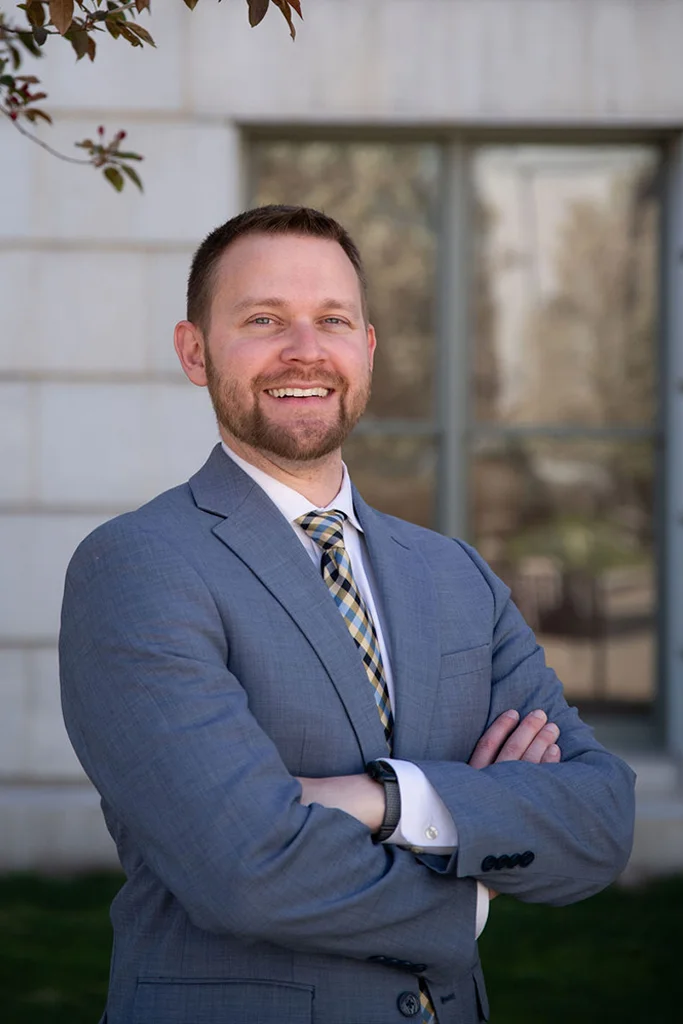

Durango Sex Crimes Lawyer
A sex crimes charge does not wait for a convenient moment to upend your life. It arrives alongside public records, employer background checks, mandatory reporting obligations, and a social weight that follows the charge long before any verdict. Durango sex crimes lawyer Reid DeChant understands that people come to him at the lowest points of their lives, and that what happens in court is only part of what matters. DeChant Law brings genuine courtroom experience, including jury trials and contested hearings, to one of the most consequential areas of criminal defense.
What Colorado Sex Crime Charges Actually Look Like in La Plata County
La Plata County courts handle a range of charges under Colorado’s sex offense statutes. Sexual assault is the most serious, covering allegations of nonconsensual sexual contact or penetration. Charges also arise from allegations involving minors, including sexual assault on a child, enticement of a child, and internet-based solicitation offenses. Unlawful sexual contact, indecent exposure, and invasion of privacy for sexual gratification are lower-level offenses by classification but still carry registration consequences that follow a person for decades.
Durango’s population is small enough that word travels. Fort Lewis College is located here, and cases involving college students or faculty are not uncommon. The region’s outdoor recreation culture also creates situations where allegations surface at festivals, campgrounds, or during tourist seasons. None of that context changes what Colorado law requires of prosecutors, but it does shape how investigations develop and how quickly community pressure can affect a case. Understanding who is doing the charging, what evidence they actually have, and where the weaknesses in the investigation lie requires someone who is paying close attention from the beginning.
The Registration Consequence That Outlasts the Sentence
Colorado’s Sex Offender Registration Act requires anyone convicted of a qualifying offense to register with local law enforcement. In Durango, that means registering with the La Plata County Sheriff’s Office. The registration period depends on the offense and the risk classification that follows. Some offenses carry a ten-year registration period. Others require lifetime registration. Even where deregistration is theoretically available, the process requires a petition, a court hearing, and a showing that the person no longer poses a risk to the community.
Registration affects where you can live, where you can work, and how you can interact in public. It appears on databases accessible to landlords, employers, schools, and neighbors. A plea that seems like a resolution to the criminal case can lock a person into a registration obligation that reshapes their entire future. That is not a reason to panic. It is a reason to treat any potential resolution as something to be analyzed carefully before signing anything.
Reid evaluates every charge with registration consequences in mind from the first conversation. If there is a path to a disposition that avoids registration or reduces the registration period, finding it requires knowing what the options actually are and having the credibility with prosecutors and courts to make that argument land.
How These Cases Are Built and Where They Break Down
Sex crimes prosecutions in Colorado often rest on a narrow foundation of evidence. Physical evidence is frequently absent, particularly in cases involving delayed reporting. Investigators rely heavily on forensic interviews of child complainants, recorded phone calls, digital communications, and witness testimony. Each of those sources has its own set of reliability problems.
Forensic interview protocols exist precisely because interviewer technique can shape a child’s account. If those protocols were not followed, or if a child was interviewed multiple times before a formal forensic interview was conducted, the reliability of what was said is genuinely in question. That is not a tactic. It is a scientific reality that courts accept, and it is a legitimate part of any defense.
Digital evidence, including texts, emails, social media messages, and browser histories, is increasingly central to how these cases are prosecuted. The chain of custody for that evidence matters. How it was extracted, what tools were used, and whether the data has been interpreted accurately are all contestable. In cases involving allegations of internet solicitation or possession of illegal material, the technical details of how law enforcement identified a device and linked it to a specific person can be the difference between a conviction and a dismissal.
Reid’s background as a public defender included handling sexual assault and serious felony cases, which means this is not territory he is approaching for the first time in private practice. That experience shapes how he reads a discovery packet and where he looks first for problems with the government’s case.
What Happens After an Arrest in Durango
Cases originating in Durango proceed through La Plata County Court for misdemeanor-level offenses and La Plata County District Court for felonies. Arraignment typically follows arrest, and bond conditions in sex offense cases often include no-contact provisions, restrictions on being near minors, or electronic monitoring. Those conditions can have immediate practical consequences for people who live with family members or work in environments where children are present.
Investigators from the Durango Police Department or the La Plata County Sheriff’s Office often want to speak with a suspect before charges are formally filed. That conversation is almost never in a defendant’s interest. The instinct to explain, cooperate, or provide an alibi on the spot is understandable, but statements made to law enforcement before an attorney is involved routinely become the most damaging evidence in a case. Nothing said informally clears a person’s name. It becomes part of the record that prosecutors shape into a narrative.
The right move after any contact with law enforcement regarding a sex offense allegation is to say nothing and make a call. That is not guilt. That is what the right to counsel actually looks like in practice.
Questions People Ask Before Calling a Durango Sex Crimes Attorney
Can charges be filed if the alleged victim does not want to press charges?
Yes. In Colorado, the decision to file charges belongs to the prosecutor’s office, not the complaining witness. A victim who recants or refuses to cooperate can complicate the prosecution’s case, but it does not automatically result in dismissal. Prosecutors will often proceed if they believe other evidence is sufficient.
What does a sex offender risk level actually determine?
Colorado uses a risk assessment instrument to classify registered offenders as low, moderate, or high risk. That classification affects registration frequency, the type of community notification required, and eligibility for deregistration. It is not determined solely by the offense of conviction. Prior history, behavioral assessments, and other factors are considered. The classification hearing can be contested.
Is a deferred sentence an option in sex offense cases?
In some cases, yes. Colorado law permits deferred judgments in certain sexual offense matters, which can preserve the ability to avoid a final conviction if the terms are completed. Whether a deferred sentence is available depends on the specific charge, the prosecution’s position, and the facts of the case. It is worth exploring but not something that should be assumed.
What if I was falsely accused and there is no physical evidence?
False allegations do occur, and the absence of physical evidence does not prevent a prosecution from moving forward. It also does not guarantee an acquittal. Building a defense requires understanding the full scope of what the prosecution has, identifying inconsistencies in the accuser’s account, and sometimes presenting affirmative evidence of what actually happened. That work takes time and attention to detail.
Do these charges follow me even if I am acquitted?
An acquittal does not automatically erase an arrest from your record in Colorado. Record sealing may be available following an acquittal or a dismissal, depending on the circumstances. If you were charged and the case resolved in your favor, evaluating whether your record is eligible for sealing is a worthwhile step once the case concludes.
Can I be charged based on something that happened years ago?
Colorado has extended statutes of limitations for sex offense cases, particularly those involving child victims. In some circumstances, prosecution is permitted decades after the alleged incident. If you are being investigated for a past allegation, that investigation should be treated with the same seriousness as a current one.
What does it mean that Reid trained at Trial Lawyers College?
Trial Lawyers College is an intensive program focused on courtroom storytelling, jury psychology, and genuine human connection in advocacy. Reid has spoken publicly about how that training shaped his understanding of what jurors respond to and how to present a client’s full story, not just a legal argument. In sex offense trials, where credibility is often the central battleground, that matters.
Talk to a Sex Crimes Defense Attorney in Durango Before This Gets Further Down the Road
These cases move quickly once law enforcement is involved, and early decisions carry lasting weight. Whether you have been arrested, contacted by investigators, or are just beginning to understand what a charge against you could mean, getting counsel early gives you more options, not fewer. DeChant Law handles Durango sex crimes defense for people who need someone who takes their case seriously and is willing to go to trial if that is what the situation demands. Reid has taken serious felony cases to verdict and understands what it costs a person to be in that chair. Reach out to DeChant Law to set up a consultation.