Denver Mortgage Fraud Lawyer
Mortgage fraud carries federal and state criminal exposure that most people do not fully appreciate until they are sitting across from investigators. What begins as a question about a loan application can escalate into charges carrying years in federal prison, civil forfeiture of property, and restitution orders that follow a person for decades. A Denver mortgage fraud lawyer at DeChant Law approaches these cases with the same tenacity and attention to factual detail that has produced dismissals and not-guilty verdicts across Colorado’s state and federal courts.
What Federal and Colorado Prosecutors Actually Charge in Mortgage Fraud Cases
Mortgage fraud is not a single statute. Prosecutors in Colorado piece together charges from several overlapping frameworks, and understanding which statutes are in play shapes everything about how a defense is built.
At the federal level, the most common charges are wire fraud under 18 U.S.C. § 1343 and bank fraud under 18 U.S.C. § 1344. Because nearly every mortgage involves electronic communications and federally insured lenders, almost any misrepresentation in the lending process can be framed as a federal offense. Mail fraud under 18 U.S.C. § 1341 is added whenever documents passed through the postal system. These statutes carry maximum sentences of 20 to 30 years per count, and prosecutors frequently charge multiple counts to increase leverage during plea negotiations.
Colorado also has its own mortgage fraud statute under C.R.S. § 38-40-105, which targets misrepresentations made knowingly during real estate transactions. State charges are sometimes pursued in parallel with federal ones, and sometimes as an alternative when federal prosecutors decline to take a case. The U.S. Attorney’s Office for the District of Colorado, headquartered in Denver, has prosecuted significant mortgage fraud matters tied to Colorado’s historically active real estate market, including schemes involving inflated appraisals, straw buyers, and fraudulent income documentation during periods of rapid property value growth along the Front Range.
Conspiracy charges are layered on top of the underlying fraud counts whenever more than one person was involved, which dramatically expands criminal exposure. A person who played a limited role, such as a real estate agent who referred clients to a broker running a scheme, can find themselves named as a co-conspirator even if they had no knowledge of the full scope of what was happening.
The Specific Conduct That Draws Scrutiny
Mortgage fraud investigations are triggered by patterns, not single events. Lenders, federal agencies like the FBI and HUD’s Office of Inspector General, and Colorado’s Division of Real Estate all have the authority to refer matters for criminal prosecution. The conduct that most commonly attracts attention falls into distinct categories, and knowing which category applies to a particular case is essential to building an effective defense.
Fraud for profit schemes typically involve real estate professionals, including loan officers, appraisers, and title company employees, working together to generate fees on transactions structured around falsified data. These cases tend to involve large numbers of transactions and produce substantial paper trails that prosecutors reconstruct through financial records subpoenaed from lenders, title companies, and banks.
Fraud for housing involves borrowers who misrepresent their income, employment status, assets, or intent to occupy a property as a primary residence. These cases became common during periods when lenders relaxed documentation standards, and many borrowers who made these misrepresentations did so on the advice of loan officers who are now cooperating witnesses.
Appraisal fraud centers on inflated property valuations, often coordinated between appraisers and buyers or sellers in transactions where the lender’s security interest needs to be obscured. In Denver’s real estate market, where property values along the corridor from Castle Rock to Fort Collins shifted dramatically over relatively short periods, appraisal anomalies can be difficult to separate from legitimate market movement, a factual ambiguity that a defense attorney can work with.
Foreclosure rescue schemes target distressed homeowners and promise to save properties through title transfers, refinancing arrangements, or other mechanisms that ultimately strip equity from the homeowner rather than preserve it. These cases often involve victims who have also suffered financial harm, which adds a restitution component to the prosecution’s demands.
How the Defense Actually Works
Mortgage fraud cases live and die in the documents. Prosecutors build their cases from loan files, bank records, email chains, text messages, and the testimony of cooperating witnesses, many of whom have made their own deals in exchange for cooperation. The defense attorney’s task is to go through that same evidence and find where the government’s theory does not hold.
Intent is the central question in almost every mortgage fraud case. The government must prove that a defendant acted knowingly and with the intent to defraud. That is a higher bar than proving that a document contained false information. Loan officers who instructed borrowers on how to complete applications, lenders who employed appraisers with known accuracy problems, and software systems that auto-populated fields can all introduce reasonable doubt about whether a defendant made a deliberate misrepresentation or relied in good faith on instructions from professionals they trusted.
Cooperating witness credibility is another area that deserves careful attention. In complex fraud cases, the government often builds its case around individuals who have their own criminal exposure and have agreed to testify in exchange for leniency. Prior inconsistent statements, bias, and agreements that incentivize a witness to exaggerate their account of a defendant’s role are all grounds for impeachment that a prepared defense attorney pursues aggressively at trial.
Search warrants and subpoenas are heavily used in these investigations. Challenging whether evidence was obtained lawfully, whether grand jury procedures were followed correctly, and whether the government’s financial expert applied recognized methodology are procedural and evidentiary arguments that belong in the defense toolkit from the start of the case, not as afterthoughts.
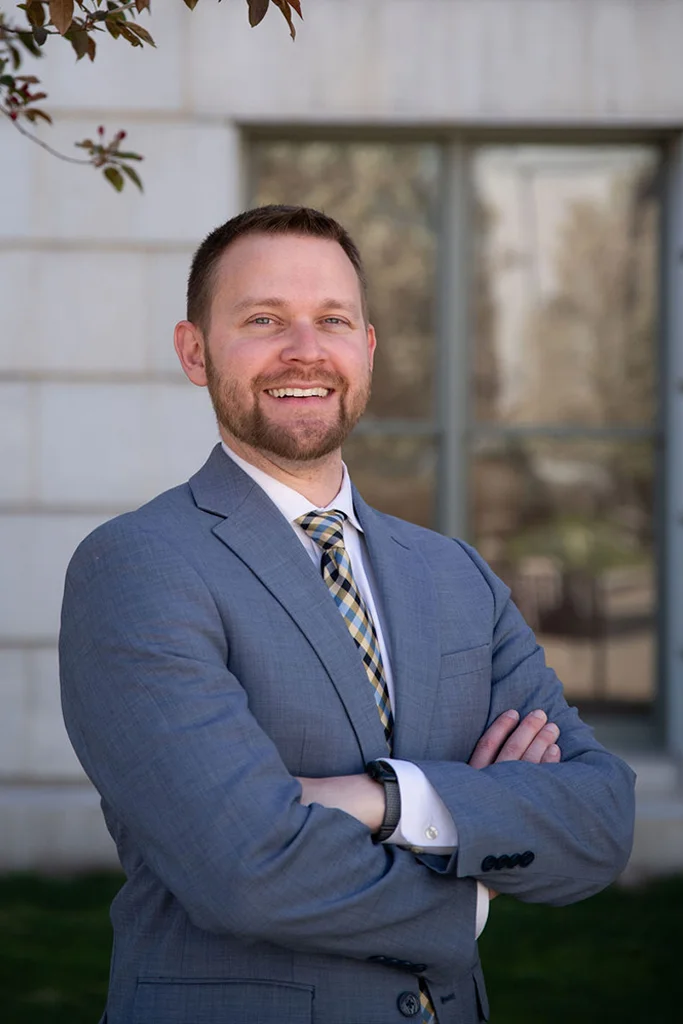
At DeChant Law, Reid brings experience as both a public defender and private defense attorney, handling cases across Denver, Broomfield, Adams County, and beyond. That background matters in mortgage fraud cases, where the ability to move confidently through complex factual records and connect those facts to a human story that resonates with a jury is what separates a well-prepared defense from one that simply responds to the government’s narrative.
Answers to Questions People Search for When Facing Mortgage Fraud Allegations
What is the difference between being a target, a subject, and a witness in a mortgage fraud investigation?
Federal investigators use these terms to signal how close a person is to actual charges. A witness is someone whose conduct is not itself under investigation. A subject is someone whose conduct falls within the scope of the investigation but who has not been identified as a likely defendant. A target is someone the government believes has committed a crime and against whom prosecution is being considered. If you have been contacted by federal agents or received a grand jury subpoena, an attorney should evaluate which category applies to you before you speak with anyone.
Can I be charged with mortgage fraud if I just signed documents that someone else prepared?
Potentially, yes. Signing a document you knew or should have known contained false information can be sufficient for a charge. The more important question is what you actually knew at the time and what representations were made to you about the documents you were signing. These facts are what distinguish a defendant from a victim in many of these cases.
Does Colorado charge mortgage fraud separately from the federal government?
Colorado has its own mortgage fraud statute and can bring state charges regardless of what the federal government does. In practice, federal and state prosecutors sometimes coordinate, and sometimes one jurisdiction defers to the other. A person under investigation may face exposure in both systems simultaneously.
What happens to my property if I am convicted of mortgage fraud?
Federal law allows for criminal forfeiture of property traceable to the fraud, which can include homes purchased through the scheme, proceeds deposited in bank accounts, and any assets acquired with those proceeds. Restitution orders requiring repayment to lenders and victims are also common, and these obligations survive bankruptcy in most circumstances.
How long do mortgage fraud investigations typically take before charges are filed?
These investigations frequently run for years. Federal mortgage fraud has a ten-year statute of limitations under 18 U.S.C. § 3293, which gives investigators significant time to build cases. By the time charges are filed, investigators have often already reviewed thousands of documents and conducted multiple witness interviews. Retaining counsel at the first sign of an investigation, rather than waiting for an indictment, gives the defense the best chance to understand and respond to what has already been gathered.
Should I speak with federal agents if they contact me about a mortgage transaction?
No. Federal agents are trained interviewers who are gathering evidence, not seeking to understand your perspective. Even truthful statements can be used in ways you did not anticipate, and any inconsistency with other evidence the government has already collected can result in additional charges for making false statements to federal investigators under 18 U.S.C. § 1001. The appropriate response is to consult a defense attorney before any contact with investigators.
When to Call a Denver Mortgage Fraud Attorney
The moment an investigation becomes apparent is the right time to act, not after charges are filed. A Denver mortgage fraud attorney can assess whether you are a target or a peripheral witness, identify whether any of your communications or records are at risk of subpoena, and evaluate whether there are factual or legal arguments that could resolve the matter before prosecution begins. DeChant Law handles these cases throughout Colorado’s federal and state courts. Reid’s approach starts where every good defense starts: understanding your story, taking it seriously, and building a response grounded in the facts rather than assumptions about what the government will ultimately be able to prove.