Denver Medical License Defense Lawyer
A medical license represents years of education, clinical training, board examinations, and professional sacrifice. When that license comes under threat, whether through a complaint filed with the Colorado Medical Board, an investigation triggered by a hospital peer review, or a disciplinary proceeding connected to a criminal matter, the response window is short and the consequences of a misstep are permanent. A Denver medical license defense lawyer at DeChant Law understands that what is at stake is not just a credential but an entire career, a professional identity, and the ability to continue caring for patients.
Colorado’s licensing framework for physicians, nurses, and other healthcare professionals is administered through the Division of Professions and Occupations within the Department of Regulatory Agencies. The Colorado Medical Board, the Colorado Board of Nursing, and the relevant boards overseeing physician assistants, pharmacists, dentists, and other practitioners all have independent investigative and disciplinary authority. These are not passive bodies. When a complaint is filed, an investigation begins, and the licensee often does not receive meaningful notice until the process has already been underway for weeks or months. By the time a practitioner realizes what is happening, the window to shape the record and control the narrative has already started closing.
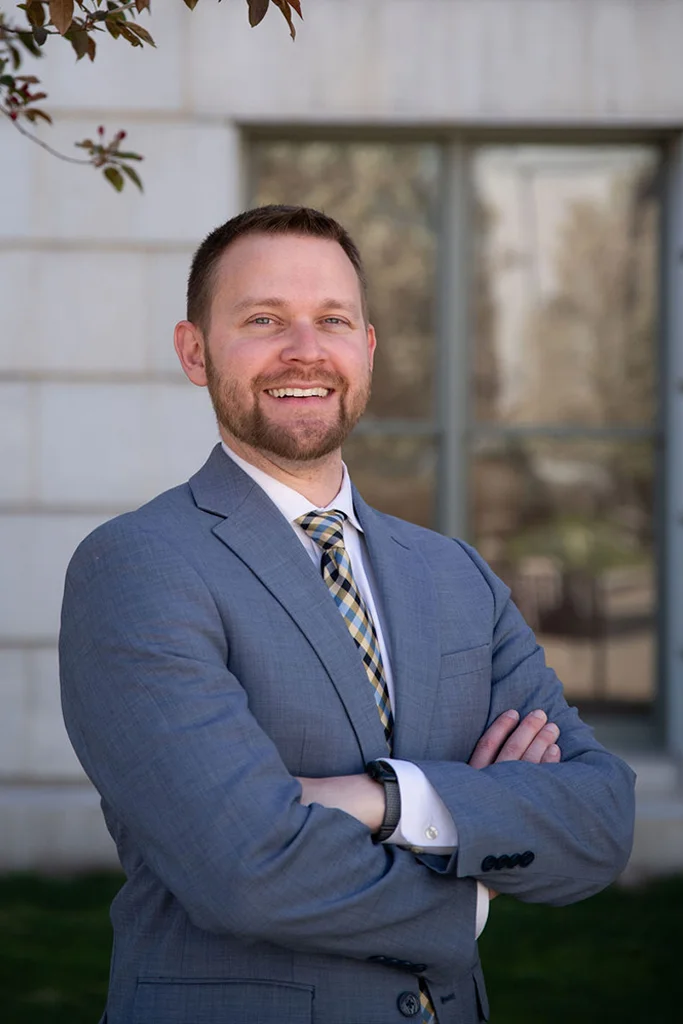
The intersection between criminal defense and professional license protection is more common than most practitioners realize. A DUI, a domestic violence accusation, a prescription fraud allegation, or even an arrest that never results in a conviction can trigger mandatory self-reporting obligations under Colorado law, which then opens a parallel disciplinary inquiry. At DeChant Law, Reid DeChant approaches these overlapping situations with an understanding of both tracks. His background handling serious criminal charges in Denver County courts and across the Front Range means he is equipped to address both the criminal and administrative dimensions of a case simultaneously, rather than treating them as separate problems for separate lawyers.
What Medical Professionals in Colorado Face When Their License Is Challenged
- Colorado Medical Board Investigations: Complaints can be filed by patients, employers, hospital credentialing committees, or anonymous sources. The Board has authority to subpoena records, compel testimony, and impose sanctions ranging from formal reprimands to license revocation, even before a formal hearing is scheduled.
- Nursing Board Disciplinary Actions: The Colorado Board of Nursing handles complaints involving RNs, LPNs, and advanced practice nurses. Substance abuse, documentation errors, medication diversion, and patient safety concerns are among the most common grounds for investigation, and a summary suspension can occur without prior notice in urgent circumstances.
- Prescription and DEA Compliance Issues: Prescribing irregularities, controlled substance documentation failures, or prescriptions written outside the scope of a provider-patient relationship can draw scrutiny from both the state board and federal Drug Enforcement Administration investigators, creating an environment where criminal charges and license proceedings run concurrently.
- Criminal Charges That Trigger Reporting Obligations: Colorado requires licensed healthcare professionals to report certain criminal convictions and in some cases criminal charges to their licensing board. A DUI charge, a domestic violence arrest, or a drug-related offense does not stay compartmentalized. It crosses into the professional licensing world through mandatory reporting, and the response strategy for both matters must be coordinated from the beginning.
- Hospital Peer Review and Credentialing Consequences: A hospital’s internal peer review process can result in a report to the National Practitioner Data Bank, which then affects a practitioner’s ability to obtain privileges at other facilities. Once a report is in the NPDB, correcting or challenging it requires its own formal process, making early intervention in the underlying peer review the better course.
- Mental Health and Substance Use Evaluations: Boards frequently require independent medical evaluations, substance use assessments, or fitness-for-duty examinations as part of an investigation. The results of these evaluations can be used against a licensee, and the framing of how a practitioner engages with the evaluation process matters significantly to the outcome.
- Consent Agreements and Stipulations: Boards regularly offer consent agreements as a resolution mechanism. These documents look like settlements, but they carry lasting consequences, including public disclosure, monitoring requirements, practice restrictions, and entries that follow a practitioner’s record across state lines. Accepting one without legal review is one of the most common mistakes practitioners make.
Why DeChant Law Brings the Right Perspective to Denver Medical License Defense
Medical license defense requires a lawyer who is comfortable operating in adversarial administrative proceedings, not just one who negotiates behind closed doors. Reid DeChant’s background as a former public defender in Denver, Broomfield, and Adams County courts, where he tried cases ranging from misdemeanor traffic matters to felony assault and homicide, built a capacity for courtroom advocacy that most administrative practitioners never develop. When a case proceeds to a formal hearing before a licensing board, or escalates to district court review, the lawyer handling it needs to know how to cross-examine, how to present evidence, and how to tell a compelling story under pressure. Reid’s training at the Trial Lawyers College, the program founded by Gerry Spence focused on authentic narrative advocacy, shapes how he approaches every contested proceeding, including those outside traditional criminal courts.
The case results on DeChant Law’s record reflect a consistent ability to achieve dismissals and not-guilty verdicts across a wide range of charged conduct, including cases involving assault, domestic violence, DUI, and drug offenses. For healthcare professionals, these criminal outcomes directly affect the parallel licensing proceedings. A case dismissed at trial or a charge reduced before conviction changes the analysis entirely under Colorado’s reporting and disciplinary framework. When a Denver medical license defense attorney can address both the criminal charge and the licensing consequence as part of a coordinated strategy, the overall outcome improves. Reid’s membership in the National Association of Criminal Defense Lawyers and the Colorado Criminal Defense Bar keeps him current on the evolving standards that govern both criminal and professional license matters in Colorado courts and administrative agencies.
What to Do the Moment You Receive Notice of a Licensing Investigation
The single most damaging thing a healthcare professional can do after receiving a Board complaint notice is respond without legal guidance. The notice may appear to invite an informal written response, and the tone may feel collaborative. That framing is misleading. Anything submitted to the Colorado Medical Board or the Colorado Board of Nursing becomes part of a formal investigative record. Admissions made in an early written response, characterizations of the underlying conduct, and documents voluntarily produced without strategic review can all be used in a subsequent formal hearing. The time to retain a Denver medical license attorney is before that first response goes in.
Formal proceedings in Colorado licensing matters are heard by the Office of Administrative Courts, located at 1525 Sherman Street in Denver. The Division of Professions and Occupations within DORA oversees the investigation and prosecution side. These are specialized proceedings with their own rules of procedure and evidence, and they move on their own timeline, often continuing in parallel with any criminal case pending in Denver County District Court at the Lindsey-Flanigan Courthouse or in the courts of surrounding jurisdictions like Jefferson County, Arapahoe County, or Adams County.
If a criminal matter is also in progress, coordinate communication carefully. Statements made to a licensing board, even in a formal hearing, can potentially be used in the criminal proceeding, and vice versa. Self-incrimination protections apply differently across these two forums, and practitioners who are not aware of the interplay sometimes inadvertently compromise one case while responding to the other. Gather your own documentation early, including patient records relevant to the complaint if they are properly accessible to you, employment communications, hospital policies, prescribing records, and any prior correspondence with the Board. Do not destroy or alter records under any circumstances.
Pay close attention to mandatory reporting deadlines. Colorado law sets specific timeframes within which certain events must be reported to a licensing board. Missing a reporting deadline is itself a disciplinable offense separate from whatever underlying conduct prompted the obligation, so the reporting analysis needs to happen quickly and with legal input.
Questions Colorado Healthcare Professionals Ask About License Defense
Can the Colorado Medical Board suspend my license before a formal hearing?
Yes. The Board has authority to issue a summary suspension order in situations where it determines that continued practice poses an immediate threat to the public. A summary suspension is an emergency measure that takes effect quickly and without the standard pre-hearing process. A licensee subject to a summary suspension is entitled to request a prompt hearing to contest it, and moving quickly is essential to minimize the interruption to practice.
Will a DUI charge in Denver automatically affect my medical license?
Not automatically, but it creates real exposure. Colorado requires certain categories of healthcare professionals to report criminal charges to their licensing board within a specified window. How the Board responds to a DUI depends on factors including whether it was a first offense, whether it involved on-duty conduct, and how the practitioner engaged with the process. A DUI that is dismissed or results in a not-guilty verdict is treated differently than one that ends in a conviction, which is why the outcome of the criminal case directly shapes the licensing exposure.
What is the National Practitioner Data Bank and how does it affect my career if I have a report there?
The NPDB is a federal information clearinghouse that hospitals, insurers, and credentialing bodies are required to query before granting privileges or employment. Reports to the NPDB are generated by adverse licensing actions, hospital privilege restrictions, and malpractice settlements over certain thresholds. Once a report exists, it is visible to every institution that queries the database. Challenging an erroneous report requires a formal dispute process, and the standards for correcting or voiding a report are strict.
If I enter into a consent agreement with the Board, does that become public record?
Yes. In Colorado, consent agreements and final disciplinary orders are posted publicly on the relevant Board’s website and through DORA’s licensing lookup. They are also reportable to the NPDB in many cases. This is why it matters to evaluate any proposed consent agreement carefully before signing, including examining the specific findings of fact, the practice restrictions, the monitoring requirements, and the reporting obligations. What appears to be a favorable resolution can carry long-term consequences that are not apparent from the surface of the document.
Can I keep practicing while a Board investigation is open?
In most cases, yes, unless the Board issues a summary suspension or an interim practice limitation. An open investigation without a summary suspension order does not, by itself, strip a practitioner’s license. However, hospital credentialing departments, employers, and insurers may have their own reporting obligations or discovery mechanisms that bring the investigation to their attention, so the practical effects of an open investigation extend beyond just the Board’s formal authority.
My prescribing was investigated by the DEA. Does that trigger the Colorado Medical Board as well?
A DEA investigation, administrative action, or registration revocation will almost certainly draw Colorado Medical Board scrutiny. Prescription authority is tied to DEA registration, so any federal action affecting that registration implicates the licensee’s ability to prescribe under state law as well. The two proceedings involve different agencies operating under different standards, but the factual record often overlaps substantially, and the resolution of one can influence the other.
How long does a Colorado licensing board investigation typically take?
Investigation timelines vary widely depending on the complexity of the complaint, the volume of records involved, whether expert review is required, and the current caseload at the relevant Board. Simple complaints may resolve in a few months. Complex investigations involving multiple patients, prescribing patterns, or concurrent criminal matters can take a year or more from initial complaint to final resolution. During that time, the practitioner’s license generally remains active unless emergency suspension is ordered.
Does the Board consider rehabilitation and corrective steps a practitioner has already taken?
Yes, and demonstrating that a practitioner has already taken meaningful corrective action, whether through additional training, treatment, practice changes, or supervision, can significantly influence the Board’s assessment of the appropriate sanction. The timing and credibility of remediation matters. Steps taken proactively, before a formal hearing, carry more weight than those that appear reactive. Part of early legal strategy involves identifying and implementing corrective steps that will stand up to scrutiny when the case reaches its resolution stage.
What happens if I practice on a suspended or revoked license, even briefly?
Practicing on a suspended or revoked license is a separate criminal offense under Colorado law, entirely apart from the original conduct that led to the disciplinary action. It also makes reinstatement substantially more difficult. Healthcare professionals who receive a suspension order sometimes continue to see patients due to logistical confusion or because they believe the order was wrongly issued. Neither situation is a legal defense to the criminal charge. If a suspension order has been issued and you believe it was improper, the remedy is to challenge the order through the proper legal channels, not to continue practicing in the interim.
Can out-of-state licensing board actions affect my Colorado license?
Yes. Colorado has mechanisms for taking action against a licensee based on disciplinary action taken by another state’s licensing board. Healthcare professionals who are licensed in multiple states need to be aware that an adverse action in one jurisdiction does not stay contained there. Managing a license defense matter across multiple states, each with its own procedural rules and timelines, requires coordinated legal strategy rather than treating each state’s proceeding as an isolated event.
DeChant Law’s Medical License Defense Representation Across the Denver Metro and Front Range
DeChant Law represents healthcare professionals facing licensing investigations and disciplinary proceedings throughout the Denver metropolitan area and across Colorado’s Front Range. This includes practitioners based in Denver proper, from Capitol Hill and the Five Points neighborhood through the LoDo district and down to the medical corridor around Anschutz Medical Campus in Aurora. The firm also represents clients in Lakewood, Wheat Ridge, Arvada, and Westminster in Jefferson and Adams Counties, and extends representation to practitioners in Littleton, Englewood, Centennial, and Greenwood Village in the Arapahoe and Douglas County corridors. Professionals working in Broomfield, Thornton, Northglenn, Commerce City, and Brighton are within the firm’s regular service footprint. Further along the Front Range, DeChant Law serves clients in Fort Collins, Greeley, Longmont, Boulder, and Pueblo, as well as those practicing in mountain communities and resort areas who face licensing actions tied to work done anywhere in Colorado. For practitioners whose licensing matters involve Denver-based proceedings before the Office of Administrative Courts or DORA regardless of where they practice, the firm provides representation through the full course of those proceedings.
Speak With a Denver Medical License Defense Attorney Before Responding to the Board
The moment you receive a Board notice, an employer inquiry, or any communication suggesting that a licensing investigation has begun, that is the right time to contact a Denver medical license defense attorney. Not after you have drafted a response. Not after you have spoken to the investigator. Before any of that. Reid DeChant represents healthcare professionals in licensing matters with the same tenacity and preparation he brings to the most serious criminal cases in Colorado courts. The combination of trial experience, administrative knowledge, and genuine investment in each client’s outcome is what sets this representation apart. Call DeChant Law to discuss your situation and understand your options before the record is made.