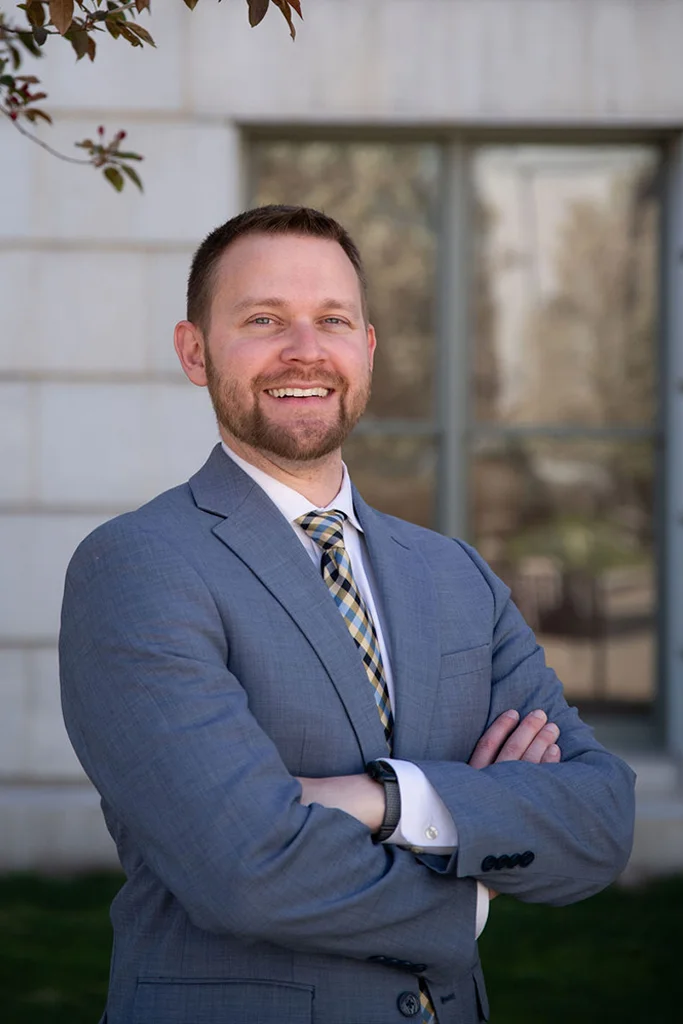
Denver Federal Criminal Defense Lawyer
Federal charges operate on a different level than anything the Colorado state courts handle. The agencies investigating these cases, the prosecutors bringing them, and the sentencing guidelines that govern outcomes all function under a separate framework that demands specific preparation. At DeChant Law, Denver federal criminal defense lawyer Reid DeChant brings the same relentless advocacy to federal court that has produced dismissals and not-guilty verdicts across Colorado’s state system, applied now to the distinct demands of federal prosecution.
What Makes Federal Prosecution Different from State Charges
Federal cases begin long before an arrest. Agencies like the FBI, DEA, IRS Criminal Investigation, ATF, and Homeland Security Investigations typically build cases over months or years, compiling evidence through wiretaps, financial records, informants, and surveillance before a grand jury ever sees a charge. By the time someone receives a target letter or a federal agent appears at their door, the government often believes it already has what it needs to convict.
The U.S. Attorney’s Office for the District of Colorado, which handles federal prosecutions in Denver, operates with substantial resources and a conviction rate that reflects how carefully its prosecutors select cases. Federal prosecutors do not charge cases they do not expect to win. Understanding that posture matters when deciding how to build a defense.
Federal sentencing adds another layer. The U.S. Sentencing Guidelines create a structured calculation that accounts for the offense level, criminal history, and a range of specific factors that can dramatically affect the final sentence. Cooperation agreements, safety valve provisions, and guideline departures are all tools that require careful navigation from the moment a case begins, not after a plea is entered.
Federal Charges That Arise Frequently in the Denver Area
Colorado’s geography, economy, and position as a distribution hub create particular patterns in federal prosecution. Drug trafficking cases involving Interstate 70 and Interstate 25 corridors are among the most common federal matters handled in Denver. Because these interstates serve as primary routes for controlled substances moving through the mountain west, federal task forces concentrate enforcement resources along these roads, and arrests made in cooperation with state troopers frequently escalate into federal charges when quantities or alleged conspiracies meet the federal threshold.
Financial crimes, including wire fraud, bank fraud, tax evasion, and money laundering, appear regularly in the District of Colorado, particularly as Denver’s financial sector and real estate market have grown. The IRS Criminal Investigation division maintains an active presence, and cases involving unreported income, fraudulent business filings, or suspicious transaction patterns often proceed quietly through investigation before charges emerge.
Gun charges under federal law carry mandatory minimums that state law does not. Being a prohibited person in possession of a firearm, using a firearm during a drug trafficking crime, or trafficking weapons across state lines all fall under federal statutes with limited judicial discretion at sentencing. Federal gun charges in Denver are frequently paired with drug charges, which compounds the guideline calculation significantly.
Computer crimes, child exploitation offenses, and immigration-related federal charges also appear in the District of Colorado. Each carries its own investigative dynamics, evidentiary issues, and sentencing consequences that require analysis specific to that charge type rather than generic criminal defense approaches.
The Investigation Phase Is Where Federal Defense Often Matters Most
One of the most significant errors people make in federal cases is waiting until formal charges arrive before hiring counsel. Federal investigations can span years, and the period between when the government begins focusing on a person and when charges are filed is often where critical decisions get made, statements get taken, and evidence gets preserved or lost.
A target letter from the U.S. Attorney’s Office is a formal notification that the government considers someone a subject of a grand jury investigation. Receiving one requires immediate attention. Grand jury subpoenas, requests for document production, and voluntary interview requests from federal agents all carry consequences depending on how they are handled. Responding without counsel or, worse, making statements to agents before understanding what the investigation actually covers has destroyed defenses that might otherwise have been viable.
Reid’s background as a public defender, where he handled serious cases including homicides and sexual assaults, shaped his understanding of how investigations unfold and what prosecutors are actually building toward. That experience translates directly to federal defense work, where reading the government’s strategy early and responding thoughtfully matters more than reactive maneuvering after charges land.
Questions People Facing Federal Investigation Actually Ask
Do I have to talk to federal agents if they contact me?
No. Federal agents, including FBI and DEA investigators, may contact you without any obligation on your part to respond. You have the right to decline any interview and request that future contact go through your attorney. Declining to speak is not an admission of guilt, and anything you say voluntarily can and will be used against you regardless of whether you are formally under arrest.
What is the difference between being a “target,” a “subject,” and a “witness” in a federal investigation?
The Department of Justice uses these terms to describe levels of investigative focus. A target is someone the government has substantial evidence against and expects to charge. A subject is someone whose conduct falls within the scope of the investigation. A witness is someone who has information but is not currently suspected of wrongdoing. These categories can shift, and a “witness” interview can become a prosecution if statements are made that implicate the person in criminal conduct.
How do federal sentencing guidelines actually work?
Federal judges calculate sentences using a grid that maps offense level against criminal history category. The offense level increases based on factors like drug quantity, role in the offense, use of a weapon, or loss amount in fraud cases. Criminal history points come from prior convictions. The resulting range is advisory following the Supreme Court’s decision in United States v. Booker, but judges still use it as the primary framework, and departures require specific justification on the record.
Can a federal case be dismissed before trial?
Yes. Suppression motions challenging unlawful searches, seizures, or statements can result in evidence being excluded, which sometimes leads to dismissal when that evidence is central to the prosecution. Grand jury proceedings can also be challenged in limited circumstances. Cooperation and early resolution in exchange for reduced charges or a government motion for downward departure are other pathways that result in different outcomes than a full trial.
What courts handle federal criminal cases in Denver?
The U.S. District Court for the District of Colorado, located in the Alfred A. Arraj United States Courthouse in downtown Denver, handles all federal criminal matters arising in Colorado. Cases from across the state, including those originating in Colorado Springs, Pueblo, Grand Junction, and Fort Collins, are all prosecuted in this single district court.
Is it possible to get bail in a federal case?
Federal detention hearings are governed by the Bail Reform Act, which requires a judge to determine whether any combination of conditions can reasonably assure the person’s appearance and the community’s safety. Charges involving drugs, weapons, or violence trigger a presumption in favor of detention that the defendant must rebut. The detention hearing is often one of the first critical moments in a federal case and deserves careful preparation.
What happens if a co-defendant decides to cooperate against me?
Cooperating witnesses are a significant factor in federal prosecution. The government routinely secures guilty pleas from co-defendants in exchange for testimony, and cooperator credibility becomes a central issue at trial. Defense attorneys can challenge cooperating witnesses on their motive to lie, the benefits received for their testimony, prior inconsistent statements, and the reliability of their accounts. Preparing to confront cooperation evidence effectively requires understanding the specific cooperation agreement and what the witness has already told the government.
What to Do When Federal Charges Are on the Table
A Denver federal criminal defense attorney handles a fundamentally different legal environment than state court practice. The investigative resources, the sentencing framework, the rules of procedure, and the culture of the U.S. Attorney’s Office all require specific familiarity. DeChant Law does not approach federal cases with a generic criminal defense template. Reid’s training at Trial Lawyers College, his experience handling serious felonies as both a public defender and in private practice, and his commitment to understanding each client’s full story inform how every federal matter is handled. Whether a case is in its earliest investigative phase or heading toward trial at the Arraj Courthouse, the goal is the same: position the client as well as possible at every stage and hold the government to its burden at every turn. If you are under investigation or have been charged in the District of Colorado, contact DeChant Law to discuss what your situation actually requires.