Delta Vehicular Assault and Homicide Defense Lawyer
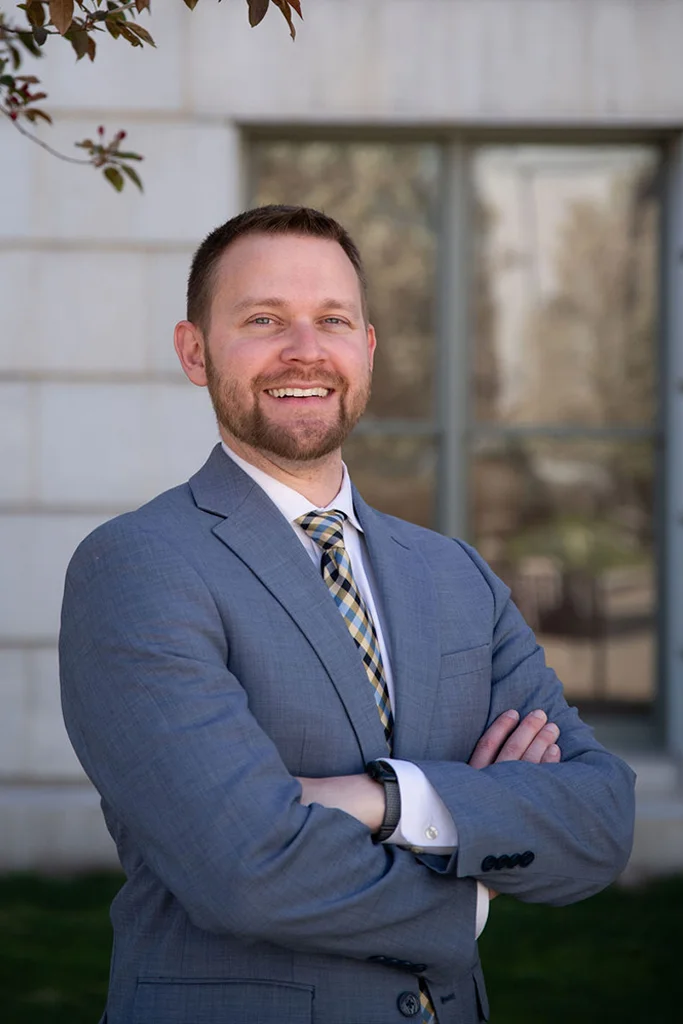
A crash that results in serious injury or death can transform a driver from a witness into a defendant almost overnight. Colorado prosecutors treat vehicular assault and vehicular homicide as among the most serious traffic-related crimes on the books, and a conviction carries consequences that reach far beyond fines or license suspension. If you are facing these charges in Delta County or anywhere along the Western Slope, attorney Reid DeChant brings the courtroom experience and commitment to your story that this level of charge demands. At DeChant Law, we handle Delta vehicular assault and homicide defense with the same tenacity we bring to our most serious felony cases across Colorado.
What Colorado Law Actually Charges and Why It Matters in Delta County
Colorado distinguishes vehicular assault from vehicular homicide based on outcome, and then layers each offense depending on the driver’s condition at the time of the crash. Under Colorado Revised Statutes, vehicular assault is charged as a Class 4 felony when the driver operated recklessly and caused serious bodily injury to another person. When alcohol or drugs are involved and serious injury results, the charge escalates to a Class 3 felony, carrying a sentencing range of four to twelve years in the Colorado Department of Corrections plus mandatory parole.
Vehicular homicide follows the same structure. Reckless driving that causes death is a Class 4 felony. When impairment is alleged, the charge becomes a Class 3 felony with the same upper sentencing exposure. Delta County sits in the 7th Judicial District, which also covers Gunnison, Montrose, Ouray, and San Miguel counties. The 7th Judicial District Court handles these prosecutions, and the prosecutors there are experienced with mountain highway crashes, agricultural road incidents, and cases that originate on routes like Highway 50, Highway 92, or State Highway 65 through the Grand Mesa area, where conditions and driving patterns create fact patterns you simply do not encounter on the Front Range.
One detail that frequently determines how these cases are charged: prosecutors often file vehicular assault or homicide alongside a DUI charge, or they may pursue the vehicular offense even when no chemical test was administered or when results fall below the legal limit. Recklessness alone, without any impairment, is sufficient to support a felony charge. That means a driver who fell asleep at the wheel, who was distracted, or who made a poor judgment call in adverse road conditions can face the same criminal exposure as someone with a measurable BAC.
The Evidence the State Will Build Against You
These cases rarely rest on a single piece of evidence. Prosecutors typically assemble a layered case using law enforcement crash reconstruction reports, toxicology results, witness statements, cell phone records, surveillance footage from businesses along the route, and data pulled from the vehicle’s event data recorder, commonly called a black box. Each of these sources carries its own reliability questions and chain-of-custody requirements.
Crash reconstruction is particularly consequential. A reconstruction expert hired by the prosecution will analyze skid marks, vehicle damage patterns, road geometry, and weather conditions to present a narrative about what happened and why. That narrative directly supports the recklessness or impairment theory the state is building. The defense has the right to retain its own expert and to challenge the methodology, assumptions, and conclusions of the state’s reconstruction. When that reconstruction is the centerpiece of the prosecution’s case, the quality of that challenge matters enormously.
Toxicology results in vehicular cases often involve blood draws taken hours after a crash, sometimes at a hospital where the driver was also receiving treatment. The timing of the draw, the conditions under which it was stored, the lab’s testing procedures, and the retrograde extrapolation used to estimate BAC at the time of driving are all legitimate areas of scrutiny. Reid has focused his training and experience on fighting impaired driving cases and understands the forensic detail these challenges require.
Cell phone records deserve particular attention in distracted driving cases. Prosecutors increasingly use carrier data to show that a driver was texting or using an app at the moment of a crash. Obtaining those records, understanding what they do and do not prove, and countering expert testimony about their interpretation are defense tasks that require preparation well before trial.
Recklessness Is Not a Simple Standard
Colorado’s vehicular assault and homicide statutes require proof of recklessness, not merely negligence. Recklessness, in Colorado’s criminal code, means the defendant consciously disregarded a substantial and unjustifiable risk. That is a meaningful distinction. Poor driving, misjudgment, or failure to anticipate road conditions does not automatically satisfy the recklessness standard, even when the outcome is catastrophic.
Proving recklessness is harder than it might appear, and that difficulty creates real opportunities on the defense side. Was the driver aware of the risk they were creating? Were road conditions, limited visibility, a mechanical failure, or another driver’s conduct contributing factors? On routes like Highway 50 through the Black Canyon corridor or on gravel roads off Highway 92, weather, wildlife, and road surface conditions all play roles that prosecutors sometimes underweight in their charging decisions.
A thorough defense examines whether the state can actually meet the recklessness threshold or whether the evidence is better characterized as negligence, which is a civil standard, not a criminal one. This analysis shapes whether a charge can be challenged at the trial level, resolved through a reduced charge, or dismissed entirely on the facts.
What a Felony Conviction Means Beyond the Courtroom
A Class 3 felony conviction in Colorado follows a person in ways that extend well past the prison term. A felony record affects employment in almost every licensed profession, disqualifies individuals from certain housing options, affects the ability to possess firearms, and can have immigration consequences for non-citizens. If the defendant holds a commercial driver’s license, a conviction eliminates that license and the livelihood tied to it. If the defendant holds a professional license in healthcare, law, finance, or another regulated field, the licensing board must be notified and often initiates its own proceeding.
Reid DeChant’s background includes defense work across a wide range of felony charges, from assault to cases with homicide-level exposure. His experience as a public defender in Denver, Broomfield, and Adams County gave him a working knowledge of how serious felony prosecutions are built and what it takes to dismantle them. That foundation informs how DeChant Law approaches vehicular homicide cases in Delta and across the Western Slope.
Questions Defendants in Delta County Often Ask About These Charges
Can vehicular assault or homicide be charged even if I wasn’t drunk?
Yes. Impairment elevates the severity of the charge, but reckless driving alone, without any alcohol or drug involvement, is sufficient to support a vehicular assault or vehicular homicide charge under Colorado law. A driver who was distracted, fatigued, or made a dangerous maneuver can face felony charges if a serious injury or death resulted.
What happens at the DMV when I’m also facing criminal charges?
In Colorado, a DUI-related felony arrest triggers a separate administrative proceeding through the DMV to revoke your license, independent of the criminal case. DeChant Law handles both proceedings. The DMV hearing has its own short timeline and its own rules of evidence, and losing it does not mean the criminal case is resolved against you, but the two processes must be managed simultaneously.
If the other driver contributed to the crash, does that matter?
It can matter significantly. Colorado courts recognize comparative fault principles, and while comparative fault is primarily a civil concept, the presence of another driver’s negligence or dangerous conduct is directly relevant to whether the defendant’s conduct meets the criminal recklessness standard. A defense investigation that uncovers the other driver’s contributing role can change the trajectory of the case.
How long does a vehicular homicide case typically take to resolve in the 7th Judicial District?
These cases rarely move quickly. Between crash reconstruction, toxicology, and expert retention on both sides, a vehicular homicide case can take a year or more from arrest to trial. That timeline allows for significant investigation and pretrial motion practice, both of which are critical to an effective defense strategy.
Will I have to go to trial, or can these charges be resolved before that?
Some cases resolve through plea negotiations, sometimes to reduced charges with significantly different sentencing exposure. Others require trial. The right path depends entirely on the strength of the evidence, the accuracy of the charge, and what outcome is actually achievable given the facts. Reid will give you an honest assessment of both paths rather than steering you toward whichever is easier for the attorney.
What is the difference between vehicular homicide and first-degree murder in a crash scenario?
Vehicular homicide applies when death results from reckless driving or driving under the influence. Murder requires proof of intent to kill. These are distinct charges with distinct elements, though in rare cases involving deliberate conduct with a vehicle, prosecutors have pursued murder charges. The specific facts of the crash and the defendant’s state of mind are what determine which charge, if any, applies.
Should I speak with law enforcement after the crash before contacting an attorney?
No. Statements made at the scene or at the hospital, even statements that feel cooperative or explanatory, become part of the investigative record and can be used in prosecution. You are not required to answer questions beyond basic identifying information. The time between a crash and when you speak with an attorney is when the most damaging statements are often made.
Defending Vehicular Charges Across Delta and the Western Slope
DeChant Law handles vehicular assault and vehicular homicide defense for clients in Delta County and surrounding communities throughout Colorado’s Western Slope. Whether your case originates in Montrose, Gunnison, or on a rural road outside Paonia, the 7th Judicial District Court will be where your case is fought. Reid DeChant approaches Delta vehicular assault and homicide defense with the same investment in your facts and your outcome that he brings to every serious felony case. Contact DeChant Law to talk through the specifics of your situation with an attorney who will treat your case with the care and tenacity it deserves.