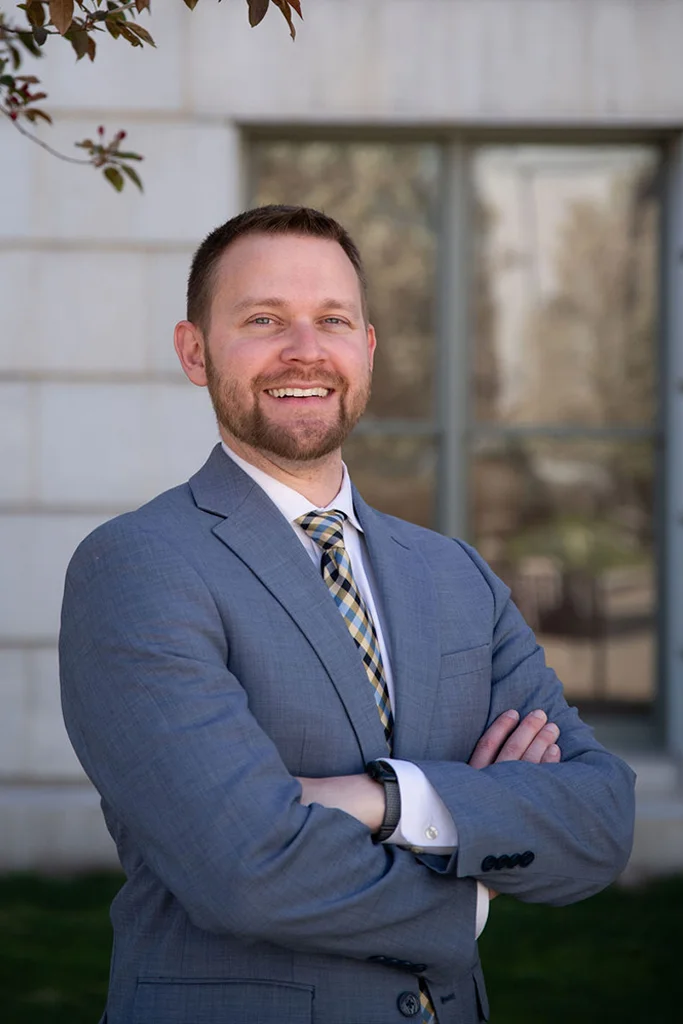
Crested Butte Vehicular Assault and Homicide Defense Lawyer
A crash that injures or kills someone on a Colorado mountain road can transform from a tragic accident into a felony prosecution within hours. When law enforcement suspects impairment, recklessness, or speed, they do not wait to build a case. They begin gathering evidence at the scene, drawing blood, and interviewing witnesses before the dust has settled. Reid DeChant is a Crested Butte vehicular assault and homicide defense lawyer who has handled serious felony cases through trial and understands what these charges demand from the moment of arrest through verdict.
What Colorado Actually Charges in Serious Crash Cases
Colorado distinguishes between several felony offenses that arise from crashes. Vehicular assault under C.R.S. 18-3-205 applies when a driver causes serious bodily injury to another person while driving under the influence, driving with ability impaired, or while operating recklessly. A DUI-based vehicular assault is a class 4 felony. Reckless-based vehicular assault is a class 5 felony. The difference between those classifications carries significant sentencing weight.
Vehicular homicide under C.R.S. 18-3-106 applies when a death results. A DUI-based vehicular homicide is a class 3 felony, carrying two to six years in the Department of Corrections presumptively, with aggravated sentencing ranges pushing far beyond that. A reckless-based vehicular homicide is a class 4 felony. Both charges are subject to mandatory sentencing provisions and carry consequences that extend well past prison, including license revocation, victim restitution, and the lasting weight of a violent felony conviction on a person’s record.
Prosecutors in Gunnison County and across Colorado’s mountain judicial districts approach these cases with public pressure in mind. A fatal crash on Highway 135, on Kebler Pass Road, or on Gothic Road near the mountain bike trails generates community attention. That pressure can push charging decisions and plea postures in ways that do not always reflect the actual evidence. Having counsel who can evaluate the case on its own terms, not on what a headline demands, matters from the earliest stages.
How Evidence Gets Built and Where It Can Be Challenged
Crash reconstruction is central to nearly every vehicular assault or homicide prosecution. Law enforcement will typically deploy a trained reconstructionist to calculate speed, determine points of impact, measure braking distances, and assign fault. These conclusions feed directly into the question of whether the driving conduct was reckless or impaired. But reconstruction is not infallible. The methodology, the measurements taken, the assumptions built into the model, and the qualifications of the analyst are all subject to scrutiny. Defense experts can examine the same data and reach different conclusions, particularly on rural mountain roads where grade, road surface, lighting, and visibility interact in ways that general reconstruction models may not fully account for.
Blood and breath testing is a second major battleground. In DUI-based vehicular assault and homicide cases, the prosecution’s entire theory of impairment often rests on a blood draw taken after the crash. The timing of that draw matters, because alcohol absorbs and eliminates at variable rates. A blood result taken an hour or more after a crash does not automatically reflect the driver’s BAC at the time of driving. Retrograde extrapolation is contested science, and the way Colorado law enforcement administers and stores blood samples creates chain-of-custody questions that skilled counsel will always examine.
Witness accounts collected in the immediate aftermath of a serious crash are often unreliable in ways that neither the witnesses nor investigators fully appreciate. Stress, shock, and the chaotic environment of a mountain road accident scene affect perception and memory. Statements taken before a person has processed what happened, or before defense counsel is involved, can be used against a defendant even when they do not accurately reflect events. Understanding how that evidence was gathered, and what challenges apply, is part of building a defense that holds up at trial.
The Distinction Between Accident and Criminal Recklessness
Colorado law does not criminalize every crash. The line between a tragic accident and vehicular assault or homicide runs through the element of recklessness, which requires proof that the driver consciously disregarded a substantial and unjustifiable risk. That is a specific legal standard, not a general judgment about fault. Someone can be at fault in a civil negligence sense without satisfying the criminal definition of recklessness. Prosecutors and law enforcement sometimes collapse that distinction in the immediate aftermath of a fatal or serious injury crash, charging recklessness when the evidence supports negligence at most.
Mountain driving conditions add complexity to this analysis. Crested Butte area roads change rapidly with weather, and conditions that appear manageable can shift without warning. Unmarked hazards, wildlife crossings, unexpected ice patches, and other drivers’ behavior are all factors that bear on whether a driver consciously disregarded a risk. A defense that takes these conditions seriously, and that presents them through qualified experts and meticulous factual investigation, is built on a fundamentally different foundation than one that simply asks for mercy.
Where Crested Butte Cases Are Prosecuted
Vehicular assault and homicide charges arising from incidents in Crested Butte and the surrounding area are handled in Gunnison County District Court, which is part of Colorado’s 7th Judicial District. The 7th Judicial District covers Gunnison, Delta, Montrose, Ouray, San Miguel, and other mountain counties. Cases in these courts move on a different timeline than Denver metro cases, and the prosecutors, judges, and local dynamics differ from urban jurisdictions. Understanding how cases are handled in this district, how local courts respond to motions to suppress and challenges to reconstruction evidence, and what resources exist for mitigation is part of effective representation in mountain Colorado.
Reid has appeared in courts across Colorado’s Front Range and mountain communities, including Adams, Jefferson, Douglas, Broomfield, Denver, and Arapahoe counties. Cases involving serious felonies in Gunnison County draw on the same core skills: thorough investigation, command of the forensic evidence, and the willingness to take a case to trial when that is what the facts and the client’s interests require.
Questions Worth Asking About These Cases
What is the difference between vehicular assault and vehicular homicide in Colorado?
Vehicular assault requires that someone other than the driver suffered serious bodily injury as a result of the crash. Vehicular homicide requires that someone died. Both charges can be filed under either a DUI theory or a recklessness theory, which affects the felony class and the applicable sentencing range. DUI-based versions of both offenses carry more severe penalties than recklessness-based versions.
Can a vehicular assault charge be reduced or dismissed?
Yes. The outcome depends on the strength of the evidence, the specific facts of the crash, and how effectively the defense challenges the prosecution’s case. Charges have been dismissed and reduced in cases where blood test results were successfully challenged, where reconstruction methodology was found to be flawed, or where the evidence did not support the recklessness standard under Colorado law. Past results do not guarantee future outcomes, but thorough defense work creates real opportunities.
What happens to a driver’s license after a vehicular assault charge in Colorado?
A vehicular assault or homicide charge typically triggers both criminal court proceedings and a separate DMV action. The DMV proceeding can result in license revocation independent of the criminal case. Challenging the DMV action requires prompt attention because Colorado’s express consent and hearing request timelines are strict. Missing a deadline can result in automatic revocation even if the criminal case resolves favorably.
Does it matter that the other driver may have contributed to the crash?
Comparative fault matters differently in criminal cases than in civil cases. In a criminal prosecution, the focus is on whether the defendant’s conduct met the statutory threshold for recklessness or impairment. Evidence that another driver or an external factor contributed to the crash is relevant and can be used in defense, but it does not automatically negate criminal liability. How that evidence is developed and presented matters significantly.
How does a felony vehicular conviction affect someone long-term?
A class 3 or class 4 felony conviction carries consequences that extend far beyond any prison sentence. Colorado felony convictions are part of the public record, affect employment and housing, can trigger federal firearm disabilities, and carry mandatory victim restitution obligations. For non-citizens, a vehicular homicide conviction creates serious immigration consequences. These downstream effects are part of why the defense strategy matters at every stage, from arrest through sentencing.
What if the driver was a visitor or seasonal worker in Crested Butte?
Being charged in Gunnison County while living elsewhere in Colorado or out of state creates logistical and legal complexity. Court appearances and deadlines do not pause for geography. Having counsel who can appear in Gunnison County District Court and manage the case without requiring constant in-person travel from the client is a practical necessity for many people charged in mountain communities.
Contact DeChant Law About Vehicular Assault or Homicide Charges Near Crested Butte
These charges move quickly, and the evidence most critical to the defense is often at its most accessible in the first days after a crash. If you or someone close to you is facing a Crested Butte vehicular assault or homicide charge, Reid DeChant is available to review the facts, explain what Colorado law actually requires the prosecution to prove, and begin building a defense grounded in the real evidence of the case. Reach out to DeChant Law to discuss what comes next.