
Crested Butte Felony Lawyer
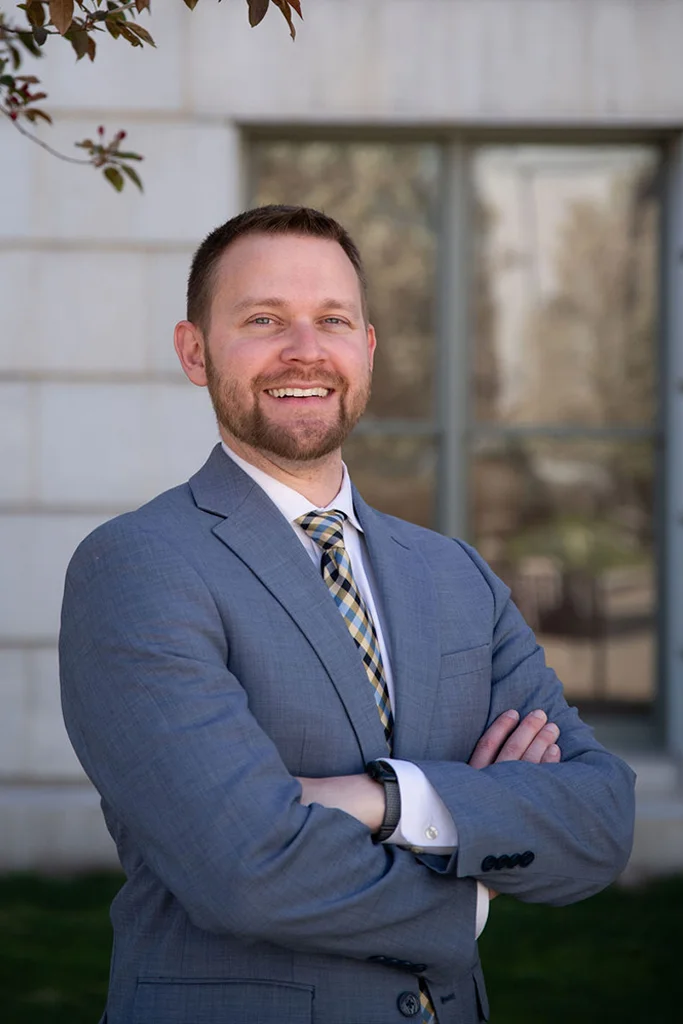
Felony charges filed in Gunnison County carry consequences that reach far beyond the courtroom. A conviction can strip a person of voting rights, firearm ownership, professional licenses, and housing opportunities for years or decades. The mountain communities around Crested Butte may feel removed from the pace of urban courts, but the Colorado criminal statutes that apply here are exactly the same ones prosecuted in Denver, and Gunnison County prosecutors pursue felony cases with the same determination. Reid DeChant is a Denver-based criminal defense lawyer who has handled felony cases across Colorado’s court system, bringing the kind of trial preparation and courtroom experience that serious charges demand.
What the Felony Classification System Actually Means for Your Case
Colorado organizes felony offenses into six classes, with Class 1 being the most serious and Class 6 representing the lowest rung of felony-level conduct. That classification determines the presumptive sentencing range a judge works from, and understanding it matters because the difference between, say, a Class 4 and a Class 6 felony is not just a label. A Class 4 felony carries a presumptive range of two to six years in the Department of Corrections, while a Class 6 felony carries one to eighteen months. Extraordinary risk designations can add additional time on top of those ranges for certain offenses involving violence or vulnerable victims.
Beyond prison time, Colorado law imposes mandatory parole periods, fines that can reach into tens of thousands of dollars, and sentence enhancers for crimes designated as crimes of violence or involving a deadly weapon. Felony drug cases carry their own parallel classification system under Colorado’s drug felony statutes, which layer different sentencing considerations onto what might initially look like a straightforward case. What this means practically is that the specific language of the charge, the classification attached to it, and any sentence enhancers alleged in the charging document each shape the entire trajectory of the case. Defense strategy has to account for all of that from the very beginning, not as an afterthought once a plea offer arrives.
How Felony Cases Move Through Gunnison County’s Courts
Felony charges filed in the Crested Butte area are prosecuted in the Seventh Judicial District, which encompasses Gunnison County along with several neighboring counties. The courthouse handling these matters is in Gunnison, roughly 28 miles south of Crested Butte. For anyone caught up in the resort community’s seasonal crowds, at a festival on Mount Crested Butte, or along the stretch of Colorado Highway 135, an arrest can happen quickly while understanding how the case will actually unfold takes considerably more effort.
After an arrest and an initial advisement, a felony case in Colorado proceeds through a preliminary hearing or a grand jury process before arraignment and then the pretrial phase. At the preliminary hearing, the prosecution must show probable cause that a crime was committed and that the defendant committed it. That hearing is itself an opportunity for defense counsel, because cross-examining witnesses under oath at that stage can expose weaknesses in the prosecution’s evidence before trial ever begins. From there, the case moves into motions practice, where suppression of evidence, challenges to the sufficiency of the charging document, and other procedural issues get litigated. Reid’s background as a public defender, where he handled cases across multiple counties including Denver, Broomfield, and Adams County, means he has worked through every phase of this process across a wide range of charge types.
Felony Charges That Commonly Arise in Mountain Resort Communities
The nature of Crested Butte as a resort and outdoor recreation destination shapes the kinds of felony cases that arise there. Drug distribution charges appear regularly in communities with heavy tourism and seasonal populations, and Colorado’s distinction between possession and distribution can hinge on facts as specific as the packaging of a substance or the presence of a digital scale. A case that begins as a simple possession allegation can be charged as distribution based on quantity thresholds alone, even without evidence of an actual sale.
Felony assault cases also arise in resort settings, often connected to alcohol-fueled incidents at bars on Elk Avenue or in the base area, where what one person describes as a bar fight another describes as a serious physical assault. Colorado’s assault statutes are divided by degree and depend on factors including the seriousness of the injury, whether a deadly weapon was involved, and the identity of the victim. Felony menacing, which involves causing a victim to believe they are in serious danger, can be charged based on conduct that the person accused may not have understood as criminal at the time.
Property crimes including burglary and aggravated motor vehicle theft also appear in mountain communities, sometimes connected to rental properties or seasonal housing situations where questions about lawful entry or authorization complicate the picture. A person who had permission to enter a property under some circumstances and exceeded that permission under others presents a factual and legal situation that looks nothing like a stranger breaking into a building, even though both can be charged as burglary.
Questions People Ask About Felony Defense Near Crested Butte
Can a felony charge be reduced to a misdemeanor in Colorado?
Yes, and it happens through several routes. Prosecutors have discretion to amend charges as part of a plea negotiation. A defense attorney can also file motions that narrow the legal theory, which sometimes results in a charge reduction. In some cases, deferred judgment agreements allow a defendant to avoid a felony conviction entirely if they complete certain conditions. The viability of each option depends on the specific charge, the defendant’s prior record, and the strength of the available evidence.
What happens if I live out of state and was charged with a felony near Crested Butte?
Colorado courts have jurisdiction over crimes committed here regardless of where a person lives. Out-of-state defendants often have more logistical challenges, including court appearances that require travel. In many pretrial hearings, an attorney can appear on a client’s behalf so the client does not need to be physically present for every proceeding. Working with a Colorado-licensed defense attorney from the outset matters because the procedural rules, local court practices, and prosecutor tendencies are specific to the Seventh Judicial District.
Does a felony conviction in Colorado follow me if I move to another state?
A Colorado felony conviction is a matter of public record and will appear in background checks conducted across state lines. It can affect employment applications, professional licensing proceedings, firearm rights, and housing applications regardless of where you live afterward. Certain collateral consequences, such as the loss of the right to possess firearms under federal law, apply nationwide no matter what state you reside in.
How does having a prior DUI affect a new felony charge?
Prior convictions, including DUI convictions, can affect sentencing under Colorado’s habitual criminal provisions and can be used to argue against favorable bond conditions. For certain offenses, a prior felony conviction elevates the current charge’s classification or triggers mandatory minimum sentencing. Your full criminal history matters at every stage from the initial bond hearing forward.
Is it possible to seal a felony conviction in Colorado?
Colorado’s record sealing laws were significantly expanded in recent years. Many felony convictions are now eligible for sealing after a waiting period, with some exceptions for violent offenses, sexual offenses, and certain other categories. Arrests that did not result in a conviction are often eligible for sealing immediately. An attorney can review the specifics of your case to determine what sealing options exist.
What should I do if law enforcement wants to question me without making an arrest?
Voluntary cooperation with law enforcement questioning is exactly that: voluntary. You have the right to decline to answer questions and to request that an attorney be present before any interview begins. Statements made during pre-arrest questioning can and do get used in charging decisions and at trial. Reaching out to a defense attorney before agreeing to any interview is almost always the right move.
How does the remoteness of Crested Butte affect how cases are handled?
The Seventh Judicial District is a lower-volume court compared to Denver or Arapahoe County, which means individual cases may receive closer attention and that local practice norms differ from what you might expect in a larger urban court. Defense counsel with experience working across different Colorado jurisdictions understands how to adapt to those differences.
Reach Out to a Colorado Felony Defense Attorney
A felony case in the Crested Butte area is not something to approach reactively. The decisions made early, including whether to answer questions, how to present at a bond hearing, and which motions to file during the pretrial phase, set the shape of everything that follows. Reid DeChant has worked felony cases from first appearance through jury verdict, including cases involving assault, domestic violence, and charges requiring careful investigation of the underlying evidence. If you are looking for a Crested Butte felony attorney who treats this as real litigation rather than paperwork to process, contact DeChant Law to talk through what your case actually involves.