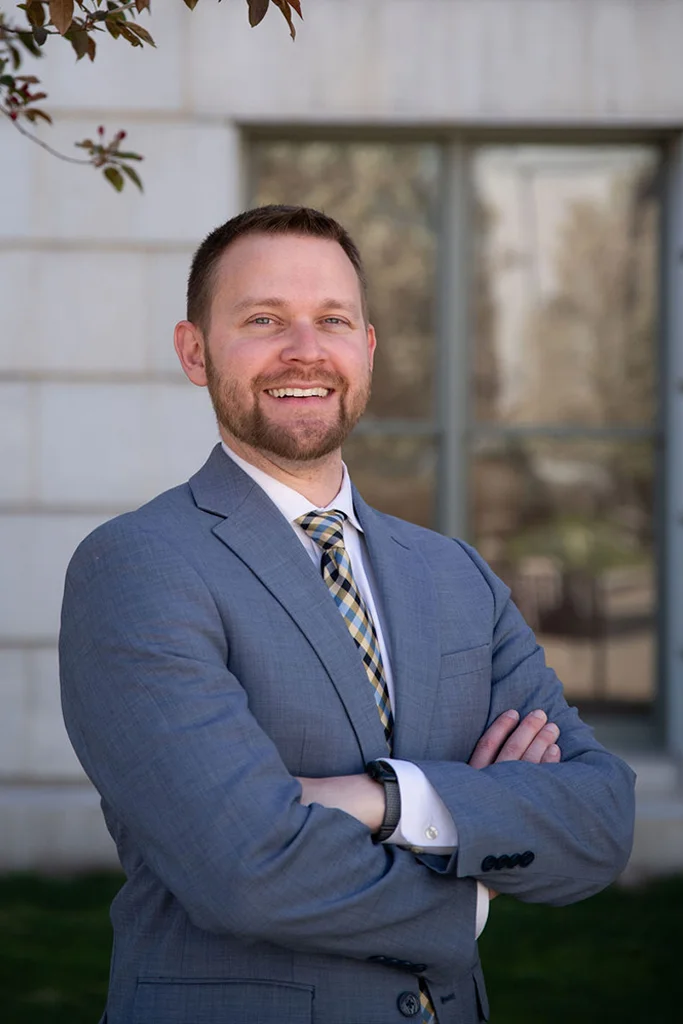

Craig Felony Lawyer
A felony charge in Craig, Colorado does not stay local. It follows you into background checks, licensing applications, custody proceedings, and employment screenings for years after the case closes. The Moffat County courthouse handles these cases with the same seriousness as any metro court, and the Colorado statutes that govern felony sentencing apply with equal force here. If you are looking at a Class 1 through Class 6 felony charge, or a drug felony under Colorado’s DF classifications, what happens at the beginning of your case often determines everything that comes after. Reid DeChant is a Craig felony lawyer who defends clients throughout rural Colorado, bringing trial experience that many attorneys in smaller markets simply cannot match.
What the State Actually Has to Build Against You in Moffat County
Felony prosecutions in Colorado begin at the district court level after a preliminary hearing or grand jury indictment establishes probable cause. In Moffat County, the Fourteenth Judicial District handles these cases, and the prosecution will often rely on a combination of physical evidence, witness statements, and law enforcement reports that were assembled quickly in the field. That speed works against the state too. Officers working in a rural county, covering large geographic areas with limited resources, sometimes make procedural mistakes that matter later.
Search and seizure is one of the most fertile areas for challenging felony cases. Whether evidence was found in a vehicle, a home, or on a person, the Fourth Amendment analysis is the same in Craig as it is in Denver. If the stop was improper, if the warrant was defective, or if consent was not freely given, evidence obtained as a result may be suppressible. Suppression does not always end a case, but it frequently changes the calculus for both sides.
Witness credibility is another area where rural felony cases can develop weaknesses. In smaller communities, personal relationships between witnesses, law enforcement, and even prosecutors can complicate how testimony is gathered and presented. A defense attorney who knows how to examine those relationships at trial can expose inconsistencies that might not surface in a larger, more anonymous setting.
Felony Classifications in Colorado and Why the Tier Matters
Colorado divides felonies into six classes for most offenses, with Class 1 carrying the most severe penalties and Class 6 representing the lower end of felony-level conduct. Drug felonies operate on a separate DF1 through DF4 scale. Where your charge lands on that scale determines not just the sentencing range but also probation eligibility, mandatory minimums, and whether a judge has discretion to depart downward.
A Class 4 felony, for instance, carries a presumptive range of two to six years in the Colorado Department of Corrections, with a mandatory three-year parole period following any prison sentence. A Class 6 felony carries twelve to eighteen months, but probation is often available and prison may be avoidable entirely depending on criminal history and the nature of the offense. The difference between a Class 4 and Class 6 finding, or between a felony and a misdemeanor reduction, can mean years of your life.
That classification fight happens through motions, plea negotiations, and sometimes at trial itself. It is not a given. Prosecutors charge at the highest defensible level and expect defense counsel to push back. When defense counsel does not push back effectively, the initial charge frequently becomes the final one.
Violent Felonies, Drug Felonies, and the Cases That Come Through Craig’s Courts
Moffat County’s geography and economy shape the types of felony cases that arise. Assault charges, domestic violence escalations that cross into felony territory, weapons offenses, and drug distribution cases tied to transportation corridors all appear regularly. Craig sits along Highway 40, and that corridor sees its share of traffic stops that produce drug charges, sometimes involving quantities that trigger distribution-level allegations rather than simple possession.
Violent felony convictions carry consequences beyond the sentence itself. Under Colorado law, certain violent offenses trigger mandatory sentencing enhancements, eliminate or limit good-time credit, and create registration obligations that extend long past release. Domestic violence designations added to felony charges trigger federal firearms prohibitions that are permanent upon conviction, not just while a sentence is served. That is a consequence that affects rural residents who hunt, work in ranching environments, or hold occupations where firearms are part of daily life.
Drug felonies, even at the DF3 and DF4 levels, can affect professional licenses, federal student aid eligibility, and housing applications. For someone in a smaller community where employer options are limited, a drug felony conviction can close off opportunities that would otherwise be available. Deferred sentences and diversion programs exist under Colorado law for certain drug offenses, and knowing whether a client qualifies, and then actually getting them there, requires knowing both the statute and the local court’s practices.
Reid DeChant’s Background and How It Applies to Felony Defense
Reid’s experience as a public defender gave him direct exposure to felony cases across the severity spectrum, including sexual assaults and homicides, in Denver, Broomfield, and Adams County. That breadth matters when defending clients facing serious charges. Lawyers who have only handled DUI and misdemeanor cases in private practice often encounter the mechanics of felony litigation for the first time when a client is already facing real prison exposure. Reid encountered those mechanics early, in high-stakes cases, before moving into private practice at DeChant Law.
His training at Trial Lawyers College grounded his courtroom approach in something specific: the story behind the charge. Prosecutors tell one version of events. A defense attorney’s job is not simply to poke holes in that version but to offer the jury a fuller and more accurate picture of what actually happened and who the person charged actually is. That approach requires genuine interest in the client, not just the case file. Reid has spoken openly about recognizing that most clients come to him at the lowest point in their lives, and that the legal representation they need is inseparable from the human understanding they deserve.
What People in Craig Ask Before Hiring a Felony Defense Attorney
Can a felony charge in Moffat County be reduced to a misdemeanor?
Yes, in some cases. Charge reductions happen through negotiated plea agreements, motions that challenge the legal sufficiency of the charges, or in rare circumstances at trial when a jury convicts on a lesser included offense. Not every felony is reducible, but many are, particularly at the Class 5 and Class 6 level or when the evidence on a key element of the offense is genuinely contested.
What is a deferred judgment and how does it apply to felony cases?
A deferred judgment is an agreement where the defendant pleads guilty, but sentencing is postponed while the defendant completes specific conditions, such as probation, treatment, or community service. If the conditions are completed successfully, the case is dismissed and the guilty plea is withdrawn. Colorado law permits deferred judgments in felony cases under certain circumstances. For eligible defendants, it can mean the difference between a permanent conviction and a clean record.
How does the Fourteenth Judicial District operate differently from Denver?
Smaller judicial districts often have fewer available hearing dates, which can create longer waits between case events. Judges in rural districts handle broader dockets and may have less exposure to certain specialized defense arguments. Local prosecutors may also have more discretion in how they handle plea negotiations. An attorney familiar with how the Fourteenth Judicial District actually operates day to day is in a better position than one who only knows metro court procedures.
Does a felony conviction in Colorado affect gun rights permanently?
Under both Colorado and federal law, a felony conviction results in a permanent prohibition on firearm possession. This applies to all felony convictions, not just violent ones. For many rural Coloradans, this consequence is among the most serious practical outcomes of a conviction. It is one of the reasons fighting for a reduction or dismissal matters as much as it does.
What happens at a preliminary hearing in a felony case?
A preliminary hearing is held to determine whether probable cause exists to bind the case over to district court for trial. The standard is lower than at trial, but it is still an opportunity for defense counsel to cross-examine witnesses, test the strength of the evidence, and sometimes identify issues that can support later motions. Waiving the preliminary hearing is sometimes strategically appropriate, but that decision should be made deliberately and not by default.
Is probation possible for a Colorado felony conviction?
Probation is available for many felony offenses, particularly at the lower classification levels and for first-time offenders. Some offenses carry mandatory prison terms that preclude probation. Others allow the court to impose probation as an alternative to incarceration. Whether a client is a strong candidate for probation depends on criminal history, the nature of the offense, and how the case was developed before sentencing.
How long does a felony case in Moffat County typically take to resolve?
Timelines vary significantly depending on whether the case proceeds to trial, how complex the evidence is, and the court’s current docket. Cases that resolve through negotiated plea agreements often move faster. Cases that require extensive pretrial litigation, expert witnesses, or jury selection can take considerably longer. There is no universal answer, but a realistic attorney will give you a range based on the specific facts of your case rather than a number designed to make you feel better.
Talk to a Felony Defense Attorney Who Will Actually Prepare Your Case
DeChant Law represents clients facing felony charges in Craig and throughout the surrounding region. Reid’s trial background, combined with the kind of client-centered preparation that comes from real courtroom experience, makes a difference in how these cases are handled, not just how they are filed. If you are facing felony charges in Moffat County or the surrounding area, contact DeChant Law to discuss your situation with a Craig felony attorney who has seen these cases through to verdict and knows what it actually takes to defend them.