Chaffee County Criminal Defense Lawyer
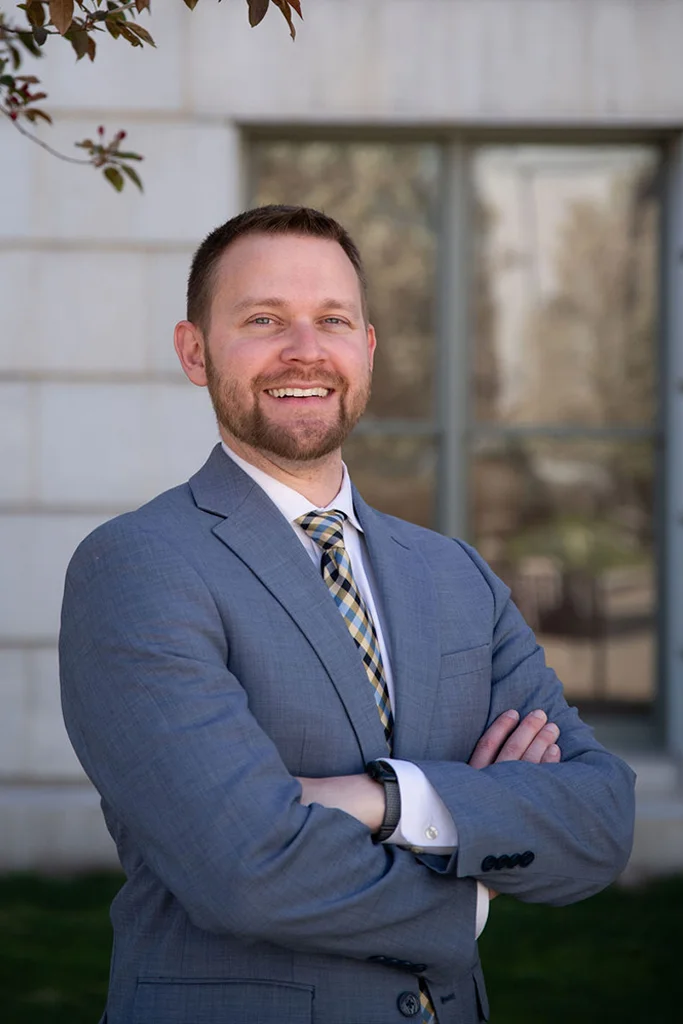
Chaffee County sits at the center of some of Colorado’s most traveled mountain corridors, drawing outdoor recreationists, seasonal workers, and tourists through Salida and Buena Vista year-round. That traffic, combined with a relatively small local court system, creates a situation where criminal charges move quickly and defendants unfamiliar with how things work in the 11th Judicial District can find themselves at a serious disadvantage. Reid DeChant is a Chaffee County criminal defense lawyer who has built his practice on genuine courtroom experience, not just negotiated plea agreements. He understands that clients come to him at one of the hardest moments of their lives, and he approaches every case with both the tenacity to fight and the care to actually listen.
How the 11th Judicial District Handles Criminal Cases
Chaffee County falls under Colorado’s 11th Judicial District, which also covers Fremont and Custer counties. The Chaffee County Combined Court in Salida handles everything from misdemeanor traffic matters to serious felony prosecutions. Because this is a smaller rural district, the dynamics are different from a large urban court like Denver. Prosecutors and judges often carry broader individual caseloads, and the local law enforcement agencies, including the Chaffee County Sheriff’s Office and officers from Salida and Buena Vista Police Departments, tend to be familiar with the judiciary.
That familiarity cuts both ways. Defendants without local legal representation may not understand how cases are typically charged or resolved in this specific court. Statutory timelines still apply, preliminary hearings still happen, and the constitutional protections afforded to any defendant in Colorado apply fully in Chaffee County. What changes is the texture of how things unfold, who is in the room, and what arguments are likely to land. An attorney who has spent time in Colorado courts knows how to read those dynamics and use them strategically.
Charges That Come Up Frequently in Chaffee County
The combination of US-285, US-50, and the mountain passes running through the county generates a steady volume of DUI and DWAI stops. Tourists driving back from Monarch Mountain or after spending a night in Salida’s downtown are common targets of late-night traffic enforcement. Colorado’s express consent law means that if you’re suspected of impaired driving, you’ve already agreed by operation of law to submit to chemical testing. Refusing carries its own automatic consequences at the DMV, separate from the criminal charge itself. Reid has specific training and experience focused on DUI defense, including the procedural requirements around express consent advisements, the timing rules for chemical testing, and how to challenge the reliability of field sobriety tests administered on mountain roads at altitude.
Drug offenses also appear regularly, in part because US-285 and US-50 are known trafficking corridors. What begins as a routine traffic stop can escalate to a search and a possession or distribution charge. The legal question in many of these cases is whether the stop, the detention, and any subsequent search were constitutionally sound. If law enforcement exceeded what the Fourth Amendment permits, the evidence gathered may be suppressible. That suppression issue, when properly raised and argued, can be the difference between a conviction and a dismissal.
Assault charges, including those coded as domestic violence under Colorado law, are another significant category. Colorado has mandatory arrest policies in domestic violence situations, which means an officer at the scene often has no discretion once a determination is made that an offense occurred. A protective order follows almost automatically. Reid has handled these cases from both county-level misdemeanor assault charges up through felony-level domestic violence prosecutions, including a strangulation case where the DA ultimately dismissed at trial.
What Makes Mountain County DUI Defense Distinct
DUI defense in a mountain county is not identical to DUI defense in an urban setting, and that distinction is worth understanding before choosing how to approach your case. Field sobriety tests, including the walk-and-turn and one-leg-stand, were designed and validated under specific conditions that do not account for altitude, uneven roadway shoulders, cold temperatures, or footwear appropriate for outdoor recreation. Someone pulled over on a gravel pullout at 8,000 feet after a day of skiing may perform those tests differently than the standardized scoring model assumes.
Breath testing equipment also requires proper calibration and maintenance documentation, and results can be affected by factors the arresting officer may not disclose without being pressed. Blood testing, which is more common in DUI-drug cases and in some DUI-alcohol situations, requires a proper chain of custody and laboratory analysis that can be scrutinized. Reid’s focus on DUI defense includes understanding these evidentiary issues at a technical level, not just as talking points. He has secured dismissals in DMV express consent proceedings for improper advisements and for failure to administer a chemical test within the required two-hour window, and he has taken DUI cases to trial and won verdicts of not guilty.
Questions About Criminal Defense in Chaffee County
Does it matter that I’m not a local resident? I was passing through when I was arrested.
It matters logistically, but not legally. Colorado courts have jurisdiction over offenses committed within the state regardless of where you live. You will generally be required to appear at hearings in Chaffee County, though an attorney may be able to handle certain appearances on your behalf. What does matter is having representation from someone who understands Colorado criminal law and is willing to work a case in a rural mountain court without cutting corners.
The officer told me refusing the breath test would protect me. Was that accurate?
No. Colorado’s express consent law attaches a set of consequences to refusal that are independent of the criminal charge. Refusing a chemical test after a valid express consent advisement typically results in automatic license revocation, and the refusal itself can be used as evidence in the criminal case. The advisement you’re given at the scene is legally significant, and if it was given incorrectly or out of sequence, that procedural error may be grounds to challenge the DMV action.
Can a criminal charge from Chaffee County affect a professional license I hold?
Yes, depending on your license type. Colorado licensing boards for physicians, nurses, commercial drivers, and other regulated professions can initiate their own proceedings based on a criminal charge or conviction, separate from the criminal court outcome. Reid has experience with the intersection between criminal charges and professional license consequences, including DUI cases involving CDL holders and medical license holders. These collateral consequences deserve attention from the beginning, not as an afterthought.
What happens if I miss a court date in Chaffee County?
A failure to appear will typically result in a warrant being issued and a bond being forfeited. The warrant is active statewide and can result in arrest at any traffic stop anywhere in Colorado. Addressing a missed court date quickly, before the situation compounds, is almost always the better path. An attorney can often file to recall a warrant and reschedule, depending on the circumstances.
Is there any way to keep a conviction off my record in Colorado?
Colorado allows certain arrests and convictions to be sealed under specific eligibility rules. The criteria depend on the charge category, how the case resolved, and how much time has passed. Not every conviction is sealable, but many arrests that did not result in conviction can be sealed, which means they would no longer appear in standard background checks. Reid can evaluate whether your situation qualifies and walk through what the process involves.
My case is a misdemeanor. Is that serious enough to hire a lawyer?
Misdemeanor convictions in Colorado carry real consequences: fines, probation, mandatory classes, potential jail time, and a criminal record that affects employment and housing. Class 1 misdemeanors carry up to 364 days in county jail. Beyond the direct penalties, a misdemeanor conviction can also trigger consequences under professional licensing rules, immigration law, or custody arrangements. The label “misdemeanor” does not mean the outcome is minor.
How do I know if the traffic stop that led to my arrest was lawful?
A lawful stop requires at minimum reasonable articulable suspicion that a traffic violation or criminal activity occurred. If the stop was pretextual or the officer lacked a sufficient basis to make contact, evidence obtained during that stop may be challenged through a motion to suppress. Whether this applies in your case depends on the specific facts: what the officer observed, what was documented in the report, and what the dashcam or bodycam footage actually shows. These questions get answered through discovery, not assumptions.
Talking to Reid About a Chaffee County Charge
DeChant Law represents people facing criminal charges across the Denver metro area and extends representation into the mountain communities and rural counties where clients need genuine trial capability, not just someone who can broker a plea. Reid’s background as a public defender across multiple counties, combined with private practice experience in DUI defense and serious criminal matters, positions him to handle what Chaffee County courts require. For anyone facing a criminal charge in Salida, Buena Vista, or anywhere else in the 11th Judicial District, reaching out directly to discuss the facts of your situation is the most practical next step. The consultation is the starting point for understanding what your case actually looks like and what a real defense might involve from a Chaffee County criminal defense attorney who will take the time to understand your story.