
Centennial Vehicular Assault and Homicide Defense Lawyer
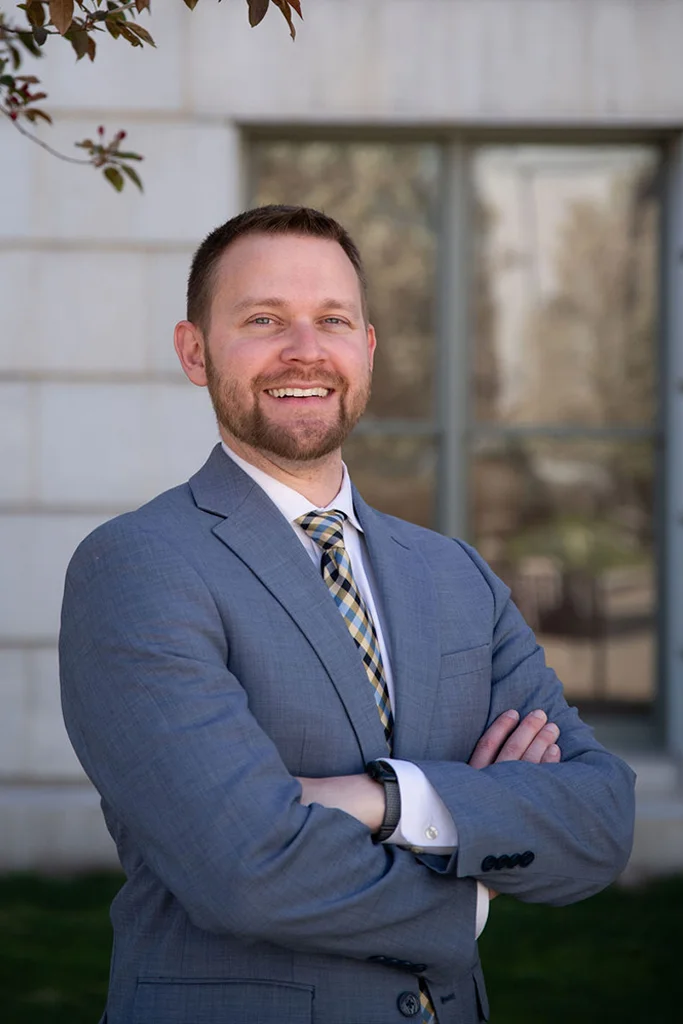
A crash that results in serious injury or death can transform from a civil matter into a criminal prosecution almost overnight. When investigators and prosecutors in Arapahoe County decide that recklessness, impairment, or extreme indifference caused the harm, the driver faces felony charges that carry years in prison and consequences that follow for a lifetime. DeChant Law’s Centennial vehicular assault and homicide defense lawyer Reid handles these cases with the courtroom preparation and factual precision they demand.
What Colorado Actually Charges in Serious Crash Cases
Vehicular assault and vehicular homicide are distinct charges under Colorado law, and understanding what separates them matters when building a defense. Vehicular assault under C.R.S. 18-3-205 applies when a driver operates a vehicle in a reckless manner and causes serious bodily injury to another person. The charge elevates to a class 4 felony when the driver is under the influence of alcohol or drugs at the time. Vehicular homicide under C.R.S. 18-3-106 applies when a death results. A reckless vehicular homicide is a class 4 felony; one tied to impaired driving is a class 3 felony, carrying up to 12 years in the Department of Corrections.
Prosecutors in Arapahoe County and the 18th Judicial District treat these cases differently from ordinary DUI matters. Victim impact, media attention, and community pressure all enter the picture. The charging decision often comes weeks or months after the crash itself, after investigators have reconstructed the scene, reviewed data from the vehicle’s event data recorder, analyzed blood draws, and interviewed witnesses. By the time charges are filed, the state has already built a substantial record. That gap between crash and charge is time a defense attorney should be using just as productively.
The Stretch of Road and the Charge Are Not the Same Thing
Centennial sits at the intersection of several heavily traveled corridors, including E-470, C-470, South Parker Road, and Arapahoe Road. Fatal and serious-injury crashes happen on all of them. But a serious crash does not automatically mean recklessness or impairment in the legal sense. Colorado requires proof of a specific mental state for these charges. Recklessness is a conscious disregard of a substantial and unjustifiable risk. That standard excludes ordinary negligence, inattention, a momentary lapse in judgment, or a tire blowout. Impairment must be proven, not merely assumed from a BAC reading taken hours after the crash.
Defense work in these cases starts at the accident reconstruction level. How fast was the vehicle actually traveling? Where did the impact occur relative to lane markings? What was the road condition, the lighting, and the sight distance at that location? Was the other driver also violating a traffic law? These are not rhetorical questions. They are the questions an expert retained by the defense will answer, and the answers frequently conflict with the prosecution’s narrative. Reid’s approach begins with a thorough factual investigation before any courtroom strategy is formed.
Blood Evidence, Timing, and the Science Behind Impairment Claims
A significant number of vehicular assault and vehicular homicide prosecutions in Colorado rest on a blood draw taken at a hospital after a crash. The problem is that blood draws in these circumstances are almost never taken at the moment of the crash. Minutes or hours pass. Blood alcohol concentration changes during that time, and the prosecution’s experts routinely use retrograde extrapolation to work backward to a BAC at the time of driving. That process relies on assumptions about absorption rates, elimination rates, and the individual’s physiology that may or may not hold in a given case.
When drugs rather than alcohol are alleged, the forensic complexity increases further. Many controlled substances and even legal prescription medications are detectable in blood long after any impairment has passed. The presence of a substance in a blood sample does not establish that the driver was impaired at the time of the crash. Reid has focused his training and defense practice on DUI and impairment science precisely because these evidentiary issues require a lawyer who understands the laboratory methods, the chain of custody requirements, and the limits of what a toxicology result can actually tell a jury.
What Arapahoe County Prosecutors and Judges See in These Cases
The 18th Judicial District handles a substantial volume of serious felony matters out of the Arapahoe County Justice Center in Centennial. Vehicular assault and homicide cases in this district often involve parallel proceedings: the criminal case and a separate DMV revocation hearing tied to the blood or breath result. Losing the DMV hearing can affect the criminal case, and vice versa, which is why both proceedings need coordinated attention from the outset.
Prosecutors in these cases have resources that most criminal defendants underestimate. They work with law enforcement accident reconstruction units, state toxicologists, and victim advocates who help keep community pressure on the case. The defense has to be equally well-resourced. That means lining up independent accident reconstruction experts, challenging the chain of custody on biological evidence, scrutinizing search warrant affidavits for blood draws obtained at the hospital, and preparing for a trial where jurors arrive with strong emotions and pre-formed opinions about crashes that hurt or killed someone. Reid’s background as a public defender in Denver, Broomfield, and Adams County, and his subsequent private practice, has given him courtroom experience across the range of serious felonies that prosecutors in this region bring to trial.
Questions People Ask Before Hiring a Defense Attorney for These Charges
Is vehicular homicide always charged as a felony in Colorado?
Yes. Vehicular homicide is a felony regardless of the circumstances. The level of the felony depends on whether the prosecution alleges recklessness or impairment. Impairment-based vehicular homicide is a class 3 felony with significantly higher sentencing exposure than the class 4 reckless version.
Can I be charged even if the other driver was partially at fault?
Yes. Colorado’s criminal statutes do not require that the defendant be solely at fault. Comparative negligence concepts from civil law do not directly apply to criminal prosecutions. However, another party’s fault can be relevant to whether the defendant’s conduct rose to the level of recklessness and whether that recklessness was a proximate cause of the injury or death.
What happens to my driver’s license while the criminal case is pending?
If a blood or breath test showed a BAC of 0.08 or higher, or if you refused testing, the DMV will pursue a separate administrative revocation through an express consent hearing. That hearing has its own timeline and its own standards. A favorable result at the DMV hearing does not resolve the criminal case, but the two proceedings often share overlapping evidence and arguments.
The police took a blood draw at the hospital without my consent. Is that legal?
Not always. Colorado law permits warrantless blood draws in limited circumstances, and there is active case law surrounding when a warrant is required. If the blood draw violated constitutional protections, suppression of the result is a viable motion that can significantly weaken the prosecution’s case.
How long do these cases take to resolve in Arapahoe County?
Vehicular assault and homicide cases rarely resolve quickly. Investigators take time to complete accident reconstruction reports and toxicology analysis. Pre-trial litigation over evidence and expert disclosures adds more time. Many of these cases take a year or longer from charge to resolution, whether by trial, negotiated plea, or dismissal.
Can vehicular assault charges be reduced or dismissed?
They can. Reductions and dismissals happen when the defense identifies weaknesses in the evidence, such as flawed accident reconstruction methodology, an untimely or improperly obtained blood draw, or facts that undercut the recklessness element. Whether a reduction is in a client’s best interest depends entirely on the facts of the case and the specific charges at issue.
Should I talk to investigators before hiring an attorney?
No. Statements made to police and accident investigators in the hours and days after a serious crash are frequently used in the subsequent prosecution. Even a cooperative, truthful account can be framed against you. Retaining an attorney before any substantive contact with investigators protects your ability to mount a full defense later.
Defending Vehicular Assault and Homicide Cases in the Centennial Area
These are not cases where the defense is built around paperwork and courtroom procedure. They require a lawyer who is genuinely prepared to take the case to a jury, challenge expert witnesses, and tell a complete story about what actually happened and why the criminal law’s standards are not satisfied by the facts. At DeChant Law, Reid has tried serious felony cases to verdict and has learned through both public defender work and private practice that clients facing the most serious charges in their lives need someone who invests in their story and fights for the best achievable outcome. If you are facing vehicular assault or homicide charges in Centennial or anywhere in Arapahoe County, contact DeChant Law to discuss what a full defense of your case would actually look like.