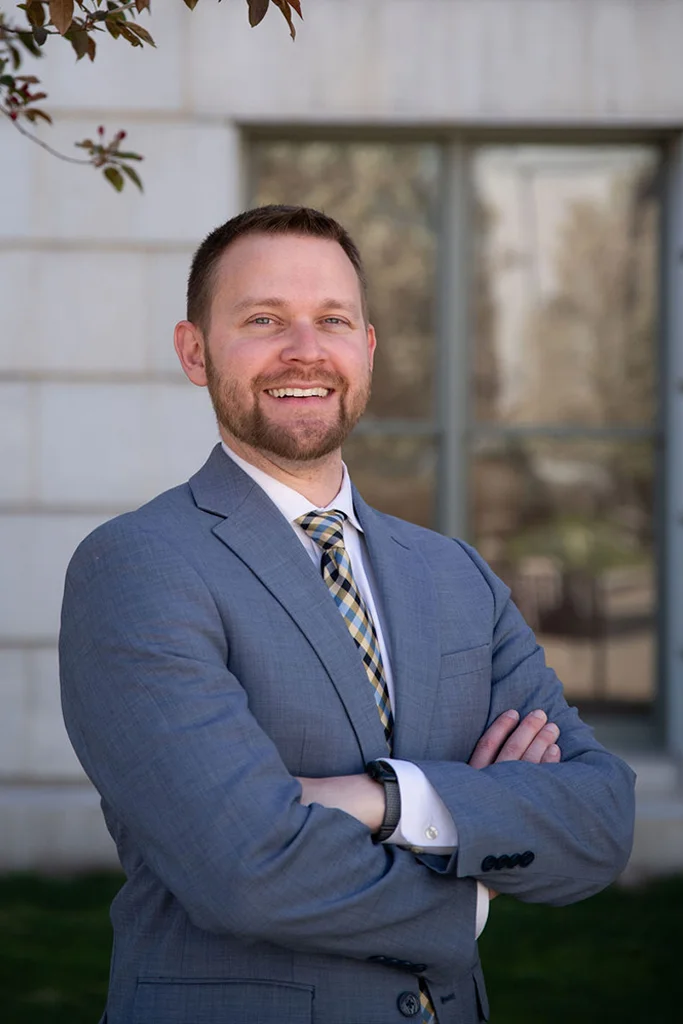
Buena Vista Vehicular Assault and Vehicular Homicide Defense Lawyer
A crash that results in serious injury or death can transform a driver from a victim of circumstance into the target of a felony prosecution almost overnight. Colorado treats vehicular assault and vehicular homicide as among the most serious charges a driver can face, carrying prison sentences that rival many violent offenses. When those charges arise in Chaffee County and get prosecuted in the 11th Judicial District, the courtroom dynamics are different from a major metro case, and the attorney standing next to you needs to understand both the law and the local landscape. DeChant Law represents people facing these charges, bringing the trial preparation and courtroom experience that cases this serious actually demand.
What Colorado Actually Charges in These Cases
Vehicular assault and vehicular homicide are not the same offense, even though people often use the terms interchangeably. Under Colorado law, vehicular assault applies when a driver causes serious bodily injury to another person while operating a vehicle in a reckless manner or while under the influence of alcohol or drugs. Vehicular homicide applies when the same conduct results in death. The distinction between reckless driving and DUI as the underlying theory matters significantly, because each carries a different penalty range and requires the prosecution to prove different things.
Vehicular assault based on reckless driving is a class 5 felony. Vehicular assault based on DUI escalates to a class 4 felony. On the homicide side, reckless vehicular homicide is a class 4 felony, while DUI-related vehicular homicide becomes a class 3 felony, which can mean four to twelve years in the Department of Corrections before any aggravating factors are considered. These ranges are not theoretical starting points from which good behavior earns a discount. Colorado’s presumptive sentencing ranges mean a conviction at trial or through a plea puts a specific number of years on the table from the beginning.
Chaffee County sees these charges arise in ways that reflect the region’s geography. Highway 285 through the Arkansas River Valley, US 24 east toward Hartsel, and the canyon roads near Salida and Poncha Springs carry a mix of through traffic, local drivers, and tourists who are not always familiar with mountain driving conditions. Elevation, weather, wildlife crossings, and narrow lanes create conditions that can turn an ordinary moment of inattention into a catastrophic collision. That context matters for how a case is investigated, how fault is assigned, and how a defense is built.
How Prosecutors Build These Cases and Where the Evidence Gets Contested
The prosecution in a vehicular assault or homicide case does not simply present a crash and ask the jury to infer the rest. They build a theory around how the vehicle was being operated immediately before impact. That theory draws on accident reconstruction experts, blood or breath test results, toxicology reports, cell phone records, surveillance footage, witness accounts, and sometimes data pulled directly from the vehicle’s event data recorder. Each of those sources carries its own reliability questions, and a thorough defense works through all of them.
Accident reconstruction is one of the most contested areas. Reconstructionists use physical evidence from the scene, vehicle damage patterns, and road conditions to build a model of what happened. That model can be challenged when the underlying measurements are incomplete, when assumptions about speed or braking distance rely on conditions that were not accurately documented, or when the expert overstates the confidence the physical evidence actually supports. In mountain terrain with variable road surfaces and weather, reconstruction models are often more dependent on assumptions than their authors acknowledge.
Blood alcohol evidence presents its own set of issues. If the crash caused serious injury, law enforcement may draw blood at the hospital rather than administering a roadside breath test, and the timing, chain of custody, and lab procedures for those samples are all subject to scrutiny. Colorado’s express consent law means drivers are required to submit to testing, but that does not mean every test is conducted correctly or that every result accurately reflects the driver’s BAC at the time of driving rather than at the time the sample was taken. Retrograde extrapolation, the process of calculating what a driver’s BAC was at the time of the crash based on a later blood draw, involves assumptions that can be challenged through cross-examination and counter-expert testimony.
Reid DeChant’s background includes extensive work on DUI cases and trial work in criminal defense across Colorado’s Front Range and mountain communities. That foundation shapes how DeChant Law approaches the evidence in cases where alcohol or drugs are alleged to be a factor.
The Recklessness Question and Why It Is Not Always as Clear as It Looks
A substantial portion of vehicular assault and vehicular homicide prosecutions turn not on alcohol but on whether the driver was operating recklessly. Recklessness under Colorado law means consciously disregarding a substantial and unjustifiable risk. That is a different standard than negligence, and the gap between the two matters enormously for a defendant. A driver who made a mistake, misjudged conditions, reacted late to an unexpected hazard, or was distracted for a moment is not automatically guilty of recklessness. The prosecution has to prove the driver was aware of the risk and chose to disregard it.
That distinction gives the defense meaningful ground to work with. Speed alone does not establish recklessness. Neither does following too closely, drifting from a lane, or failing to brake in time. When prosecutors reach for a recklessness theory, the defense can scrutinize road conditions, visibility, signage, the behavior of other vehicles, and whether the risk the driver allegedly disregarded was actually apparent in the way the law requires. Getting this question right early, before a plea is entered or a trial strategy is locked in, is one of the more important pieces of early defense work.
Questions People Ask When Facing These Charges in Chaffee County
Can a vehicular assault charge be reduced to a misdemeanor?
It depends on the specific facts, the strength of the evidence, and the particular prosecutor handling the case. In some circumstances, particularly where the recklessness theory is weak and no DUI allegation is involved, a felony charge can be negotiated down. That outcome requires building a credible defense that puts pressure on the prosecution’s case, not simply waiting to see what gets offered.
What happens to my driver’s license while the criminal case is pending?
If the charge involves DUI, the DMV will pursue a separate administrative action against your license regardless of how the criminal case proceeds. Those two proceedings run on separate tracks with separate timelines, and failing to respond to the DMV action within the required window can result in an automatic revocation even if the criminal charge is later dismissed.
Does it matter that the other driver was also at fault?
Comparative fault does not work the same way in criminal cases as it does in civil litigation. The fact that another driver contributed to the crash does not automatically defeat the prosecution’s case, but it is absolutely relevant to the recklessness question and to the causal link between your driving and the resulting injury or death. Defense attorneys use this evidence to challenge both the theory of guilt and the sufficiency of the prosecution’s proof.
What is the 11th Judicial District, and how does it affect my case?
The 11th Judicial District covers Chaffee, Fremont, Custer, and Park counties. Cases arising from crashes in or around Buena Vista are handled in that district’s courts rather than in Denver or Jefferson County. The prosecutorial culture, judicial tendencies, and local resources in smaller mountain districts can differ meaningfully from the Front Range, and having a defense attorney who takes the time to understand those dynamics is worth considering.
Will I face both a criminal charge and a civil lawsuit?
Potentially yes. The criminal case and any civil personal injury or wrongful death lawsuit filed by the injured party or their family proceed independently. A conviction in the criminal case can have consequences in the civil proceeding. How you handle the criminal defense, including decisions about statements and evidence, should take the civil exposure into account.
How does Reid DeChant’s trial experience apply to these cases?
Trial experience in this context means understanding how to present a defense to a real jury, not just how to negotiate a plea. Reid’s background at Trial Lawyers College and his work as a public defender across multiple Colorado counties gave him a foundation in both the mechanics of trial and the human storytelling that actually moves juries. In felony cases with prison sentences at stake, having a lawyer prepared and willing to go to trial changes the dynamics of every conversation before trial as well.
What should I avoid doing after a serious crash before speaking with an attorney?
The period immediately after a serious crash is when the most consequential mistakes happen. Law enforcement will be gathering statements, and anything said at the scene or in a subsequent interview can be used in the prosecution’s case. Beyond the immediate scene, posting about the crash on social media, speaking with insurance adjusters without understanding your exposure, and consenting to additional interviews without counsel present can all create problems that are difficult to undo later.
Facing Felony Charges in the Arkansas River Valley Requires Real Preparation
A vehicular assault or vehicular homicide case in Buena Vista is not the kind of charge that resolves itself with minimal effort. These cases involve technical evidence, expert witnesses, serious consequences, and a prosecution that has substantial resources. DeChant Law approaches this work the way it approaches all serious felony defense: by engaging the evidence directly, identifying where the prosecution’s case is actually vulnerable, and preparing for trial rather than assuming one will never happen. If you are dealing with vehicular assault or homicide charges in Chaffee County or the surrounding region, contact DeChant Law to talk through what the case actually looks like and what a defense strategy might involve.